Ukraine is cutting a slice out of the state-owned banks, triggering the process of privatizing Ukrgazbank and Sense Bank, among five other banks also operating – Motor Bank, Oschadbank, PIN Bank, PrivatBank and Ukreximbank.
Ukrainians perceive them as safe havens for wartime deposits, but Ukraine has too many of them. They can operate where markets fail, e.g. in small or frontline communities, but the state is not expected to engage in business where the market works efficiently, Investment Capital Ukraine (ICU) financial analyst Mykhailo Demkiv told Kyiv Post.
JOIN US ON TELEGRAM
Follow our coverage of the war on the @Kyivpost_official.
Ukrgazbank focuses on corporate clients, providing trade finance, export and import financing, and funding backed by western international financial institutions, with an emphasis on SME lending. “The bank can be attractive for international financial institutions interested in Ukraine’s post-war reconstruction,” Demkiv said.
It is ninth in Ukraine’s banking sector by net revenue, reporting Hr. 3.4 billion (almost $81 million), and seventh by capital, according to data from Ukraine’s central bank, the National Bank of Ukraine (NBU), as of Jan. 1, 2025. It is also the country’s fourth-largest lender by loan portfolio.
Interest from a global investor has already emerged. In 2021, the International Financial Corporation (IFC), provided Ukrgazbank with a €30 million loan ($35.4 million) convertible to up to a 20% equity stake. The loan matures in July 2026, though the conversion option still remains unused, as Kyiv Post found out. The IFC told Kyiv Post that “a decision to make that conversion depends on a range of business factors that are not yet ready to be discussed publicly.”
Iran Warns Israel: Any Attack on Beirut Will Trigger Resumption of War
Wartime risks weigh on valuations. Oleksandr Parashchiy of Concorde Capital estimates Ukrgazbank would cost no more than $300 million. Pre-war, the IFC assessed the bank at around 0.6 times capital, implying a valuation of $230–270 million. Eastern European banks now trade at about 1.6 times capital, compared to 0.9 at the beginning of 2021.
Past scandals also complicate the bank’s reputation – one is alleged embezzlement of Hr. 206 million ($5 million), investigated by the National Anti-Corruption Bureau of Ukraine (NABU) in 2023. Eight suspects out of 16 in the case reached plea agreements, a law enforcement source told Kyiv Post on condition of anonymity, while the fate of the other eight will be decided in court.
“Those remaining [without sentence or plea agreement] are [former central bank governor Kyrylo Shevchenko] himself, his deputy [Denys Chernyshov], a bank department head, and a division head,” the source told Kyiv Post. That same year, the NBU fined Ukrgazbank Hr. 64.6 million ($2.5 million) for failures in financial monitoring linked to a separate “miscoding” case involving gambling-related fraudulent transactions.
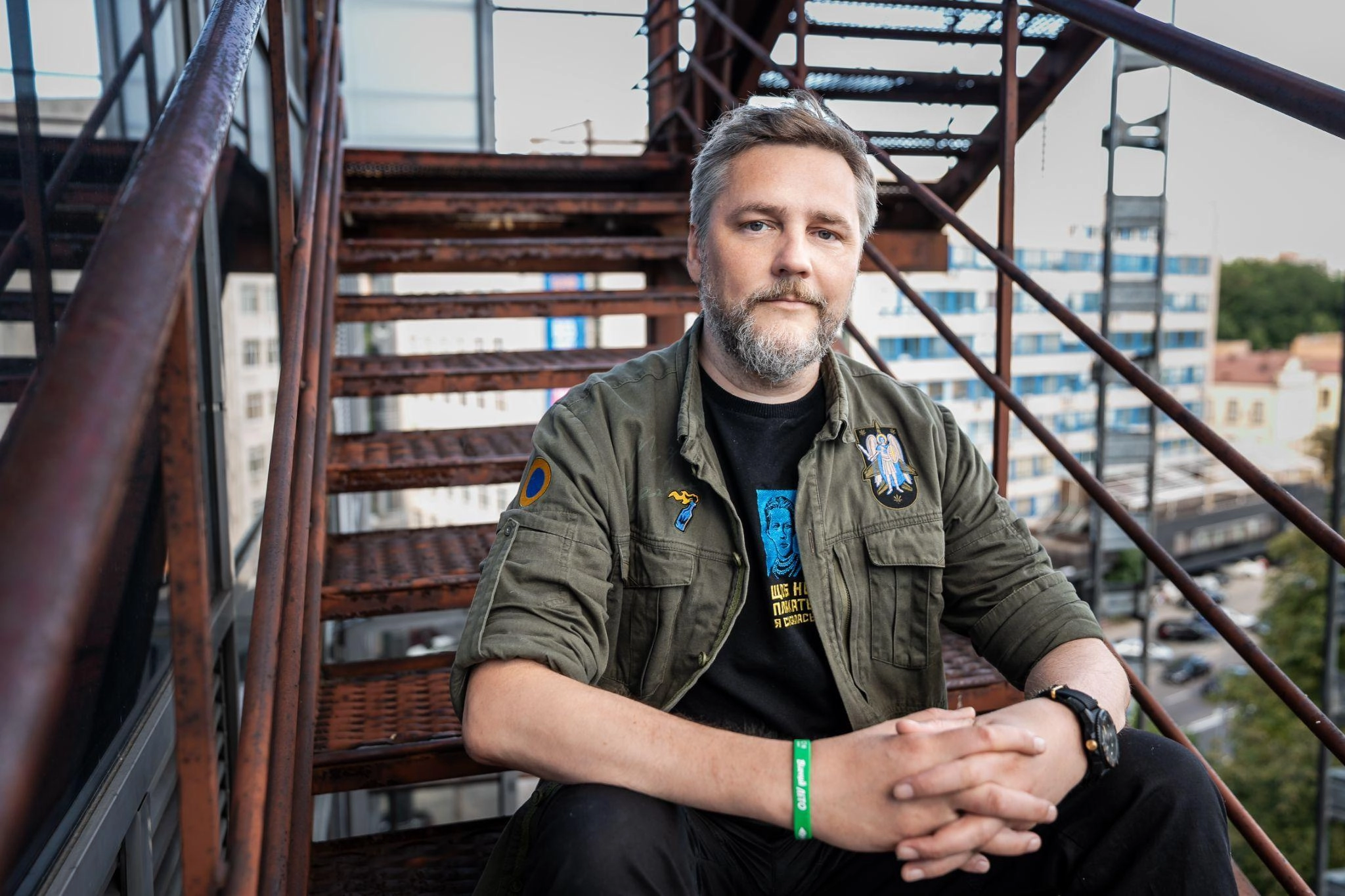
Two years later, Ukrgazbank seems to have recovered, as it funds the energy sector and agriculture. Kyiv Post spoke with Acting Ukrgazbank CEO Rodion Morozov about banking during the war, the bank’s privatization prospects, and the future of the IFC loan in the bank’s capital.
Ukrgazbank’s readiness for privatization
Kyiv Post (KP): What can be disclosed about Ukrgazbank’s search for potential investors ahead of privatization?
Rodion Morozov (RM): It’s primarily a question for our shareholder, but both the management and supervisory boards are deeply involved and monitor the process closely.
The obligation to reduce the number of state-owned banks is fixed in the IFC’s memorandum. The Ministry of Finance and the government are taking steps to fulfill it.
According to government procedures, Ukraine’s Cabinet of Ministers already approved the start of selecting a financial advisor for privatization on Oct. 29. It also approved the mechanism and criteria for competitive selection of the advisor, his tasks and powers.
Once selected, the advisor will analyze our portfolio, its concentrations, and potential discounts. For instance, our exposure to Naftogaz and other state owned enterprises (SOEs) may be discounted by international investors due to its link to state policy.
Kyiv Post disclaimer: Ukraine’s state-owned energy giant Naftogaz took out a Hr.4.7 billion ($113 million) loan from Ukrgazbank in July to prepare for 2025-2026 winter season.
Ukrgazbank’s banking business in Ukraine
KP: What makes your bank stand out compared to other banks in Ukraine?
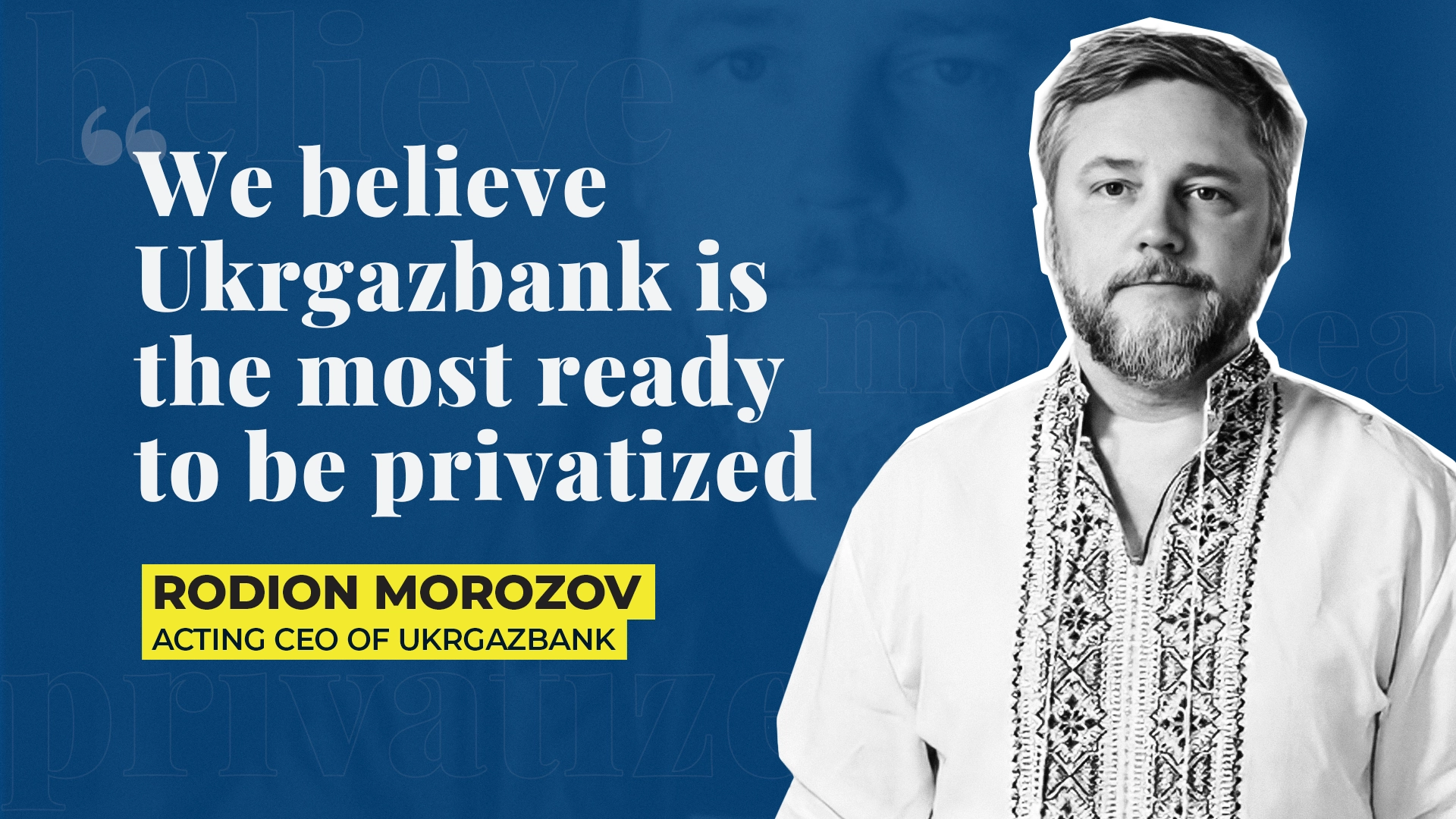
RM: We believe Ukrgazbank is the most ready to be privatized, compared to other state banks. We have an efficient operational model and meet all capital requirements. Two years ago, we decided we will not run for larger numbers, but rather for efficiency, and the marginality of the business. We did not want to just run to be first at a higher cost.
And that strategy proved right.
Our goal now is to make the bank as attractive as possible to potential buyers. The only underinvested area is IT, which we plan to improve next year.
We agreed to focus mainly on the corporate and municipal sectors.
We don’t compete with Ukraine’s top banks in retail, but we remain a universal bank with about one million retail clients – most of them connected to our corporate base.
KP: Over the past year, what were the main drives for scaling up for Ukrgazbank?
RM: The range of projects eligible for financing is narrow due to a general lack of bankable projects in Ukraine.
But our first focus is renewable energy. We’re proud to be among the most active banks in this sector. Thanks to our expertise, the European Bank of Reconstruction and Development [EBRD] honored us with the Energy Security Champion Award for our consistent contribution to enhancing Ukraine’s energy security.
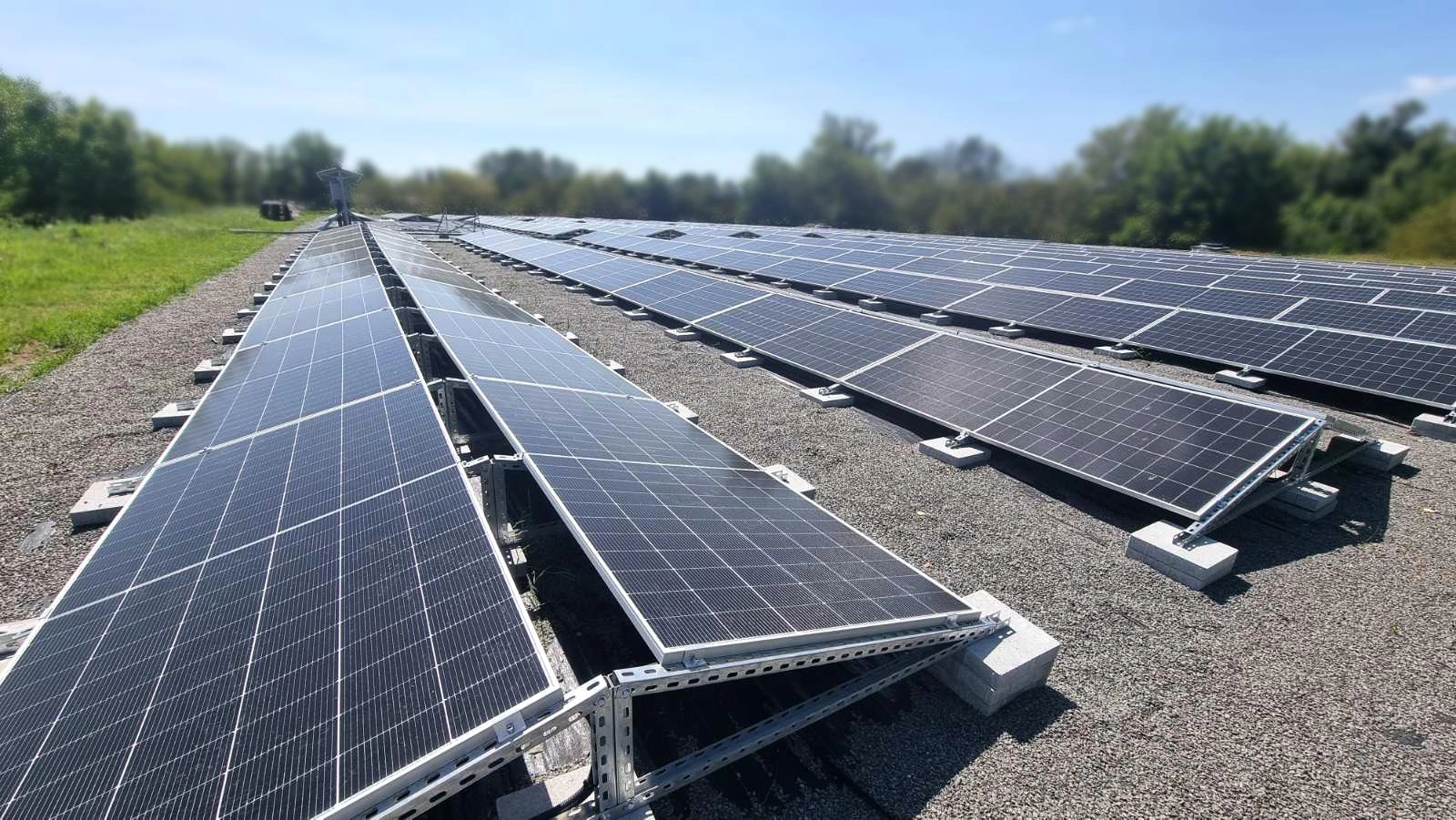
We think energy is the right direction because businesses here are very diverse. We’re expanding into solar, storage, and co-generation that helps to balance the generation and consumption. Co-generation also helps with heating.
Before, everyone in the alternative energy industry was following the so-called “green tariff” where the government compensated for generating energy from alternative sources by buying the generated energy for a higher price.
Now it’s a purely market thing. These projects have sound financial models and help balance the grid.
With solar energy, for example, it can be standalone storage for arbitrage, solar-plus-storage systems, or projects that help reduce a company’s energy costs. With rising electricity and fuel prices, interest keeps growing.
The second important area for Ukrgazbank is agriculture. Margins there are modest but they feel relatively stable.
KP: How resilient are private companies in these sectors during the war?
RM: All are focused on sustainability and preparing for worst-case scenarios. Some transitions take time. For example, sugar plants can’t instantly shift from gas to other energy sources, but many firms are diversifying energy supply, anticipating possible interruptions in gas and electricity supply. In the bank, we also calculate such risks.
This is why one of the key targets of our strategies is diversification of businesses. If you deconcentrate your portfolio, you are de-risking from some possible interruptions in the business.
KP: Do you work with businesses that only work with Ukrainian markets? What about Ukrainian exporters?
RM: There are a lot of exports in our portfolio. But what we see is the concentration of exports only in the big companies.
There’s significant potential to support small and medium businesses [SMEs]. In the EU, 90% of exporters are SMEs; in Ukraine, only around 2%. Smaller firms often sell through intermediaries, losing much of the margin. For them, it’s too complicated.
And I think there is a high potential to help SMEs to do the export. In our bank, we have a school for these companies where we teach them how to enter foreign markets for exports. Domestic demand is shrinking, while external markets have strong potential.
Before exporting, Ukrainian companies should find a reliable foreign partner willing to buy their products. That’s how larger exporters began – establishing trust, fulfilling contracts, and then scaling. Once there’s a stable channel, we can support them with financing, export guarantees, or EBRD and EIB programs.

Cooperation with IFIs and challenges with windfall tax on banks at home
KP: Are exporters facing new challenges from tariffs or geopolitical shifts?
RM: Not yet. Big exporters are diversified – if not Europe, they sell to Turkey or China, especially in sunflower oil. Among smaller businesses, we already see success stories like blueberry producers exporting to Poland and other companies.
International financial institutions are highly supportive of Ukraine. The EBRD has a permanent presence here. Both EBRD’s Managing Director Francis Malige and Vice-President Matteo Patrone always come to Kyiv. They understand local needs and stay engaged on the ground.
Kyiv Post Disclaimer: In October 2025, after Russian attacks damaged the gas production, treatment and transmission facilities, Patrone arrived in Kyiv and announced a new €500 million ($585 million) financing package for Naftogaz, speaking with Kyiv Post in Ukraine’s capital.
KP: In January 2021, IFC provided Ukrgazbank with a loan of €30 million wih the aim to convert the loan into up to 20% equity share. That could have been a precedent for privatization in Ukraine. Is there any news regarding the future conversion?
RM: On Jan. 25, 2021, the IFC and JSB “UKRGAZBANK” signed a loan agreement worth €30 million.
The loan proceeds were fully utilized for financing “sustainable” projects, primarily in the sectors of energy efficiency and renewable energy.
The loan agreement indeed features a conversion option allowing the IFC to convert the full amount of the loan, or a portion thereof, into the bank’s equity [shares]. The agreement terminates and the loan is scheduled for full repayment in July 2026.
To date, the IFC has not exercised the conversion option.
KP: And what about the Ukrainian investment climate?
RM: A key problem is the demand from Ukraine’s lawmakers to impose a windfall tax on the banks’ profits. The taxes are imposed retroactively or banks are assigned social functions without guarantees, also adding uncertainty on top of wartime risks.
The only source for the growth of our capital is profit. But when profit is taken away at year-end, it limits development, also damaging Ukraine’s economy.
For any bank, its capital, nurtured by profit, is the main working asset. The size of a bank’s capital directly impacts its valuation.
If capital stays, we can expand our loan portfolio. If it’s taken away due to a windfall tax, lending capacity will shrink next year. Ukraine’s state-owned banks like Ukrgazbank now provide nearly 70% of lending to Ukraine’s critical industries, needed for resilience against Russia’s invasion.
Ukraine’s economic team – including the NBU, the finance ministry, and the Financial Stability Council – kept explaining these arguments to lawmakers. But lawmakers disregarded them, citing what they describe as public demand to impose the tax on banks.
Given that state-owned banks are now actively financing critical infrastructure, this decision looks short-sighted.
You can also highlight the text and press Ctrl + Enter