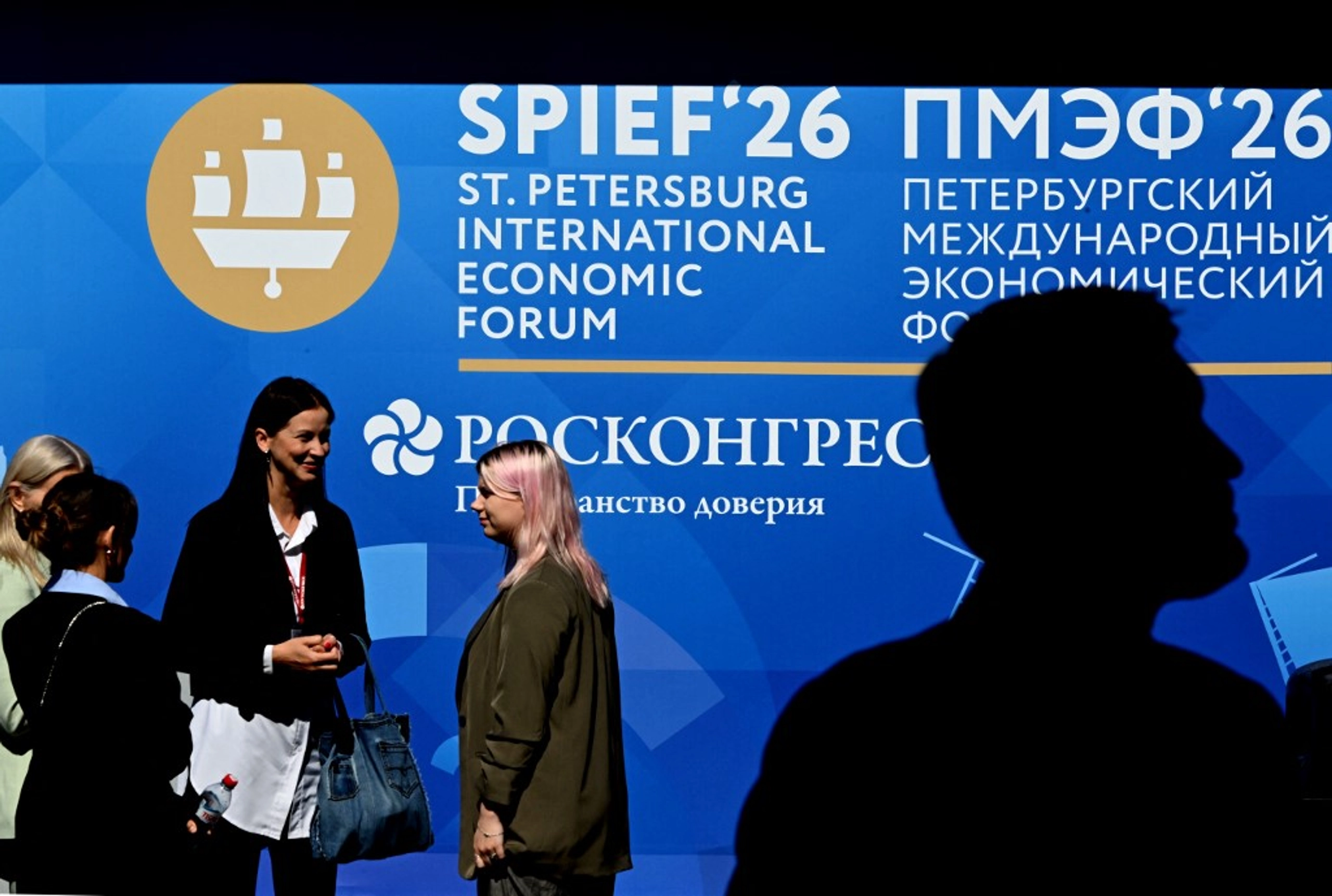
Russia confirmed on Tuesday that a US delegation will attend the St. Petersburg International Economic Forum (SPIEF) for the first time in nearly a decade.
The visit is expected to focus on US-Russia cultural ties in yet another sign of a gradual thaw in Western relations with Moscow as Russia’s full-scale invasion of Ukraine continues into its fifth year.
JOIN US ON TELEGRAM
Follow our coverage of the war on the @Kyivpost_official.
Yuri Ushakov, an aide to Russian leader Vladimir Putin, confirmed the delegation’s participation on Tuesday.
“One could say that an official US delegation led by the chair of the US administration’s Commission of Fine Arts, Rodney Cook, will arrive for the first time in several years to participate in the forum,” Ushakov said at a press briefing, according to Interfax.
“I would say Americans have been absent at this level since around 2017-2018,” he added.
Rodney Mims Cook, head of the US federal Commission of Fine Arts, previously told Russian state media that he has been invited to attend the plenary session and Putin’s address at SPIEF.
Cook, who was appointed head of the Commission of Fine Arts in January, is also the founder of the US National Monument Foundation and a specialist affiliated with the World Monuments Fund.
According to Ushakov, Cook will speak at the forum’s Russia-US “Dialogue of Cultures” session alongside Valery Gergiev, director of the Bolshoi and Mariinsky theaters, and Mikhail Piotrovsky, director of the Hermitage Museum.
Zelensky: Russia Shifts Donetsk Capture Deadlines – Now at 15 Attempts
“Naturally, the US representatives will chat with our official representatives, officials and art figures, and a discussion is expected of numerous issues on the US-Russian cultural agenda,” Ushakov added.
Cook has previously participated in cultural restoration projects in Russia and delivered lectures at several high-profile Russian institutions, including the Kremlin Armory and the Arkhangelskoye estate.
SPIEF, held annually in St. Petersburg since 1997 and organized by the Kremlin-linked Roscongress Foundation, is one of Russia’s flagship economic events and will run from June 3 to June 6 this year.
Robert Agee, president of the American Chamber of Commerce in Russia, said more US companies are expected to attend this year compared to recent editions, but numbers remain significantly lower than before Russia’s full-scale invasion of Ukraine.
“We will have a commercial dialogue between Russia and America,” Agee said, adding that US businesses are still approaching Russia “with caution.”
Cultural rapprochement
The visit marks the latest in a series of cultural engagements between the West and Russia despite Russia’s ongoing invasion of Ukraine.
Recent incidents include the 2026 Venice Biennale in May, at which Russia was allowed to exhibit for the first time since 2022. Kyiv has condemned the decision, while the EU had threatened to suspend a €2 million ($2.3 million) grant for the cultural exhibition.
Critics argue that culture cannot be separated from politics, warning that such steps risk weakening pressure on Moscow to end the war in Ukraine.
The Financial Times (FT) noted that the Russian pavilion is coordinated by Smart Art, whose co-founders include Ekaterina Vinokurova, the daughter of Russian Foreign Minister Sergei Lavrov, and Anastasia Karneyeva, the daughter of a senior official at Rostec, Russia’s state-owned arms conglomerate.
Earlier incidents include the Winter Olympics, in which Russian athletes were allowed to compete under neutral flags for the first time since 2022, and the ensuing Paralympics, where they were allowed to compete under the Russian flag.
Washington did not send an official representative to last year’s SPIEF, citing Russia’s “more aggressive” stance on the war in Ukraine.
US officials at the time warned that any return to “normal relations” with Moscow would carry significant “economic and reputational risks.”
You can also highlight the text and press Ctrl + Enter

Russia Hit by 660-Drone Overnight Barrage Targeting Moscow, Crimea and Key Military Sites