WASHINGTON DC – It was supposed to be the most consequential weekend for peace in four years. Instead, it’s beginning with the familiar sound of air raid sirens.
As Donald Trump prepares to host Volodymyr Zelensky at his Palm Beach estate to finalize a 90-percent-complete peace framework, the Kremlin delivered its own counter-proposal: a sweeping overnight barrage of Kinzhal and Iskander missiles designed to shatter the optimism currently buoying Western diplomatic circles.
JOIN US ON TELEGRAM
Follow our coverage of the war on the @Kyivpost_official.
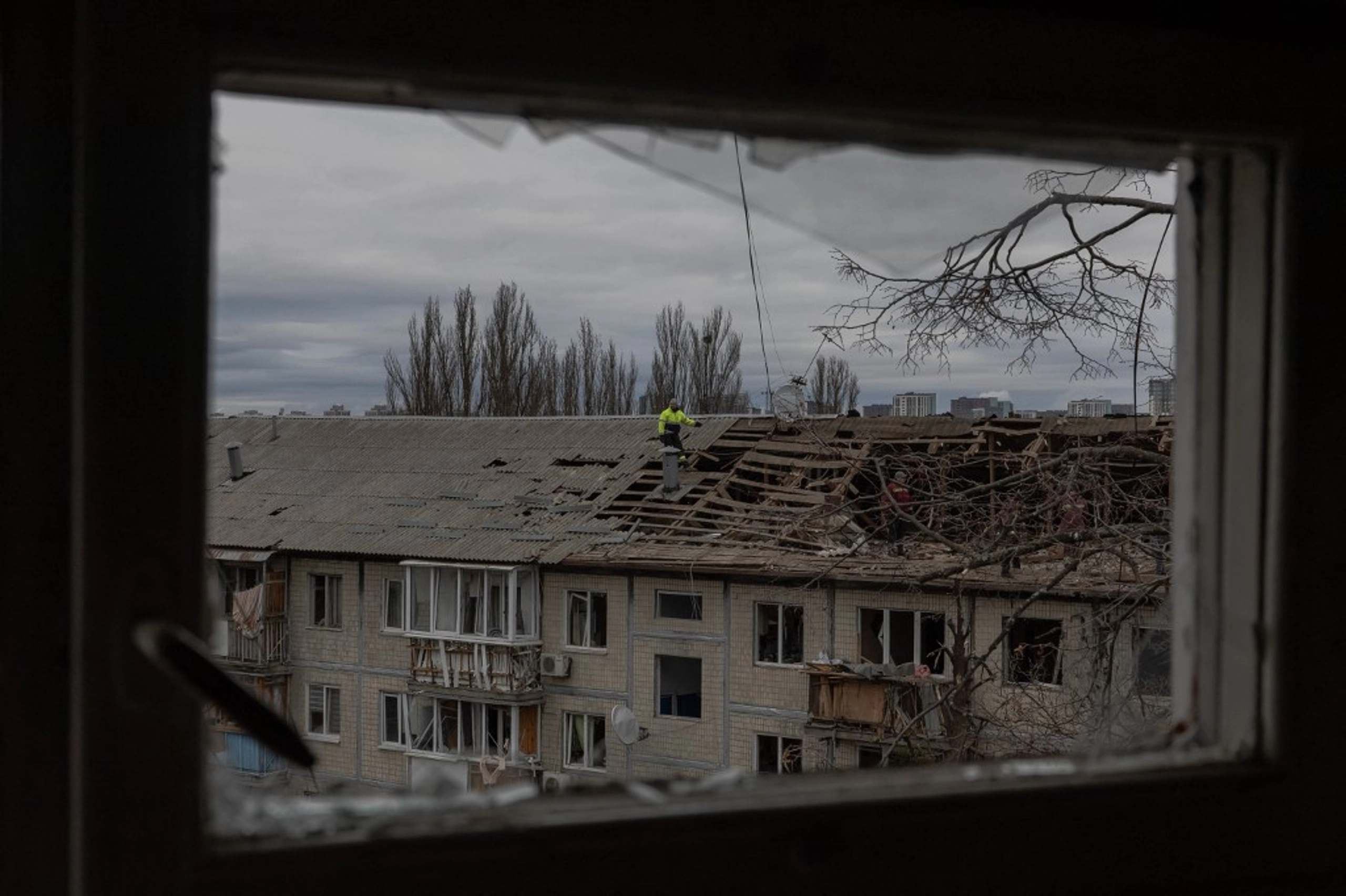
The timing is hard to ignore. Russian forces launched the sweeping overnight barrage – alongside waves of drones – targeting Kyiv and surrounding regions, triggering emergency shelter warnings across the capital in the early hours of Dec. 27.
Monitoring channels reported several Kinzhal hypersonic missiles, four Iskander ballistic missiles, and multiple Kalibr cruise missiles.
Kyiv Post correspondents reported loud explosions reverberating across the city, while Mayor Vitali Klitschko urged residents to take cover as air defenses scrambled to intercept the incoming threats.
For many in Kyiv, the strike felt less like coincidence and more like a message: the struggle over peace is still being waged on the battlefield.
Some residents took to social media, describing multiple explosions in the early morning hours as Ukrainian air defense systems lit up the sky.
Power outages were reported in Kyiv’s suburbs, while emergency services remained on high alert and authorities urged civilians to remain in shelters.

Ukraine's Banks Post Longest Credit Growth in 15 Years as Windfall Tax Threatens to Choke It Off
The assault fits a broader pattern of Russia intensifying missile and drone strikes during winter months, frequently targeting Ukraine’s energy infrastructure.
Previous waves of attacks have crippled power grids nationwide, plunging cities into darkness and compounding civilian hardship during freezing temperatures.
Diplomacy under fire
Against that backdrop, Kyiv confirmed that a meeting with Trump would take place on Sunday with Zelensky saying a joint US-Ukraine peace framework is now roughly 90 percent complete.
According to officials familiar with the talks, discussions are expected to center on security guarantees, reconstruction assistance, economic cooperation and unresolved territorial questions – including the future of the Donbas region and control of the Zaporizhzhia nuclear power plant.
Trump has positioned himself as a central broker in the conflict, hosting Zelensky this weekend at his Mar-a-Lago resort.
US officials say the goal is to finalize key pillars of the peace plan, even as uncertainty looms over how – or whether – Moscow would engage with the proposal.
Russia has publicly dismissed the talks, accusing Kyiv and its Western partners of attempting to “torpedo” negotiations. The Kremlin insists that any settlement must reflect its demands, including territorial concessions Ukraine has repeatedly rejected.
Still, behind the scenes, Kremlin officials have acknowledged the existence of indirect discussions with US interlocutors – though they have offered no sign that Russia is prepared to soften its position.
A senior Western official, speaking on condition of anonymity, told Kyiv Post that Moscow’s actions suggest it is less interested in talks than in shaping them. “The message from the Kremlin is simple,” the official said, adding: “They believe leverage is created by explosions, not by compromise – and they intend to arrive at any negotiating table with the battlefield tilted in their favor.”
Christmas barrage as signal
The latest strike followed closely on the heels of Russia’s Christmas barrage, which saw more than 650 drones and dozens of missiles launched across Ukraine on Dec. 23 alone.
That escalation, said Yuriy Boyechko, CEO of Hope For Ukraine, amounted to a blunt rejection of Western-led peace overtures.
“This deliberate escalation, targeting critical energy nodes during sub-zero temperatures, proves that Vladimir Putin is not merely seeking a territorial ‘freeze,’ but the total systemic collapse of the Ukrainian state,” Boyechko told Kyiv Post on Friday.
By weaponizing the holiday season to trigger nationwide blackouts, he said, the Kremlin is signaling to the incoming US administration and European allies that its maximalist goals remain unchanged.
“The timing of the strikes, coinciding with sensitive diplomatic discussions, underscores a strategy of ‘negotiation through fire,’ where civilian suffering is used as primary leverage to force a settlement on Moscow’s terms,” Boyechko said.
He added that the campaign reflects a longer-term vision in Moscow, pointing to Putin’s decree naming 2025 the “Year of the Defender of the Fatherland.”
“Far from preparing for a wind-down of hostilities, the holiday strikes highlight a pivot toward a permanent war footing designed to outlast Western political will,” Boyechko said.
War, peace effort – and an uncertain future
The strikes on Kyiv are more than another grim episode in a war that will soon enter its fifth year. They are a signal – from Moscow’s battlefield calculus – that Russia intends to shape any diplomatic outcome as much through force as through dialogue.
For Zelensky and Trump, the Florida meeting represents a pivotal opportunity to lock in the architecture of a peace plan.
But it comes with a stark reality: every step forward at the negotiating table risks being undercut by the next missile launched in the dark.
As one Western diplomat put it, “Peace talks may be scheduled on calendars – but for now, Moscow is still setting the tempo.”
And in Kyiv, that tempo is still measured in explosions.
You can also highlight the text and press Ctrl + Enter