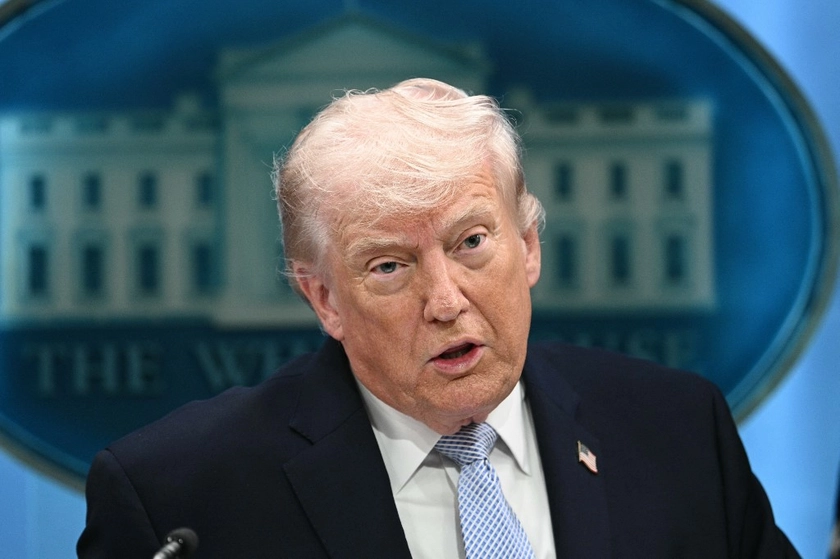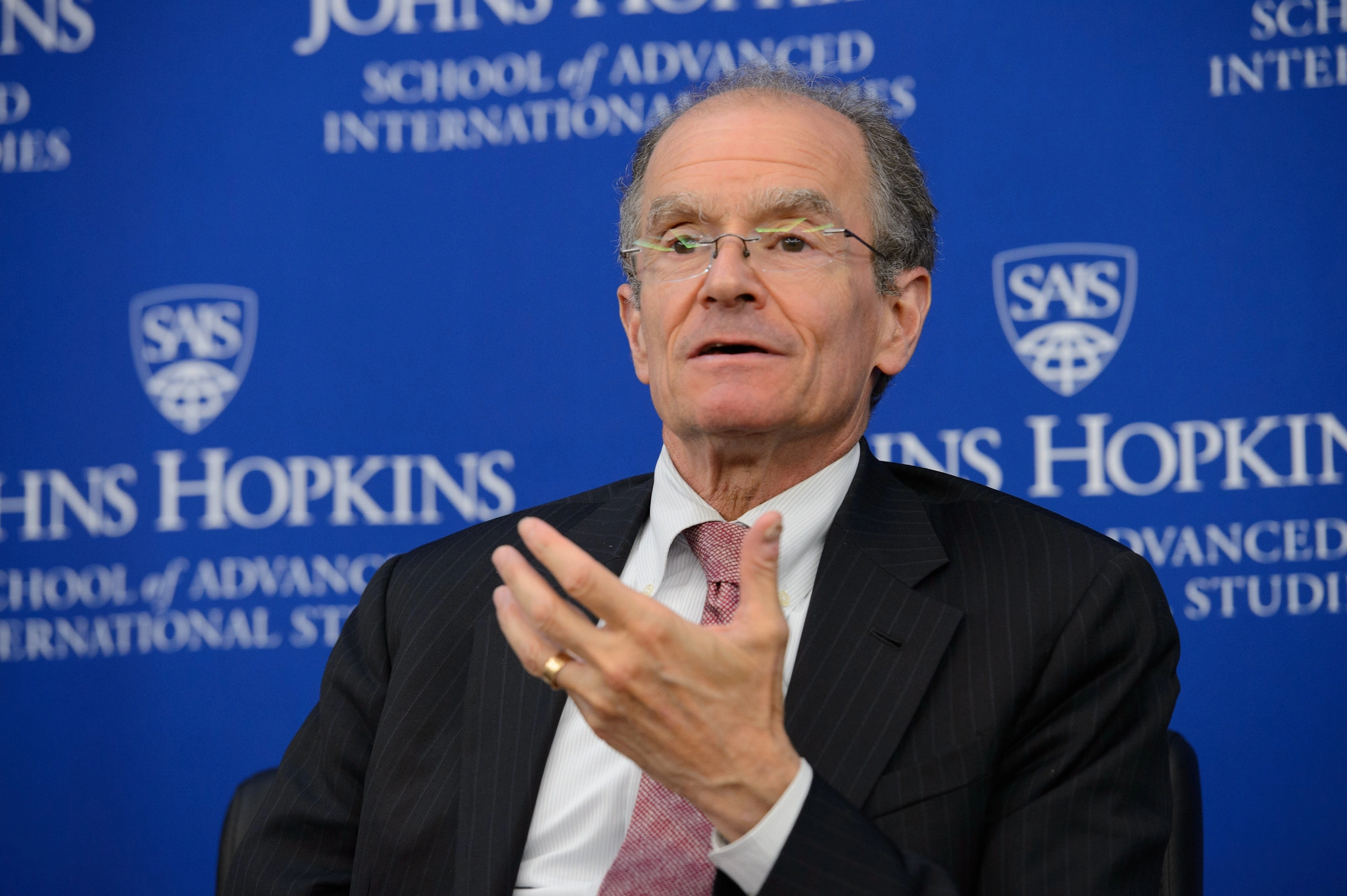
WASHINGTON, DC – As President Volodymyr Zelensky prepares for a crucial meeting with Donald Trump in Florida this Sunday afternoon, veteran US diplomat Daniel Fried – the former assistant secretary of state and longtime Russia expert whose career spanned seven administrations – offers a blunt prescription for Kyiv: frame Russia as the problem, not the compromise.
In an exclusive interview with Kyiv Post on Friday, Fried outlined Zelensky’s tactical approach.
JOIN US ON TELEGRAM
Follow our coverage of the war on the @Kyivpost_official.
“Zelensky’s tactical objective should be to position himself as a supporter of the emerging 20-point plan while making Putin the obstacle and seeking simultaneously to improve the 20-point plan,” Fried said.
Fried emphasized that the plan’s core centers on the location of the ceasefire line and security for Ukraine. “Zelensky is correct to resist the ceasefire line being moved to give Russia territory it has not won in battle,” he noted.
Fried warned against a traditional demilitarized zone (DMZ), citing Russia’s track record of ignoring obligations.
“A DMZ is fraught because Russia would not respect its own obligations, but if a third-party force were in the DMZ and no Russian forces at all, it might work. But extension of Russian control is a bad idea,” he said, adding: “Trump was right that the line should stand where it is.”
European forces and US backing
Fried advised Zelensky to push for European forces on the ground, supported by US airpower and intelligence, even if Moscow resists.
Germany Eyes PAC-3 Patriot Production Deal Ahead of Ankara NATO Summit
“Russia will try to veto security arrangements that include Europeans on the ground. Zelensky should try to convince Trump that it would be a US victory to have European forces in front, supported by US airpower and intelligence,” he said.
Kyiv and Washington have spent months developing a 20-point plan, which includes territorial compromises and long-term security guarantees. Yet, key questions remain unresolved, particularly concerning eastern regions partially or fully under Russian occupation.
European unity, global pressure
The US-brokered talks come after a flurry of diplomatic activity in Miami and Berlin, as NATO allies and European partners reinforce a unified front ahead of Zelensky’s meeting with Trump.
Germany’s Chancellor Friedrich Merz told Ukraine that Europe was “unwaveringly by your side” as Zelensky prepared for fresh talks in Washington on ending the war with Russia.
Merz commented on X after a phone call with the Ukrainian leader on Friday to discuss next steps in the US-brokered peace plan.
“A strong, coordinated European approach remains essential for peace, freedom, and security. The Berlin group is ready to help – closely coordinated with our US partners,” Merz wrote.
Zelensky noted that he had briefed Merz “on our work with the US envoys – we all recall the Berlin meeting format and the productivity that was achieved there.
This is exactly how we continue to work. We agreed to continue acting together with Europeans,” he added.
The mid-December summit in Berlin marked the first major Ukraine meeting involving the US, Ukraine, and leading European countries in an EU member state since President Trump’s renewed push for a peace solution in November.
Canadian Prime Minister Mark Carney also spoke with Zelensky on Friday, discussing the latest developments in ongoing peace talks.
“The Prime Minister affirmed Canada’s commitment to Ukraine throughout these negotiations and emphasized the need to maintain pressure on Russia to negotiate,” Carney’s office said.
Despite the diplomacy, tensions remain high. Russian Deputy Foreign Minister Sergei Ryabkov accused Ukraine of trying to “torpedo” negotiations, reflecting Moscow’s reluctance to compromise.
Strategic challenge for Zelensky
As Zelensky heads to Florida, Fried framed the strategic challenge in stark terms: Kyiv must thread a narrow needle – keeping Russia in check, safeguarding Ukrainian territory, and convincing Washington and European allies that their support will yield a lasting, enforceable peace.
Fried underscored that the meeting with Trump is more than a bilateral handshake; it is a moment to translate Kyiv’s leverage into concrete security guarantees while signaling to Moscow that any attempt to rewrite the rules on the battlefield will come at a political and strategic cost.
Zelensky’s task is to “make the case that the US benefits from this inevitable show of strength occurring in defense of a better deal,” Fried said, framing it as both a tactical and symbolic victory.
The stakes are existential in diplomatic terms: how Zelensky positions himself in these talks could define Ukraine’s negotiating posture for years to come.
It is a test of strategic patience, political acumen, and the ability to coordinate tightly with NATO allies.
Success means reinforcing the West’s credibility while keeping Russia constrained; missteps could embolden Moscow and fracture the fragile coalition of European and US support.
In Fried’s words, Kyiv’s overarching strategy should be simple but uncompromising: make Putin the obstacle, not the compromise. Lead with strength, exploit leverage, and ensure that every concession is framed not as a surrender, but as a calculated step toward a durable peace.
In the high-stakes arena of US-backed diplomacy, every move will be scrutinized, every word weighed, and every signal interpreted – not just in Washington and Berlin, but in Moscow.
You can also highlight the text and press Ctrl + Enter
OPINION: The New Line Kyiv Quietly Built Into NATO