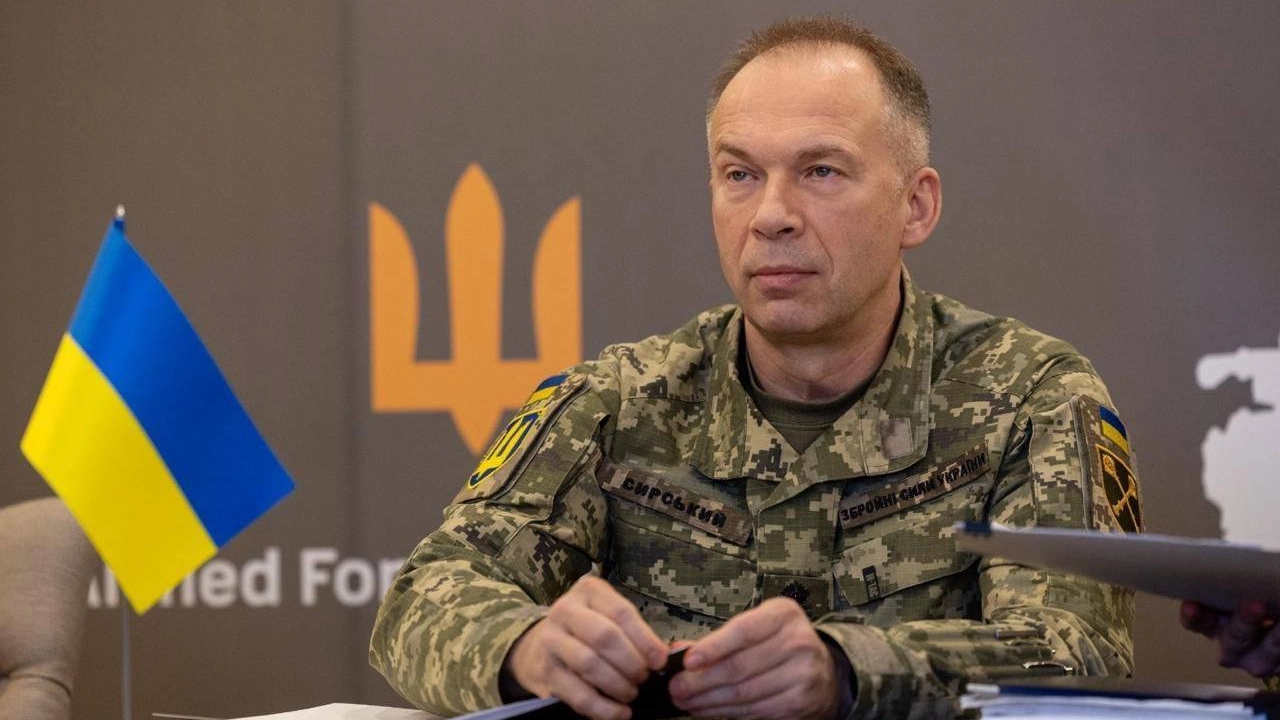
Russia’s army in 2025 failed to make useful ground gains at the price of crushing and, at times, debilitating casualties, vindicating the Ukrainian strategy of inflicting maximum losses against Kremlin forces in a war of attrition, Commander of the Armed Forces of Ukraine (AFU) General Oleksandr Syrsky said in a Tuesday statement.
Russia’s top military leadership over the past twelve months set itself the objective of ending its war against Ukraine with the total conquest of Ukraine’s southern and eastern Donetsk, Luhansk, Kherson and Zaporizhzhia regions, along with a planned takeover of the major seaport Odesa, and failed decisively to achieve any of those goals, Syrsky said in 12-month roundup published on his personal social media, and by AFU information outlets.
“The past year was a great test for us. The Russian aggressor sought to end the war against Ukraine – but planned to end it with defeat [of Ukraine], imposing his conditions on us from a position of force,” Syrsky said. “We did not allow the enemy to make critical breakthroughs, thwarted his plans, and repeatedly forced him to postpone the dates of planned operations.”According to most independent analysts, during 2025, Russian Federation forces, deploying 600,000-700,000 combat troops in Ukraine, using primarily infantry-heavy short-range assault tactics, captured between 5,000 and 5,500 square kilometers of Ukrainian territory. That land space represents slightly less than 1% of Ukraine’s total territory, or an area slightly bigger than County Donegal in Ireland, or the English county of Norfolk.
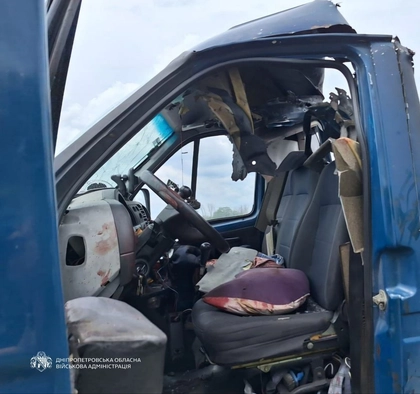
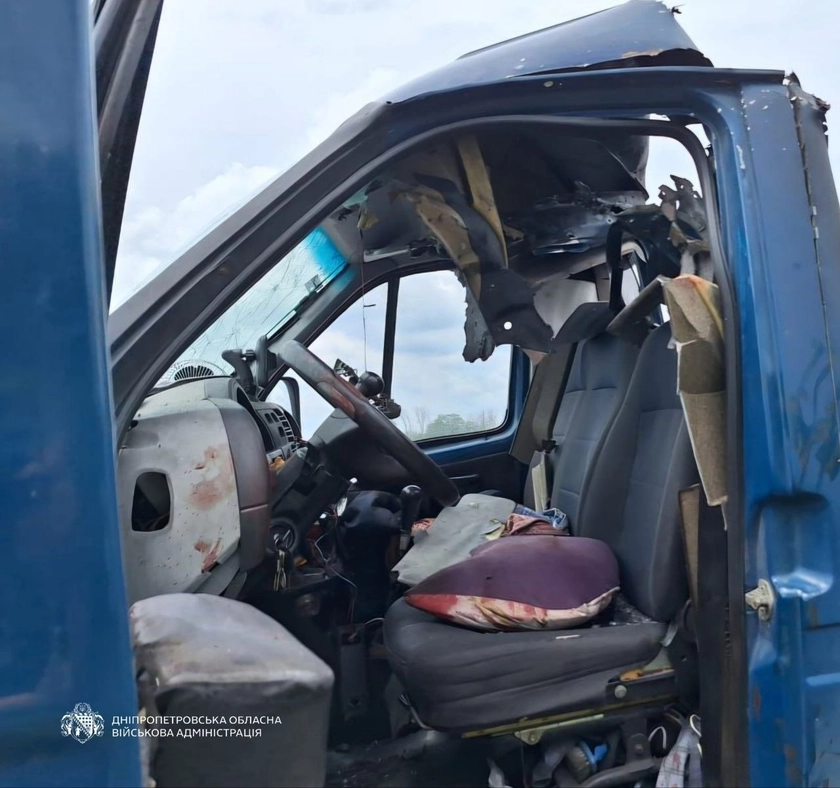
Russian Strikes Kill 2, Wound 17 in Dnipropetrovsk Region
Syrsky said the price paid by Moscow for those gains, by AFU calculation, amounted to at least 418,000 soldiers killed or seriously wounded in combat. Estimates by independent military watch groups, as well as Britain’s Ministry of Defence, are similar.
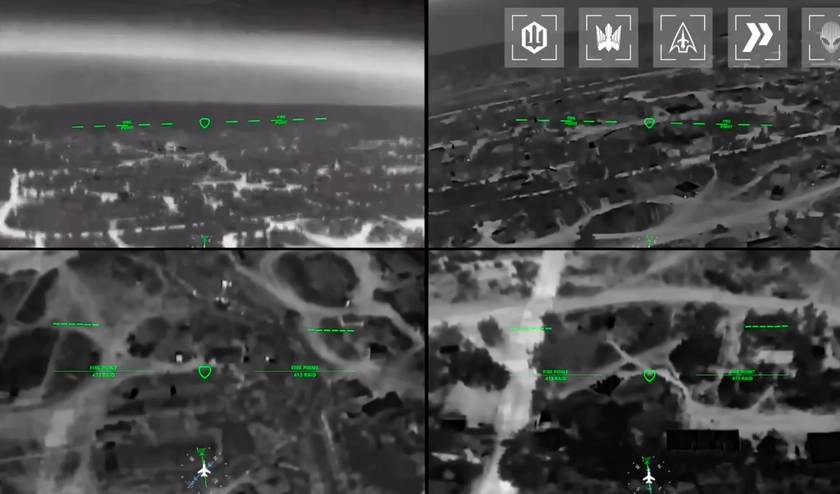
Ukrainian combat unit video and soldiers speaking to Ukrainian media, including Kyiv Post, say that dense clouds of First Person View (FPV), bomber and observation drones orbiting battlefields are the main engine of Russian combat losses. First used as an emergency measure to give frontline troops firepower following a US embargo on artillery ammunition deliveries to Ukraine in late 2023, drones – 95-99% of them domestically-manufactured - now account for at least half of all Russian military killed and wounded, operators say.
Syrsky claimed that the lethality of Ukraine’s defenses over the year had repeatedly forced Kremlin planners to delay or even cancel major offensives, because Russian assault units ran out of troops to carry out attacks.
“This year proved: we are capable of systematically exhausting the enemy and significantly reducing his potential. The defense forces did not allow the aggressor to implement his plans, preserved [Ukrainian] strategic positions and prepared the ground for further [AFU] operations,” Syrsky said.
Although Russian forces, over 2025, held the initiative and scored relatively small but unquestionable ground gains, Ukrainian forces during the year also conducted limited counterattacks, regaining lost territory. The most visible Ukrainian counterattacks took place in the eastern sector near the city of Pokrovsk, a named Russian major objective since mid-2023.
In fighting around the village of Dobropillya, to the northeast of Pokrovsk, in July and August, Ukrainian counterattacks surrounded and wiped out hundreds of Russian infantry that had infiltrated behind Ukrainian lines. In a similar defensive operation in October-November 2025, formations of Russian infantry infiltrated to the center of Pokrovsk city but were pushed back by Ukrainian assault troops in December.
Syrsky repeated a claim made by him and other senior AFU officers in early January, that the Ukrainian military was, for the first time in the war, killing and wounding Russian soldiers faster than the Kremlin can recruit them.
If true the ratio could become a potential breaking point for a Russian military needing to demonstrate continual ground gains so that the Russian state might claim it still is on a slow but inevitable path to victory in Ukraine.
According to independent analysts, the Ukrainian claim that Russia might be running out of troops is possibly true. That Russian units are at times suffering eviscerating combat losses is well documented, frequently in video of Ukrainian drones conducting swarm attacks on Russian infantry caught out in the open.
However, Moscow information outlets and senior officials have, since Russia’s February 2022 invasion of Ukraine, steadfastly maintained that the Russian state has never faced difficulty finding volunteers to fight in Ukraine, that Russia’s population stands behind Russia’s invasion of Ukraine, and that casualties inflicted by Russia are much heavier than the other way around.
Most independent analysts question the validity of Russian official claims of Ukrainian losses. On Tuesday, Russia’s Defense Ministry reported that since hostilities began, its forces had destroyed 670 Ukrainian combat aircraft and 283 combat helicopters – figures that, if accurate, would mean that Russia, since invading Ukraine, shot down the entire Ukrainian Air Force four times over.
Syrsky said of the AFU’s 2025: “We survived. Because our soldiers worked at the limit, with complete dedication, inflicting maximum losses on the occupiers... Thanks to the effective combat work of the Defense Forces, the enemy has not been able to increase its grouping (overall force numbers in Ukraine) for a long time.”
Syrsky referred only indirectly to Ukrainian casualty counts, a closely guarded Ukrainian state secret for its critical impact on military planning, internal politics and public morale, in his announcement stating AFU personnel losses had fallen 13% over 2025, as compared with 2024.
Manpower shortages are chronic across the AFU thanks to inefficient recruiting, controversial national law banning the conscription of men aged 18-24, absence of rest and recovery policy in most AFU units, and massive desertion, particularly by men volunteering at the start of the war and unable to transfer to safer billets after years on the front.
Syrsky’s reputation in the AFU is that of an old-school commander demanding discipline from troops and looking to defeat an enemy with large-scale operations. In September-December 2022, he led the AFU’s two most successful counteroffensives of the war – into the Kharkiv and Kherson regions.
Syrsky’s critics have accused him of micromanaging frontline units and bypassing mid-level headquarters to intervene with orders even in small-scale battles. Many are younger generation officers who came to mid-level command thanks to tactical skill and charisma rather than time served in the military. According to them, General Syrsky starves existing formations of men and materiel to create elite assault infantry units under his personal command, which increasingly carry out his counterattacks.
Ukrainian President Volodymyr Zelensky, in an early-January reshuffle of senior members of the national security leadership, transferred or accepted the resignations of, among others, the head of the national intelligence agency (SBU), the head of the Office of the President, and the defense minister. Syrsky was left in his job by Zelensky.
You can also highlight the text and press Ctrl + Enter

Putin’s Worst Nightmare