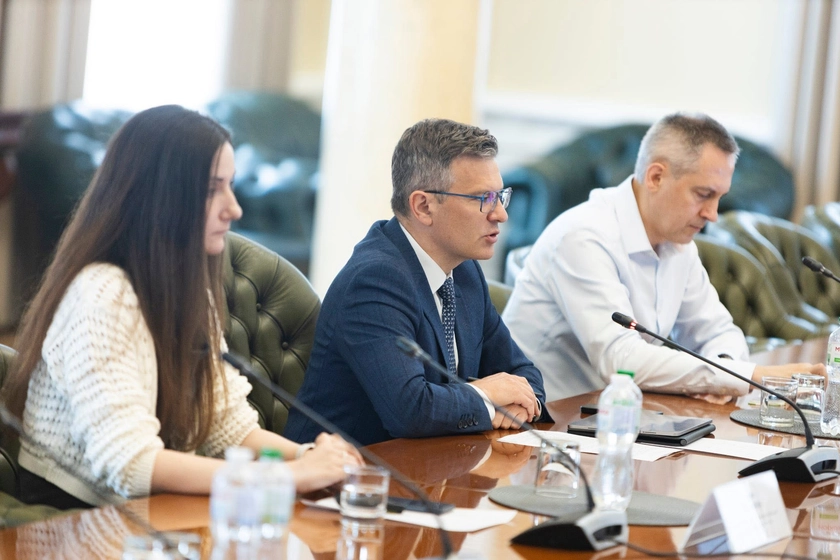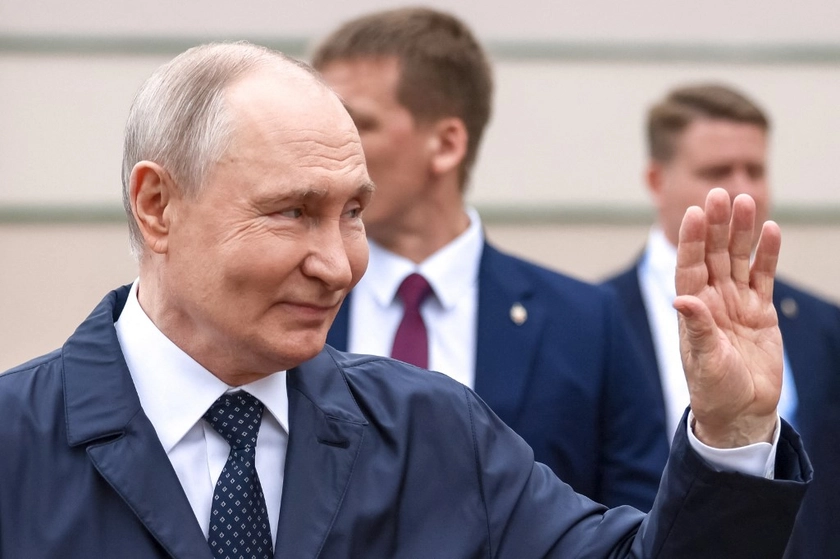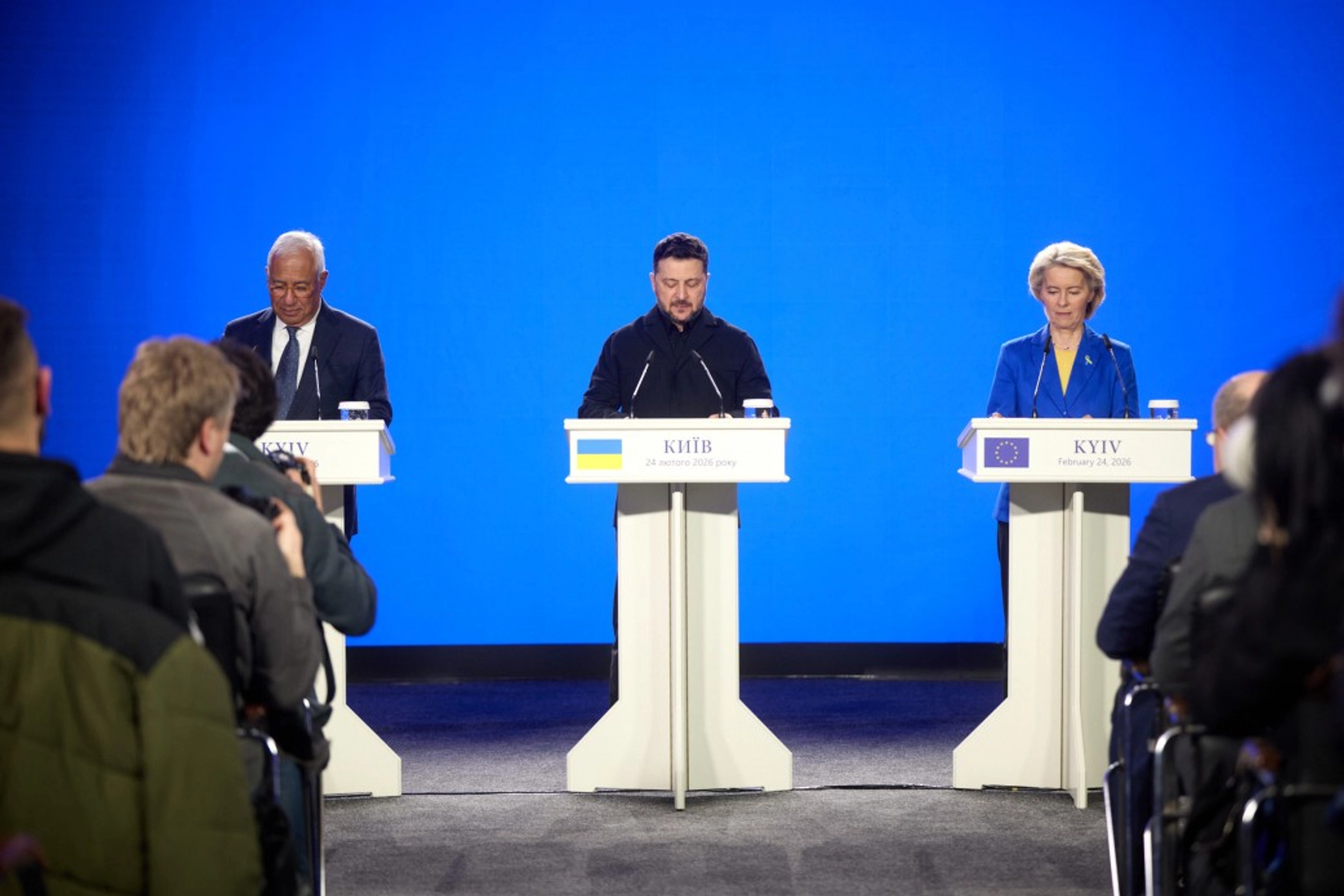
The EU bloc’s leadership duo, Ursula von der Leyen and António Costa, arrived empty-handed in Kyiv trailed by three mute commissioners. No fresh sanctions package and no €90 billion loan ready to deploy
Back in Brussels, the president of the European Parliament Roberta Metsola confused enthusiastic supporters of Ukraine by signing the loan into law – but with Hungary continuing to block the measure, the move is largely symbolic as the money cannot be raised or transferred.
JOIN US ON TELEGRAM
Follow our coverage of the war on the @Kyivpost_official.
Promising to get Ukraine into the bloc, as von der Leyen and other leaders did in the wake of Russia’s invasion, was always a long-term gamble. It’s now rearing its head in the shape of mounting Ukrainian frustration that, for all its appeasement, the EU cannot get a grip on Hungary’s wanton veto.
An awkward disagreement between von der Leyen and Volodymyr Zelensky live on stage exposed the limits of the EU’s high expectation setting.
Zelensky pressed for a commitment that Ukraine could join the EU by 2027 – an extremely short timeline for an accession process that normally lasts years and, for some candidates, has dragged on for decades or stalled indefinitely.
Addressing him directly, von der Leyen ruled out fixed deadlines. “The date you set is your benchmark that you want to match,” she said. “From our side, dates by themselves are not possible.”
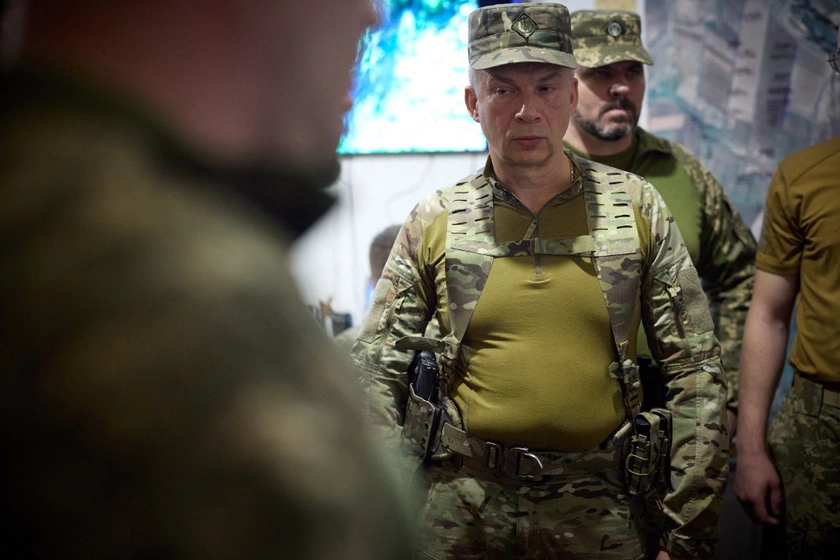
Ukraine’s General Syrsky: AFU Is Making Fair Progress vs Russia But No Victory Soon
It was a clear rejection of Zelensky’s demand for a specific date, let alone one as ambitious as 2027. In part, von der Leyen’s hands are tied by governments. Several EU ministers made it clear on Tuesday they are squeamish about letting Ukraine cut corners in its accession bid. Corruption and judicial independence are still big worries.
Zelensky framed a firm entry date as the only way to ensure Putin doesn’t block EU accession for decades. But the domestic political calculus may be more immediate. If a ceasefire or peace deal were to materialize, he would need a tangible political gain to offset painful concessions, including perhaps territorial ones.
There is some talk in Brussels of a fast-tracked or partial accession.
“I think we should be imaginative,” Commissioner Hadja Lahbib told Nicoletta and me. Valdis Dombrovskis said last night the EU is exploring “non-standard” tactics to speed up the process. Marta Kos, though, has explicitly rejected the idea of a two-tier membership model, warning it would risk creating “second-class” EU citizens.
In a sobering assessment of the war’s trajectory, former Ukrainian Foreign Minister Dmytro Kuleba last night described the belief that Kyiv could win back all its territory as “euphoria that we got trapped in.”
Could the same one day be said for the hype about a speedy Ukraine accession to the EU?
This is report by Eddy Wax and Nicoletta is reprinted from Euractiv’s Rapporteur Newsletter. See the original here.
You can also highlight the text and press Ctrl + Enter