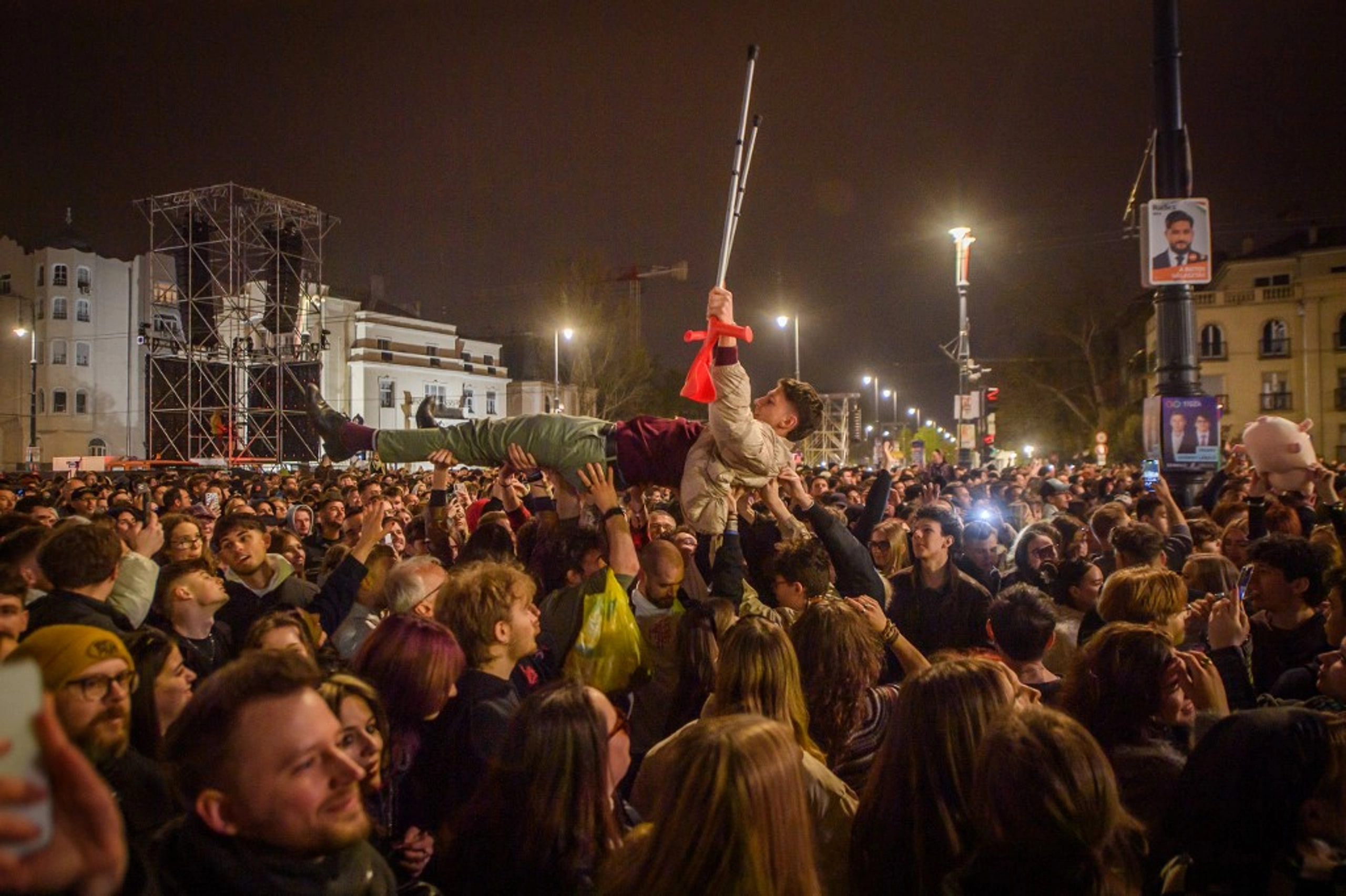
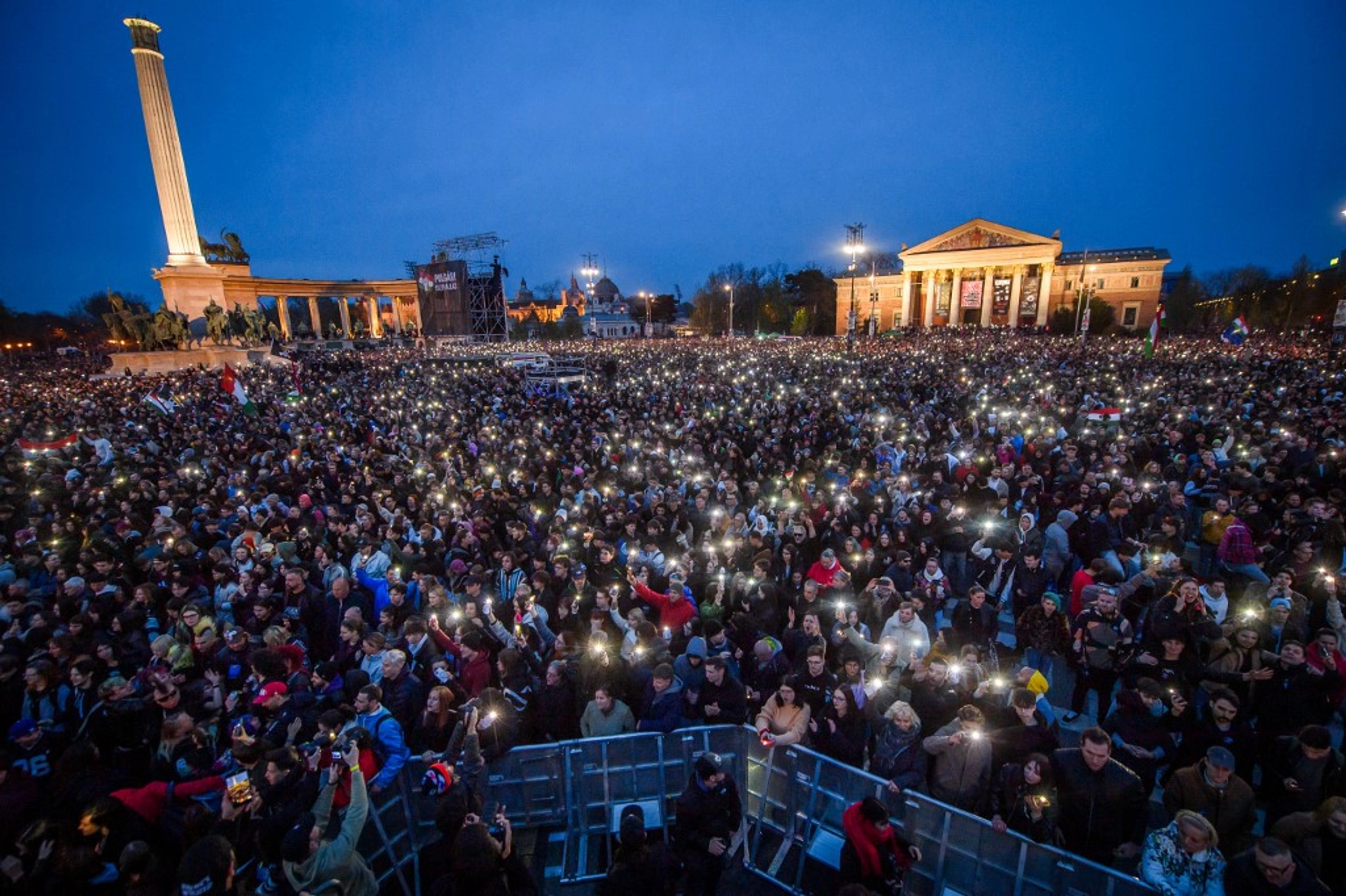
More than 100,000 people gathered on Heroes’ Square in Budapest on Saturday, April 10, for a massive concert-rally calling for the ousting of Prime Minister Viktor Orbán in Sunday’s parliamentary elections, AP reported.
The seven-hour event, organized by the “Civil Resistance Movement,” featured 50 musical acts. Organizers described the concert as a “system break,” aimed at signaling to voters that the “era of impunity is ending.” Participants, largely consisting of the nation’s youth, chanted anti-government slogans, including the historic “Ruszkik haza!” (”Russians, go home!”) – a cry from the 1956 Hungarian Revolution that has seen a resurgence due to Budapest’s deepening ties with Moscow.
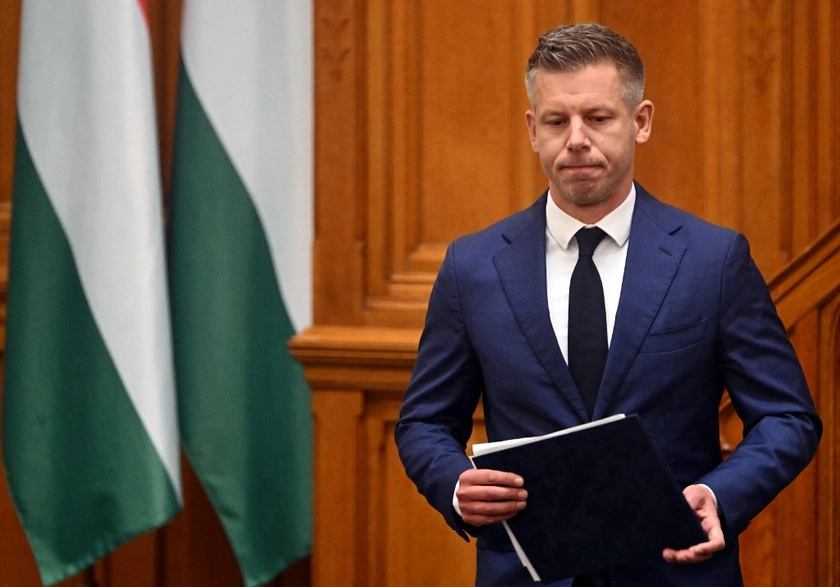
The major show of public discontent comes as polls show Orbán’s Fidesz party trailing behind Péter Magyar’s rising Tisza party, which currently leads with 48% support compared to Fidesz’s 39%.
Serbia to Reintroduce Mandatory Military Service by Next March
The election has drawn significant international attention. U.S. President Donald Trump publicly endorsed Orbán on Truth Social, urging Hungarians to “GET OUT AND VOTE FOR VIKTOR ORBAN.” Meanwhile, reports from Meduza suggest the Kremlin is bracing for a potential Fidesz defeat, preparing to label the outcome a “color revolution” orchestrated by the European Union.
Orbán, the EU’s longest-serving leader, has faced intense criticism for undermining democratic norms and acting as a “Trojan horse” for Russian influence within the bloc. Leaked communications recently suggested that Hungarian officials have coordinated with Moscow to weaken EU sanctions packages.
As Hungarians prepare to head to the polls on Sunday, April 12, the atmosphere in the capital suggests a high level of mobilization. “What happens in Hungary matters not only for Hungarians, but also for the EU, for Ukraine, and for the wider debate over the future of democracy in Europe,” noted Professor Daniel Kelemen.
You can also highlight the text and press Ctrl + Enter