Europe’s inability to counter the threat from Russia under its own defense spending is due to inefficiencies in the organization of European defense, inefficiencies in procurement, poor coordination, and pooling of resources to meet the threats and gaps. But Ukraine has shown what can be achieved with the use of technology on a much lower defense spend - probably $100 billion annually in defense spend by Ukraine has succeeded in stopping Ukraine in its tracks.
But it is what Ukraine and Turkey are doing in terms of how they are transforming their militaries and defense industries, with the use of technology, to max bang for buck, which Europe needs to follow. Doubling defense spending will likely just see spending going to the same primes, which have not shown a particular ability to stay ahead of the times and keep to budget in key defense procurement projects.
JOIN US ON TELEGRAM
Follow our coverage of the war on the @Kyivpost_official.
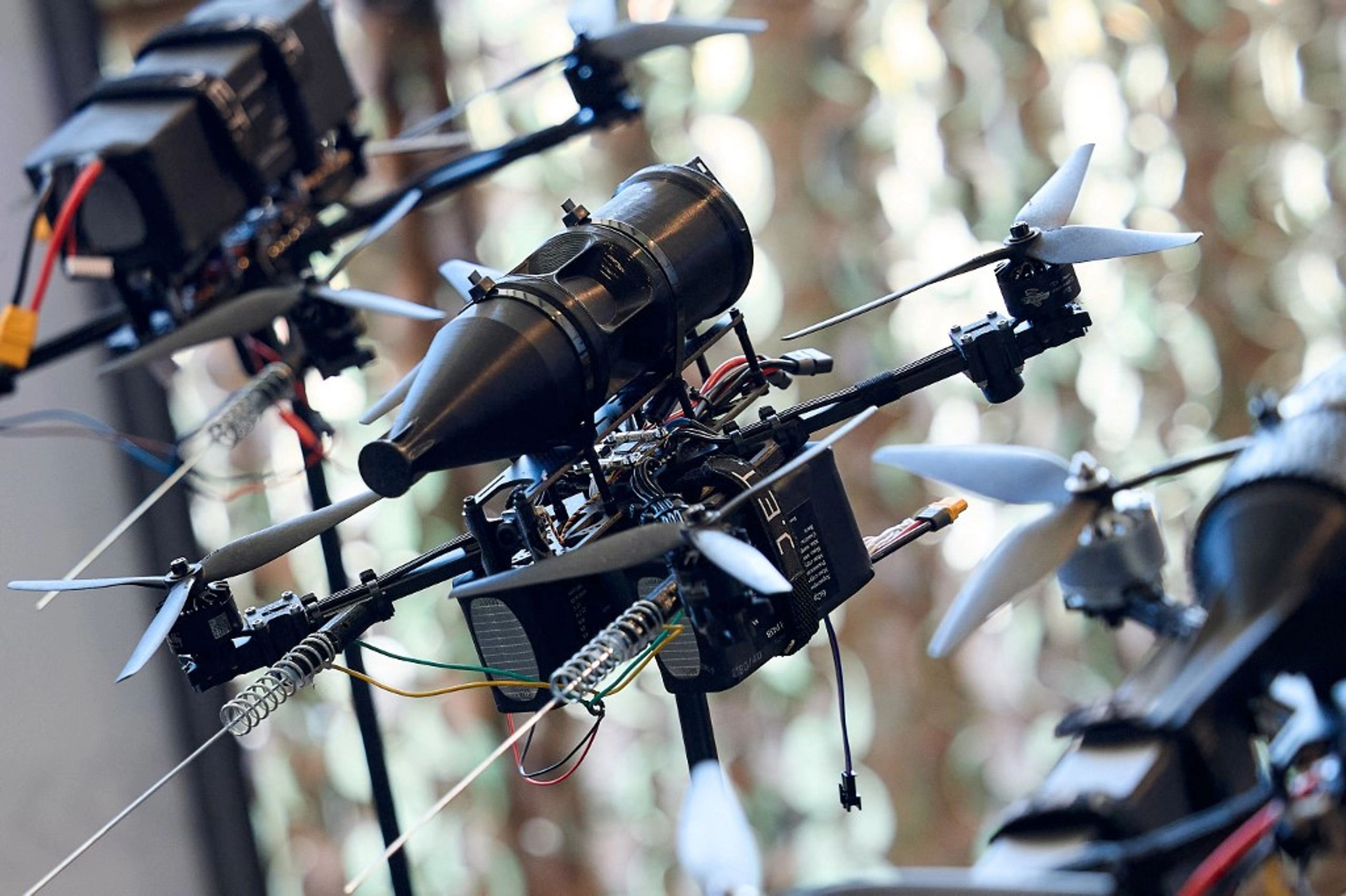
And in an era of innovation, or iteration warfare, as being fought out in Ukraine, likely it will be new drone domain forces that lead the way in terms of fighting the wars of the future and crafting military industrial sectors to fit.
In a world of uncertain geopolitics, likely higher global defense spending, and a bigger defense tech market to go with it, I would say a route to moving up the global value chain is in partnering with Ukraine in the defense tech space.
Ukraine is at the leading front of drone warfare now - without a doubt, it is winning the battle of iteration against Russia but still needs cooperation with European partners to secure financing and scale. Winning against Russia in Ukraine is about maintaining the iteration edge and then moving to scale - we are seeing that in Deep Strike drone attacks on Russian energy infrastructure.

Culture as Resistance: Georgian Violinist Performs in Lviv
Europe should look to integrate Ukrainian defense tech companies and capabilities into its own military-industrial supply chains. This is now mission-critical for European defense and the broader future of the European economy, as defense tech can be a locomotive for innovation across the economy.
On the issue of innovation in defense tech, I was struck by a recent paper by the former Prime Minister of Ukraine, Oleksiy Honcharuk, “Time Domain: a new dimension of the battlefield, revealed by the experience of the Russo-Ukraine war,” LSE, May 2026.
Oleksiy was the youngest prime minister in Ukraine’s history when Zelensky appointed him in 2019, and he later became a naval drone pilot. As you do, in Ukraine these days.
Oleksiy reveals how Ukraine does so much with so much less, and a key rethinking of warfare, as well as the domains of warfare.
Ukraine has established a separate drone domain to run alongside the usual military domains - air, navy, army, et al. And within the drone domain, there are 12 competing and largely autonomous drone units. They are responsible for their own R&D, procurement, and receive funding based on results.
This organizational structure is the key to Ukraine’s current drone tech advantage - a very decentralized approach as compared to the almost command economy approach of the Russian side. It’s easy to imagine the 12 Ukrainian drone units emerging as new defense primes post-war - I can almost hear the investment bankers gearing up for their IPOs. But Europe should be partnering with these entities to learn from their battlefield experience and to moonshot their own defense capabilities into the real world, as has been revealed in the war in Ukraine.
The point in all the above is that the Ukraine war and the Iran war, ongoing, have revealed the complete transformation in the nature of warfare, the importance of military industrial complexes and defense tech. It’s not only about how much you spend on defense, but how you spend that money, and NATO is, I think, still stuck in the mindset of the traditional defense domains - navy, air force, army, et al - egged on by the old primes and not understanding the need to rethink the whole structure of defense.
Just doubling defense spending, as seems to be the logic at present in response to the Russian threat, will just cement existing inefficiencies and rigidities. At 2% of GDP, defense spending in Europe is already getting terrible value for money; doubling it will just double the inefficiencies. And existing milking cow primes are never going to say no, as they ate the winners from the existing inefficiencies.
But we need to rethink the whole ecosystem of defense tech in Europe, as the Ukrainians have done, to ensure our own defense and also provide a leg up for the value-added production chains in our economies.
The Ukrainians changed the way they structured defense tech as they had to, given the existential threat from Russia, limited defense supplies, and Western financing. Europe needs to do the same. Needs must.
The above is an excerpt from the author’s latest article on his @tashecon blog. See the full text in the original here.
The views expressed in this opinion article are the author’s and not necessarily those of Kyiv Post.
You can also highlight the text and press Ctrl + Enter