Poland is right to insist that the truth about Volhynia must not be blurred. But moral clarity about the past is not the same as strategic wisdom in the present, and Warsaw’s escalating dispute with Kyiv over Ukraine’s decision to honor the Ukrainian Insurgent Army is turning a legitimate grievance into an act of political self-harm.
Poland risks deepening its marginalization from key discussions on Ukraine’s future while jeopardizing both its role in the country’s reconstruction and the relationship that underpins Warsaw’s regional ambitions.
JOIN US ON TELEGRAM
Follow our coverage of the war on the @Kyivpost_official.
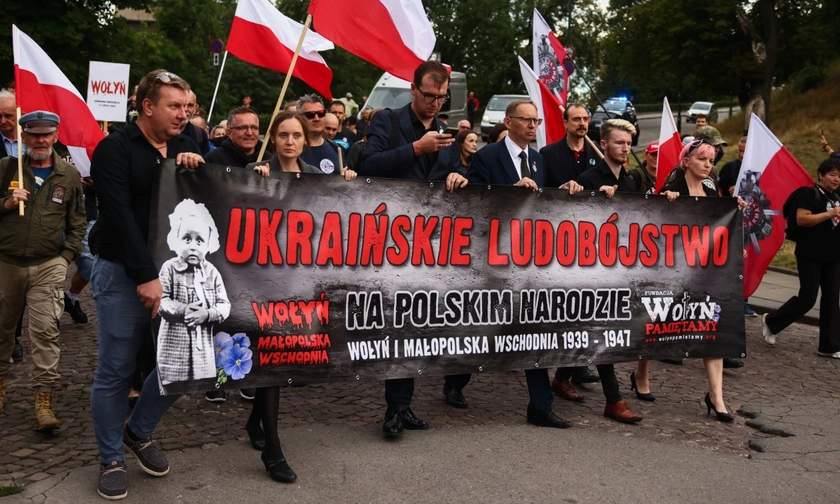
The Ukrainian Insurgent Army (UPA) was a nationalist formation whose units carried out the killings of an estimated 100,000 Polish civilians in Volhynia and Eastern Galicia between 1943 and 1945, in what is now western Ukraine. The massacres remain among the most painful chapters in Polish historical memory, and Poland officially recognises them as genocide, a characterisation that Ukraine rejects.
Against that background, President Volodymyr Zelensky’s decision on May 26 to grant a Special Operations Forces unit the honorary title “Heroes of the UPA” was genuinely painful from the Polish perspective. It reopened the most sensitive historical wound in a relationship that, despite recurring frictions over memory, has otherwise been defined by solidarity since Russia launched its full-scale invasion in February 2022.
Hungary’s Ruling Tisza Party Introduces Legislation to Overhaul State Media
The cost of escalation
The question is at what cost Poland is now responding. On June 25–26, Poland is due to co-host the Ukraine Recovery Conference in the Baltic port city of Gdańsk, the flagship international event for mobilising support and investment for Ukraine’s reconstruction. Warsaw’s strategic ambition has been not merely to participate in that process, but to help shape it. That ambition is now at risk.
Poland’s President Karol Nawrocki moved to put it at risk himself when he asked the chapter of the Order of the White Eagle, Poland’s highest state honor, to consider stripping Zelensky of the decoration he received in April 2023 for strengthening bilateral ties and supporting democracy and security in Europe.
Nawrocki’s office indicated only that the president “will make a decision in due time,” a formula suggesting the initiative may be losing momentum rather than building toward a swift conclusion.
The damage, though, has not waited for a final decision. The mere act of opening the revocation process sent a powerful political signal to Kyiv, deepened bilateral tensions and reinforced the perception that Warsaw is allowing a dispute rooted in 1943 to override its own strategic interests in 2026.
Polish Prime Minister Donald Tusk has warned of the danger that “cooperation is in the interests of both our countries and peoples, whereas conflict is in Moscow’s interests,” as he appealed for direct talks between the two presidents.
Poland will remain involved in Ukraine’s reconstruction regardless, due to geography and its role as a logistics hub, but there is a growing danger that it ends up as a petitioner rather than a decision‑maker, excluded from the small circles where the key political and economic choices are made.
All of this stems from Nawrocki’s effort to throw some red meat at nationalist voters. The backlash has spread well beyond the presidency, with Law and Justice (PiS) MPs and other conservative politicians renewing calls for Poland to block Ukraine’s EU accession process.
The question is whether turning that leverage into a veto campaign is worth the cost: sacrificing influence over Ukraine’s future, weakening Poland’s position in reconstruction, and further marginalizing Warsaw from the forums where Europe’s security architecture is now being shaped.
The exclusion that came first
Poland’s predicament runs deeper than the question of Zelensky’s medal. Long before the latest row over the UPA, the country had already found itself punching below its potential in discussions about Ukraine’s future security arrangements, even as it remained one of Kyiv’s most important military and humanitarian backers.
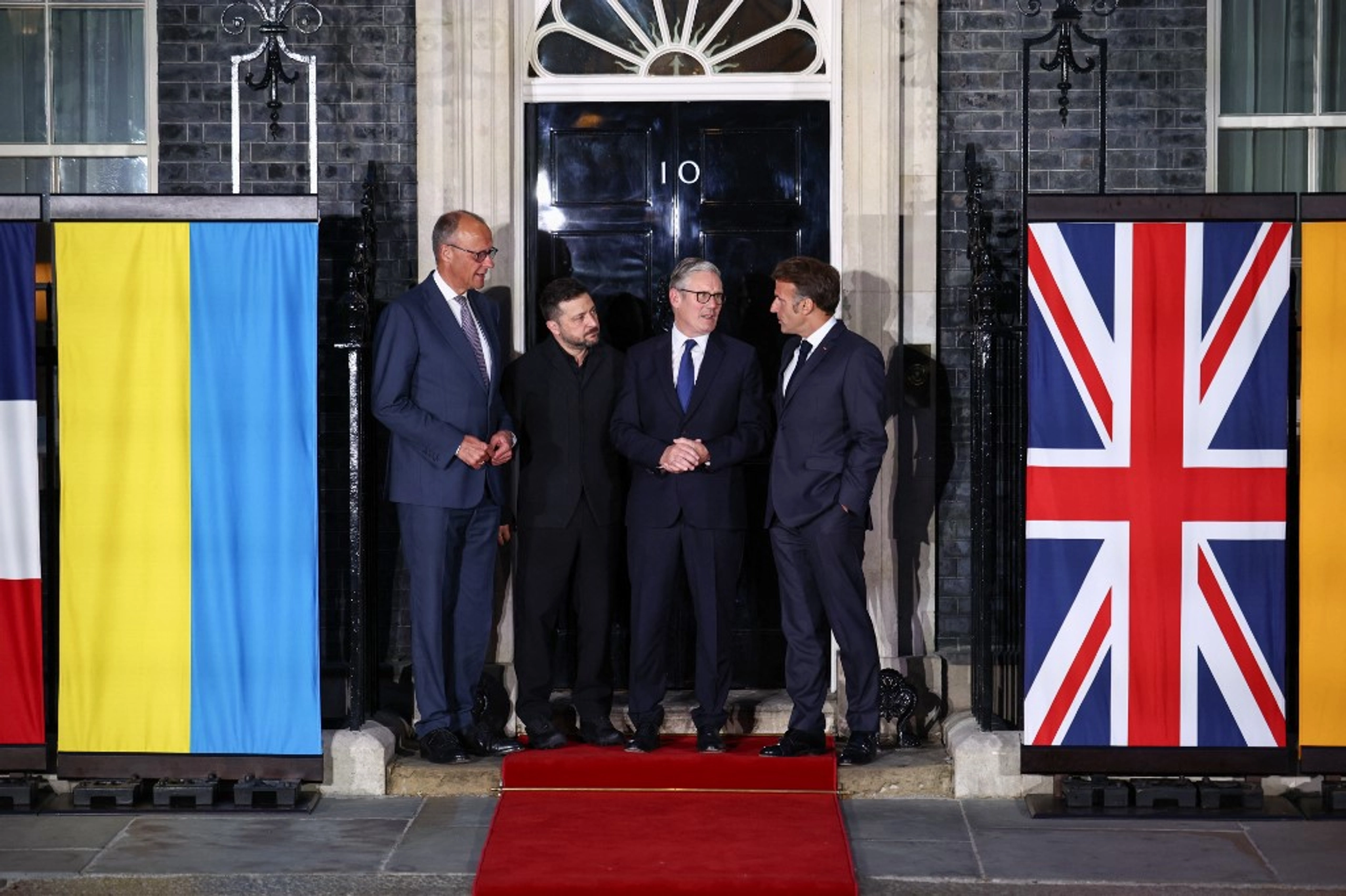
Warsaw has already been left outside several high-profile diplomatic formats shaping Ukraine’s endgame – from the October 2024 Berlin meeting of core Western leaders to the Geneva and London talks in late 2025 over peace proposals and security guarantees. On June 7, the UK, France and Germany again met Zelensky in London as the informal E3 group and set out five principles for any future settlement. Poland’s absence from such formats is becoming harder to dismiss as incidental.
Part of the reason lies in the fact that Poland has ruled out sending troops to any hypothetical post‑ceasefire force in Ukraine, focusing instead on its role as the alliance’s logistical backbone through the Rzeszów‑Jasionka hub, the main gateway for Western military aid since 2022.
That position is understandable, but it has consequences: the countries driving discussions on long‑term security guarantees are largely those prepared, at least in principle, to put soldiers on the ground. Poland’s relative absence from that inner circle began well before the current historical dispute. What the UPA row does is make it easier for others to justify keeping Warsaw at arm’s length, cloaking a broader pattern of exclusion in the language of values and historical sensitivity.
Two weeks to Gdańsk
Poland has placed an enormous economic bet on Ukraine’s reconstruction. Poland’s Prime Minister Tusk has described it as a national economic strategy, warning that Poland must not repeat the pattern of Iraq, where many countries contributed but only a few major players reaped most of the benefits.
More than 3,000 Polish firms are now involved in or bidding for reconstruction‑related projects, from infrastructure and housing to energy and logistics. The Sławków Euroterminal in Silesia, a key rail-freight hub in southern Poland, is being expanded to nearly double its handling capacity and strengthen east-west cargo flows, including those linked to Ukraine’s reconstruction. A UN Office for Project Services (UNOPS) office in Warsaw is also helping support Polish private-sector participation in UN projects connected to Ukraine’s rebuilding.
The Gdańsk conference is intended to crystallize that position. Poland helped shape this year’s agenda, adding a security and defense dimension that links Ukraine’s recovery to its long‑term protection, and officials have presented hosting rights as recognition of Poland’s regional role.
Yet the conference approaches while the medal decision remains unresolved, and amid visible signs of cooling at the top. Zelensky’s recent travel route to London – via Chișinău rather than directly through Rzeszów, the Polish airport that has often served as a transit hub for Ukrainian leaders since 2022 – was widely read as a deliberate signal of displeasure toward a partner now publicly debating whether to dishonor him.
No eastern flank without a partner
Poland’s ambitions for regional leadership cannot be separated from its relationship with Ukraine. Key initiatives championed by Warsaw, including the Three Seas Initiative, the Bucharest Nine and the Poland-Ukraine-Lithuania Lublin Triangle, are all strengthened by sustained cooperation with Kyiv.
This is unfolding at a time when Ukraine is increasingly becoming a security and deterrence provider, not merely a recipient of protection. It now maintains armed forces of roughly one million personnel, giving it one of the largest and most battle-tested militaries in Europe.
The Baltic states, once Ukraine’s most vocal advocates for external protection, now increasingly describe it as a pillar of regional security in its own right.
In April, Estonian Foreign Minister Margus Tsahkna argued that the region now needs “security guarantees from Ukraine,” a reframing that complicates Poland’s claim to a singular leadership role on NATO’s eastern flank.
Another uncomfortable truth is that a Poland that builds and maintains the armored belt protecting NATO’s eastern approaches while exercising diminished political influence over European security decisions is close to Germany’s ideal eastern neighbor.
In that context, the fight over Zelensky’s medal does nothing to strengthen Poland’s position: it only deepens the isolation that is already costing Warsaw influence, access and leverage.
See the original here.
You can also highlight the text and press Ctrl + Enter