This is the second in a Kyiv Post series on Ukraine’s recently launched operation targeting Russian military logistics at mid-range distances from the front lines, with the declared objective of damaging Russian army units’ capacity to fight effectively by using unmanned aerial vehicles (UAVs) to attack Russian supply routes and logistics.
The first article in the series, focusing on the aircraft used by the Armed Forces of Ukraine (AFU) in that ongoing strike campaign, is here.
JOIN US ON TELEGRAM
Follow our coverage of the war on the @Kyivpost_official.
The Ukrainian concept
In mid-April, Ukraine’s elite Unmanned Systems Forces (USF), announced that its pilots and ground crews were expanding flight operations to focus on “middle-strike,” or drone combat missions roughly 50-150 kilometers (30-110 miles) behind the front. The announcement chronologically came shortly after the collapse of Russia’s spring offensive in Ukraine, which failed to gain ground (and in some sectors even lost ground) because of unprecedentedly dense Ukrainian tactical drone coverage of positions forward of Ukrainian lines.
By mid-May, Russian air defenses and ground units reported a new presence of small numbers of Ukrainian medium-range drones operating in the Sea of Azov region, especially in the Russia-occupied Kherson and Donetsk territories of Ukraine – but attacks were scattered.
At the time, most Kremlin outlets identified the main Ukrainian drone threat as Ukrainian long-range drones seeking out Russian oil refineries, swarms attacking defense-related facilities like the Sterlitamak Petrochemical Plant, some 1,500 kilometers (932 miles) deep inside Russia on April 15, or the drone strikes by Ukrainian military intelligence which heavily damaged two Russian Black Sea Fleet landing ships in Sevastopol Bay on April 18-19.
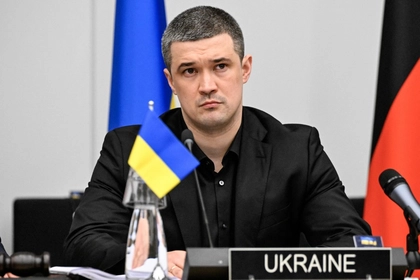
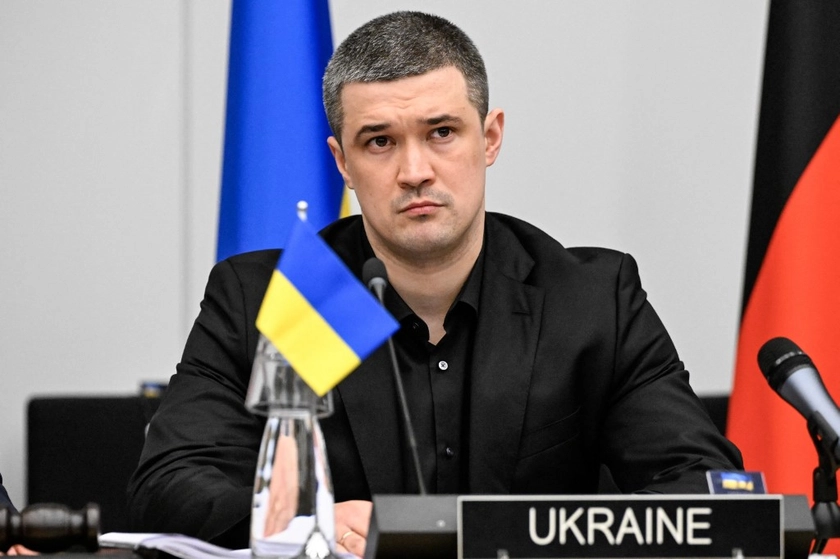
Ukraine Regained Battlefield Initiative but Needs More Aid to Keep It – Fedorov
In an April 29 Telegram statement following a briefing from Defense Minister Mykhailo Fedorov on drone supplies, President Volodymyr Zelensky said Ukraine’s short- and long-range strikes would continue but also expand, saying in part: “One of our priorities for the coming months is middle strikes – that is, targeting the enemy at a depth of up to 120-150 kilometers.”
He specified that primary targets would include enemy military logistics, depots, command posts, air defense systems, and other components of Russia’s offensive activity against Ukraine.
Driving the increased volume of mid-range attacks was a fivefold increase in contracted mid-range strike assets in 2026 compared to 2025.
Ukrainian media pointed to Western aid, particularly a €248 million ($293 million) Dutch investment announced April 15-16 for joint drone production in both countries. Fedorov, in a May 27 statement, formally launched the campaign, allocating an additional Hr.5 billion ($111 million) for procurement and giving the operation a name: Logistics Lockdown.
“We are launching a logistics lockdown of the Russian army and scaling up middle-strike attacks on enemy rear areas,” Fedorov said. “Our task is to further increase pressure on the Russians behind the front line and deprive them of the ability to conduct active assault operations.”
By the time Fedorov made that announcement, according to USF daily sitreps on drone sorties and targets attacked, Ukraine’s drone forces were flying 4,000-5,000 combat sorties 24/7, and at least a third of them were concentrated in the roughly Belgium-sized slice of southeast Ukraine that is occupied by Russia: southern and central Donetsk region, southern Zaporizhzhia region, southern Kherson region, and the Crimea peninsula. The actual sortie count is almost certainly greater because clandestine special operations units and selected drone teams normally assigned to combat brigades are reinforcing the USF-led strike campaign.
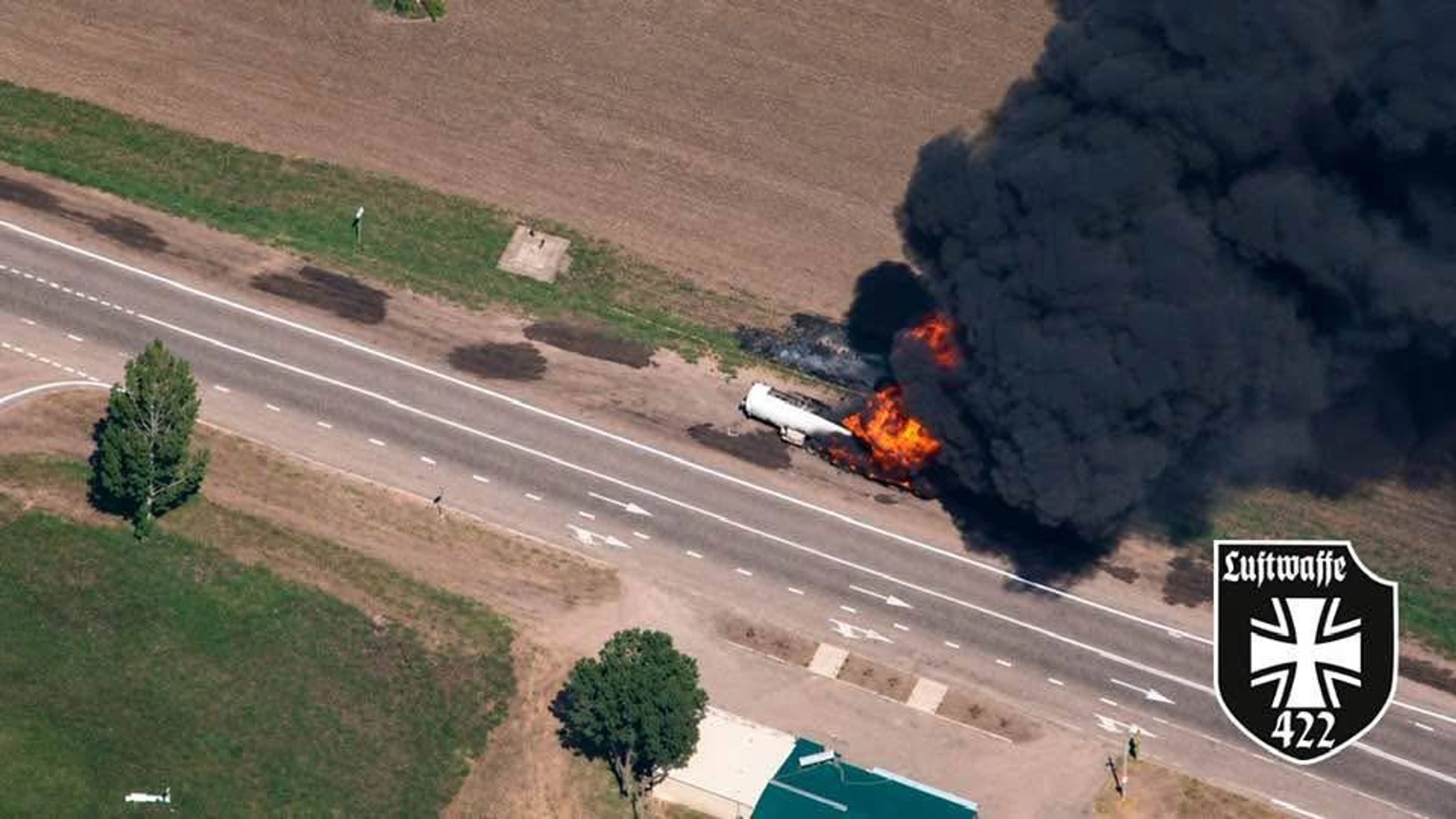
Based on reports from those units, the highest-priority targets have been military vehicles, fuel tankers, and cargo trucks moving in that region, rail junctions facilitating movement between the Russian mainland and Crimea, and depots and warehouses holding military material that supplies Russian combat units farther north, at ranges formerly inaccessible to Ukrainian drones in quantity. The M-04 highway connecting the cities of Donetsk and Mariupol, the M-14 highway running from Rostov inside Russia through occupied Mariupol to occupied Melitopol, and the R-280 “Novorossiya” highway between Melitopol and destinations in Crimea have seen the densest drone swarms and the most damaged and destroyed Russian vehicles.
Laying the groundwork: Russian air defenses
In March 2026, the airspace above southeast Ukraine and Crimea was among the best defended in the world, with dozens of veteran Russian army air defenses having been on the ground for three or four years already, and the sky monitored by the Russian Federation’s Air and Space Force’s powerful fleet of air watch aircraft and observation satellite constellations. Equipment on the ground included the powerful S-400/500 missile system, a weapon touted by Moscow as the world’s best.
The Ukrainian campaign that broke down those air defenses, piece by piece, took place from January to April 2026.
Each attack was a complex operation usually requiring distraction and timing so one of several Ukrainian-launched drones could reach and hit the targeted Russian air defense system. In most attacks, pilots and on-the-ground agents from Ukraine’s SBU intelligence agency and HUR military intelligence agency carried out the missions.
In January, working with both SBU and HUR operators, a Ukrainian drone unit specializing in attacking difficult targets (the 412th USF Brigade “Nemesis”) destroyed about $250 million of top-end Russian air defense systems deployed to southeast Ukraine, including five heavy anti-aircraft missile systems, a medium anti-aircraft missile system, and a rare long-range air watch radar. In March 2026, USF units shifted to blitz tactics and, in about 40 days, destroyed 20+ Russian air defense systems, including an S-400 top-end air defense system, a Pantsir-S1 system (specifically designed by Russia to shoot down drones), as well as medium-range Buk air defense systems and rare air watch radars.
By the end of April 2025, according to USF figures, Russian air defenses across Crimea and other occupied territories had taken $1.1 billion in losses with 25 anti-aircraft missile systems +13 radars or electronic warfare systems destroyed or rendered ineffective long term.
Intelligence edge
Probably the most important technological edge wielded by Ukraine in its middle-strike campaign is the fruits of a January agreement with the US private company Vantor to supply Ukraine with near real-time satellite intelligence, including of Russian traffic moving on occupied territory roads.
The US government was Ukraine’s main supplier of satellite intelligence until March 2026, when a Kremlin-friendly White House cut Ukraine off. At the time, CIA Director John Ratcliffe said President Donald Trump ordered the information choked off because he questioned whether “Zelensky committed to the peace process.”
National Security Adviser Mike Waltz said the White House was “reviewing all aspects” of its relationship with Ukraine and Russia and had “taken a step back.”
As reported by the Wall Street Journal, the Vantor deal gives Ukrainian operators updates about every 15 minutes on territory overflown by Vantor observation satellites that is shared with AFU intelligence fusion networks, reducing the time lag faced by the Ukrainians for satellite information from the Americans – usually a day or two – to usually less than an hour. Reportedly, the Dutch and Ukrainian governments are financing the Vantor intelligence feed.
By early May, not just Russian driver chat groups but Russia-loyal officials in occupied southern Ukraine were warning that every meter of the highway between Rostov, Russia, and Simferopol, Crimea was being observed by Ukraine’s armed forces, and subject at any point to a drone strike.
Priority targets: fuel and roads
Ukraine’s bombardment campaign of Russian energy infrastructure dates back to July 2025 and has reached as deeply into Russia as the Ural Mountains, with the strategic objective of reducing Russian oil exports and Russian state income for weaponry.
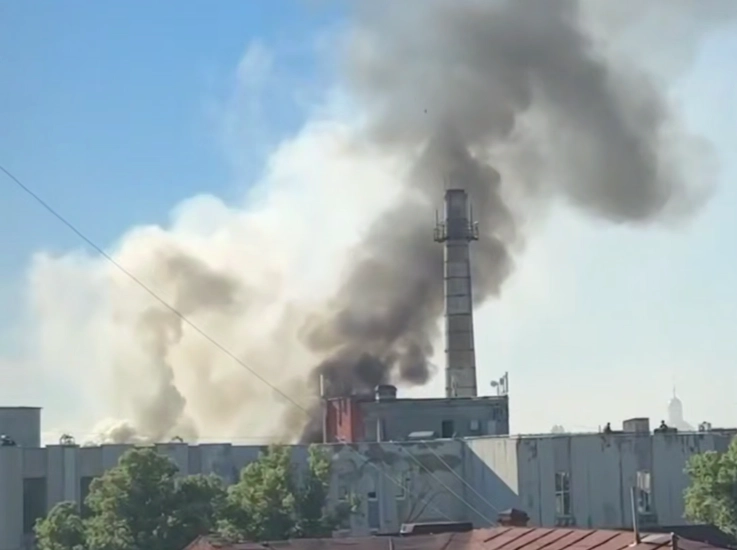
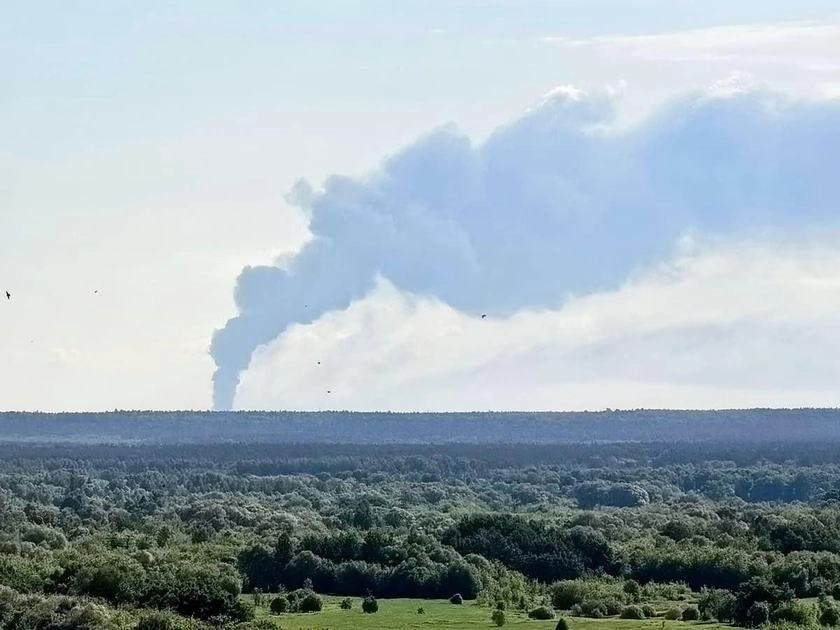
But in May-June 2026, strikes in occupied southern Ukraine hitting targets like refineries, fuel storage sites, and pumping stations became common, and fuel infrastructure attacks snowballed – with drones seeking out filling stations, tanker rail cars, and fuel trucks on the “Novorossiya” highway, the main land route connecting Russia to occupied Ukraine and Crimea. By late May, the campaign had triggered a serious fuel shortage in Crimea, with gas stations limiting sales to 20 liters per vehicle and many running out entirely.
Dash cam footage and driver commentary from Russian truckers and tourists transiting occupied southern Ukraine in May-June 2026 have likewise documented Ukrainian drones appearing over cities and regions where they had not been spotted for years. In late April, the AFU delivered a clever psychological dig at the Kremlin by announcing that pilots from drone units assigned to 1st Corps “Azov” had returned to the airspace above Mariupol to strike any Russian military vehicles or soldiers they could find. This was the same formation whose “total destruction” in that surrounded city Russian propagandists had celebrated back in May 2022.
The Ukrainian hunt for deep-strike targets has extended well beyond the Bulgaria-sized swath of Ukraine that Russia occupies into the Russian Federation itself. According to Kyiv Post records drawing on open-source data, Ukraine’s USF carried out at least 90 air strikes in April 2026 against Russian oil production, transport, and processing infrastructure and the air defenses protecting it – an about daily (or even perhaps slightly more than daily) tempo of attacks on refineries that pushed Russian oil processing to its lowest level since 2009. Among the most spectacular was the April 25-26 attack on the Slavneft-YANOS refinery in Yaroslavl, one of Russia’s five largest, where residents reported more than fifteen explosions and a fire visible for kilometers.
The worst Russian fuel shortages, currently, are per local news along the southern Ukrainian highways and in Crimea, and tourists already are reporting they can’t drive home because filling stations in the peninsula are empty, and the road between Crimea and the Russian mainland is a fuel desert. But across Russia fuel prices are up, and shortages and even outages have been reported across western Russia, as far north as the Arctic Sea, and in the capital Moscow.
NEXT: The Damage – How Effective Has Mid-Strike Been So Far?
You can also highlight the text and press Ctrl + Enter

Russia Hit by 660-Drone Overnight Barrage Targeting Moscow, Crimea and Key Military Sites