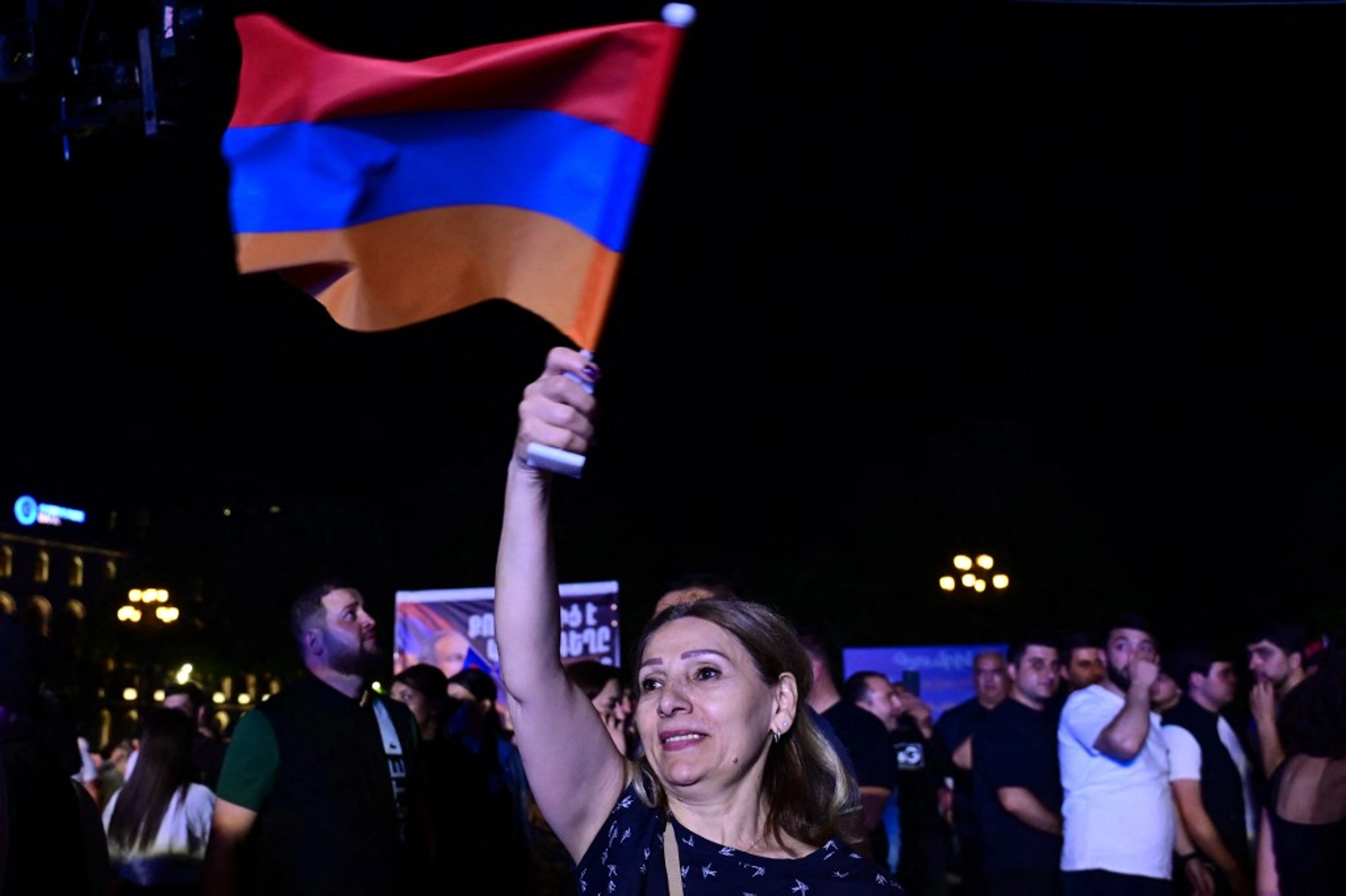
The results of Armenia’s parliamentary election, held on Sunday, are in.
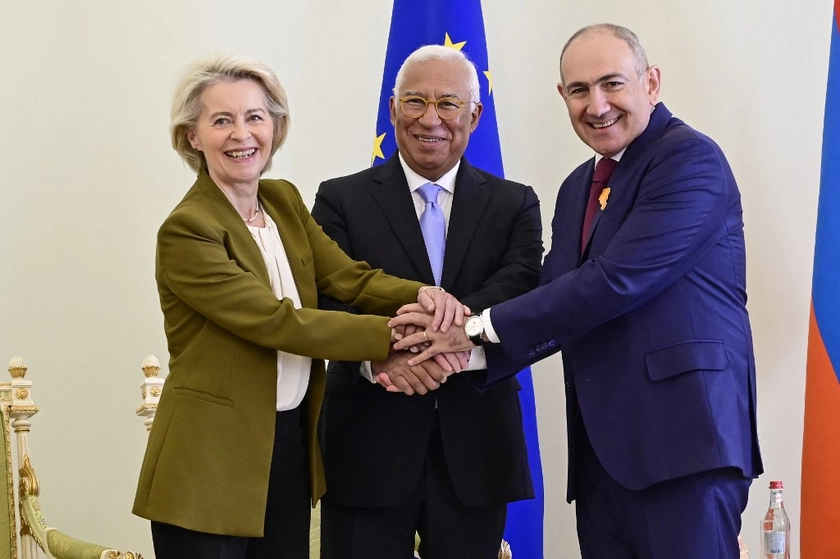
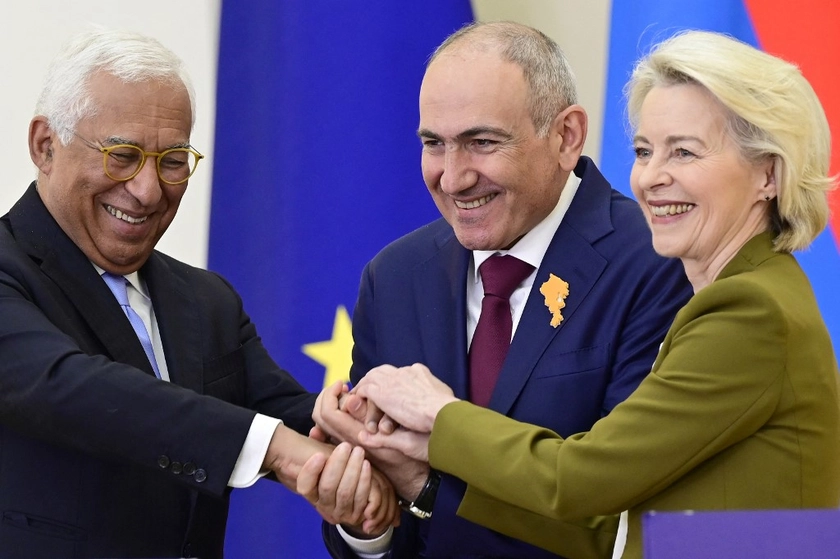
Incumbent Prime Minister Nikol Pashinyan’s Civil Contract party secured a decisive victory, winning 49.8% of the vote and 61 seats in parliament.
JOIN US ON TELEGRAM
Follow our coverage of the war on the @Kyivpost_official.
Civil Contract received 727,160 votes, comfortably defeating Strong Armenia, the party associated with Russian-Armenian oligarch Samvel Karapetyan, which won 23.3% of the vote.
The Armenia alliance of former president Robert Kocharyan, known for his close ties to Vladimir Putin, finished a distant third with 9.9%.
Pashinyan described the outcome as a “historic victory” that guarantees the development and future of the Republic of Armenia.
While Western governments and President Volodymyr Zelensky were quick to congratulate the prime minister on his victory, Moscow struck a markedly different tone. After spending more than a month attempting to undermine Pashinyan’s re-election through political pressure, economic threats, and support for his opponents, Russian officials responded by alleging – without presenting evidence – that the vote had been rigged.
As of publication, the Kremlin has yet to issue a formal statement on the result.
Yet the real significance of the election extends far beyond Armenian domestic politics: it was Armenian society’s answer to years of Kremlin intimidation, and, indirectly, to Ukraine’s decision to resist Moscow’s aggression.
‘Die Together’: Ukraine’s LGBTQ Soldiers Fighting Russia – and for Their Rights
Separating from Russia
For decades, Armenia was considered one of Moscow’s closest partners in the South Caucasus. The country hosted a Russian military base, belonged to the Russia-led Collective Security Treaty Organization (CSTO), relied heavily on Russian energy, and remained deeply integrated into Russian-led economic structures.
That relationship began to unravel after the collapse of Nagorno-Karabakh.
When Azerbaijan restored control over the region in 2023, many Armenians felt abandoned by Moscow. Russian peacekeepers were present on the ground, yet the Kremlin did little to alter the outcome.
According to Russian opposition activist Daniil Chebykin, who currently lives in Yerevan, that moment fundamentally changed Armenian perceptions of Russia.
“Many Armenians concluded that Russia was either unwilling or unable to protect its closest regional ally,” Chebykin told Kyiv Post.
“As a result, Armenia began distancing itself from Moscow not because somebody forced it to do so, but because the Russian government demonstrated that it was not a dependable partner,” he said.
Since then, Armenia has steadily moved away from Russia’s orbit.
Yerevan froze participation in the CSTO, with Pashinyan even suggesting that it may leave the organization. Following this, Armenia deepened cooperation with the EU and the US, expanded contacts with Ukraine through humanitarian assistance, and increasingly positioned itself as a bridge between Europe and Asia rather than a Russian outpost in the Caucasus.
The shift became especially visible this year when Armenia hosted the European Political Community summit in Yerevan, attended by French President Emmanuel Macron and Zelensky, provoking hostile commentary from Russian officials and state media.
US Secretary of State Marco Rubio’s brief visit to Yerevan in late May, during which he signed a Charter on Comprehensive and Strategic Partnership together with Armenian Foreign Minister Ararat Mirzoyan, only fuelled the Kremlin’s anger over Armenia’s increasingly pro-European and pro-Western course.
Kremlin coercion strategy
In an attempt to curtail the pivot, Reuters recently reported, citing Western intelligence sources and internal documents, that Russia had actively attempted to prevent Pashinyan from securing another victory, fearing that his re-election would further cement Armenia’s Western trajectory.
Yet Moscow’s pressure campaign extended far beyond rhetoric and support for Strong Armenia, the party associated with billionaire Samvel Karapetyan.
In late April and early May, Russia intensified economic pressure on Armenia using a well-recognized playbook.
Appealing to sanitary and technical grounds, Russian authorities introduced restrictions on imports of Armenian berries and fresh vegetables.
Earlier, Moscow had already limited imports of Armenian mineral water, products from several Armenian brandy producers, and fresh flowers.
In late May, Russia recalled its ambassador from Armenia for consultations, a diplomatic move signalling a high level of diplomatic dissatisfaction, short of recalling an ambassador entirely, closing an embassy, or severing diplomatic relations.
Officially, the move was linked to concerns over Armenia’s growing cooperation with the EU.
At the same time, Russian officials openly warned Armenia about the economic consequences of moving closer to Europe.
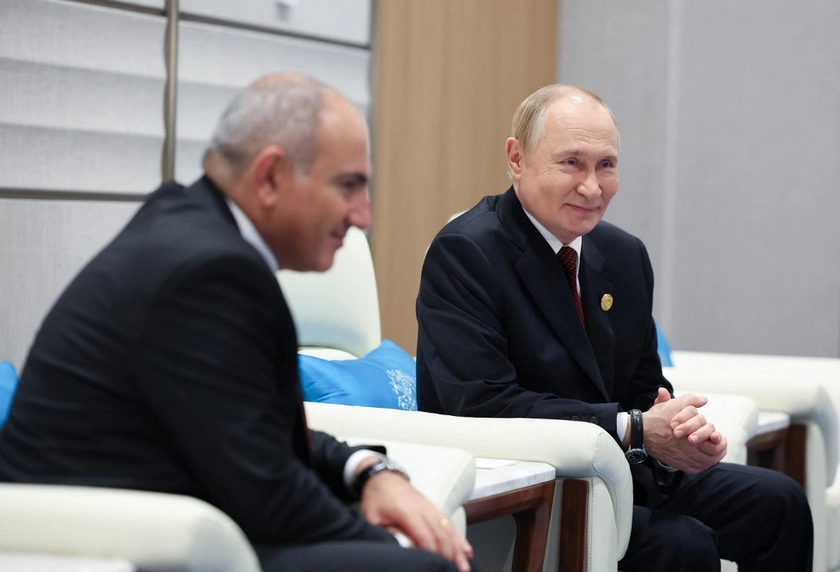
Russian ruler Vladimir Putin suggested that deeper integration with the EU could cost Armenia preferential treatment within Russian-led economic structures and potentially inflict severe economic damage on the country. Russian officials claimed Armenia could lose up to 14% of its GDP if it abandoned existing integration arrangements.
The Kremlin also hinted that discounted prices for Russian gas could disappear.
“We heard statements from the Armenian leadership about the very attractive and preferential price for Russian gas,” Kremlin spokesman Dmitry Peskov said. “That is indeed the case. But such a regime is naturally impossible for participants in other integration structures.”
Other threats followed.
Russian officials raised the possibility of ending preferential railway tariffs and restricting labor migration – an important issue given the large number of Armenians working in Russia.
Former Armenian MP and current adviser to the country’s foreign minister Dr. Stepan Grigoryan said Russia’s attempt to obstruct Pashinyan’s victory was impossible to miss.
“Even Marco Rubio said in one of his speeches that ‘Putin wants Pashinyan to lose.’ So the US understood that,” he said, adding that the Kremlin systematically attacked Armenia for more than a month.
“This was political blackmail. And it proved to be a mistake. The Armenian society responded to it because what is this really? Russia claims to be our ally and yet it has not fulfilled its obligations. Still, they resort to threats,” he added.
Armenia turns to alternatives
Yet unlike previous disputes between Moscow and its neighbors, Armenia is no longer entirely dependent on Russia.
Armenia is not currently negotiating EU membership.
Although lawmakers approved legislation supporting eventual European integration, Yerevan has been speaking primarily about obtaining visa-free travel with the EU rather than joining the bloc in the near future.
Pashinyan himself repeatedly argued that Armenia is nowhere near the stage where a referendum on EU membership would make sense.
Nevertheless, the EU did not stand aside.
To help Yerevan weather potential Russian retaliation, Brussels is reportedly preparing a package of support measures worth more than €50 million ($57 million). European Commission President Ursula von der Leyen has condemned what she described as Russia’s “unacceptable economic coercion” and pledged additional support.
The EU is also opening its markets to Armenian flowers, one of the key export positions for the small economy.
The US has likewise been steadily deepening ties with Armenia.
Following the 2025 Washington Peace Summit and the signing of the implementation framework for the Trump Route for International Peace and Prosperity (TRIPP), Washington has increasingly viewed Armenia as a strategic transit and economic hub connecting Europe and Asia.
Meanwhile, Yerevan has expanded contacts with Turkey.
The recent Turkey-Armenia Business People Meeting brought together officials and business representatives from both countries to discuss trade, logistics, tourism, and regional connectivity.
Armenia is also exploring greater imports of Iranian gas through existing infrastructure despite Russian warnings regarding future energy cooperation.
“We will continue to pursue our EU integration path and the TRIPP project,” Grigoryan said, adding that Yerevan enjoys good relations with the Trump administration.
The “Ukrainian scenario”
Yet the most revealing aspect of Moscow’s campaign against Armenia was neither the trade restrictions nor the diplomatic pressure.
It was the recurring warning that the country could face a “Ukrainian scenario” if it continued moving closer to Europe rather than reverting to a “Georgian scenario” – a reference to the slowdown of Western-oriented reforms and the rise of the Russia-friendly Georgian Dream after Russia’s 2008 invasion.
This matters.
For years, Russia justified its actions in Ukraine through rhetoric about “denazification” and “demilitarization.” Yet similar warnings are now directed at Armenia – a country nobody seriously accused of Nazism or posing a military threat to Russia.
“The Kremlin finally made it clear that the real reason for the war is simple: Ukraine choosing the EU integration path. Everything else is fluff,” Chebykin said.
He argues that neighboring countries choosing political paths independent of Moscow is what the Kremlin ultimately finds unacceptable.
Grigoryan confirmed that Pashinyan’s opponents frequently echoed Kremlin talking points, using the prospect of an “Ukrainian scenario” as a scare tactic. However, it proved ineffective, not least because many Armenians developed a deep respect for Ukrainian society after witnessing its resistance.
“Your example and courage give us wings,” he said, admitting that Russia’s war against Ukraine was an eye-opener for many Armenians and demonstrated that resisting Moscow is possible.
“President Zelensky’s praise for our democracy during his visit to Yerevan was a very important move too,” he added.
Ultimately, Chebykin believes Pashinyan’s victory represents not only a political victory for the Armenian prime minister, but also a victory for Armenian civil society – and a defeat for the Kremlin’s influence campaign.
“They spent millions on fakes, propaganda, voter import schemes, mobilization campaigns, deepfakes, sponsored content, and fearmongering about Azerbaijan and Turkey conquering Armenia,” he said. “It was futile.”
The views expressed in this opinion article are the author’s and not necessarily those of Kyiv Post.
You can also highlight the text and press Ctrl + Enter

Russia Hit by 660-Drone Overnight Barrage Targeting Moscow, Crimea and Key Military Sites