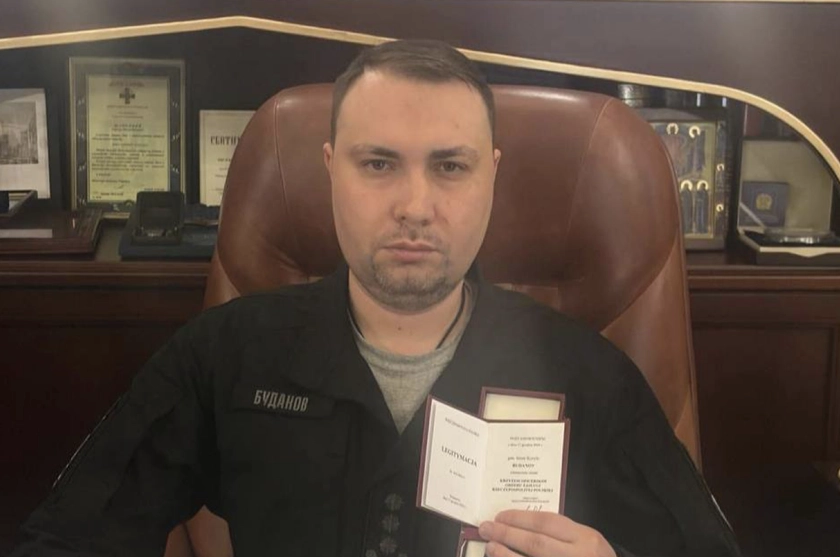
Stripping President Zelensky of Poland’s highest honor is shameful. A disgrace, especially now when he leads the country fighting for its survival and against the mortal enemy of both Ukraine and Poland. Let’s not let two nationalisms collide and damage our relationship.
“We forgive and ask for forgiveness.” These were the words written by the Polish Catholic bishops to their German counterparts in a pastoral letter dated Nov. 18, 1965.
JOIN US ON TELEGRAM
Follow our coverage of the war on the @Kyivpost_official.
We, Poles and Ukrainians, do not need a similar reconciliation and yet, today, these may be the most important words Poles and Ukrainians can say to one another.
To understand the courage behind that letter from the Polish bishops, one must remember when it was written: just twenty years after the end of World War II.
One-fifth of the Polish nation had perished in this war. Millions were murdered by Germans, cities were destroyed, and families shattered. Germans had not merely occupied Poland – they had sought to erase it. They shot civilians, burned villages, exterminated entire communities, and turned our land into a vast cemetery.
Yet in 1965, Polish bishops reached out to Germany with a message that stunned Europe: “We forgive and ask for forgiveness.”
They did not forget, they did not excuse, they did not deny history. They chose reconciliation.
The letter became one of the foundations of the remarkable reconciliation between Poland and Germany – a reconciliation that once seemed impossible.

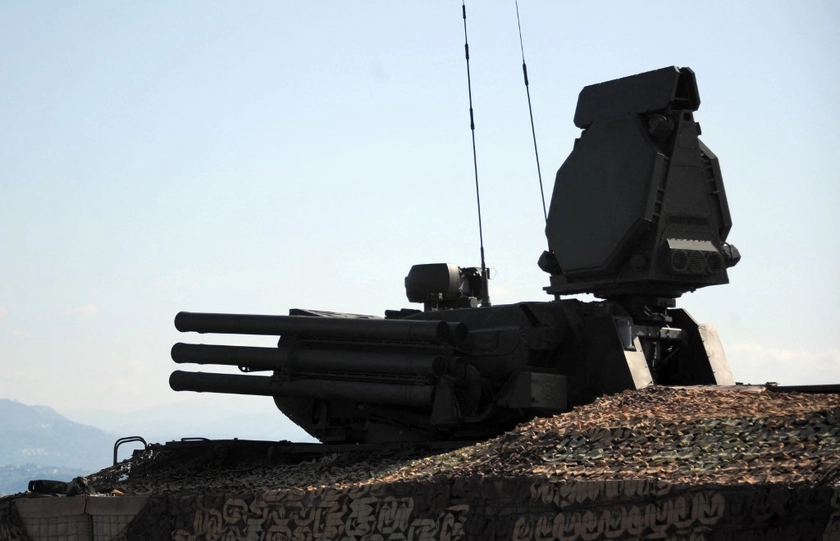
Additional Pantsir Air Defense System Spotted Near Attacked Moscow Oil Refinery
We do not need reconciliation between our nations, Polish and Ukrainian – but we do need to understand the past and forgive one another.
I am Polish. Members of my family were killed during World War II by Germans, by Soviets, and, in Volhynia, by whom?
Like many Poles, I carry family memories of suffering inflicted by more than one nation.
That is why I understand how difficult these conversations are. But history is a tapestry of causes and consequences, rarely offering the comfort of simple judgments.
Mature nations understand that historical memory is not only about celebrating our heroes.
And when a nation is fighting for survival, when enemies seek to erase your identity, language, and culture, the instinct to defend your own nation becomes overwhelming.
Poles know this well.
After 123 years of partitions, Germanization, and Russification, the reborn Polish state after 1918 was determined to strengthen Polish identity. In doing so, it treated its minorities unjustly – including Ukrainians, who retaliated.
My personal hero remains Marshal Józef Piłsudski. Yet admiration should never blind us to complexity: Piłsudski wanted an independent and free Ukraine. He envisioned a close alliance between Poland and Ukraine, but his vision was ultimately centered on Polish interests.
An independent Ukraine, in his thinking, would also serve as a democratic buffer separating Poland and the West from Russia.
There is nothing shameful about that. Every nation has the right – and indeed the duty – to defend its interests.
The danger begins when patriotism crosses into nationalism. When the defense of our own nation comes at the expense of another nation – its people, its dignity, its memories, and right to its own historical narrative.
Some readers may assume I am speaking only to Poles. I am not. I am speaking equally to Ukrainians.
There is no military unit in today’s Polish Armed Forces named after Polish nationalist Roman Dmowski. Nor is there one named after Jeremi Wiśniowiecki, famous for being a Polish patriot and infamous for brutal suppression of the Cossacks’ Khmelnytsky Uprising – even during the interwar Second Polish Republic, when the 22nd Podkarpackie Uhlan Regiment sought to adopt Wiśniowiecki as its official patron, military authorities declined to approve the request.
Mature nations understand that historical memory is not only about celebrating our heroes.
It is also about recognizing how those same figures may be remembered by our neighbors.
Today, there is one nation in Europe that refuses to reckon with its past.
As Bohdan Nahaylo, editor-in-chief of the Kyiv Post, recently reminded us, there were reasons why many Ukrainians who entered World War II were not inclined toward good relations with Poles – Piłsudski’s pacification of Ukrainians in Eastern Galicia.
Understanding those reasons does not require abandoning our own historical memory. It requires intellectual honesty.
Today, there is one nation in Europe that refuses to reckon with its past
It refuses to accept responsibility for the crimes of its empire, its Soviet legacy – on the contrary, it glorifies conquest rather than reflecting upon it, celebrates power rather than justice, and shows no interest in acknowledging – let alone atoning for – the suffering it has inflicted on others.
Russia nurtures historical grievances, weaponizes them, and passes them from generation to generation. It uses victimhood as a political tool and rejects reconciliation as “weakness.”
We reject the Russian world.
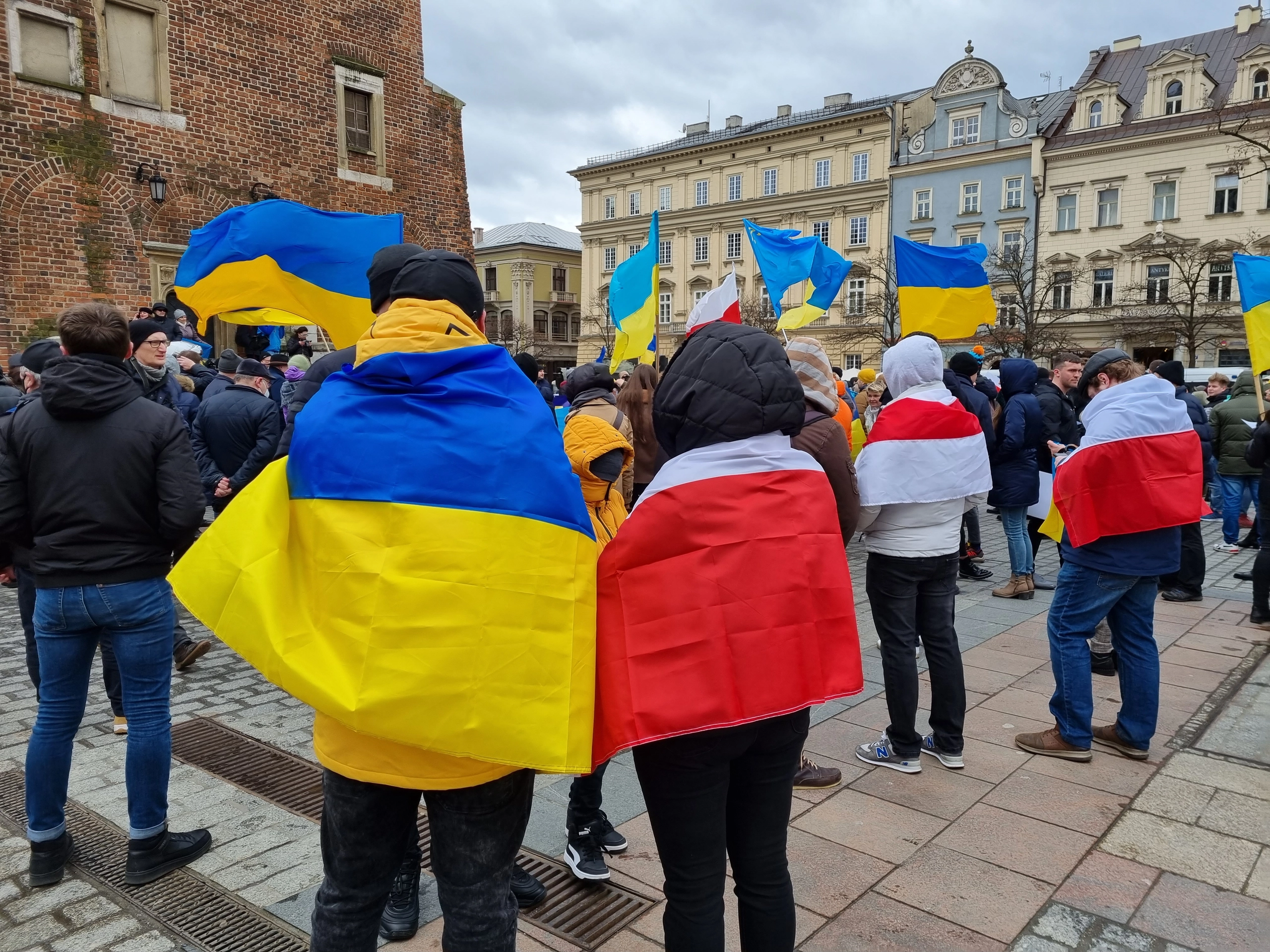
Poles and Ukrainians have every reason to remember history. But we have even greater reasons to forgive each other. Not because the past did not happen, not because the wounds are not real. But because we are better than those who seek to keep us imprisoned by history.
The Polish-German reconciliation showed the path – built on truth, memory, courage, and forgiveness.
My fellow Poles. My dear Ukrainians.
Let us be bigger than Russia, let us remember, let us tell the truth. And let us have the courage to say to one another: “We forgive and ask for forgiveness.”
The views expressed in this opinion article are the author’s and not necessarily those of Kyiv Post.
You can also highlight the text and press Ctrl + Enter