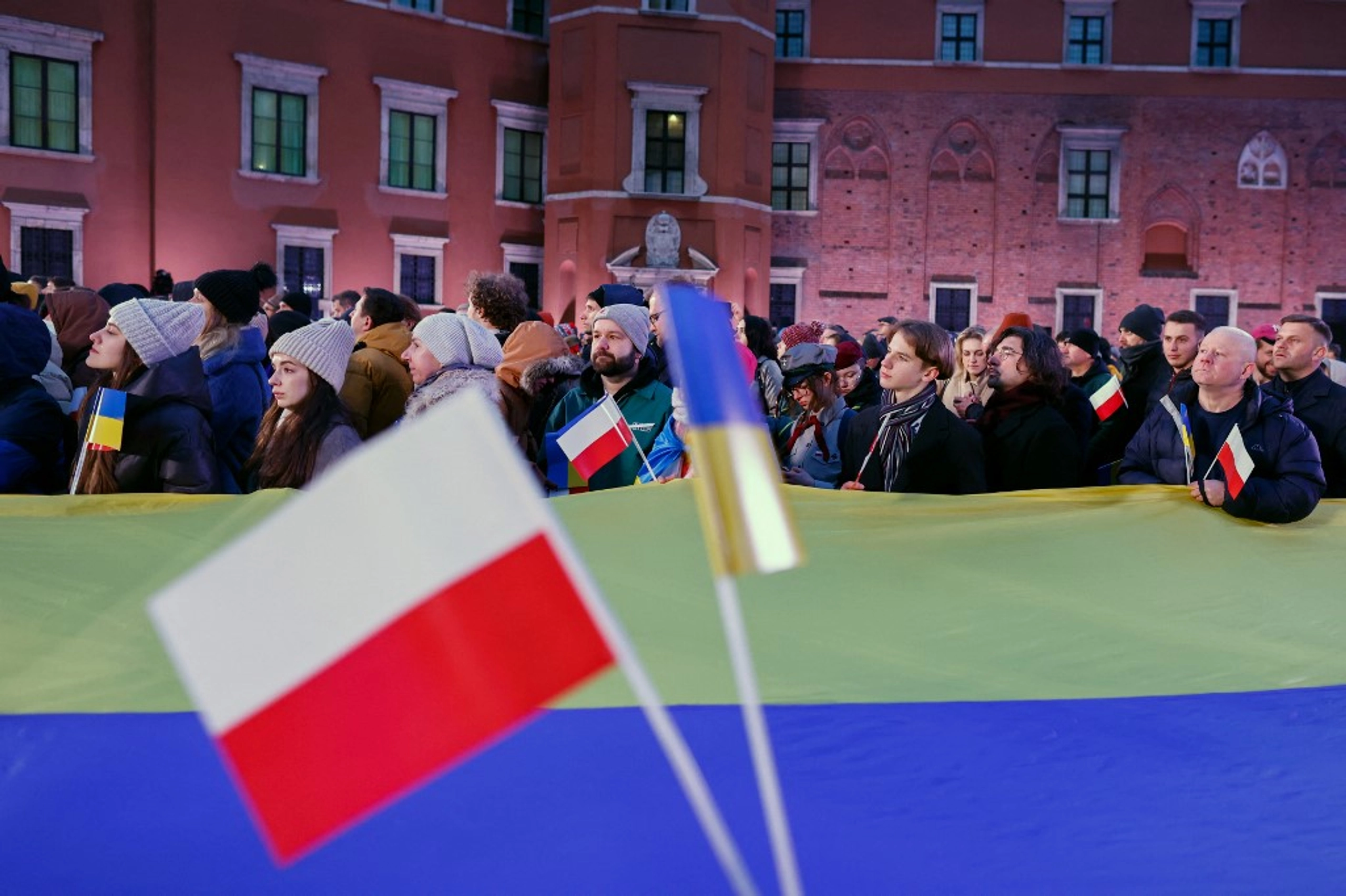
An overwhelming 90% of Ukrainians support a pragmatic, depoliticized approach to historical disputes with Poland, according to a new nationwide survey by the Kyiv International Institute of Sociology (KIIS) conducted June 17-23, 2026.
The poll shows a strong public preference to remove sensitive history from political confrontation, with most respondents backing either national “agree-to-disagree” positions or historian-led dialogue instead of political bargaining.
JOIN US ON TELEGRAM
Follow our coverage of the war on the @Kyivpost_official.
“A total of 90% of Ukrainians strive for constructive interaction with Poland,” KIIS said. “A majority (57%) believe each nation may have its own heroes, while 33% support joint commissions of historians as the way forward.”
Researchers say the pragmatic view is consistent across all regions, with only a small minority supporting confrontational narratives or political escalation over historical issues.
Attitudes toward Poland remain broadly stable
KIIS also measured “social distance” toward Poles on a 1-7 scale. In 2025, the score stood at 4.1, reflecting a generally tolerant but moderate stance.
The institute notes sharp shifts in recent years: Attitudes improved dramatically after Russia’s 2022 full-scale invasion, when Polish support for Ukraine peaked and social distance fell to record lows of around 2.9-3.0.
That surge in goodwill has since cooled. The indicator rose to 4.0 in 2024 and 4.1 in 2025 – a return to pre-war levels.
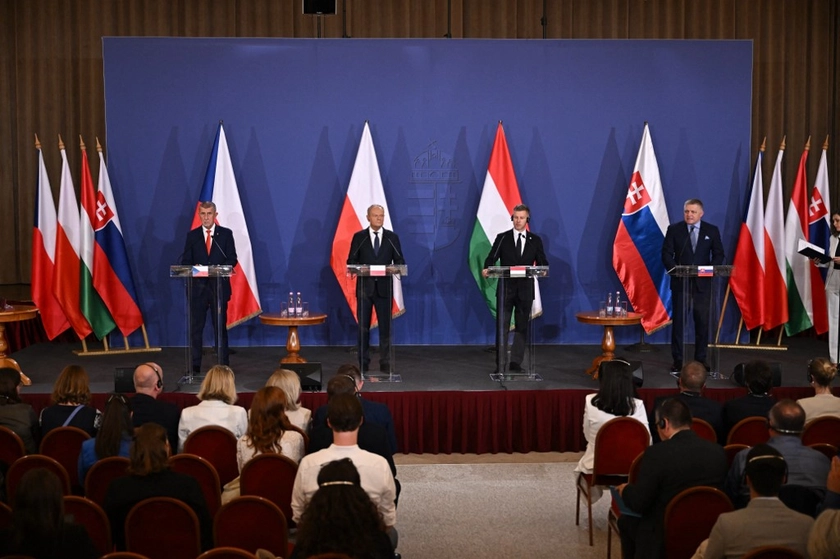
Ukraine Divisions Fade as Visegrád Leaders Reunite After Two-Year Rift
KIIS links part of the shift to tensions, including Polish border blockades that began in late 2023, calling it a “normalization” rather than a breakdown in relations.
Memory politics: OUN-UPA views shift sharply
The poll also shows a major long-term change in perceptions of the Organization of Ukrainian Nationalists (OUN) and the Ukrainian Insurgent Army (UPA).
Differing perceptions of the historical Ukrainian groups have been at the center of recent disputes between Kyiv and Warsaw. The UPA is viewed in Ukraine as part of the independence struggle, while Poland holds it responsible for the mass killings of Polish civilians during World War II.
In 2013, nearly half of Ukrainians viewed them negatively. By 2025, only 8% did, while 37% expressed positive views – with half of the respondents now saying they are unsure how to assess them.
KIIS says this reflects a post-2022 rethinking of historical narratives, but also significant public uncertainty about wartime history.
Ukraine-Poland tensions
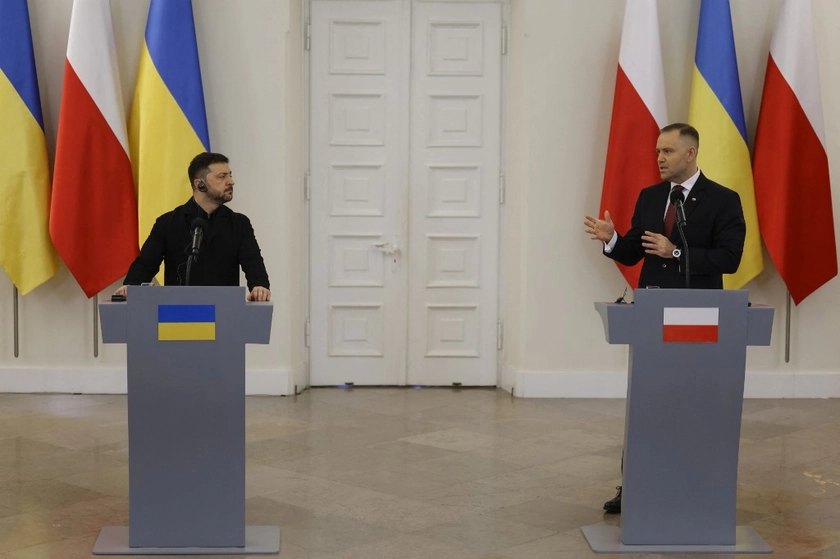
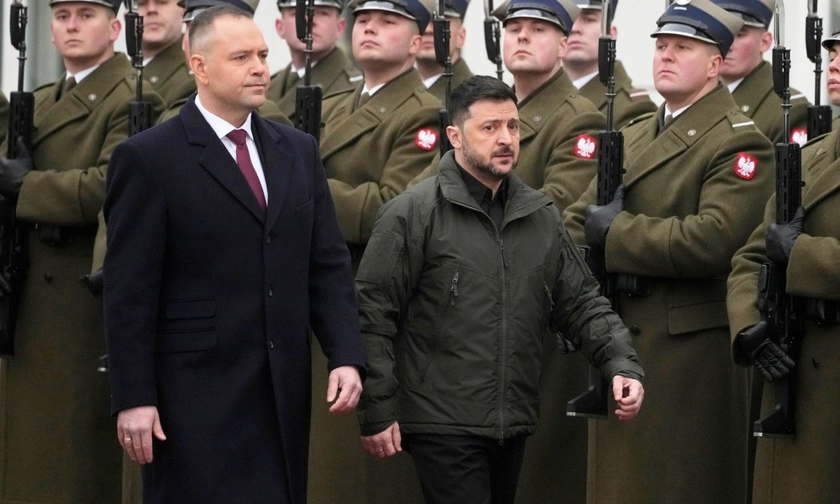
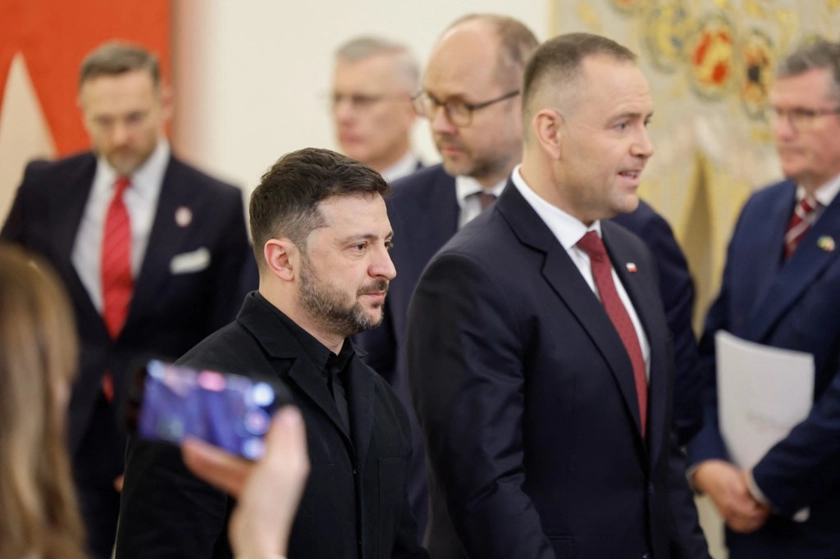
The poll was conducted amid rising tensions between Warsaw and Kyiv following Polish President Karol Nawrocki’s decision to revoke President Volodymyr Zelensky’s Order of the White Eagle, awarded to Zelensky in 2023.
The decision was linked to Ukraine’s move to grant a military unit the honorary title “Heroes of the UPA.”
After consulting the order’s chapter, Nawrocki revoked the award, citing Zelensky’s approval of the designation. He said the decision was not directed against the Ukrainian people and did not signal a change in Poland’s support for Ukraine.
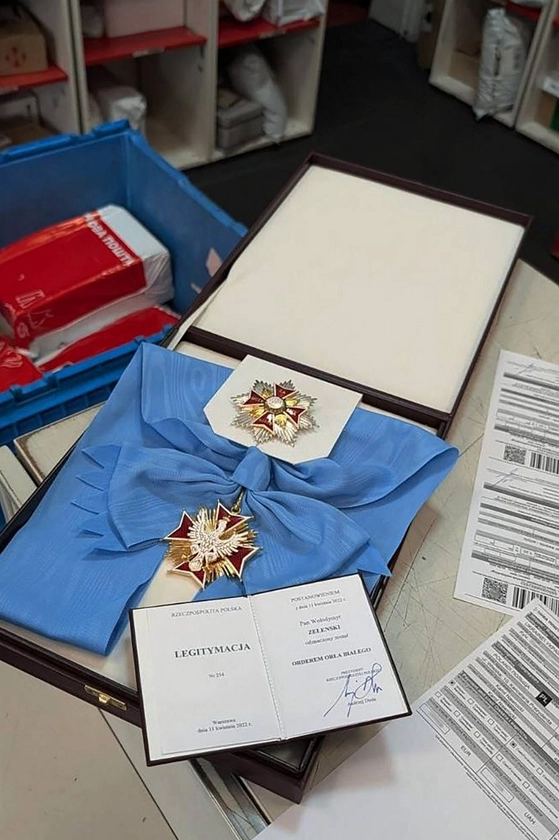
The move prompted Zelensky to return the honor and triggered a broader backlash in Ukraine, with several current and former officials announcing plans to return or renounce Polish state awards.
In addition to Foreign Minister Andrii Sybiha, several former presidents, high-ranking officials, and prominent public figures said they would return Polish state awards, arguing that revoking Zelensky’s state award undermined relations between the two countries and played into Russia’s hands.
“If it is considered that this special symbol can remain with Catherine II, Benito Mussolini, and Gerhard Schroeder, then we in Ukraine will not argue with this,” Zelensky wrote on Telegram, accompanying his message with a photograph of the award being returned by mail.
After that, Agnieszka Jancążek, a minister in Nawrocki’s chancellery, said on Sunday that even controversial recipients such as Benito Mussolini, Catherine II, and former German Chancellor Gerhard Schröder had never openly insulted the Polish nation.
You can also highlight the text and press Ctrl + Enter