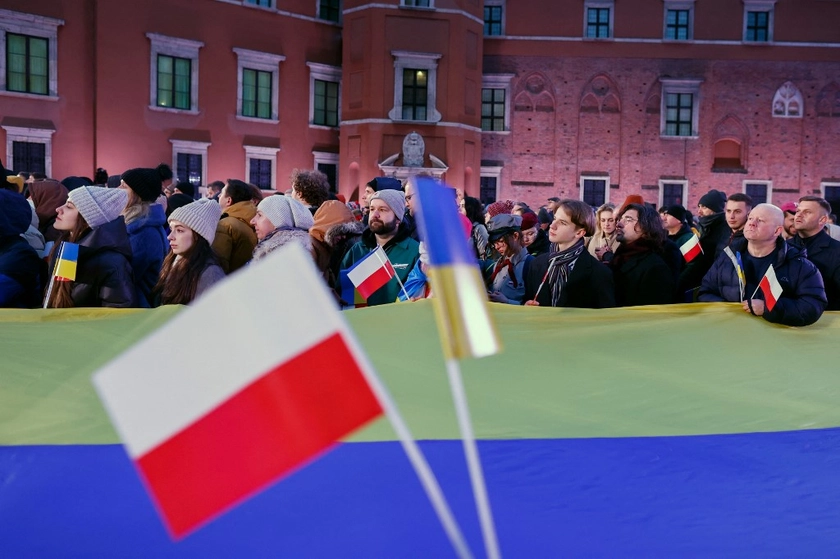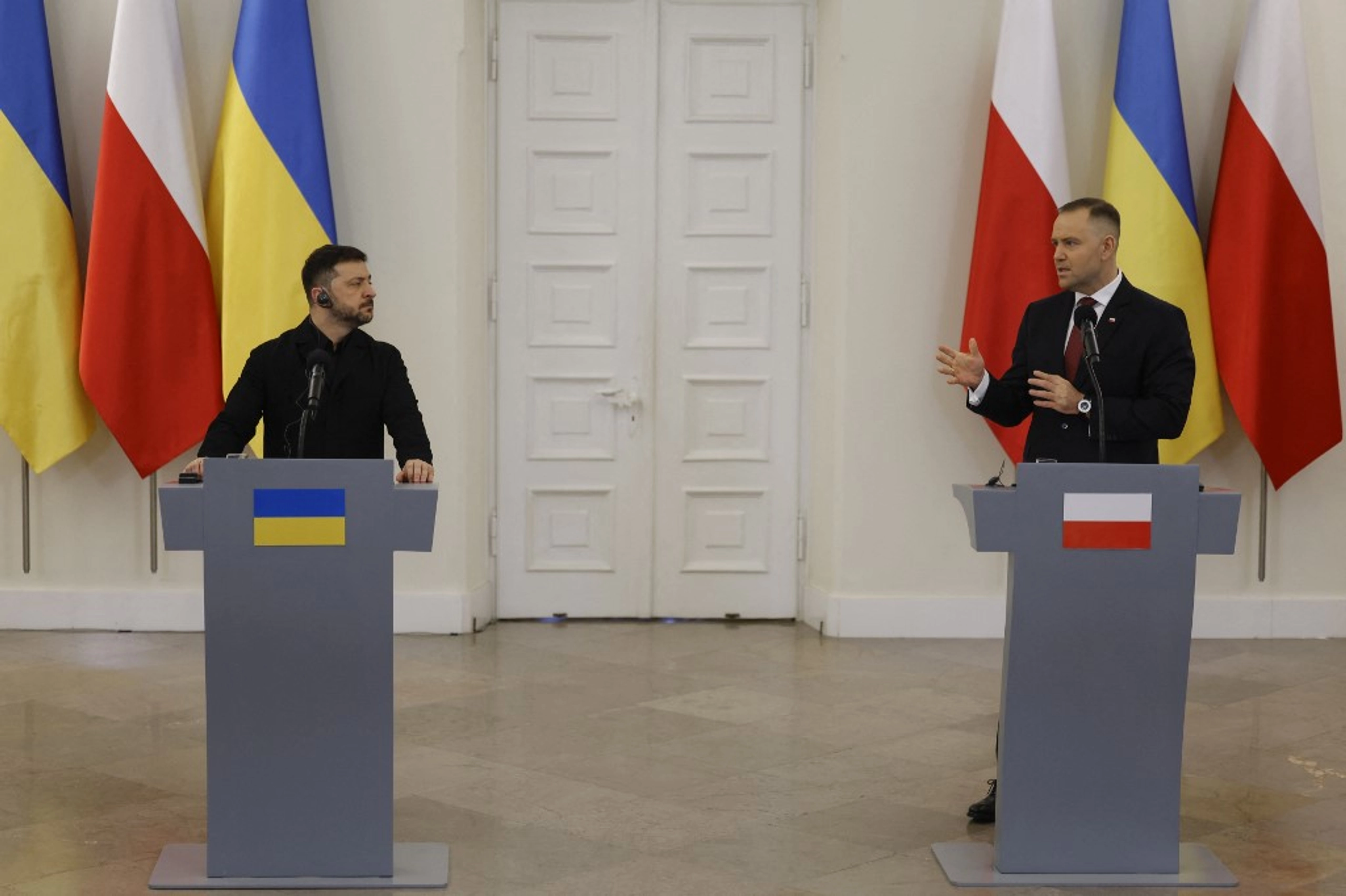
A historical dispute over the legacy of the WWII-era Ukrainian Insurgent Army (UPA) has resurfaced in Polish-Ukrainian relations, with analysts noting that the subject is slowly reshaping the upcoming 2027 elections in Poland.
UPA is a WWII-era Ukrainian nationalist force viewed in Poland as responsible for massacres of tens of thousands of Poles in Volhynia and Eastern Galicia, while many Ukrainians regard it as a symbol of anti-Soviet resistance.
JOIN US ON TELEGRAM
Follow our coverage of the war on the @Kyivpost_official.
What’s the UPA dispute about?
The latest dispute began after President Volodymyr Zelensky named a Ukrainian military unit after the “Heroes of UPA,” triggering criticism from Poland.
In response, Polish President Karol Nawrocki revoked the highest honor, the Order of the White Eagle, previously awarded to Zelensky, provoking further criticism.
“No one else will ever dictate to Ukrainians which heroes to honor, which holidays to celebrate, or which history to study,” Kyrylo Budanov, the head of Zelensky’s office, said earlier; Budanov previously served as chief of Ukraine’s military intelligence (HUR).
For the pro-EU government of Prime Minister Donald Tusk, the growing historical dispute with Ukraine risks straining one of the war’s most important alliances.
Tusk has urged both sides to cool tensions, calling the escalating rhetoric a “strategic mistake.”
From WWII disputes to modern political clashes
According to Politico‘s report on Tuesday, the issue is becoming increasingly entangled in Polish domestic politics as the 2027 election approaches.
Ukrainian Tycoon Injured in Monaco Parcel Bomb Explosion
The nationalist Law and Justice (PiS), aligned with Nawrocki, is pushing a harder line toward Kyiv, while growing frustration over the presence of roughly 2 million Ukrainians in Poland has made Ukraine a key campaign issue.
Zelensky suggested Nawrocki’s revocation of his state award was tied to domestic politics.
“They have an election in 2027. We have no business here, this is their internal matter,” he said.
However, Nawrocki rejected that claim, saying the dispute “does not concern Poland’s domestic issues at all,” adding that Poland could block Ukraine’s EU accession unless Kyiv acknowledges the wartime massacres and apologizes.
Analysts cited by Politico say the dispute has become politically useful for Poland’s nationalist camp, helping consolidate right-wing voters ahead of the election.
Renata Mieńkowska-Norkiene, a political scientist at Warsaw University, told Politico that she believes Nawrocki saw an opportunity to capitalize on the changing sentiment towards Ukrainians.
“The president has recognized the public mood has shifted more against Ukraine and the Ukrainians and concluded he wasn’t really risking anything. The spat over history allows him to consolidate right-wing and nationalist circles around himself and that will be important in the run-up to the election,” she said.
Politico said that support for Ukraine in Poland has cooled since the early solidarity shown after Russia’s 2022 full-scale invasion. Right-wing politicians have intensified anti-Ukrainian rhetoric, while polls suggest public attitudes have shifted.
“We understand that Ukraine is at war and we want Ukraine to win this war against Russia, but we cannot allow Poland and Poles to be so disrespected,” said Rafał Bochenek, a lawmaker and a PiS spokesperson.
PiS continues to criticize Tusk and his government for being too soft on Ukraine, pledging a tougher stance toward Kyiv if it returns to power next year.
“Polish society is being cured of a certain idealism, the idea that something can be built with Ukraine on the basis of partnership. We can see that this is not possible. So it should be only hard, pragmatic interests from now on,” said Arkadiusz Mularczyk, a member of the European Parliament with PiS.
A Polish Research poll found 51.9% of respondents said their view of Ukraine and Zelensky worsened after his decision to honor a military unit linked to the UPA.
Rising tensions in Kyiv
Tensions are also rising in Kyiv.
Announcing a national pantheon honoring Ukraine’s heroes, Zelensky said that “no one will ever tell us how to live… or which heroes to honor.”
Zelensky’s chief of staff, Budanov, called the standoff “a serious mistake,” while analysts say narrowing the gap between Warsaw and Kyiv will remain difficult as history and politics increasingly overlap.
Tadeusz Iwański, head of the Belarus, Ukraine, and Moldova desk at Poland’s state-run Eastern Studies Center think tank, said narrowing the gap between Polish and Ukrainian perspectives would be extremely difficult.
He argued that Zelensky has already withstood “enormous Russian pressure,” as well as pressure from US President Donald Trump, whom he said had tried to force him into concessions, adding that in comparison, pressure from Poland over UPA-related issues “barely registers.”
As a result, Politico’s article includes multiple Polish political voices emphasizing historical accountability and hardline policy toward Kyiv, but Ukrainian arguments receive comparatively less analytical space beyond official statements from Zelensky and Budanov.
You can also highlight the text and press Ctrl + Enter
Poland Rejects Mediation in Ukraine Dispute