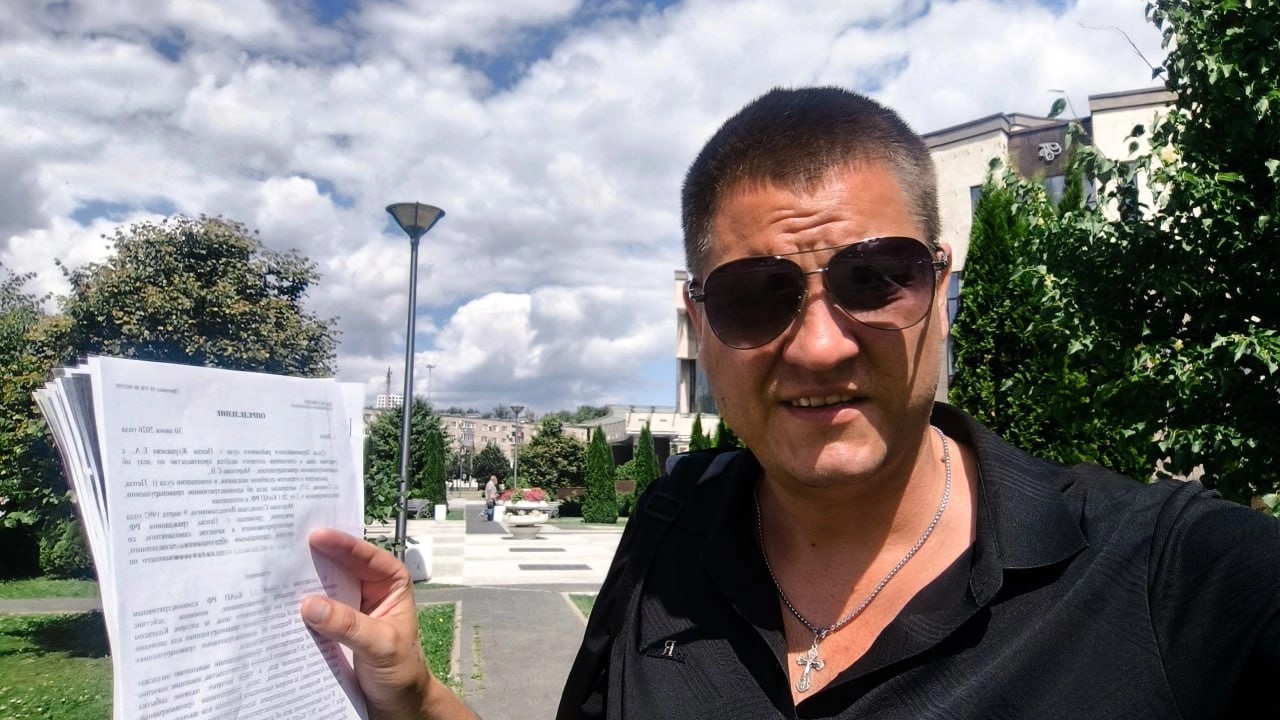
Agents from Russia’s national intelligence agency, the FSB, detained a Volga region blogger who had accused authorities of arresting men on the street in a major city to force them into military service, independent Russian news agencies reported on Friday.
Reports said Penza city resident Stanislav Morozov, a local internet personality known as a Russian nationalist critical of corrupt big government and big business, in late June published comment on platforms he operates stating law enforcers were stopping men on the street, in shopping areas, in public transport and even after exiting homes and forcing them to travel in police vehicles to Ministry of Defense recruitment offices.
JOIN US ON TELEGRAM
Follow our coverage of the war on the @Kyivpost_official.
Russian military officers ordered to dragoon new men into military service accompanied the police squads in the city of Penza and the satellite communities of Kamenka and Kuznetsk, the SOTA news agency reported. According to SOTA and Morozov’s claims, once at the recruitment center authorities used pressure tactics to force detained men to sign military contracts “voluntarily.”
If confirmed, the incidents affecting a reported several dozen military-age men would possibly be the Russian Federation’s first-ever deployments of press gangs operating in public and searching for men to force to become soldiers.
Since Russia’s second invasion of Ukraine in February 2022, the Kremlin – faced with ballooning combat losses – has mobilized reserves, recruited in prisons, hired foreign fighters and pressured drafted soldiers to sign professional contracts to fill gaps in the ranks.
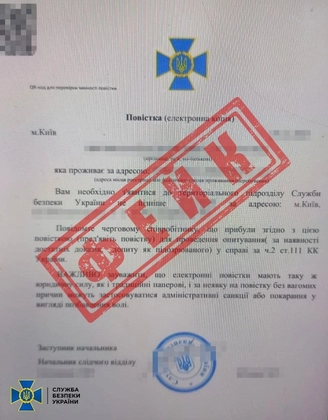
Russia Poses as Ukraine’s Security Service to Recruit Ukrainians for Terror Attacks
To date, the Russian state however has claimed it never sends men forcibly drafted into the military to Ukraine to fight, and maintained that all service personnel invading Ukraine are volunteers.
Morozov in a statement, published on his personal VK channel on Thursday, said FSB officers detained and released him after advising him that he was being investigated on the charge of criminal seditious speech, a charge carrying potential penalties that include a five year prison term and state confiscation of property.
According to Morozov’s account, a video published by him in late June stating that if authorities were grabbing men on the streets to force them into Russian military service, the public might respond by attacking recruitment centers, was, according to authorities, potentially seditious and criminal speech. In the text of the charges read by him, the Russian state was accusing him of “attempting to cause public unrest by… leading the public to false conclusions… with false statements… calling the public to extremist acts.”
Morozov said he was confident he had told the truth about military press gangs operating in the Penza region and that he was only being truthful in predicting that the Russian government was risking violent public response by its actions.
“The people’s patience is coming to an end,” Morozov said in part.
Morozov said he has hired attorneys and hopes for “a fair hearing in court” and asked supporters to donate money to his personal legal defense fund.
Before the criminal case was opened against him, Morozov had been working on a film about Penza residents reporting that authorities had employed beatings and other coercive tactics to force them or their relatives to sign military service contracts. One subject, a mother, recounted how her son was threatened with drugs if he did not sign a contract, the Astra news agency reported.
Russian military recruiting tactics in Penza came under wide public criticism following the June 17 posting by resident Natalya Solomyna of videos near military enlistment offices in the city’s Oktyabrskiy and Zheleznodorozhniy districts, in which women physically accost law enforcers and complain their husbands and blood relatives were forced to sign military contracts under pressure.
Other eyewitness statements collected by Morozov accused Penza authorities of taking men from workplaces and personal cars, and of grabbing men walking to the corner store to buy milk, or taking trash to throw away in a dumpster next to their apartment building.
Other video and testimony reaching the public domain following publication of the content by Solomyna showed screaming and crying women throwing themselves on the hood of a minibus packed with male detainees. Police push the women back and prevent the detainees’ escape.
The Penza office of Russia’s Ministry of Internal Affairs and the military enlistment office denied the operation of press gangs in the city but confirmed “targeted raids” were being conducted against “migrants and draft dodgers.” The Penza military commissar Andrei Surkov dismissed the Solomnya video of the minibus as staged.
Morozov, in his post-detention comments, said that the local FSB office by investigating charges against him for potentially criminally calling for extremist acts of violence against the government, as a result of re-publishing the Solomnya video, had effectively confirmed the authenticity of the video and its content.
Other accounts reported as authentic by SOTA and Astra, and confirmed by Morozov, said that shepherds were carried away from tending livestock in fields and fishermen were swept up from the banks of local waterways. At least 20 Penza men were scooped up in the dragnet deployed across the greater Penza urban area, those reports said.
Men delivered to recruitment offices were, according to those reports, forced to sign military contracts after sleep deprivation and beatings. In the SOTA report, Solomnya accuses Surkov of dishonestly calling her video a fake when in fact it was real and he knew it. Her husband currently is in the Russia-occupied city Luhansk and is undergoing training for combat duty, she said.
According to the OSINT research team Conflict Intelligence Group, the Russian state campaign to recruit new soldiers is using a multiple vector strategy with resources poured into motivational talks with schoolchildren and students (45,000 in 2025), amendments to history books used in primary and secondary schools to promote the Russian military’s purported successful record over the centuries, and expanded bonuses for military contract signers and the person that delivered the new soldier to the recruitment center.
Currently, the total one-time signing (enlistment) bonus for a man joining the Russian military as a contract soldier ranges from about $10,300 to $58,000 equivalent depending on the recruit’s region of registration. Promised monthly salaries range from $2,700 to $4,000, but forced garnishment of salaries for food, clothing and equipment needed by a field soldier is widely reported, as is the forced collection of soldier “donations” to corrupt unit commanders.
Russia’s leaders have struggled to maintain battlefield momentum in the face of massive casualties attacking into the teeth of fortified Ukrainian defenses backed by drone swarms.
A leading US strategic think tank recently concluded the Russian military faces serious recruitment problems because of its high battlefield losses nearly WWI-levels.
You can also highlight the text and press Ctrl + Enter