Russia’s full-scale invasion of Ukraine killed at least 1,270 civilians and injured more than 6,850 people between December 2025 and May 2026, marking a 40 percent increase compared with the previous year, UN High Commissioner for Human Rights Volker Türk said on Friday, July 3.
Türk made the remarks during an Interactive Dialogue on Ukraine before the Human Rights Council, alongside the presentation of the Secretary-General’s interim report on human rights in Crimea. He said 96 percent of the recorded casualties occurred in Ukrainian government-controlled territory. He attributed the increase largely to Russia’s expanded use of long-range weapons and drones.
JOIN US ON TELEGRAM
Follow our coverage of the war on the @Kyivpost_official.
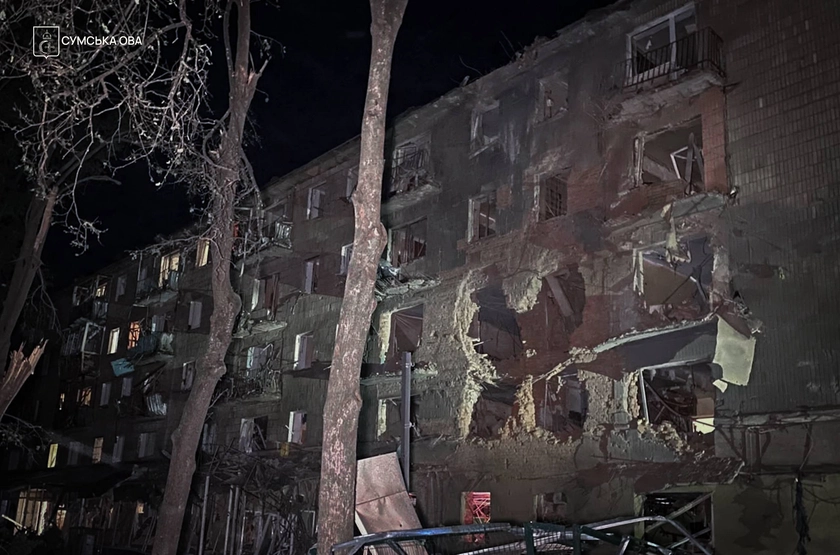
“Russia’s horrifying attack in the early hours of Thursday killed at least 30 civilians and injured at least 99 more,” Türk said. “It was one of the deadliest attacks on Kyiv since the Russian Federation’s full-scale invasion of Ukraine.”
Casualties on both sides of the front
Türk pointed to a mid-May assault as an example of the escalation, noting that Russian forces launched more than 1,500 drones and missiles across eight Ukrainian regions and Kyiv on May 13 and 14, killing 27 civilians and injuring at least 83.
He also cited a Ukrainian strike on an educational complex in Russian-occupied Starobilsk on May 22 that killed 21 civilians.
Russian authorities said 205 civilians were killed and 1,302 injured across 27 regions of the Russian Federation during the same six-month period. However, Türk said his office has not been able to independently verify those figures and again called on Russian authorities to grant access for verification.
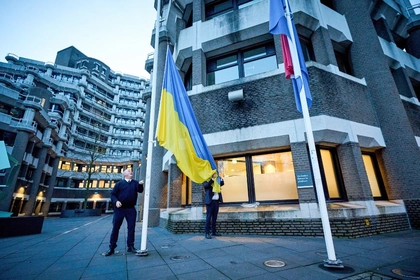
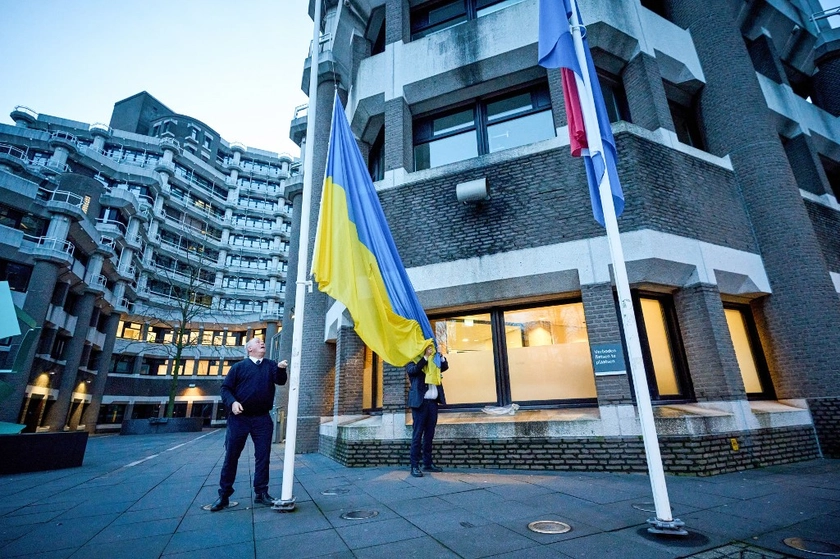
‘Historic Decision’: Netherlands to Host Tribunal on Russian Aggression
Türk said short-range drone attacks near the front line caused a 57 percent increase in civilian casualties compared with the previous year, killing around 380 people and injuring more than 2,000.
He also noted that drones have struck clearly marked humanitarian vehicles and facilities in government-controlled areas, while civilians in the occupied Kherson region remain trapped by drone attacks and landmines, facing food shortages and limited access to healthcare.
On Thursday, Russian forces struck a Red Cross humanitarian warehouse in Kyiv, destroying 320,000 relief items worth more than Hr.79 million ($1,764,719), including generators, defibrillators and a delivery vehicle.
Torture of prisoners of war
Türk said his office has verified the execution of at least 20 captured Ukrainian servicemen by Russian forces since mid-November 2025.
Based on interviews with 129 released Ukrainian prisoners of war, “virtually all of them provided detailed accounts of torture or other ill-treatment during their captivity, including sexual violence,” he said.
On June 26, Ukraine and Russia carried out another prisoner exchange, with each side returning 160 prisoners of war, some of whom had been held since 2022.
Winter attacks on energy grid
Türk said Russian forces systematically targeted Ukraine’s energy infrastructure between October 2025 and March 2026 during what he described as the country’s coldest winter in 15 years, disrupting electricity, heating and water supplies for hundreds of thousands of people, sometimes for weeks, as temperatures dropped below minus 20 degrees Celsius (minus 4 degrees Fahrenheit).
He said the scale of the attacks suggested an intent to disable Ukraine’s entire energy network rather than strike specific military targets, calling this “incompatible with international humanitarian law.”
Occupation and accountability
Türk said Russian occupation authorities continue forcing residents to swear allegiance to Russia, conscripting people into the Russian armed forces, and carrying out forcible transfers and deportations.
Courts have issued arrest warrants or fines against more than 160 people for expressing anti-war or pro-Ukrainian views, he said, while nearly 40,000 residential properties were at risk of confiscation as of December 2025.
Calling the war a driver of instability that has caused more than 2 million military casualties, according to one recent study, Türk urged renewed negotiations for “a sustainable peace, grounded in human rights” and in line with international law.
On June 29, Russian authorities sentenced three employees of a queer club to prison terms of up to seven years, marking the first criminal case explicitly linked to participation in the so-called “LGBT movement,” which Russia’s Supreme Court has designated as extremist.
Türk said Russia is not only stripping LGBTQ+ people of their fundamental rights but is also violating international human rights and humanitarian law by forcibly recruiting residents into the Russian armed forces, including in occupied Ukrainian territories.
He also said Russia has trafficked and forcibly transferred thousands of Ukrainian children since the start of the full-scale invasion. According to Yale’s Humanitarian Research Lab (HRL), more than 35,000 Ukrainian children have been identified as having been transferred by Russia to at least 210 facilities across Russia and occupied Ukrainian territories.
You can also highlight the text and press Ctrl + Enter