





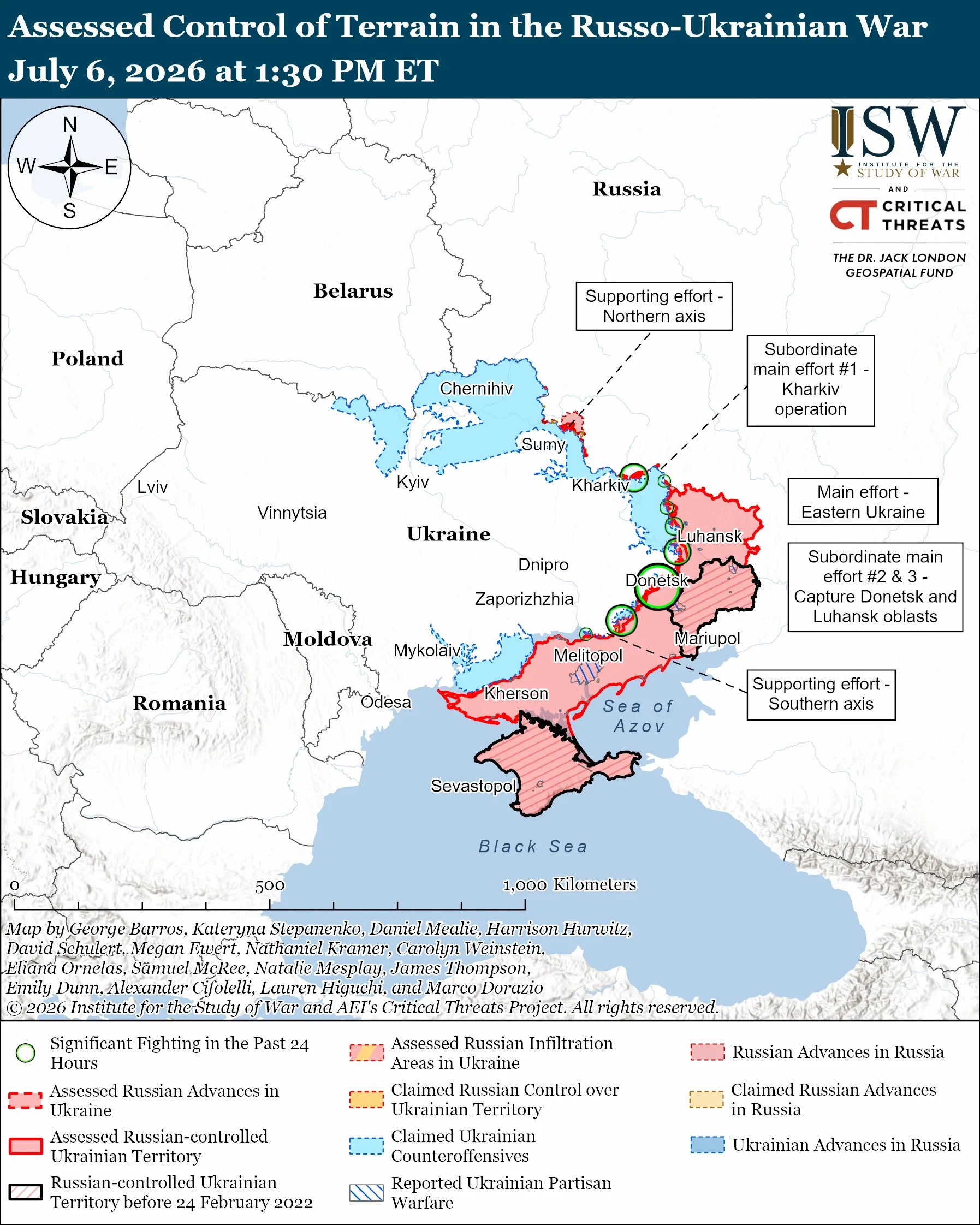
Key Takeaways from the ISW:
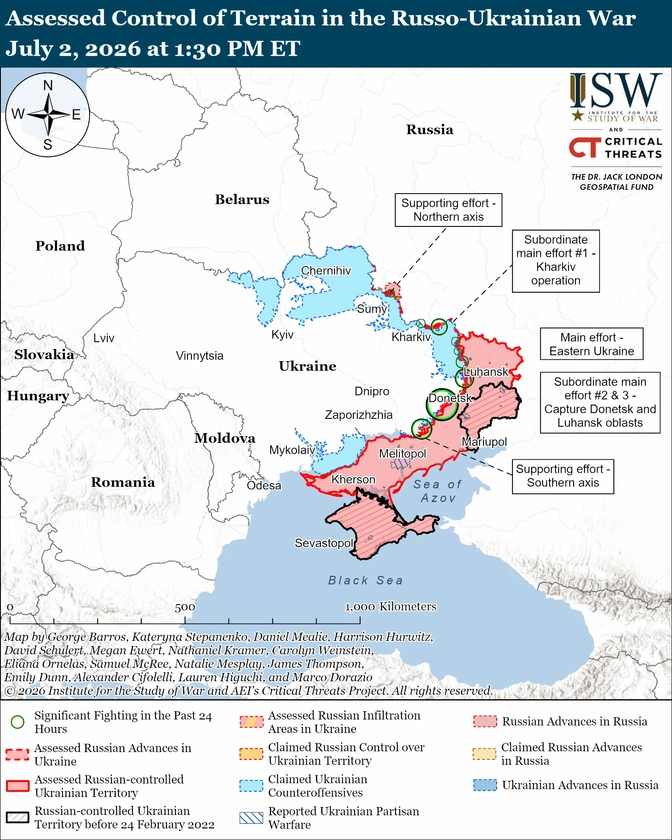
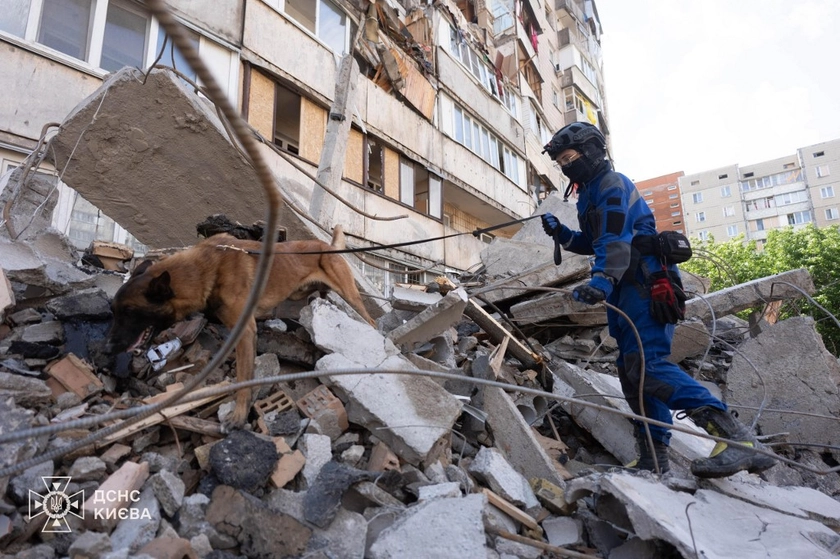
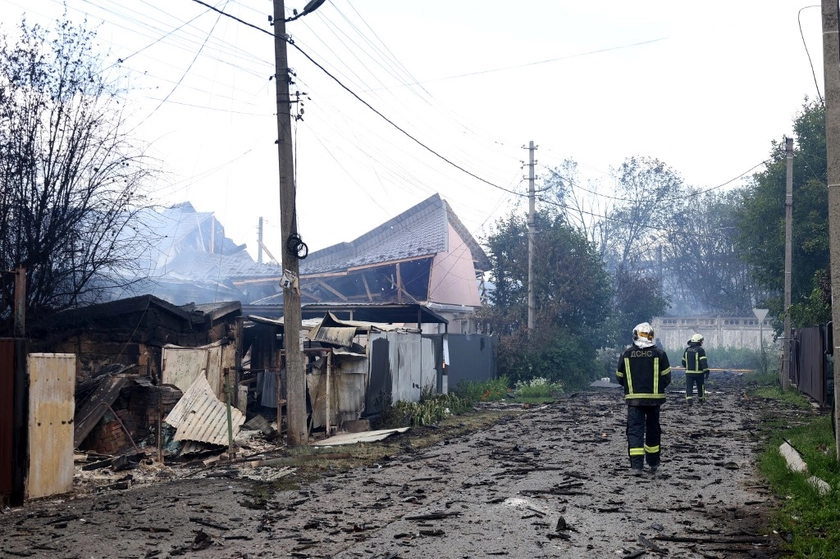
- Russian forces launched their fourth large-scale missile and drone strike against Ukraine since June 1 on the night of July 5 to 6. This latest strike series again heavily targeted Kyiv City and caused dozens of civilian casualties.
- Russian forces are taking advantage of Ukraine’s depleted stocks of anti-ballistic missile interceptors to maximize the destructive potential of their strike packages.
- Russian forces have been decreasing the number of ballistic missiles in each strike package in recent weeks as Ukraine’s interception rate has declined.
- Russian forces likely purposely timed this latest large-scale strike package to generate informational effects ahead of the July 7 to 8 NATO summit in Turkey.
- Ukrainian forces conducted their deepest drone strike against Russia thus far in the war, striking the largest oil refinery in Russia over 2,500 kilometers from the Ukrainian border.
- Russian officials are trying to present Russia as a willing negotiator and Ukraine as the obstacle to peace ahead of US President Donald Trump’s meetings with Ukraine and Europe at the July 7 to 8 NATO summit.
- Russia is engaging in increasingly risky kinetic behaviors against NATO member states as part of its “Phase Zero” condition-setting campaign.
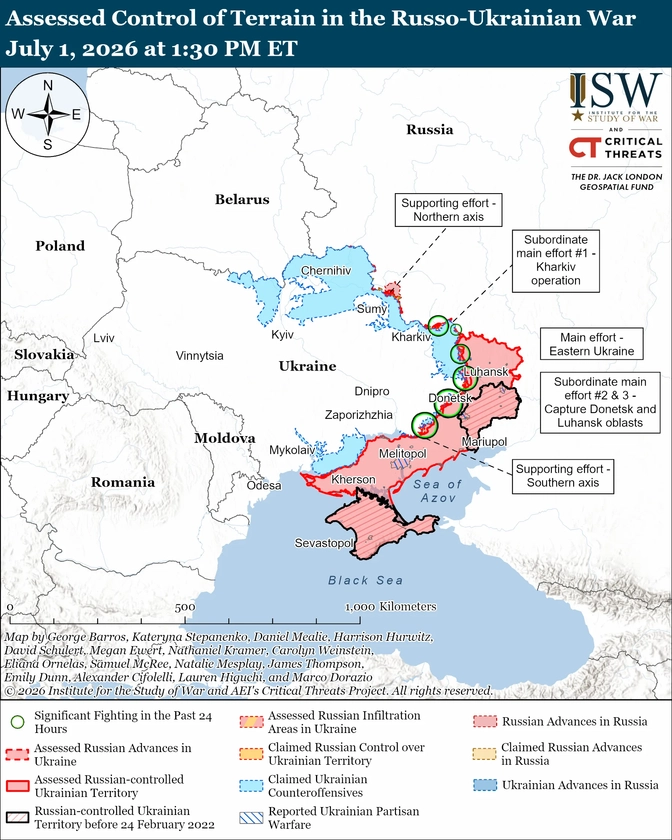
- Ukrainian forces advanced in the Oleksandrivka and Hulyaipole directions.
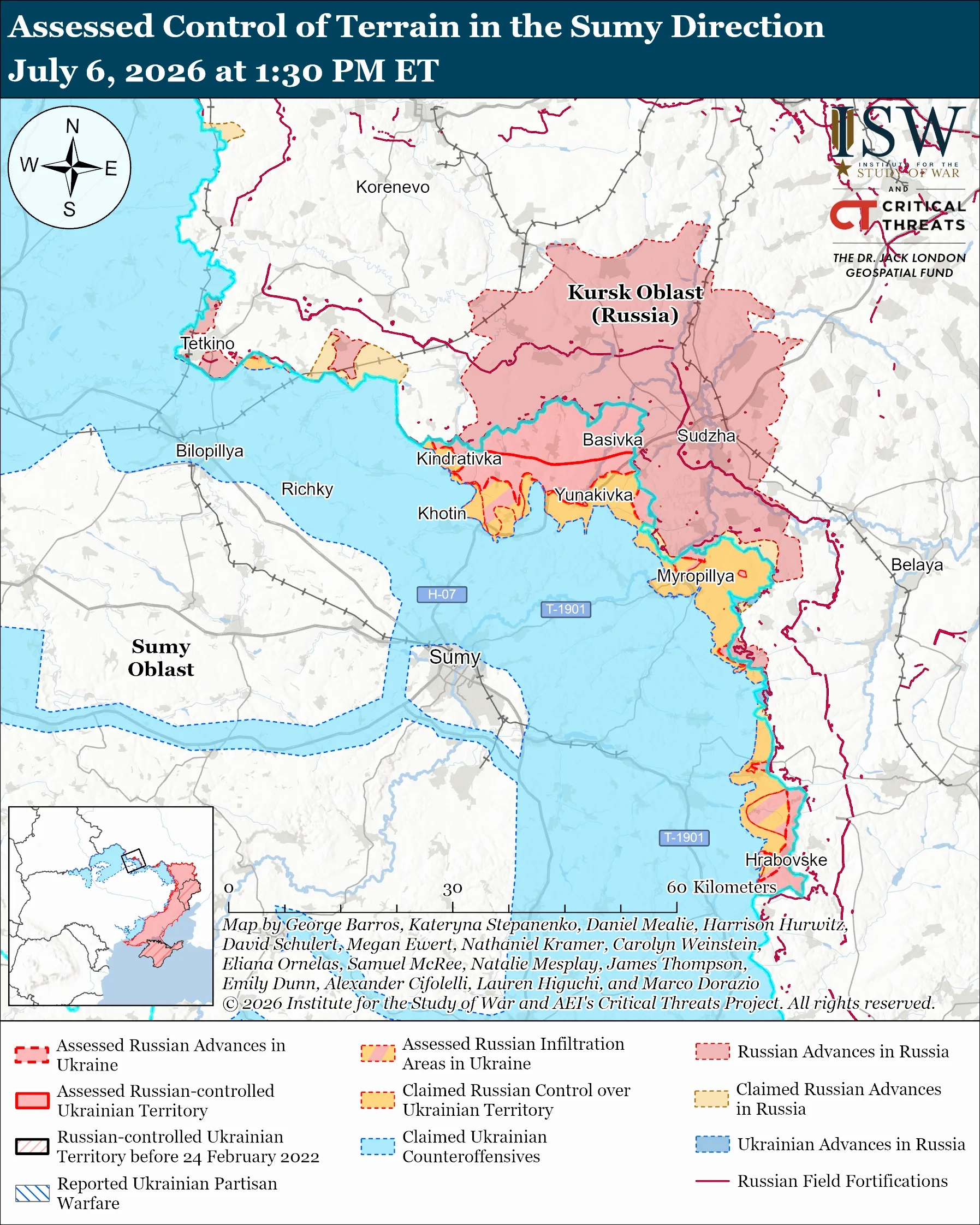
See the original here.
JOIN US ON TELEGRAM
Follow our coverage of the war on the @Kyivpost_official.
To suggest a correction or clarification, write to us here
You can also highlight the text and press Ctrl + Enter
You can also highlight the text and press Ctrl + Enter

Russia Closes Border Crossings With Baltic States, Finland
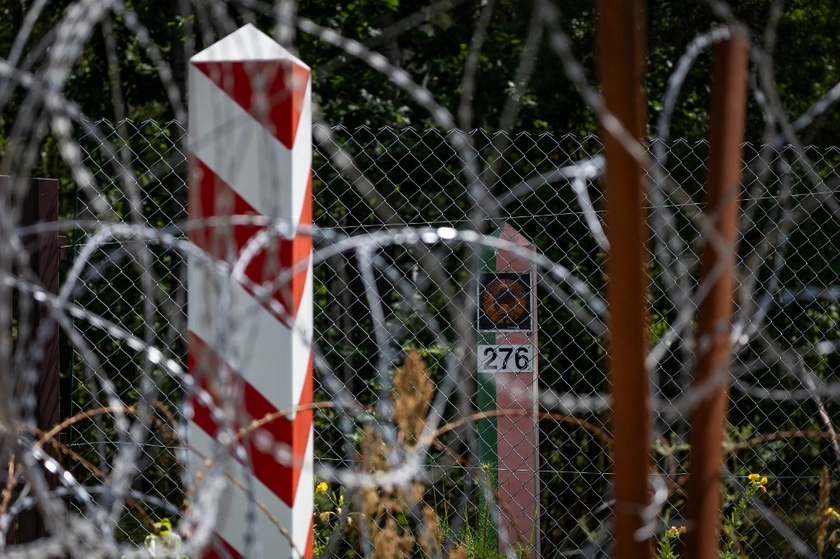
Russia is suspending all railway border crossings with Finland, Estonia and Latvia from July 1, closing seven checkpoints along its northwestern frontier.
July 1, 2026