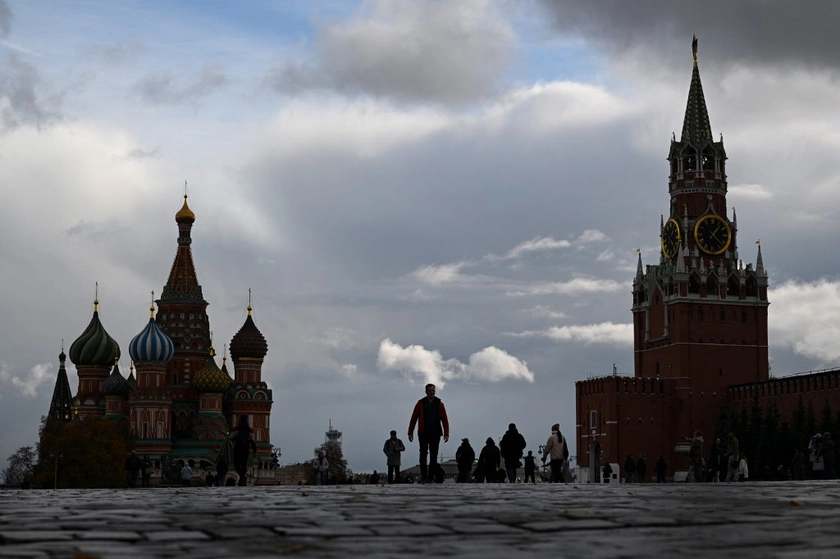
Russia’s Foreign Intelligence Service (SVR) is framing the war in Ukraine as Britain’s long-delayed payback for a military failure from nearly two centuries ago, rather than a war Moscow itself launched in 2022.
The claim was published by the Russian state-owned news media Ria Novosti, which pointed to Britain’s ongoing military and political support for Kyiv as evidence of a deeper, historically rooted motive behind London’s involvement.
JOIN US ON TELEGRAM
Follow our coverage of the war on the @Kyivpost_official.
“The Ukrainian conflict in London is largely perceived as an attempt at revenge for the unrealized 19th-century project of inflicting a strategic defeat on Russia,” the SVR’s statement reads.
The origin of the grievance
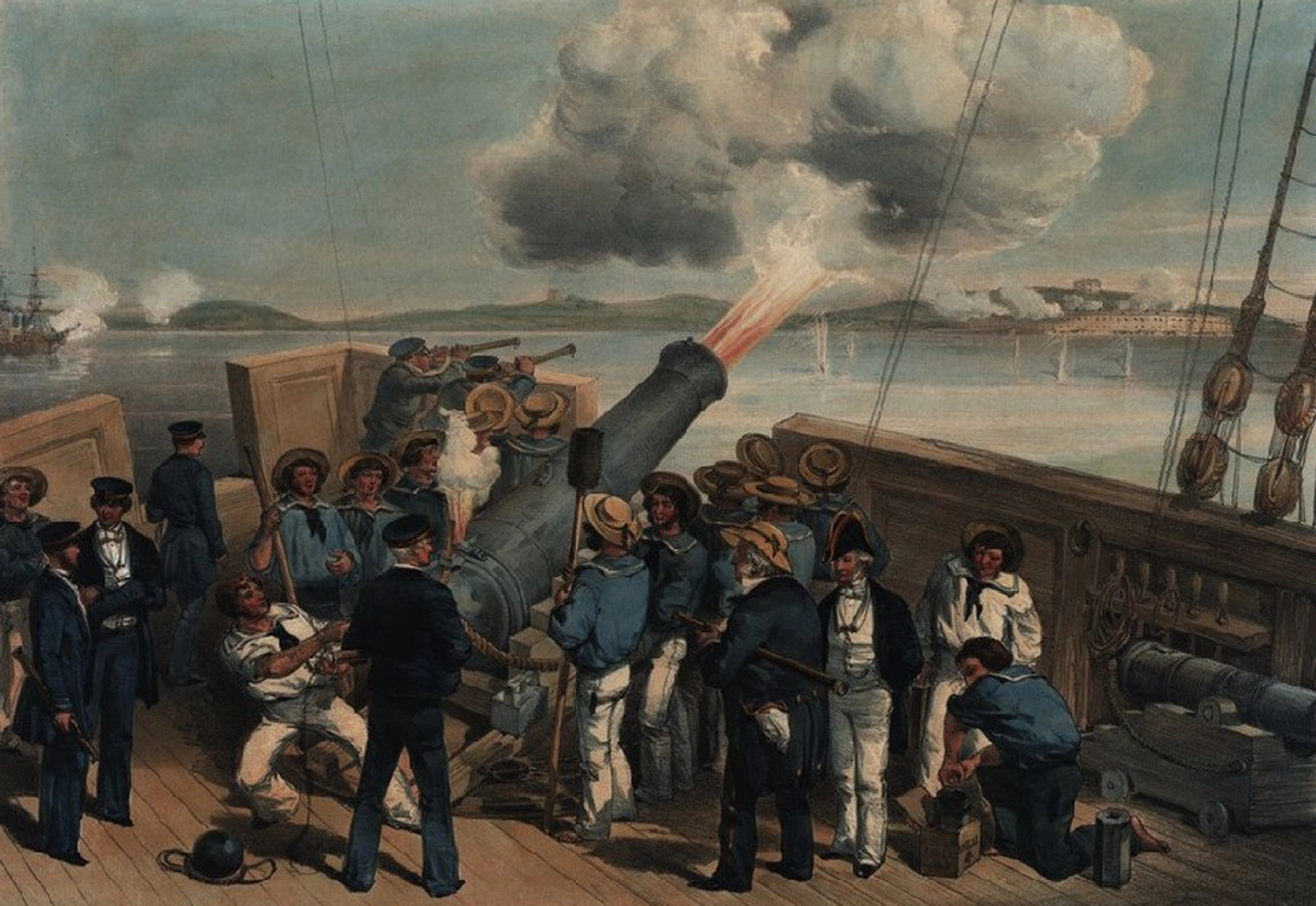
The specific historical episode being invoked is the Crimean War, fought between 1853 and 1856, when Britain joined forces with the Ottoman Empire to check Russian expansion in the Black Sea region.
According to NEST Centre, a wave of hostility defined the era, with “enlightened England” turning into a battlefield aggressor, shelling the port city of Sevastopol and shocking the Russian public who had previously admired British culture and institutions.
Cultural figures of the time, including writers and thinkers from Slavophile and conservative circles, reinforced the idea that Britain was a morally corrupt, materialist power destined for decline, feeding a narrative that persisted well beyond the war itself.
In many ways, Russia still reflects the ideology from the Slavophile movement which originated in the 1840s and 1850s and argued that Western Europe was morally bankrupt and individualistic, whereas Russian society was bound together by “sobornost” (spiritual community, “togetherness”).

Mi-8 Crew Killed as Helicopter Crashes Intercepting Russian Drones in Poltava
In June 2025, Russia launched a “traditional values” visa scheme, granting residency to foreigners who explicitly reject Western LGBTIQ+ rights and progressive social norms, framing the program as a refuge for those facing pressure in liberal democracies.
In a broader way, this effectively turns the old Slavophile movement distinction between a “corrupt West” and a “cohesive Russia” into a concrete migration filter, embedding anti-Western, anti-LGBTIQ+ ideology directly into Russian law rather than leaving it as abstract cultural commentary.
Same narrative in different conflict
Research tracking Russian state messaging has identified a recurring narrative structure in which Britain is cast as the true architect behind conflicts involving Russia, rather than a country reacting to actions initiated by Russia.
Within that framework, Ukraine is depicted less as a sovereign nation defending its own territory, and more as an instrument carrying out what Kremlin authorities describe as a much older British campaign against Russian influence.
Reportedly, senior Russian authorities have made similar arguments before, describing Kyiv’s government at various points as an “obedient executor” acting on instructions from London, rather than as an independent actor. Simultaneously, Russia continuously describes Ukraine and its government as “Nazis” and “neo-Nazis.”
The same Nazi propaganda playbook shows up in how Moscow described Britain, borrowing the term “Anglo-Saxons” as an ethnic label once used by Nazi propagandists to demean and target specific groups of people.
Russian state rhetoric casts this confrontation in almost religious terms, presenting the West, Britain in particular, not as a political rival – but as an embodiment of the “evil” West versus the “good” Russia.
Shifting public sentiment
According to the same NEST Centre report, public opinion data showed a sharp decline in favorable Russian attitudes toward Britain since the collapse of the Soviet Union – roughly three-quarters of Russians held a positive view of the UK in 1991, compared with only a small fraction expressing negative feelings at that time. By 2020, that picture had reversed almost entirely, with strongly negative opinions dominating national surveys.
The same tracking indicates Britain has, since Russia’s full-scale invasion of Ukraine in 2022, rivaled or even surpassed the United States as the country Russians regard with the greatest hostility, a shift researchers link partly to renewed diplomatic engagement between Washington and Moscow under the current US administration.
Strategic motivation behind the framing
Analysts cited in the research argue that Moscow’s emphasis on Britain serves a specific political purpose – it allows Kremlin officials to characterize Western support for Kyiv as evidence of a premeditated, decades-old scheme rather than a direct response to Russian military aggression.
This narrative also gives domestic audiences historical explanations for battlefield setbacks or diplomatic isolation, as well as during moments of heightened tension between Moscow and London, including past disputes and scandals tied to Russian actors.
The rhetorical framing runs alongside a more tangible strategy – Russia is believed to be using hybrid warfare techniques to sabotage Europe, with recent attacks in June fitting a wider pattern of Russian-backed sabotage, including firebombs on planes destined for the UK and drones entering NATO territory after being knocked off course by Russian electronic interference.
You can also highlight the text and press Ctrl + Enter