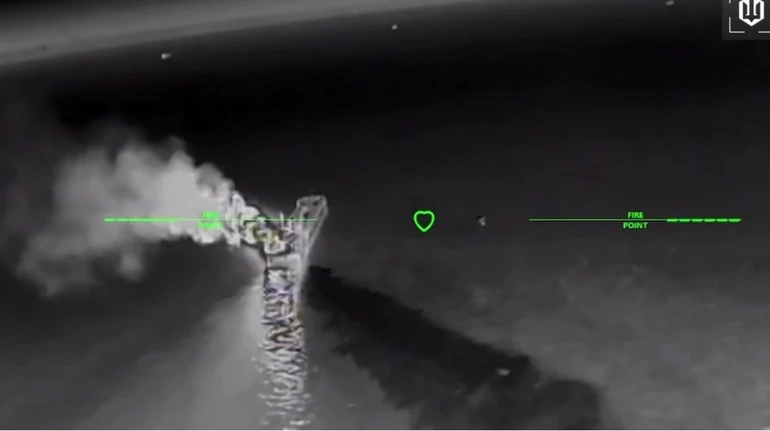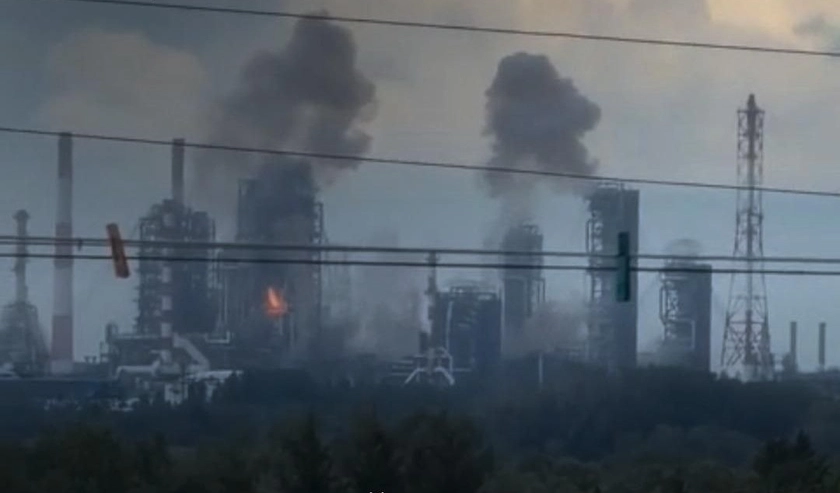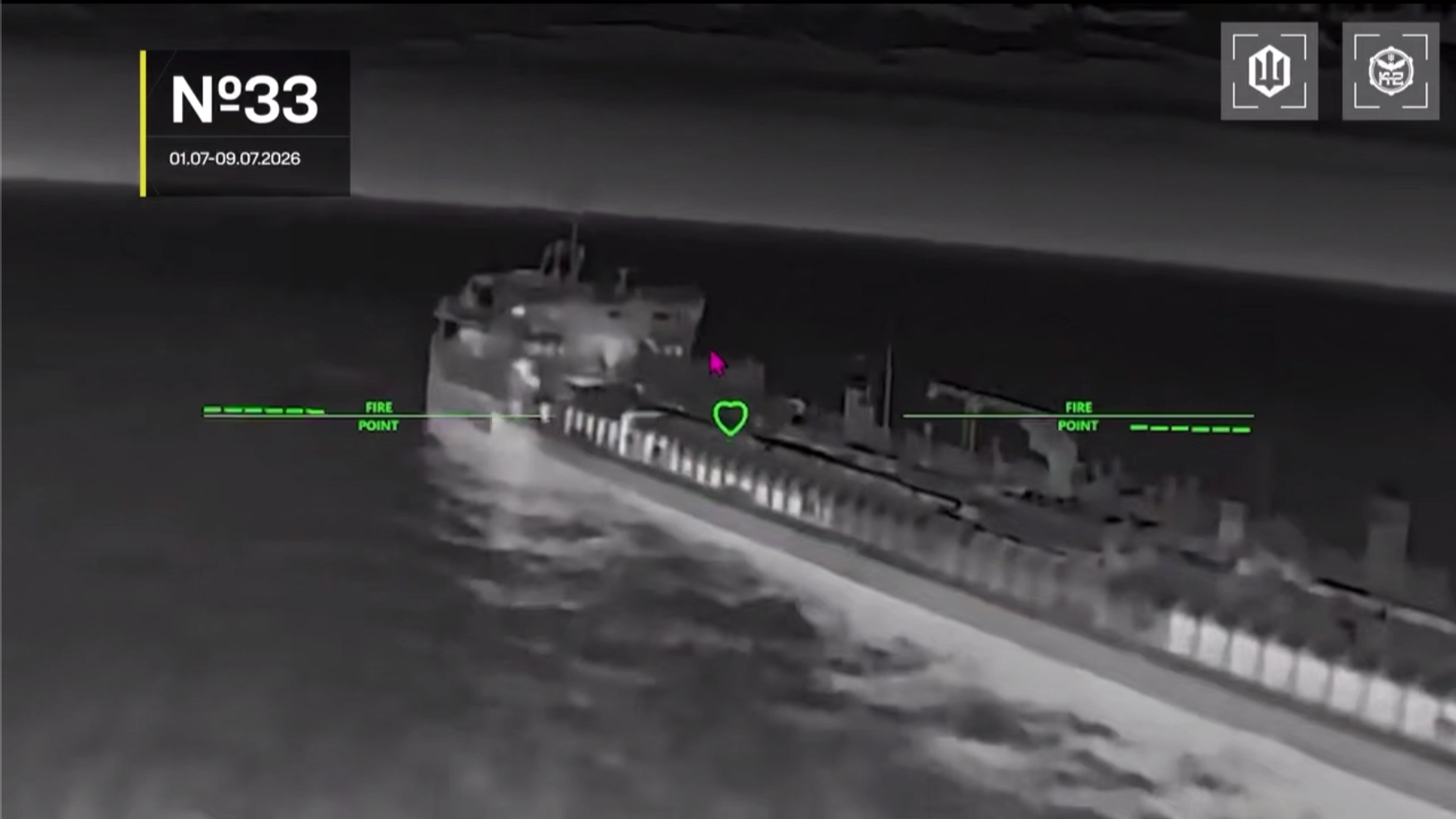
Ukraine reportedly struck 14 Russian vessels, including 12 oil tankers believed to be part of Moscow’s so-called “shadow fleet,” in the Sea of Azov overnight into Thursday, July 9.
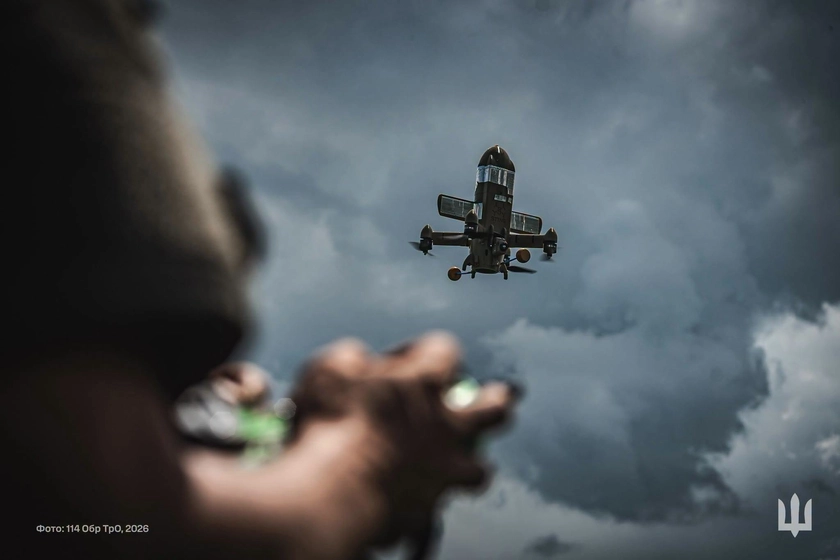
Robert “Madyar” Brovdi, commander of Ukraine’s Unmanned Systems Forces (USF), wrote on Telegram that his units targeted 12 tankers, one dry cargo ship and one tugboat.
JOIN US ON TELEGRAM
Follow our coverage of the war on the @Kyivpost_official.
He added that Ukraine had struck 35 tankers, dry cargo ships and support vessels over the past 96 hours, saying Russia’s “shadow fleet” was “thinning.”
The vessels he identified under the Russian flag were:
- tanker Chelsea-6
- tanker Auratanker Sonar-1
- tanker Ilya Repin
- Mercury (vessel type to be confirmed)
- tugboat Alfeo with the barge Aphrodite
- tanker Venus-3tanker Penelope
He also said the sanctioned tanker Galiaskar Kamal, sailing under the Panamanian flag, was hit. The identities of five additional vessels are still being verified.
“All identified tankers are part of the shadow fleet and are under international sanctions,” Brovdi wrote.
Ukraine’s General Staff also confirmed the destruction of 12 tankers, a tugboat and a dry cargo ship, adding that it is working to establish the extent of damage.
According to the General Staff, the vessels were used to supply fuel and lubricants to Russian military units and to transport oil and petroleum products in circumvention of international sanctions.
“These vessels facilitate the export of energy resources, one of the Kremlin’s key sources of funding for its war against Ukraine,” the statement says.
Ukraine Reports Strike on Rostov Oil Terminal as Russia Says Tankers Were Attacked Again
Brovdi also recounted previous strikes. On July 6, Ukrainian forces reportedly hit the tankers Captain Barmin and Sanar-3 (Primemax class).
On July 7, Brovdi said 10 vessels were struck, including 8 tankers, 1 dry cargo ship and the ferry SKS One in Kerch:
- Venera-3
- Sanar-1
- Sanar-17
- Klimena
- Teti
- Alexey Savrasov
- Penelope
- Ivan Cheremisinov
- one unidentified dry cargo
- shipferry SKS One
On July 8, he said Ukrainian forces hit nine more vessels:
- tanker Efrosinya B
- tanker Maria
- tanker Sanar-17 (second reported strike)
- tanker Sanar-4
- tanker Klimena (second reported strike)
- dry cargo ship Donstardry
- cargo ship Vladimir Yarygindry
- cargo ship Feofan Shokhirevdry
- cargo ship Evgeniya Z
Brovdi also said Ukrainian forces struck 45 military targets overnight in occupied Crimea and southern Ukraine.
Among the reported targets were the Saky thermal power plant, three fuel storage facilities, two logistics sites, a Zhitel electronic warfare system and communications towers.
Earlier on Thursday, Rostov Region Governor Yuriy Slyusar confirmed that two tankers had been damaged in the Taganrog Bay during an overnight Ukrainian drone attack.
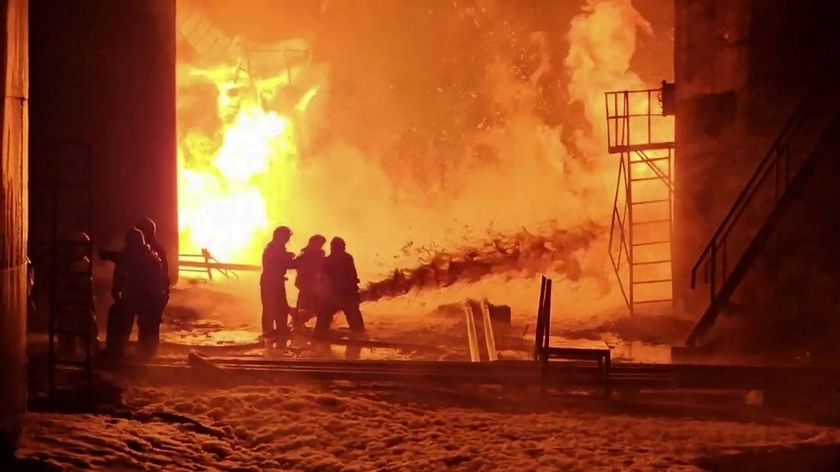
“In the Taganrog Bay, [unmanned aerial vehicles] UAVs again attacked two tankers, which sustained mechanical damage. There were no injuries. The tanker crews were evacuated,” Slyusar wrote on Telegram.
Fires broke out aboard both vessels, he said. One had been extinguished by the time of his latest update, while firefighters were still working to put out the other.
Unprecedented strike campaign against Russia’s shadow fleet
The reported strikes are part of Ukraine’s broader campaign to disrupt Russian fuel supplies and logistics between occupied Crimea and mainland Russia. If confirmed, they would mark Ukraine’s largest strike campaign against Russia’s so-called shadow fleet since the start of the full-scale invasion.
By comparison, the Ukrainian Navy damaged six Russian tankers operating off Turkey’s northern coast and in the Mediterranean over a three-week period in late 2025.
Russia, meanwhile, attempted 15-18 attacks on Ukrainian commercial shipping in 2025, damaging around 28 vessels, according to a December 2025 report by the Institute for Black Sea Strategic Studies.
Ukraine has defended its strikes on Russia’s shadow fleet, arguing that tankers transporting Russian oil and petroleum products directly finance Moscow’s war effort and may therefore constitute legitimate military targets.
Deputy Prime Minister Oleksiy Kuleba made that argument in a letter to the International Maritime Organization (IMO) after Russia accused Kyiv of carrying out “terrorist” attacks against commercial shipping, according to the Financial Times.
“Legitimate questions arise as to whether the activities of such vessels can be regarded solely as ordinary commercial operations,” Kuleba wrote.
He argued that the shadow fleet is “critical to the generation of budget revenues for the Russian Federation and the continuation of its war effort.”
Previously, Russia has accused Ukraine of attacking the Russian-flagged tanker Arctic Metagaz in the Mediterranean in March, an allegation Kyiv has denied.
Instead, Kuleba said Russia has attacked 59 merchant vessels since the start of the full-scale invasion, including the Turkish cargo ship MV Victress and the German-owned Helga, calling the incidents further evidence of Moscow’s disregard for international humanitarian law and maritime safety.
Industry estimates suggest Russia’s shadow fleet has grown to more than 1,500 tankers, enabling Moscow to continue exporting oil despite Western sanctions.
You can also highlight the text and press Ctrl + Enter