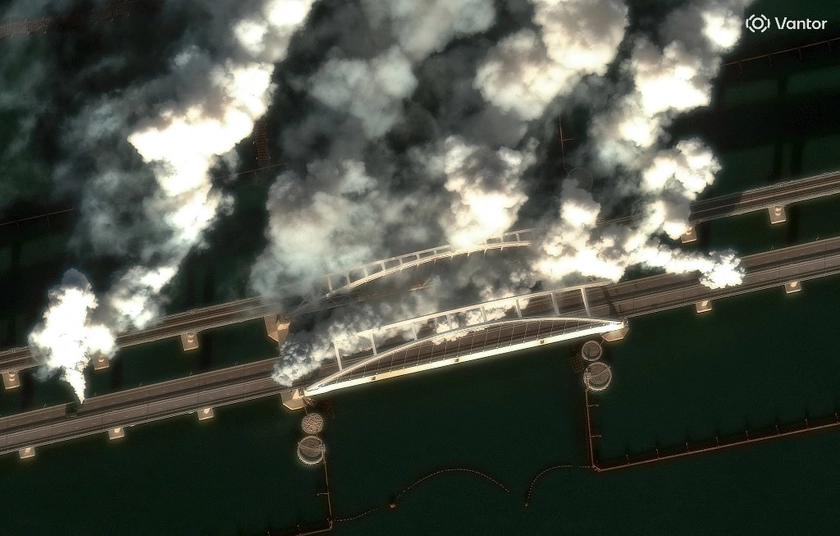
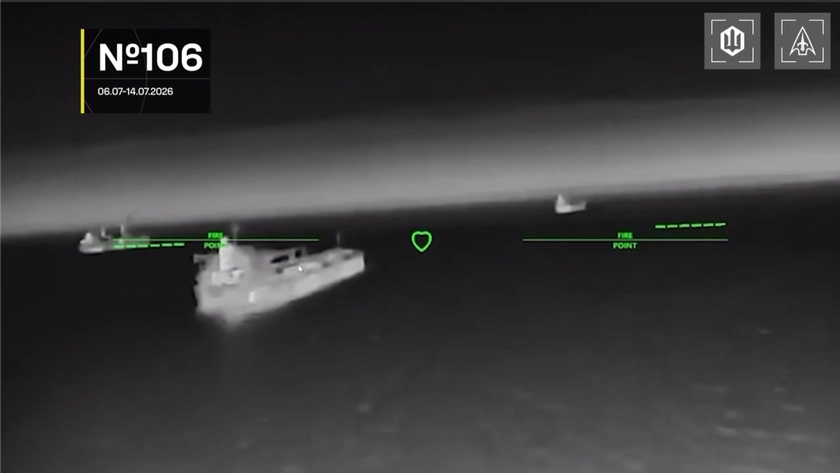
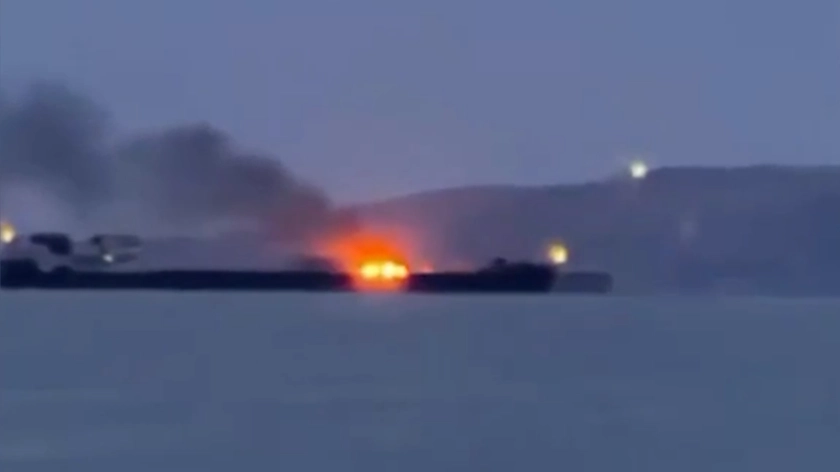
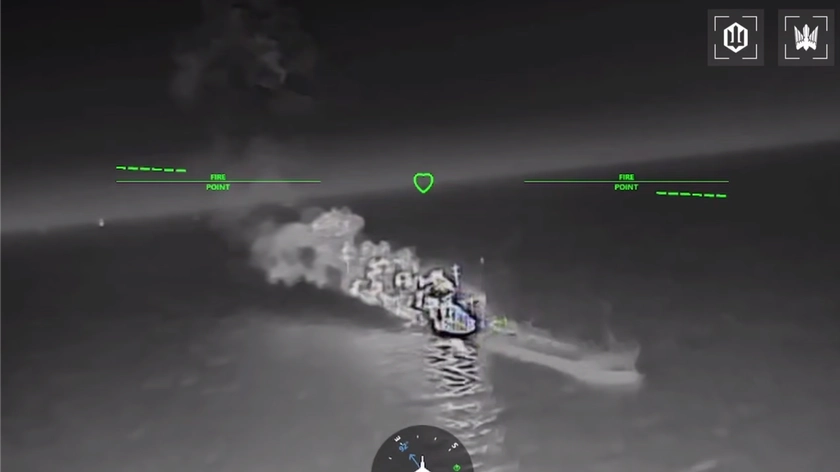
Ukraine’s Unmanned Systems Forces (USF) said they struck 20 Russian vessels in the Black Sea overnight on Wednesday, July 15, marking the expansion of their maritime drone campaign beyond the Sea of Azov.
USF Commander Robert “Madyar” Brovdi announced the operation on social media, saying it was carried out as part of Operation MoLoChKa (“Dairy”) to mark Ukraine’s Statehood Day.
JOIN US ON TELEGRAM
Follow our coverage of the war on the @Kyivpost_official.
“The next cluster of USF Operation MoLoChKa was uncorked for Ukraine’s Statehood Day – USF Birds in the Black Sea. The score count is ongoing: the first 20 tankers were hit during the night of July 15,” Brovdi wrote.
According to Brovdi, the targets included 17 oil tankers, 2 gas tankers and 1 tugboat.
“No piracy, Lavrov, just business. Yours, bloody,” he added.
Brovdi’s remarks appeared to be a response to comments made by Russian Foreign Minister Sergey Lavrov on July 14, when he condemned Ukraine’s strikes on Russian vessels in the Sea of Azov during a joint press conference with Chadian Foreign Minister Abdoulaye Sabre Fadoul.
Responding to a journalist’s question about whether the attacks could affect Russia’s African partners and how Moscow might respond, Lavrov said:
“You know, what the Ukrainian regime is doing isn’t even piracy. Pirates at least steal for themselves. Here, they neither take anything for themselves nor let others have it – they simply want to inflict damage and spread fear. It’s pure terrorism.”

Bipartisan Russia Sanctions Bill Advances as Tribute to Late Senator Lindsey Graham
Lavrov did not mention Russia’s repeated attacks on civilian merchant vessels or commercial shipping since the start of its full-scale invasion of Ukraine.
Ukraine’s expanding maritime drone campaign struck another 11 Russian vessels in the Sea of Azov, bringing the total to 116 ships hit in 9 days, according to Brovdi. The latest targets included five tankers, five cargo vessels and one tugboat.
According to Kyiv Post analysis, the campaign aims to disrupt Russia’s maritime logistics, restrict fuel deliveries to occupied Crimea and undermine oil exports that help finance Moscow’s war.
It also challenged one of the Kremlin’s longstanding claims that the Sea of Azov had become an uncontested Russian “internal sea” following the occupation of southern Ukraine.
The impact is already visible. Satellite imagery reviewed by Reuters showed more than 40 vessels waiting near the Kerch Strait in early June, but only a handful remained after Ukrainian attacks intensified.
Russia has also temporarily suspended traffic through the Don-Azov shipping channel, while navigation through the Kerch Strait has been heavily restricted.
The operation targets a critical supply chain linking Russian inland ports with larger tankers in the Black Sea. Because deep-draft tankers cannot enter the shallow Sea of Azov, smaller feeder vessels transport oil to offshore transfer points. Disrupting those shipments complicates Russia’s ability to export oil and supply its forces in occupied Crimea.
Ukraine has described such strikes as a form of “long-range sanctions.” Rather than relying solely on Western restrictions against Russia’s shadow fleet, Kyiv is physically disrupting the transport routes that enable sanctioned oil exports, making maritime logistics increasingly difficult.
You can also highlight the text and press Ctrl + Enter

OPINION: The Bill for Crimea Comes Due for Putin
‘Shadow Fleet Is Leaving the Chat’: Ukraine Hits 10 Russian Fuel Tankers in One Day
‘Shadow Fleet Is Leaving the Chat’: Ukraine Hits 10 Russian Fuel Tankers in One Day