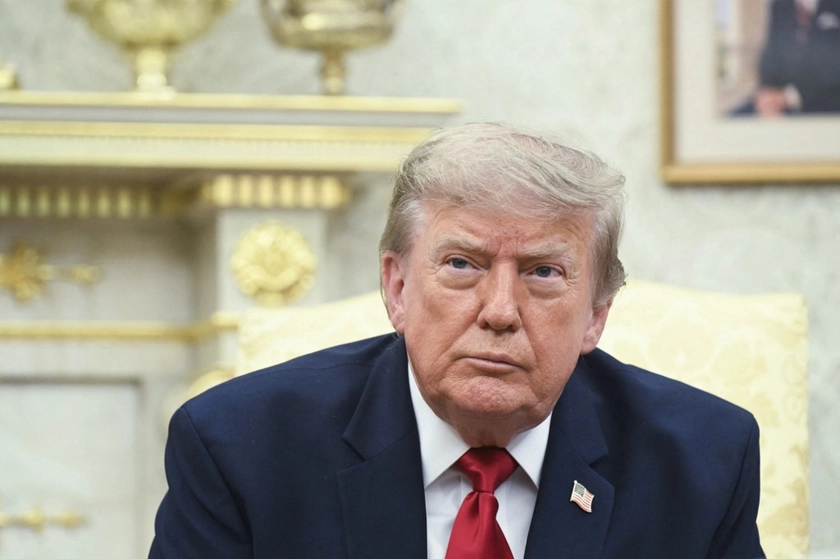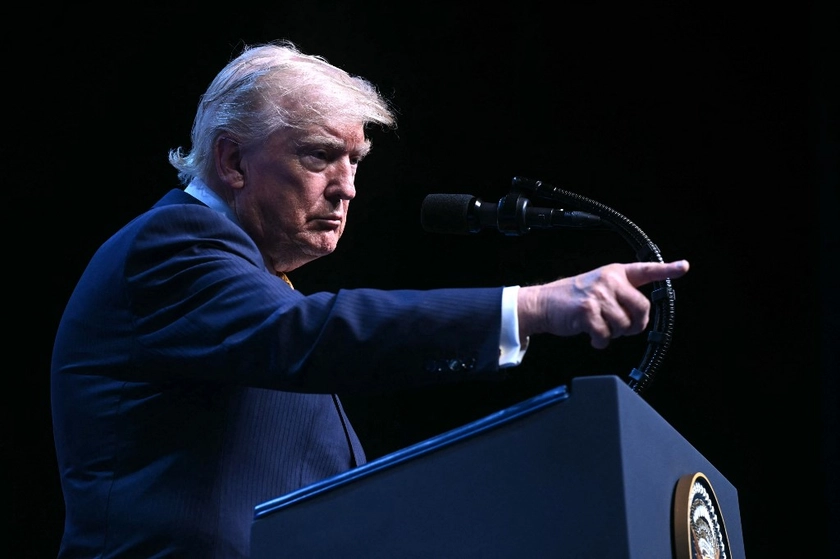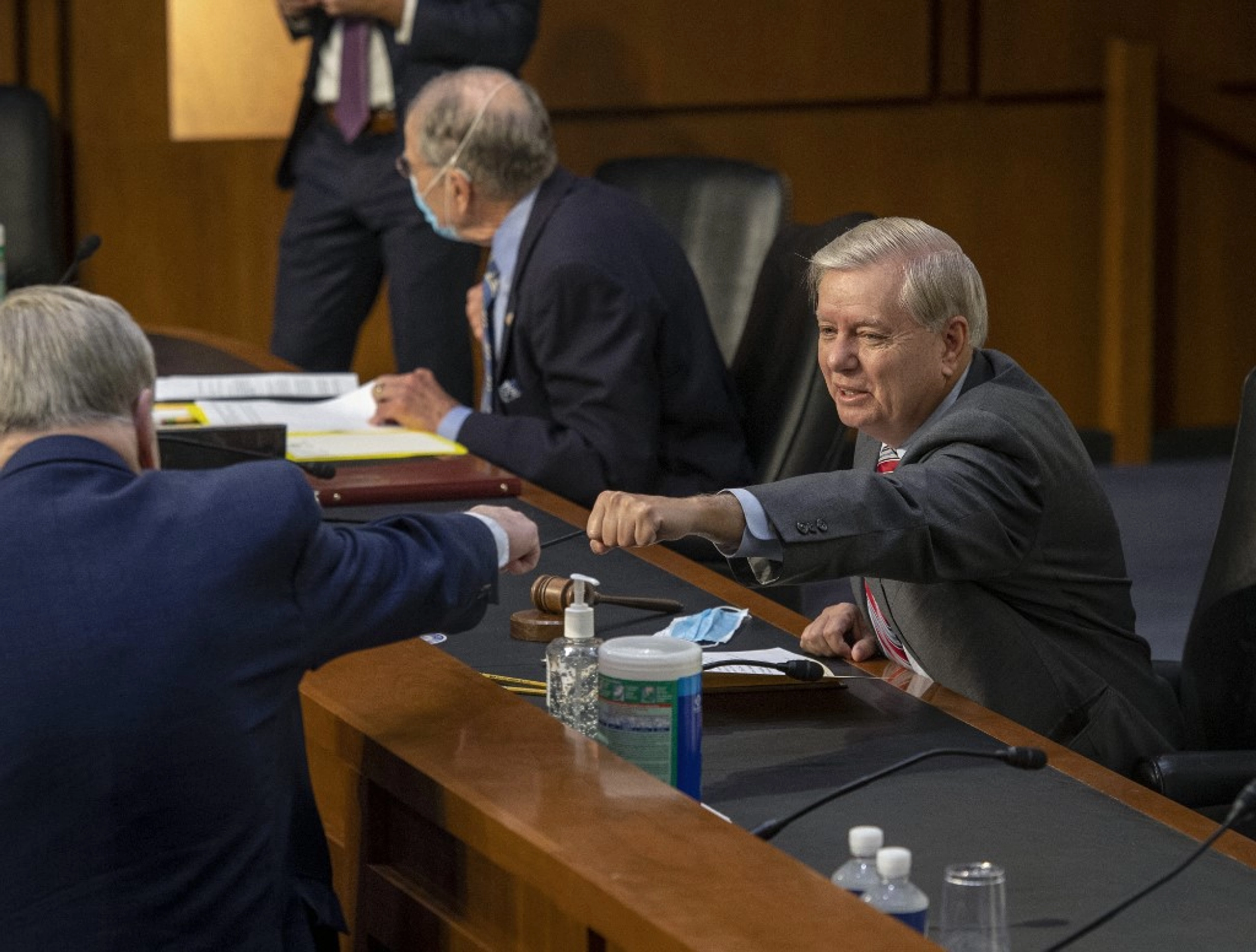
US President Donald Trump indicated Tuesday that Congress has a “good chance” of approving new measures targeting Russia’s war revenue, with lawmakers increasingly framing the initiative as a tribute to its chief architect, the late Republican Sen. Lindsey Graham.
Speaking at the White House, Trump revealed that Iran and Hezbollah could also be included.
JOIN US ON TELEGRAM
Follow our coverage of the war on the @Kyivpost_official.
“I know Lindsey wanted it very badly,” Trump told reporters. “I think they may add Iran to the bill, which would be very important if they actually do that. They may add Hezbollah also. So, if you do business with Hezbollah, that would also come under the bill.”
Sen. Richard Blumenthal, the Democratic co-sponsor of the sanctions package, urged the White House not to reopen the compromise by introducing additional targets.
“With all due respect to the president, he has approved this bill, and we should move forward with it rather than reopening it to add other potential targets,” Blumenthal told reporters. “If there are other bills that he wants to propose, we’ll consider them.”
The bipartisan proposal seeks to deprive Moscow of funds used to finance its war against Ukraine by penalizing Russia’s energy sector and countries that continue purchasing its oil and gas.
Shortly before his death, Graham announced that lawmakers had reached an agreement with the White House on a version acceptable to the Trump administration.

Should Ukraine Tax Banks’ Windfall Profits?
The South Carolina senator died Saturday night at age 71 from an aortic dissection linked to cardiovascular disease, shortly after returning to Washington.
An irreplaceable intermediary
Graham leaves behind a distinctive political role that no single lawmaker is likely to replicate, although the momentum he created behind sanctions and support for Ukraine may continue shaping Washington’s policy, former US Ambassador to Ukraine John Herbst told the Kyiv Post.
Graham had become a crucial intermediary between Ukraine’s leadership, Congress and Trump. Within the president’s political orbit, he was also among the most forceful voices arguing that Russia’s aggression presented a direct challenge to US interests.
“I don’t think we’ll see anyone take his place going forward,” Herbst said.
“He understood that Moscow considers us its principal adversary and that we need to make sure Putin does not take control of Ukraine.”
Graham’s influence may nevertheless prove durable, Herbst argued, pointing to the breakthrough over sanctions achieved shortly before his death.
“His impact has already been real,” the former ambassador noted. “It was announced a day or two before his untimely death that the administration had agreed to move the sanctions legislation that he’d been pushing for well over a year.”
Lawmakers from both parties are now calling for the Senate to advance the legislation as part of Graham’s legacy, with some proposing that the bill be named in his honor.
Bipartisan support may sustain Graham’s legacy
Although Graham’s relationship with Trump made him uniquely influential, Herbst argued that support for Ukraine remains strong across party lines in Congress and among American voters.
“This is something which has been there ever since Trump returned to the Oval Office,” he explained. “I think it has had at least some influence on his policy, though not overwhelming. But this is a factor which helps move policy in the right direction.”
Herbst does not expect Ukraine to become a dominant issue in the US midterm elections this fall. After the vote, however, he anticipates that bipartisan congressional backing for Kyiv will remain intact and could grow.
“I think this sentiment is only going to increase,” he predicted. “Our policy, again, is moving in the right direction.”
Trump’s shift toward Ukraine
Herbst pointed to several developments surrounding last week’s NATO summit in Ankara as evidence of a significant improvement in Trump’s approach toward Ukraine.
During the summit, Trump held a warm meeting with President Volodymyr Zelensky and announced that Washington would grant Ukraine a license to manufacture Patriot air-defense interceptors domestically.
Zelensky later confirmed that an agreement had been reached at the political level, although industrial and technical arrangements still need to be completed. Washington and Kyiv have also renewed discussions over cooperation involving Ukrainian aerial and maritime drone technology.
“There’s no question that decision was very important,” Herbst emphasized.
Domestic production could eventually help Ukraine address its severe shortage of interceptors as Russia continues launching ballistic missiles against cities and critical infrastructure.
Herbst also highlighted Trump’s endorsement of Ukrainian long-range strikes against military, defense-industrial and energy targets inside Russia.
“That will help bring peace, which is true,” he argued. “Putin thinks he can still conquer Ukraine, and only when he realizes that he can’t is peace possible.”
The NATO summit also reaffirmed alliance unity and the Article 5 collective-defense commitment, despite months of criticism directed at European allies by Trump and other senior US officials.
“The strong endorsement of NATO unity and Article 5 was important,” Herbst assessed.
“The criticism leveled by Trump and senior American officials prior to the summit did not get in the way of an outcome that reiterated the importance of the alliance to all members, including the US.”
Putin’s call ‘failed big time’
Shortly before the Ankara summit, Trump held a nearly 90-minute telephone conversation with Russian President Vladimir Putin, during which the US leader offered to help facilitate a settlement to Russia’s war against Ukraine.
Herbst interpreted the call as an unsuccessful Kremlin attempt to prevent progress between Washington and Kyiv.
“I think the phone call was an effort by Putin to prevent any serious progress in the US-Ukraine relationship at the NATO summit,” he said.
“If that was his goal, he failed big time.”
Rather than weakening cooperation, the summit produced the Patriot licensing announcement, renewed momentum behind a US-Ukraine drone agreement and Trump’s backing for Ukrainian strikes deep inside Russia.
“The Russian media has been going nuts about this,” Herbst observed. “They’re very unhappy about these developments.”
Europe moves beyond reliance on Patriots
Herbst also welcomed the creation of a new anti-ballistic missile coalition involving Ukraine and nine European partners.
Announced in Paris, the initiative brings together Ukraine, Denmark, France, Germany, Italy, the Netherlands, Norway, Spain, Sweden and the UK. The FREYJA program aims to develop an affordable, mass-produced defense against ballistic missiles within 12 months, combining Ukraine’s battlefield experience with European financing, radar technology and manufacturing capacity.
The US is not formally part of the initiative, but Herbst argued that Washington’s absence should not be interpreted as opposition.
The coalition reflects a structural shortage of US-made Patriot systems and interceptors, with demand rising among American allies and partners.
“Because of this, the Europeans, including Ukraine, decided they’ve got to begin producing ballistic missile defense on their own,” Herbst explained.
“I believe the US welcomes this. Certainly, the licensing agreement that President Trump announced with Ukraine is an example of this type of activity.”
Calling FREYJA a “very positive development,” Herbst portrayed the program as complementary to US support rather than an alternative to the transatlantic alliance.
John E. Herbst served as US ambassador to Ukraine from 2003 to 2006 and is senior director of the Atlantic Council’s Eurasia Center.
You can also highlight the text and press Ctrl + Enter
OPINION: The Bill for Crimea Comes Due for Putin