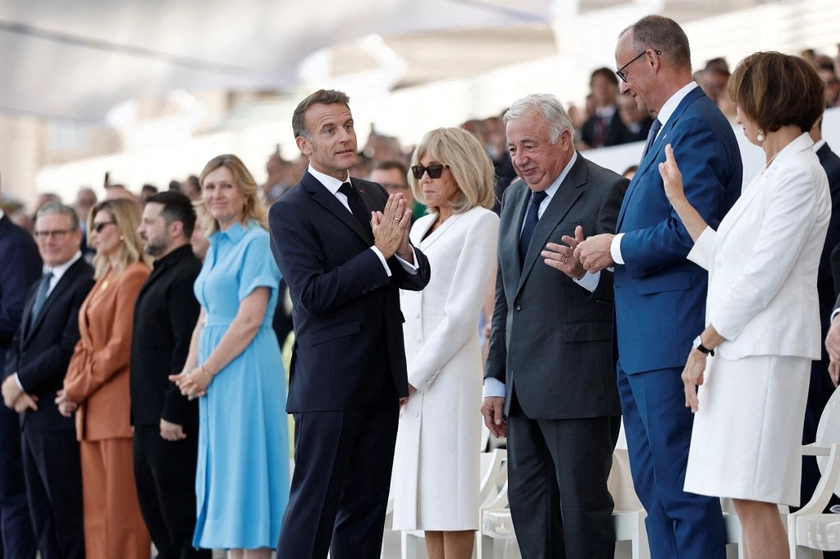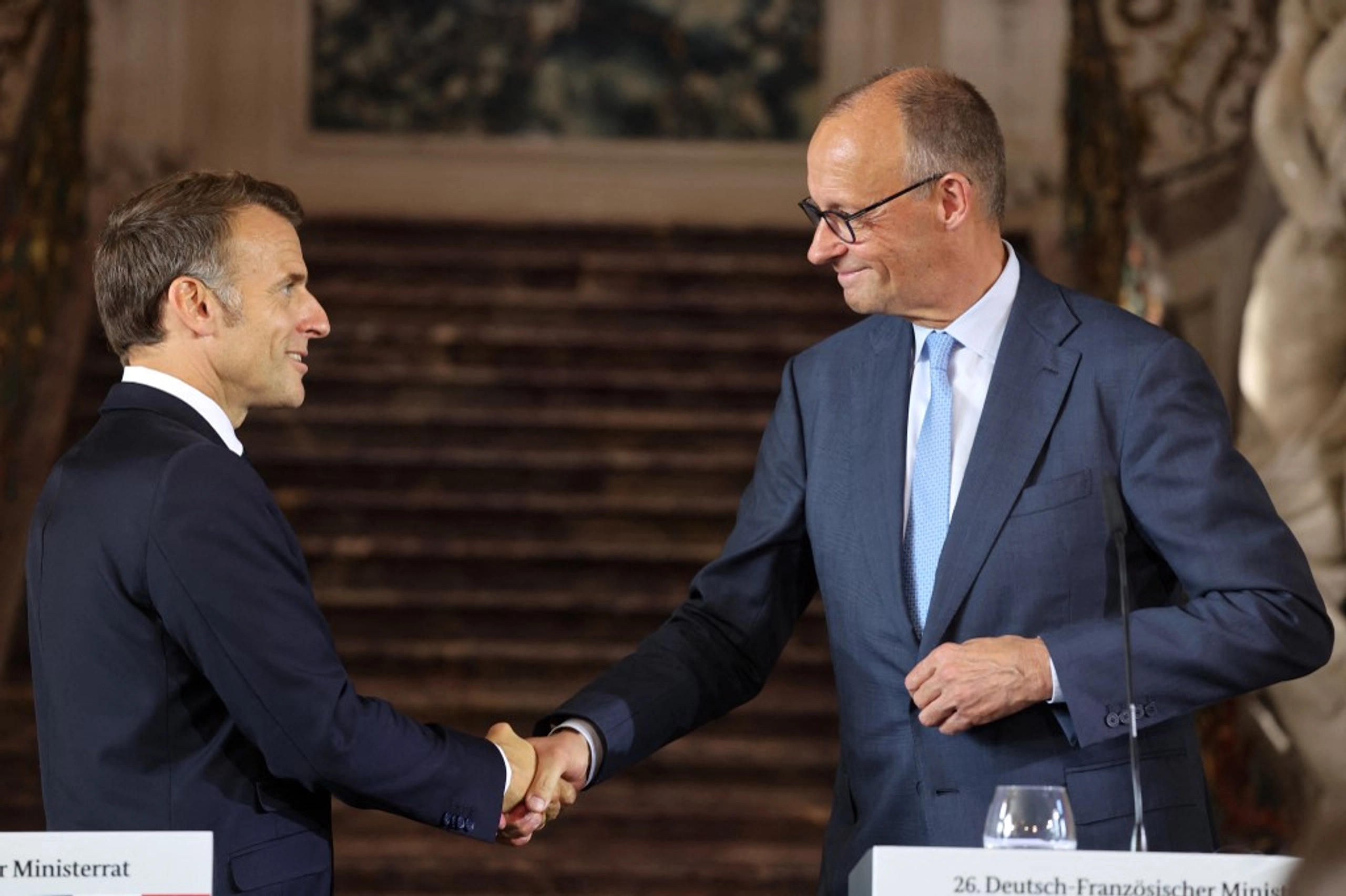
German Chancellor Friedrich Merz and French President Emmanuel Macron on Friday announced that their countries are doubling down on their strategic cooperation on nuclear deterrence, aiming to strengthen Europe’s defence posture.
Shortly after their joint €100 billion ($114 billion) fighter jet project imploded, both countries are now looking to rekindle their estranged relationship on a strategic level.
JOIN US ON TELEGRAM
Follow our coverage of the war on the @Kyivpost_official.
“This unprecedented bilateral cooperation will contribute to strengthening deterrence in Europe,” the agreement signed on Friday in Brühl, Germany, says.
The partnership will focus on “the integration of conventional capabilities, Deep Precision Strike and missile defence capabilities with nuclear deterrence”, in order to increase the ability “to manage escalation below the nuclear threshold and to develop the necessary conventional capabilities,” the document reads.
The two leaders also confirmed that Germany will participate in a French nuclear exercise later this year.
“This will be the first time we take part in such an exercise in a conventional capacity,” Merz said. The goal is “to identify where we can achieve common objectives, namely improved deterrence in Europe”.
The participation will likely involve German officials boarding a French tanker aircraft to observe a Poker exercise — the quarterly drill conducted by the French Air and Space Force to train its airborne nuclear deterrent. The exercise involves Rafale fighters carrying simulated ASMPA nuclear cruise missiles.
Historic First: Ukrainian Troops to March in Belgium’s National Day Parade
Still, a financial contribution from the German side is not foreseen, Macron pointed out.
In March, Macron invited European partners to participate in joint nuclear exercises and offered to expand the country’s nuclear deterrence over Europe.
Paris and Berlin have now formed a steering group to examine how France’s offer could work in practice.
This might end up in a common doctrine, Merz said.
Complicated industrial relationship
Overshadowed by the failed attempt to build a joint fighter jet and similar issues with their joint tank project, both sides were cautious about promoting new defence industry programmes.
Instead, the focus was put on a strategic level.
Both the joint fighter jet and tank programmes will continue to develop a common digital communication platform, ensuring interoperability on the battlefield.
French concerns about Germany’s strong push into the space domain are likely to be addressed in the near future as well, as both leaders agreed to hold a space summit in September.
Berlin and Paris have decided to coordinate on satellite frequencies and the EU’s secure communications satellite constellation, IRIS2.
See the original by Kjeld Neubert and Pietro Guastamacchia here.
You can also highlight the text and press Ctrl + Enter
Romania Destroys Five Naval Drones in Black Sea