Europe now sees Ukraine as a security asset rather than a liability, Hanna Notte, Eurasia Program Director at the James Martin Center for Nonproliferation Studies, told the World News Tonight program on Wednesday.
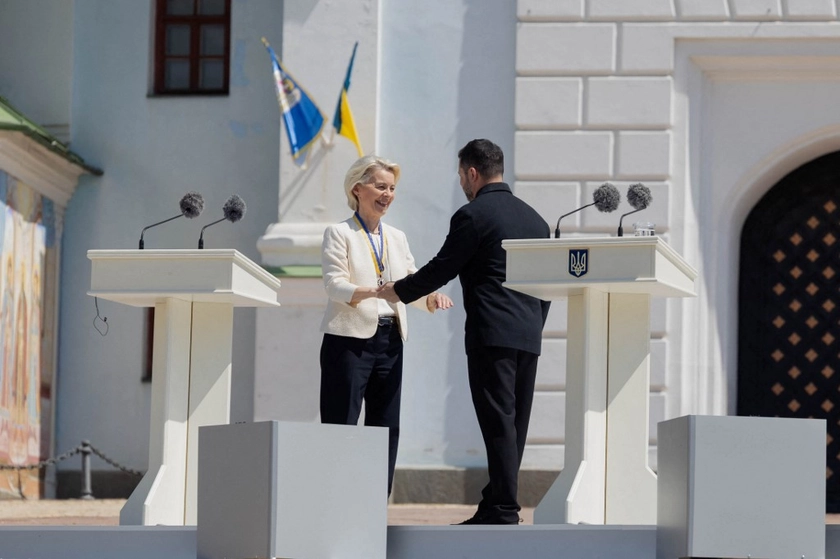
She described the deal as a “natural development” of recent events, specifically Kyiv concluding drone-based defense agreements with several individual EU member states.
JOIN US ON TELEGRAM
Follow our coverage of the war on the @Kyivpost_official.
Notte went on to underscore Russia’s increasing frustration with European countries over their support for Ukraine, drawing attention to the Russian Foreign Ministry summoning the German ambassador earlier in the week.
She said the EU deal contains a number of provisions Moscow will find “particularly undesirable,” such as drone cooperation being institutionally anchored within the bloc.
“There’s the possibility that these drones could now be built and stored across EU territory,” she said. “That would also provide Ukraine with a certain haven for its production against possible Russian strikes.”
But she conceded that the new partnership, coupled with other developments such as the anti-ballistic missile coalition recently unveiled, also exposes the rest of Europe to risk.
“So far, Russia has not dared to take any military action against European defense production,” she said. “And it seems to be deterred, but I think we can talk more about hybrid Russian action... in response to these new arrangements.”
Bulgaria Pledges Non-Military Aid to Ukraine After ‘Coalition of the Willing’ Exit
Testing NATO
Moscow is particularly likely to consider testing NATO countries’ readiness while the US is distracted in the Gulf, Notte argued.
“Now, the key question is whether Russia will dare to escalate into the kinetic or military realm and really move up a step and engage in some form of military attack against a European NATO country,” she said.
“Do I think it is conceivable? Yes, I think it is conceivable because the war in Ukraine is not going well for Russia.”
But she said NATO still represents a deterrent against the Russian threat.
“We know that Russia today has been quite risk averse vis-à-vis NATO in this war, because it still, at the end of the day, takes the NATO alliance seriously,” she said, adding that any escalation also carries significant risk for Moscow.
Not only could it elicit a strong response, but it may also have the reverse of the desired effect and make Europe more committed to supporting Ukraine, she suggested.
“If we look at the toolbox of options that Russia has right now in this war, there are really no good options,” she said.
You can also highlight the text and press Ctrl + Enter

OPINION: The Bill for Crimea Comes Due for Putin