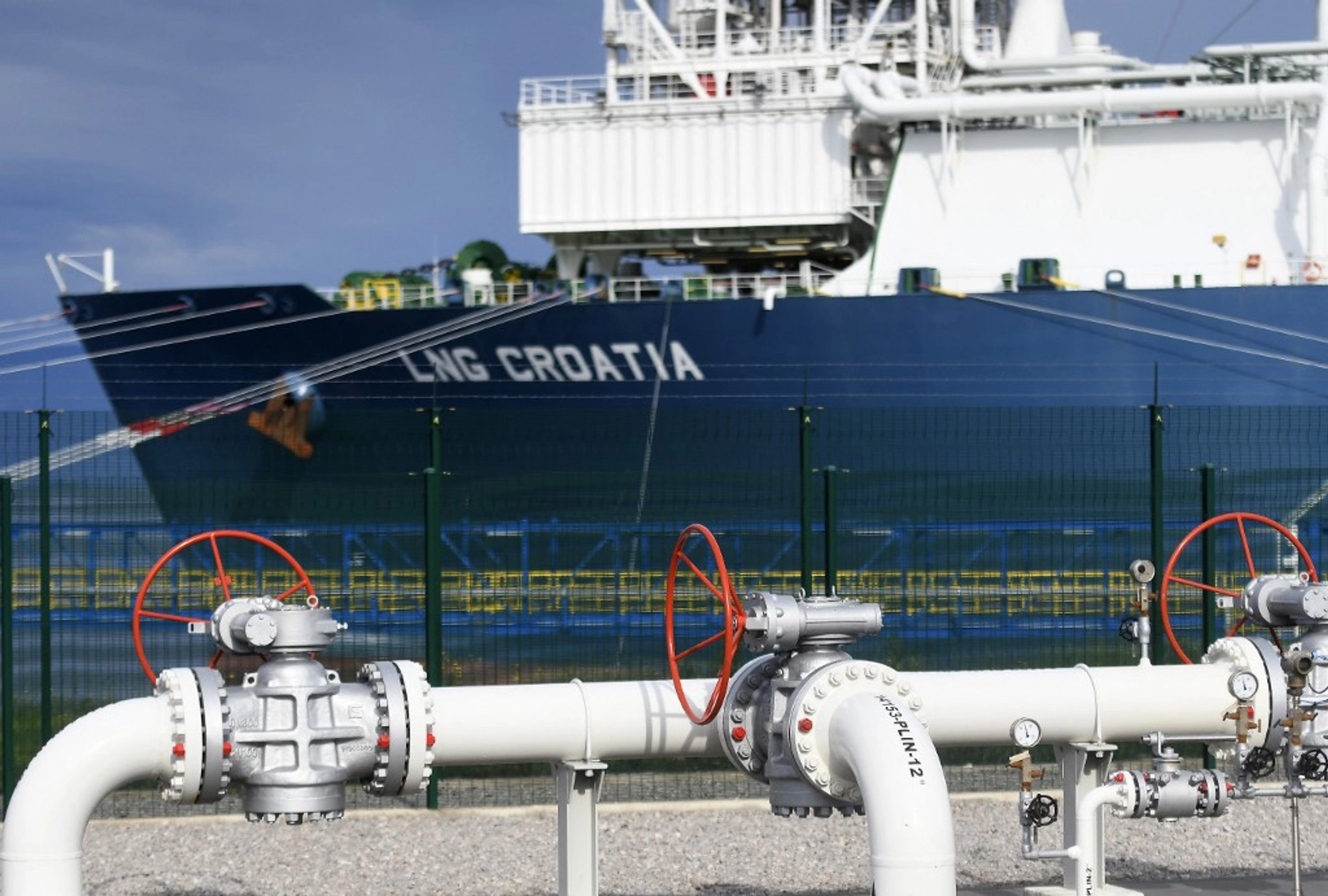
Croatia plans to expand the capacity of its only liquefied natural gas (LNG) terminal by nearly 30%, a move that could help strengthen energy supplies to Ukraine as it continues to rely on European gas imports during the war.
According to Bloomberg on Wednesday, LNG Croatia Managing Director Ivan Fugas said the company intends to hold an auction for additional terminal capacity in the first quarter of next year, with successful bidders receiving contracts valid through 2040.
JOIN US ON TELEGRAM
Follow our coverage of the war on the @Kyivpost_official.
“Our terminal’s expansion could best serve Ukraine,” Fugas said in an interview in Zagreb.
The terminal, located on the Adriatic island of Krk, is expected to increase its commercial capacity by 1 billion cubic meters (35 billion cubic feet) annually, reaching 4.5 billion cubic meters (159 billion cubic feet) per year in early 2027.
Energy needs
Countries across Eastern Europe have increasingly sought alternative LNG supplies to diversify energy sources, reduce costs, and improve energy security.
That said, Ukraine has become particularly dependent on imported gas during periods of high winter demand and when Russian missile and drone attacks disrupt domestic energy production and infrastructure.
Fortunately, Fugas said Croatia’s LNG facilities remain among the most competitively priced in Europe.
“LNG Croatia’s prices are among the lowest in Europe, especially if you make a comparison on the basis of joint terminal and pipeline costs,” Fugas said. “If in the auction next year we sell all the capacity, we may consider adding even more capacity, but that decision has to be made at the state level.”

Ukraine Tests Remote Driving Technology – Real Challenge Is Connectivity
According to Fugas, the company’s existing customers, which include local energy firms and a few Hungarian companies, have already booked capacity until 2036. About two-thirds of that gas is set to come from the US, around 11% from Trinidad and Tobago, and about 9% from Algeria, he added.
“The war in the Middle East so far hasn’t affected deliveries at all,” Fugas said, though “that could change if the situation persists in the long term.”
You can also highlight the text and press Ctrl + Enter

OPINION: The Bill for Crimea Comes Due for Putin