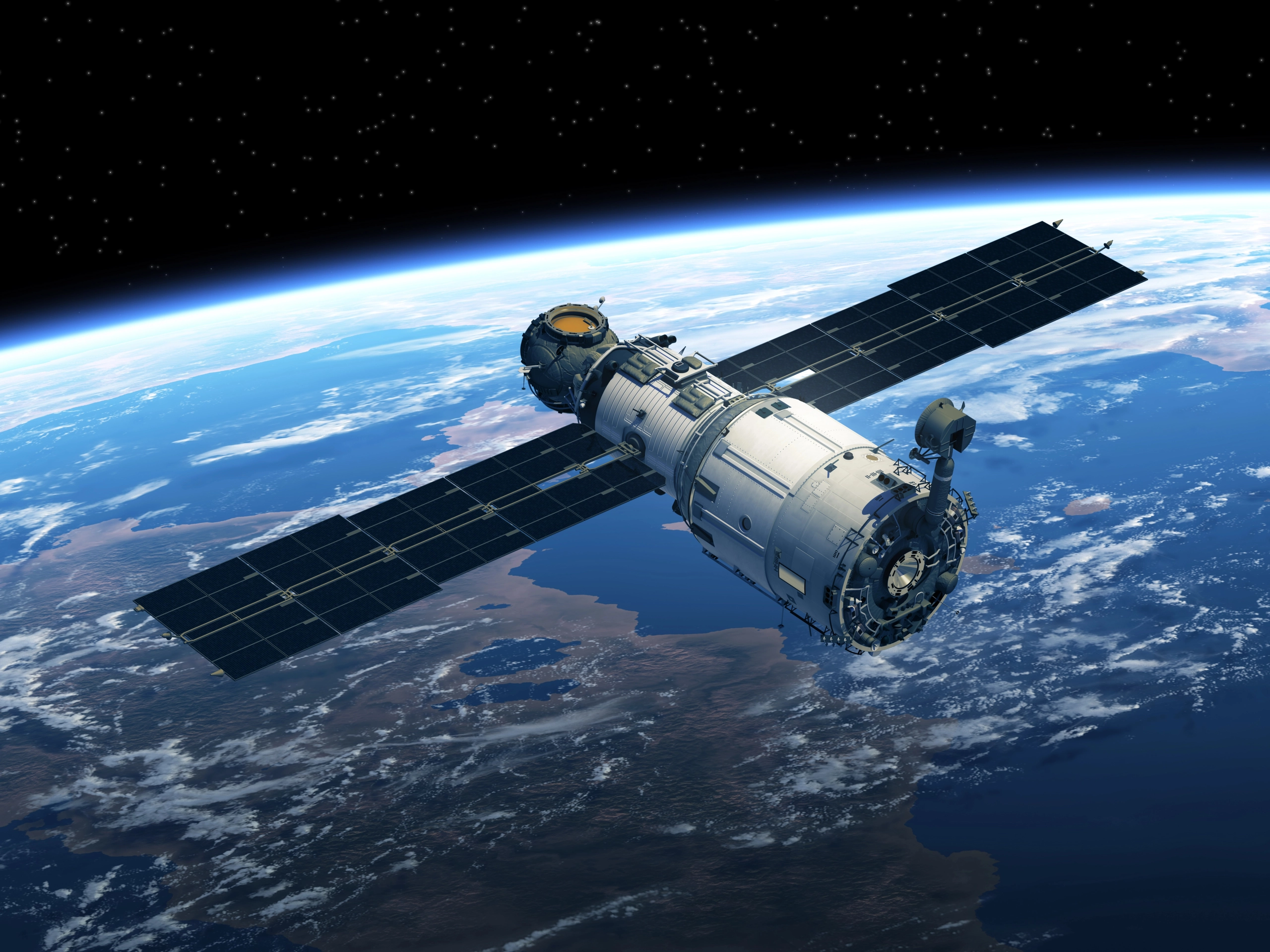
Russia has launched a second batch of Rassvet low-Earth orbit satellites, a project designed to become Moscow’s domestic alternative to SpaceX’s Starlink.
“Russia has launched the second batch of Rassvet satellites, which are intended to become an analogue of Starlink. There are now up to 40 satellites in orbit,” Serhiy “Flash” Beskrestnov, an adviser to the President of Ukraine on defense technology wrote on Telegram.
JOIN US ON TELEGRAM
Follow our coverage of the war on the @Kyivpost_official.
According to him, the newly launched satellites have not yet taken their positions within the orbital constellation, but this is expected to happen soon.
Beskrestnov noted that Russia will need to deploy at least several hundred satellites before the system can be used effectively for military purposes of C3 (command, control, and communications).
For comparison, he said SpaceX currently operates more than 15,000 satellites, while OneWeb has around 600-700 in orbit and Amazon’s Project Kuiper has deployed roughly 400-500, with plans to expand to about 4,000.
Russia claims the Rassvet network will provide broadband internet with global coverage, offering speeds of up to 1 Gbps per subscriber terminal and latency of up to 70 milliseconds.
Western and Ukrainian analysts have warned that, beyond civilian use, the constellation could have significant military applications by providing secure communications, command-and-control capabilities, and connectivity for Russian forces.
Russian Warship Conducts Live-Fire Drill Off Britain’s Plymouth
According to Militarniy outlet, Russian aerospace company Bureau 1440 launched the first operational batch of the Rassvet constellation at the end of March.
After reaching the target orbit, 16 satellites successfully separated from a Soyuz-2.1b launch vehicle and were transferred to the company’s Mission Control Center. Following system checks and activation, the satellites began moving into their operational orbits.
The spacecraft are built on Bureau 1440’s proprietary platform and feature 5G NTN communications, upgraded power systems, next-generation inter-satellite laser terminals, plasma propulsion, and the company’s own satellite deployment system.
The launch marked the transition from testing the technology to building a full-scale satellite communications network.
Bureau 1440 reached this milestone roughly 1,000 days after launching its first experimental satellites, although the project has faced delays. The first operational batch had originally been scheduled for launch by the end of 2025.
Russia now plans a large-scale deployment involving dozens of launches and a rapid expansion of the constellation.
The Rassvet system is intended to provide global low-Earth orbit internet coverage, including connectivity for trains and aircraft.
Under current plans, the constellation will initially consist of 350 satellites, with more than 250 expected to be deployed by 2027, when commercial services are scheduled to begin. By 2035, the network could exceed 900 satellites.
“On July 1, 2023, we conducted our first communication session with the three experimental Rassvet-1 satellites and demonstrated our ‘space internet.’ At that time, the data transmission speed reached 10 Mbps with a latency of 41 milliseconds,” the company previously said.
The project is backed by 102.8 billion rubles (about $1.36 billion) from Russia’s federal budget under the national Data Economy program. Bureau 1440 also plans to invest an additional 329 billion rubles (about $4.36 billion) of its own funds by 2030.
In early June, Rassvet lost one of its first operational satellites just months after launch.
State-controlled Kommersant reported that the company confirmed the loss, saying that 15 of the 16 satellites launched during the project’s first operational deployment in March remain in low-Earth orbit.
“There are currently six experimental Rassvet-1 and Rassvet-2 spacecraft and 15 satellites from the first operational batch in orbit. They have successfully tested key onboard systems, are performing orbital maneuvers, and are operating normally,” Bureau 1440 told Kommersant.
Although the project has been under development for years, it gained new urgency earlier this year after SpaceX cut off Starlink access for Russian military use.
On June 5, Iks Holding CEO Alexei Shelobkov confirmed at the St. Petersburg International Economic Forum that Russia plans to launch the service commercially by 2027.
The project comes as Starlink plays an increasingly critical role in Russia’s war against Ukraine. Although the service is banned in Russia and its use carries fines, Ukrainian forces have used Starlink-connected drones to carry out successful strikes on Russian oil refineries, benefiting from the network’s resistance to electronic jamming.
You can also highlight the text and press Ctrl + Enter