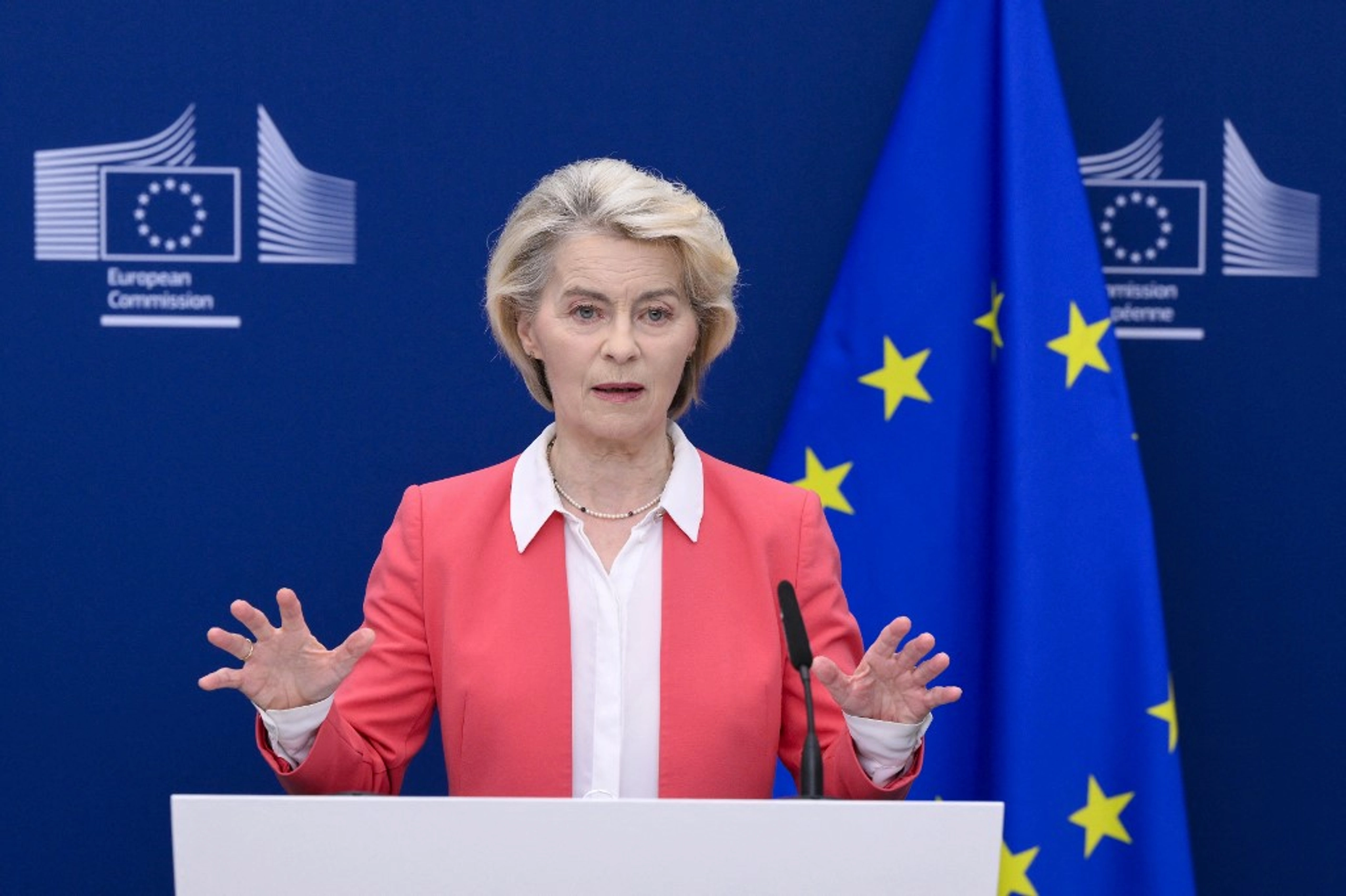
The EU faced a flat 10% tariff from Friday following the outcome of a US investigation into trade in products made with forced labour, a European Commission spokesperson said.
Washington announced on Thursday evening that it would impose tariffs on dozens of trading partners, including the EU and the UK, following a Section 301 investigation into unfair trading practices. The tariffs range from 10% for countries that have introduced, or are planning to introduce, a forced labour ban, to 12.5% for all others.
JOIN US ON TELEGRAM
Follow our coverage of the war on the @Kyivpost_official.
Unlike the previous regime, the new tariffs are not stacked on top of existing duties, meaning 10% is now the maximum rate for most goods.
The EU “notes positively the fact that this outcome is in line with the US tariff commitments” agreed under the EU-US Turnberry agreement last year, the spokesperson said, adding that Thursday’s announcement provides momentum to pursue further tariff exemptions and deepen cooperation in areas including economic security, critical raw materials, AI and digital policy.
Not all in the Commission appeared to share that assessment. Commission Vice-President and top EU diplomat Kaja Kallas described the tariffs on Friday as “a negative surprise” and a breach of the Turnberry agreement.
“If you compare our labour laws to the ones of the United States, I mean, we have paid vacations, we have very good labour conditions for our employees, so it’s not really grounded,” Kallas said, according to Reuters.
Russian Hackers Used Ukraine as Test Ground Before Targeting US Nuclear Scientists
The Section 301 investigation, however, does not allege that the EU uses forced labour. Instead, it argues that the bloc has failed to adequately prohibit or enforce a ban on imports of goods produced with such practices.
Also on Thursday, the Commission announced an €890 million fine against Google for breaching the bloc’s digital rules. US Trade Representative Jamieson Greer warned that the decision risked fuelling transatlantic trade tensions by attempting “to target the most competitive US companies”.
The new duties are widely seen as an attempt to reimpose the so-called “reciprocal” tariffs that were struck down by the US Supreme Court in February, including a 15% levy on most EU exports. The new tariffs replace a temporary 10% duty introduced by the US president following the court ruling.
The Commission spokesperson said the new regime also includes tariff exemptions for certain EU products, including cork and diamonds, in addition to aircraft and aircraft parts, generic medicines and active pharmaceutical ingredients.
The spokesperson added that it would continue engaging with Washington on other ongoing Section 301 investigations – such as what the US claims is the EU’s excess capacity and Germany’s “persistent underpayment” for pharmaceuticals.
See the original by Sofia Sanchez Manzanaro here.
You can also highlight the text and press Ctrl + Enter