The Pentagon has acknowledged that the United States currently lags far behind Ukraine in drone production.
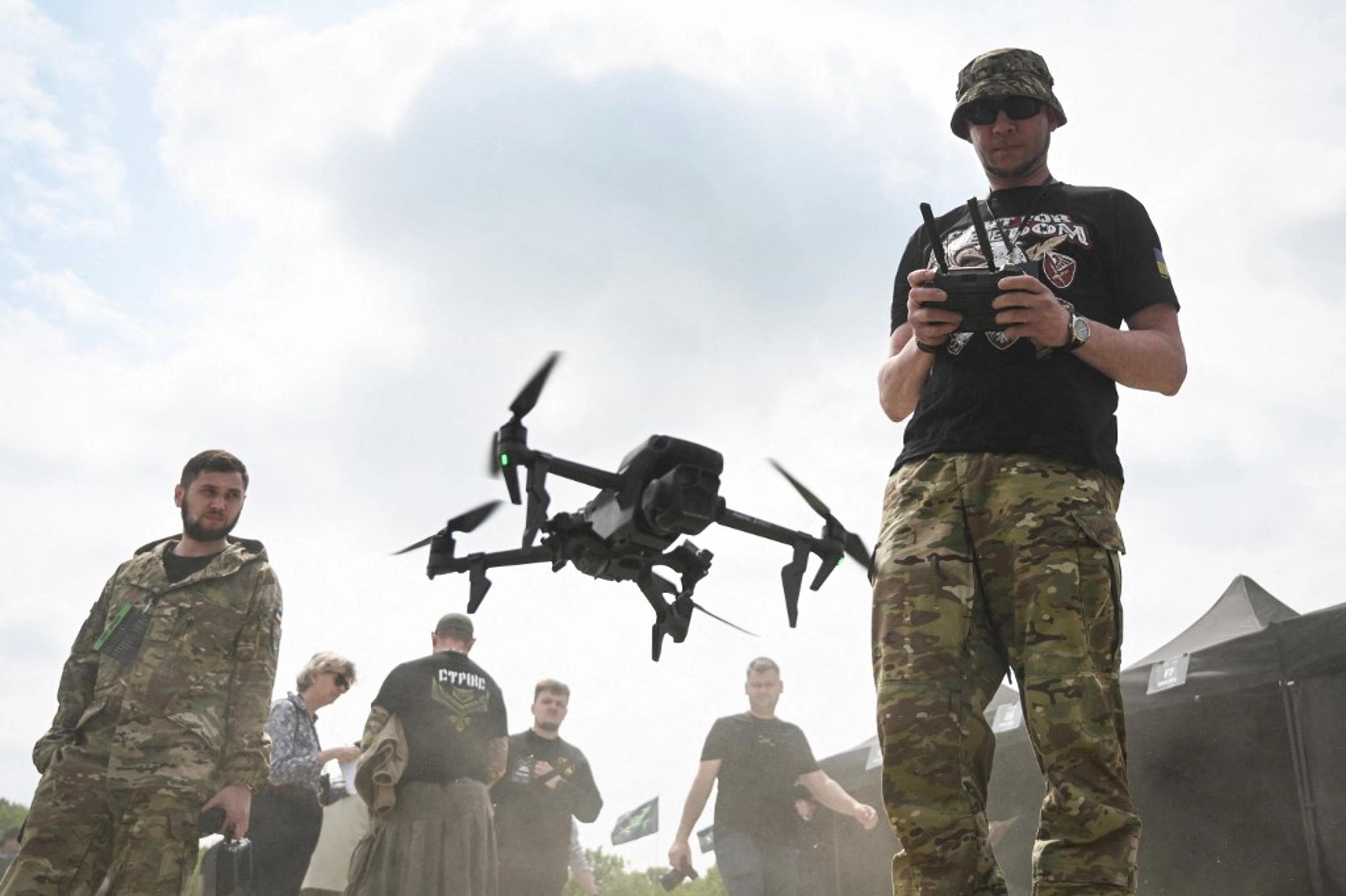
Ukraine is expected to manufacture between 6 and 7 million small first-person-view, or FPV, attack drones this year, roughly 500,000 each month, Travis Metz, the Pentagon official leading its Drone Dominance program, told Reuters.
JOIN US ON TELEGRAM
Follow our coverage of the war on the @Kyivpost_official.
By comparison, the Pentagon expects to have ordered slightly fewer than 200,000 drones through the program by February.
Metz, deputy director and chief operating officer of the Defense Innovation Unit, acknowledged that US production remained only a fraction of Ukraine’s output. He described the effort to establish a large domestic drone industry as being in its earliest and most difficult stage.
Building the initial capacity to manufacture 200,000 drones is more difficult than expanding production once factories, suppliers and trained workers are already in place, Metz said.
Ukraine’s lead reflects more than four years of intensive development under battlefield conditions. Ukrainian manufacturers have had to produce inexpensive drones in large numbers while continually adapting them to Russian electronic warfare, interception systems and changes in frontline tactics.
The Pentagon is now seeking to turn that experience into American manufacturing capacity.
Its Drone Dominance initiative is intended to expand the US supply of inexpensive military drones while developing a domestic industry capable of producing them at scale. However, the effort is complicated by tighter requirements governing where drone components are made.

UK’s New PM Burnham Pledges ‘100%’ Support for Ukraine, as Zelensky heads to Trump Talks
A revised supply-chain framework published on July 23 states that the US government’s ultimate objective is a wholly domestic supply chain for small unmanned aircraft systems.
None of the drones supplied by the 19 companies participating in trials in August may contain prohibited Chinese-made components, Metz said. The requirement is stricter than the standard applied during the program’s initial phase.
Metz acknowledged that the vast majority of drones acquired in the previous round likely contained Chinese-made motors. The Pentagon is now seeking to eliminate that dependence while simultaneously increasing production.
China holds a dominant position in the commercial drone industry and supplies many of the motors, batteries, electronic components and other inexpensive parts used in small unmanned systems.
Replacing those components with American-made alternatives could improve the security of US military supply chains but may also increase costs and slow the initial expansion of production.
Semiconductors remain an even greater challenge for the United States beyond the drone program, Metz said. Developing a fully domestic supply chain will require not only assembling drones in the US but also securing reliable sources for their most difficult-to-replace components.
Despite the current gap, Metz said he believed the United States could eventually compete with Ukraine’s drone industry.
“I see no reason why we shouldn’t... be the world champions of this as well,” he told Reuters.
Ukrainian companies are expected to play a central role in that effort.
All six Ukrainian manufacturers invited to participate in next month’s Gauntlet II trials at Fort Carson, Colorado, have established or are preparing to establish joint ventures with American companies, Metz said.
Localizing production in the United States is a condition for the Ukrainian manufacturers to receive future Pentagon orders. The arrangement is designed to transfer Ukrainian battlefield experience into American factories rather than leave the US dependent on imported finished drones.
Ukraine and the United States have also signed a statement of intent laying the foundation for broader defense cooperation involving Ukrainian unmanned systems. The arrangement allows Ukrainian drones to be exported to the US for military testing and could support future joint production.
You can also highlight the text and press Ctrl + Enter