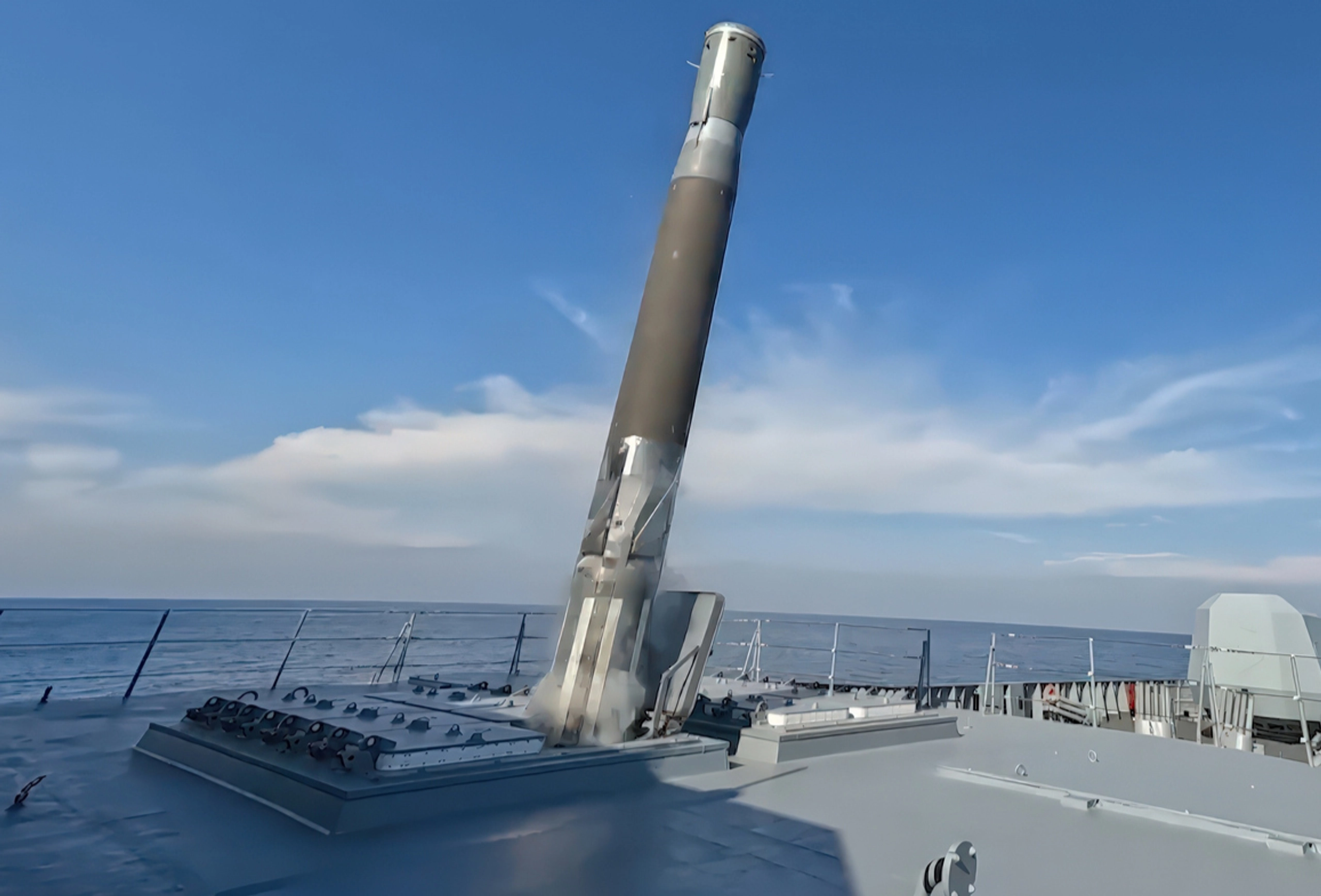
The Russian Navy plans to commission its new Yasen-M class submarine, Perm, by the end of 2026 with integrated Zircon cruise missile launchers.
While other submarines of the same class are retrofitted with Zircon launchers, the Perm is reportedly the first to come with the launchers integrated, according to Russian Navy Commander-in-Chief Admiral Alexander Moiseyev.
JOIN US ON TELEGRAM
Follow our coverage of the war on the @Kyivpost_official.
“By the end of the year, we plan to commission 21 more vessels into the navy, including the first nuclear-powered submarine cruiser armed with the Zircon hypersonic missile system. This is the Perm submarine of the Yasen-M class,” Moiseyev told Russian President Vladimir Putin, according to state media TASS on Sunday.
“It is also planned to complete the repair and modernization of the nuclear-powered cruiser Admiral Nakhimov and the Leopard cruiser submarine,” Moiseyev added.
Zircon is a Russian hypersonic cruise missile frequently used against Ukrainian cities, with new estimates indicating its use has increased in recent months.
In July alone, Russia fired more than 20 Zircon missiles at Ukraine – over two-thirds of its planned annual production of 30 missiles, according to Ukraine’s Military Intelligence (HUR).
What do we know about the new Perm submarine?
Perm is a Russian nuclear-powered submarine that belongs to the modernized Project 885M Yasen-M class.
Yasen-M class submarines are 130 meters (427 feet) long and 13 meters (43 feet) wide, with a speed of up to 31 knots and a submerged displacement of 13,800 tons. They are manned by a 64-member crew.
Zelensky Won’t Bring Fedorov Back Despite Protests, Insiders Say
Military Watch Magazine said the Yasen-M submarines could “integrate up to 32 cruise missiles,” making them “among the most heavily armed submarines in the world.”
According to Russian military outlet Mil.Press Flot-Prom in June, four Yasen-M class submarines are in service in the Russian Navy, with Perm being the fifth planned to be commissioned by the end of the year, with some reports suggesting that it would join Russia’s Pacific Fleet.
The outlet added that the sixth, Ulyanovsk, was laid down in July 2017 and is preparing for launch, while the seventh and eighth, Voronezh and Vladivostok, are being constructed.
The ninth, Murmansk, was laid down in June 2026.
While submarines are occasionally used to launch Kalibr cruise missiles against Ukraine, most Russian missile strikes are carried out from land-based launchers due to the threat posed by Ukrainian forces in the Black Sea.
Repeated Ukrainian strikes on military facilities in occupied Crimea have forced much of Russia’s Black Sea Fleet to relocate to the mainland port of Novorossiysk in 2024, limiting its ability to operate from Crimean bases.
What do we know about the Zircon missiles?
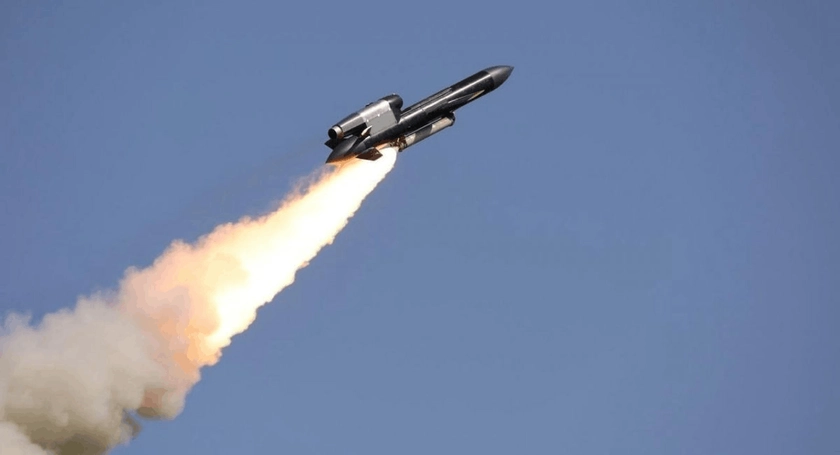
The 3M22 Zircon (NATO: SS-N-33) is Russia’s nuclear-capable hypersonic cruise missile.
The missile is 9 meters (30 feet) long and 60 centimeters (24 inches) in diameter. It has a claimed range of 1,000 kilometers (621 miles), flying at a claimed speed of Mach 9 (approximately 11,026 kmph or 6,905 mph).
The missile was test-fired in 2017 and entered service in 2023, seeing combat for the first time in Russia’s full-scale invasion of Ukraine in 2024, according to reports by Defense Express at the time.
The missile’s high speed has made it a difficult target to intercept – Russia launched four Zircons on July 1-2 and six on July 5-6, but none were intercepted. The US-made PAC-3 Patriot missile is one of the few, if not the only, interceptor missiles known to be capable of intercepting the Zircon.
You can also highlight the text and press Ctrl + Enter