Bloomberg, Financial Times, The Economist, The New York Times, the Wall Street Journal, Politico, Forbes, Ukrayinska Pravda, Dzerkalo Tyzhnia, NV, LB, Babel, and others have already written about the agreement with the US to create the fund. The fact of its existence has been recognized and not denied – as well as the key details outlined in numerous analytical materials.
I also got the deal – not from sources in the Ukrainian or American government, and certainly not from individuals or entities that could even theoretically be linked to Russia.
JOIN US ON TELEGRAM
Follow our coverage of the war on the @Kyivpost_official.
I have conducted my own analysis of this document, and I think it is right that those who really need to understand the essence of it – lawyers, economists, analysts, and the public – should be able to read it.
With the permission of those who passed it on to me, I am publishing the text of the agreement openly on my Telegram channel for the first time.
Here is a brief (though not short) analysis for those who are too lazy to read the entire document.
This is not an attempt to derail the deal or stop the process. There is criticism here, and it is sometimes harsh. But this is primarily an attempt to understand without illusions who controls the fund, what powers Ukraine has, what we are investing, and what we will actually receive.
In the conclusion, I have given specific suggestions on what should be changed. And if you read to the end, it will become clear: this agreement is not a threat, but a potential opportunity. But only if we exercise our right to revise it.
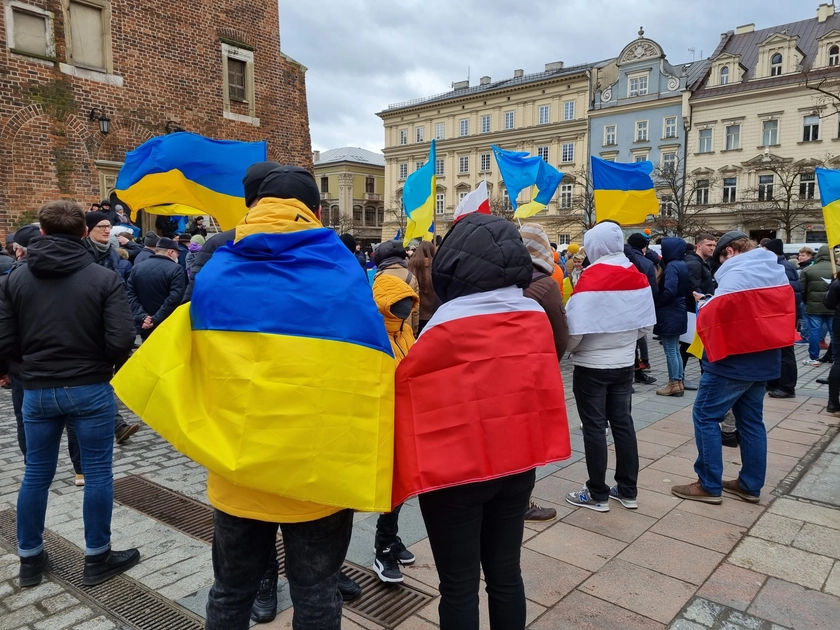
Where Poles and Ukrainians Stand Together
What the fund is
This is the final draft of the agreement between Ukraine and the US government on the establishment of the Reconstruction Investment Fund. It was drafted by Freshfields lawyers and sponsored by the US International Development Finance Corporation (DFC).
The cover reads: US-Ukraine Reconstruction Investment Fund: Partnership for Recovery. Inside is a strict corporate agreement written in the language of the State of Delaware. The design is simple: The United States makes decisions, Ukraine transfers resources and assumes obligations.
The fund referred to in the agreement is neither a donor account, nor co-financing program, nor a grant platform. It is a classic investment instrument: with profitability, units of participation, risks, managers, and a very clear logic: whoever manages it benefits.
It is established as a partnership under the American law, under the jurisdiction of the State of Delaware. Ukraine is a limited partner in this partnership. That is, without the right to make decisions. The fund is managed by the General Partner, who is appointed exclusively by the American side (through the DFC). Ukraine has no influence on his choice, replacement or actions.
The General Partner has full freedom to create new companies, move assets, change regulations, reassess contributions, determine profitability, and even change the agreement itself (with the approval of the DFC).
Ukraine, for its part, transfers to the fund a “Royalty Interest” – the right to a share of the income from future projects. But the value of this asset, the accounting procedure, the scope of obligations, and currency conditions are determined by the same General Partner. All risks are on us, all levers go to the General Partner.
This is a complex institutional structure – a fund of funds, with the ability to create subplatforms, management companies, and financial instruments. But in all this architecture, Ukraine is always a passive party. Formally, we are a “partner,” but without access to the steering wheel.
How it works
The foundation is registered in the United States. The office is in the United States. The law is American. Key decisions are made by the General Partner, who is appointed by the DFC. Ukraine in this structure does not have even the basic protection of a minority partner.
The General Partner solely:
- opens accounts,
- creates management companies,
- determines the regulations and changes them at any time,
- forms boards and committees,
- selects “authorized persons” who can act in any jurisdiction, in any form.
Ukraine does not approve these decisions, does not make amendments, and has no veto power. Its role is limited to participation in the Fund’s Board, where it has been in the minority from the beginning: 3 votes from the US, 2 from Ukraine. All decisions are made by a simple majority.
In addition, DFC has a Class C Unit, a “golden share” that gives it the right to block any decision. Ukraine does not have this right. And even if Ukrainian representatives do not agree or do not show up at the meeting, the fund continues to work unilaterally.
These are not exceptions, but a fixed structure. It allows the General Partner to manage the fund without any approvals, consultations or obligations to the Ukrainian party. Formally, it is a partnership. In fact, it is full control on one side.
What each party is investing
Many people think that the US gives money and Ukraine receives investments. But the reality is more complicated.
The DFC invests “capital” in the form of assistance already provided to Ukraine – military, technical, and advisory. In other words, what has already been done is formally counted as an Initial Contribution. The fund will not receive money from the DFC immediately.
Ukraine transfers a resource that has real economic value – Royalty Interest. This is the right to income from projects: minerals, infrastructure, energy, privatization. And although the source of this value is Ukrainian assets, the General Partner evaluates them at its own discretion. Without an independent audit. Without the participation of Ukraine.
And then it gets even more interesting:
- All cash flows of the fund are in US dollars. If Ukraine imposes currency restrictions, we are obliged to compensate the fund for any losses.
- Ukraine has no right to withdraw from the fund, demand the return of its share or transfer it to another participant. The DFC can.
- The DFC’s contribution is a priority: it is returned first, with a profit. The Ukrainian one comes only after that.
All capital, management, revaluation and distribution mechanisms are designed so that the General Partner has full control. Ukraine, on the other hand, has full liability without any protection tools.
Why it is risky for Ukraine
The creation of the fund in this form is not just an institutional partnership. This is a largescale legal structure in which Ukraine assumes obligations without having any tools of influence, protection or exit. And the risks here are not individual – they are systemic.
Full dependence on the General Partner
The General Partner does not just manage the fund – he appoints him/herself, changes the agreement without our participation, determines which documents exist and how they are interpreted. We do not have any say in strategic decision-making, even when it comes to the disposal of assets in Ukraine.
The General Partner can:
- change the rules, structure, procedures, and committees;
- appoint and remove Ukrainian representatives;
- make investment decisions without taking into account the national interests of Ukraine;
- completely ignore Ukraine’s position even in the event of systemic damage to it.
Unlimited legal and financial liability of Ukraine
The agreement provides that Ukraine will indemnify not only for its actions, but also for any claims against the fund, the General Partner, the DFC or their affiliates. These obligations:
- have no upper limit on the amount;
- are valid indefinitely, even after the fund is liquidated;
- include expenses for courts, lawyers, consultations, taxes, fines and penalties;
- entail RISKS arising even without our knowledge or involvement in the disputed situation;
- in fact, the state assumes guarantees for someone else’s activities that it does not control;
- entail deprivation of investment, fiscal and information sovereignty.
Ukraine is committed:
- not to tax the fund,
- to provide unlimited conversion into dollars,
- not to interfere with the structure of transactions,
- not to change regulations that may interfere with the operation of the RISKS fund.
Even public disclosure of information is only with the permission of the General Partner. And the fund is allowed to operate in other jurisdictions, invest outside of Ukraine, and raise resources without regard to national priorities.
Fixing inequality in rights, but not in duties
The DFC receives a “golden share,” priority payments, the right to off-take Ukrainian resources, and automatic access to any project. Ukraine has none of this.
We can’t:
- withdraw from the fund;
- transfer their share;
- influence the use of our resources;
- impose restrictions on the activities of the General Partner;
- initiate proceedings in a court outside the jurisdiction of the United States.
And even if the fund suffers losses due to the actions of the General Partner, it is not liable.
Loss of strategic positions – resource, legal, managerial
The agreement directly obliges Ukraine to:
- grant the United States the first right of access to projects in the mining, infrastructure, and logistics sectors;
- open strategic commercial documents;
- agree to terms that scare away other investors;
- ensure that the fund’s terms and conditions are met even in the event of changes in legislation or the political situation.
This is a de facto transfer of control over access to strategic resources to a foreign player – without mirror rights, without balance, without protection guarantees.
What to do
The current version of the agreement is a technical proposal from the US side, designed to maximize flexibility for the DFC and the General Partner. Ukraine has no powers, no guarantees, and no real access to management in this structure. But this is not a dogma, not a final judgment. And right now is the best time to turn this architecture into a partnership model that works for both parties.
To do this, a number of amendments need to be made to balance powers, limit financial risks, and ensure transparency.
- Abolish or clearly limit the right of first refusal for projects and resources – it should not go beyond the fund’s investments.
- Revise the provisions on taxation, capital outflows and currency control – the state should retain the right to regulate these areas on its territory.
- Change the governance structure: ensure equal representation of Ukraine in the fund’s board and investment committees, and grant the right to approve key changes and decisions.
- Provide Ukraine with full access to information: reporting, audits, documentation, primary data – everything related to its contribution and projects on its territory.
- Limit Ukraine’s liability by setting clear limits on the amount, terms, and types of obligations.
- Enshrine that the bulk of the fund’s investments are directed to Ukraine – this should be legally confirmed, not just declared.
What it can give to Ukraine
A successful reformatting of this agreement does not open up a risk, but a real opportunity. And a very big one.
First, it will be the number one market signal for all international investors: Ukraine is a country where big players come in, where institutions can work, where risk is taken not only by the state but also by powerful partners. Such a precedent is much more valuable than just an agreement between governments – it is an institutional credit of trust.
Second, it will force Ukraine to put its investment protection system in order. If we really want big money to come here, we have to guarantee that the court is working, the prosecutor’s office is working, and the rules are in place. Otherwise, the fund will simply not work – or it will work against us. And with the right conditions, it can be a catalyst for long overdue reforms.
Third, this structure gives Ukraine the opportunity to influence the global agenda. We can establish a new model of cooperation with the United States – not in the format of “aid” but in the format of a true partnership: with clear rights, mutual responsibility, and long-term interest.
Fourth, this fund can become a platform for other donors. If we create a transparent, fair, and effective model, other states, private foundations, pension companies, and tech giants can join. This can become the basis for a large recovery coalition that will go far beyond one project.
I really hope that this is how the Ukrainian government will look at this deal. I know that a great team is already working and I sincerely wish them success. Because this is another chance. And perhaps one of those that will not be repeated. But it is real. And we have to take advantage of it.
Reprinted from Mustafa Nayyem’s personal LinkedIn account with the author’s permission. You can find the original here.
You can also highlight the text and press Ctrl + Enter
OPINION: The New Line Kyiv Quietly Built Into NATO