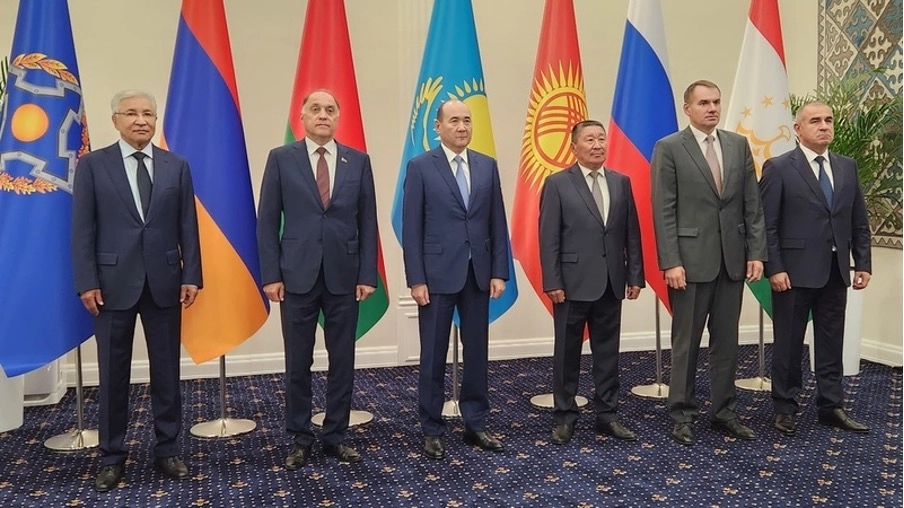
Despite all evidence to the contrary, Alexey Shevtsov, the Deputy Secretary of Russia’s Security Council, told a meeting of security council secretaries from the Collective Security Treaty Organization (CSTO) in Kyrgyzstan that the war in Ukraine had shown Russian weapons outmatched their Western equivalents and offered to train their personnel on the experience and skills Moscow’s forces had learned during its “special military operation.”
Shevtsov said: “It is important within the framework of the CSTO that we develop our military-technical cooperation. The advantages of Russian arms over Western analogues have been confirmed by the special military operation. Decisions on equipping our armed forces must be made objectively on the basis of military considerations.”
JOIN US ON TELEGRAM
Follow our coverage of the war on the @Kyivpost_official.
He said that, with that in mind, he invited his audience to “get acquainted with the capabilities of the Russian military and its industrial capabilities, modern arms, and updated training methods [by visiting] our armed forces during training and see our equipment at the Army 2025 forum.”
He then went on to say that even the best weapons were useless unless operated by properly trained personnel.
“We are ready to share our experience and operational advancements we have obtained in the special military operation. We are prepared to establish local affiliates of Russian military educational establishments, including the Kirov Military Medical Academy, the Ryazan Airborne Command School, and others,” he added.
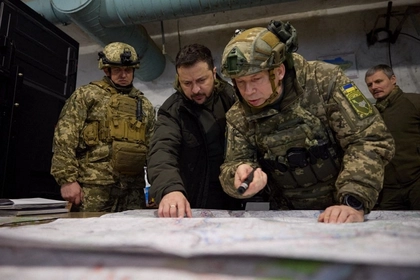
Syrsky: Russian Maps Show False Advances to Please Top Command
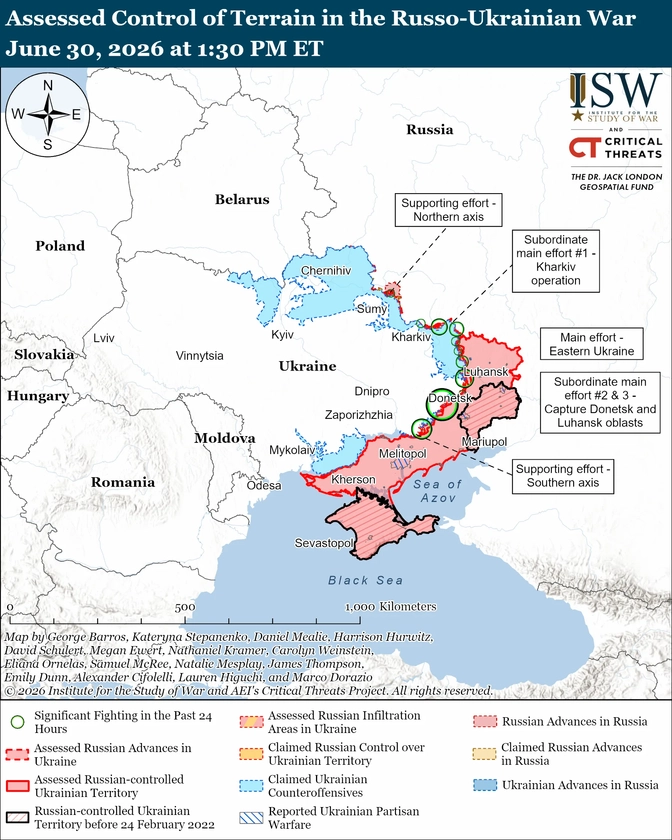
His comments seem to bear no relation to the realities of what has happened in the three and a half years since Russian President Vladimir Putin ordered the full-scale invasion of Ukraine.
The former members of the Soviet Union that make up the membership of the CSTO may believe the claims, but its apparent the rest of the world doesn’t.
His comments on the superiority of Moscow’s kit echoed those of Sergey Chemezov, the head of the Rostec Russian state-owned defense conglomerate who told Russia’s Foreign Intelligence Service (SVR) “Razvedchik” in-house magazine that in comparison, Western armored vehicles were inferior to Russian tanks such as the T-90M “Proryv” (Breakthrough) tank in terms of firepower, range, all-round protection and mobility.
The statistics also undermine both Shevtsov and Chemezov. According to the open-source intelligence analysis site Oryx, Russia has lost 4,041 tanks, including 137 T-90M tanks, while Ukraine has lost 1,198 tanks, including 27 Leopard 2 tanks, 18 Leopard 1 tanks, 22 Abrams tanks, and 2 Challenger 2 tanks.
According to the Military Show YouTube channel the statistics have impacted Russian weapons exports. These stood at $14.6 billion in 2021 but reduced year-on-year, following the invasion, until by the end of 2024, sales had fallen to less than a billion.
It said that while some of the drop could be down to Russia’s current production being focused on its operational requirements rather than exports, the majority of losses were due to the poor performance of Russian weapons systems on the battlefield of Ukraine had turned potential customers off.
By the same token Shevtsov’s offer to train CSTO forces on the experience of Russia’s armed forces also ring hollow. Russian casualties are fast approaching, if they have not already exceeded, the one-million-man milestone.
Much of these losses are a result of the continued use of so-called “meat assaults” where mass attacks by poorly trained troops are used to try and overwhelm defenses. It seems likely that poor training, both of individual operators and commanders, is also a major contributory factor alongside poor design of Russia’s equipment losses.
It is perhaps the “lessons learnt” from the failures of much of the Russian forces in Ukraine that will govern the future training models that Shevtsov is offering.
You can also highlight the text and press Ctrl + Enter

Russia Hit by 660-Drone Overnight Barrage Targeting Moscow, Crimea and Key Military Sites