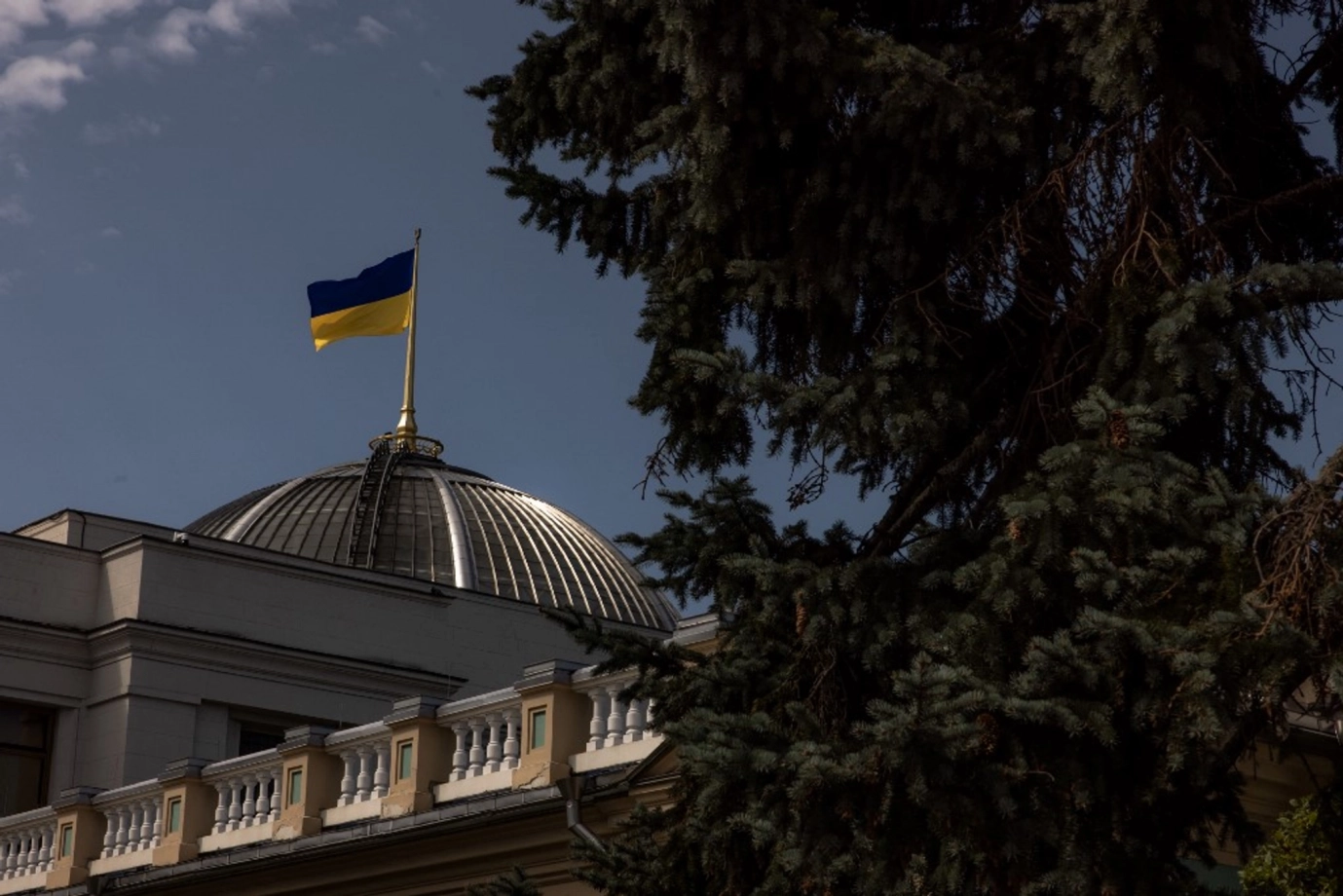

(Image by Zakhar Dunin/Kyiv Post)
JOIN US ON TELEGRAM
Follow our coverage of the war on the @Kyivpost_official.
Ukraine’s parliament and its central bank are fighting, again, over whether banks’ wartime profits should keep being taxed at double the standard corporate rate. In May, lawmakers proposed extending the 50% levy through 2027; within hours after the announcement, the central bank condemned it, warning the tax is starting to eat into the capital that fuels lending.
Lawmakers see the banking sector as both a fat cat and a fiscal lifeline – its X-ray – transparent financial statements make it easy to tax quickly, at a time when bills to de-shadow the economy remain stalled in parliament.
Banks accepted the levy the first time when it was imposed in 2023. Several extensions later, the fight has hardened into a standoff, unresolved ahead of 2027 budget planning, even with a new prime minister and government now in place.
Kyiv Post breaks down the dispute and whether the tax makes sense for a war-battered economy.
The many lives of Ukraine’s windfall tax on banks
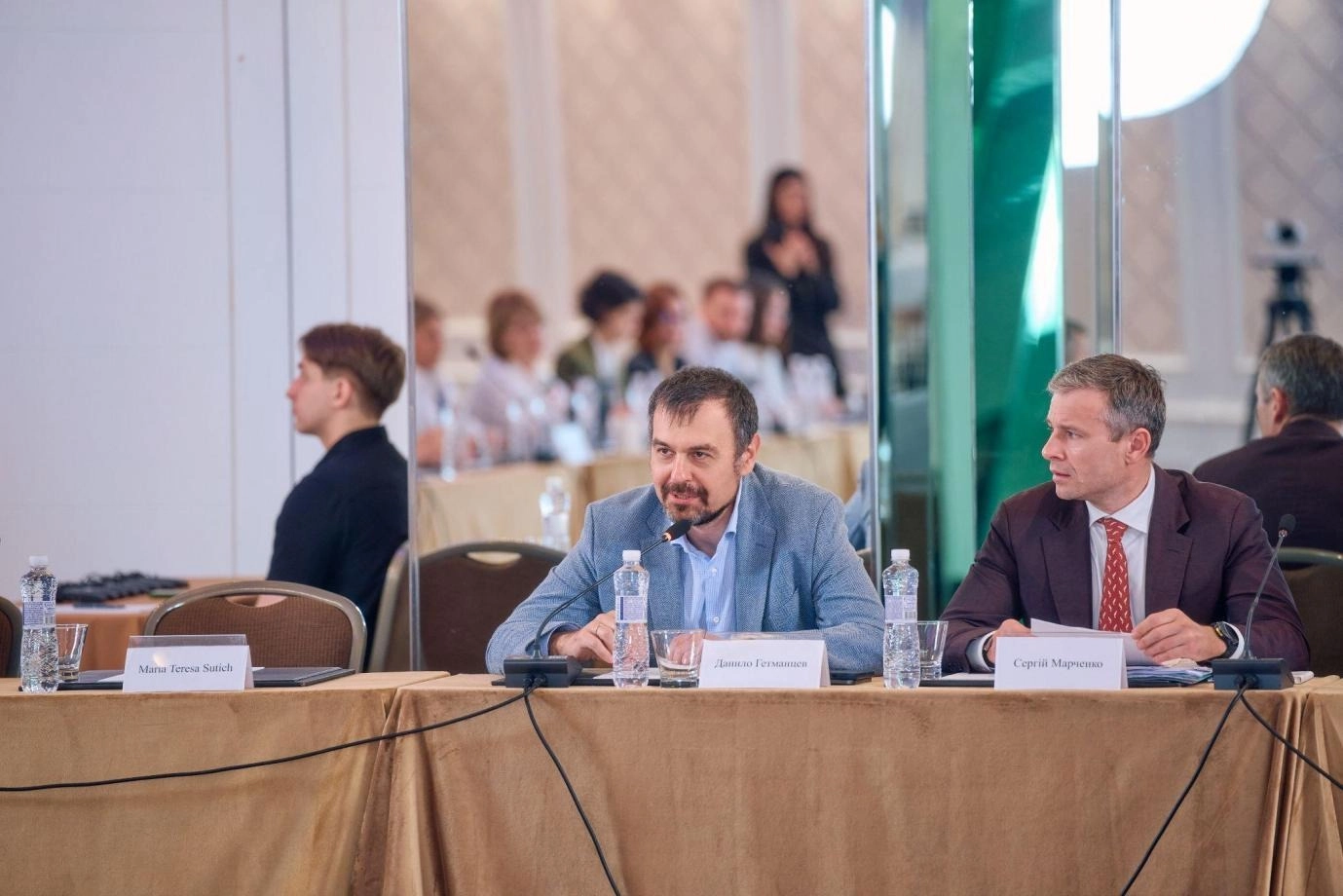
“During wartime, banks generate record profits largely through transactions involving government securities,” Danylo Hetmantsev, chair of parliament’s tax committee and a lawmaker from Zelensky’s Servant of the People party, wrote on Facebook in May, announcing a bill to extend the 50% corporate income tax on bank profits through 2026-2027.

Ukroboronprom General Director Resigns Following Explosion in Vyshneve
Eight hours later, the National Bank of Ukraine (NBU) fired back with an official statement condemning the bill. “[Ukraine’s] banking system, which is ten times smaller in terms of capital than that of neighboring Poland, must grow. If levied permanently, the extra tax would eliminate room for such growth,” the NBU wrote.
Hetmantsev and Ukraine’s banks have history – and it did not start as a fight.
Lawmakers first imposed a 50% tax on banks’ 2023 profits in a law passed in November 2023 – applied retroactively, in breach of Ukraine’s tax code, which requires at least six months’ notice – and set a permanent 25% rate for 2024 onward.
Neither banks nor the central bank were offended or actively opposed it. Lending was subdued and business ventures were too risky. Banks were earning record profits almost passively from high deposit-certificate rates and government bond yields the state was using to protect the hryvnia from war shock.
“We could clearly see that the banks were generating tax revenue and weren’t really using it,” First Deputy Governor Serhiy Nikolaichuk told Kyiv Post at the June 30 briefing.
As defense spending outpaced tax revenues, lawmakers imposed the 50% windfall rate at a second time in 2024 – this time on top of the newly permanent 25% baseline – despite the IMF recommending against taxing bank profits at 50% for a second consecutive year.
Hetmantsev returned with a third round of the windfall tax for 2026. At the next monetary briefing, Nikolaichuk again voiced the central bank’s frustration – he raised it himself, calling for “sustainable taxation of the banking system” as an IMF requirement.
This year, the NBU again raised the alarm at the June 18 briefing with NBU Governor Andriy Pyshnyi saying the central bank is “categorically opposed.” Hetmantsev responded not on the fiscal merits but by accusing the NBU governor of enabling “the largest money-laundering operation” through Sense Bank – where the NBU had recently uncovered a concealed parallel governance structure and falsified reporting.
The NBU called it “manipulative and politically motivated.”
“The very process of making this decision significantly undermines the foundations of statehood, as it disregards the position of the National Bank of Ukraine which opposes the decision to impose a special tax,” OTP Bank CEO and Chairman of the Council of the Independent Association of Banks of Ukraine Volodymyr Mudryi told Kyiv Post.
At the time of publication, the parliamentary committee on finance, tax and customs policy, led by Hetmantsev, recommended a vote in favor of the bill.

Lending spiked, the tax stayed
Hetmantsev’s stance has not changed – but the economy has.
As the invasion dragged on, businesses adapted, defense spiked to 50% of overall budget spending ($68.4 billion), and energy strikes spurred demand for diversification. In 2024, the NBU set lending priorities for defense, energy, agriculture, and processing, updated credit risk policies, and created new financial monitoring procedures for the defense sector.
War insurance tools from the EBRD, the government, and EU authorities were rolled out.
To cushion the tax’s impact on bank capital, the NBU postponed some bank capitalization requirements tied to EU integration.
“The NBU was postponing the implementation of bank capitalization plans, all to spread the impact of this tax and avoid hindering the resumption of lending,” Pervin Dadashova, director of the Financial Stability Department, told Kyiv Post during the June briefing.
Together, these factors fired.
Loans to businesses surged 30% year-on-year in 2025, and loans to households rose about 36%, according to the central bank’s estimates – exactly what lawmakers had long demanded. Nikolaichuk called it Ukraine’s longest sustained period of credit growth since 2011.
If the windfall tax is imposed again, it will bite into lending already in the second half of 2026 and into 2027, Nikolaichuk noted at the June briefing.
Over the last year, non-performing loans in the corporate sector fell to 15.3%, according to the NBU’s June 2026 Financial Stability Report. The better the loan quality, the less a bank allocates to reserves, and the more revenues are swallowed by the extra tax.
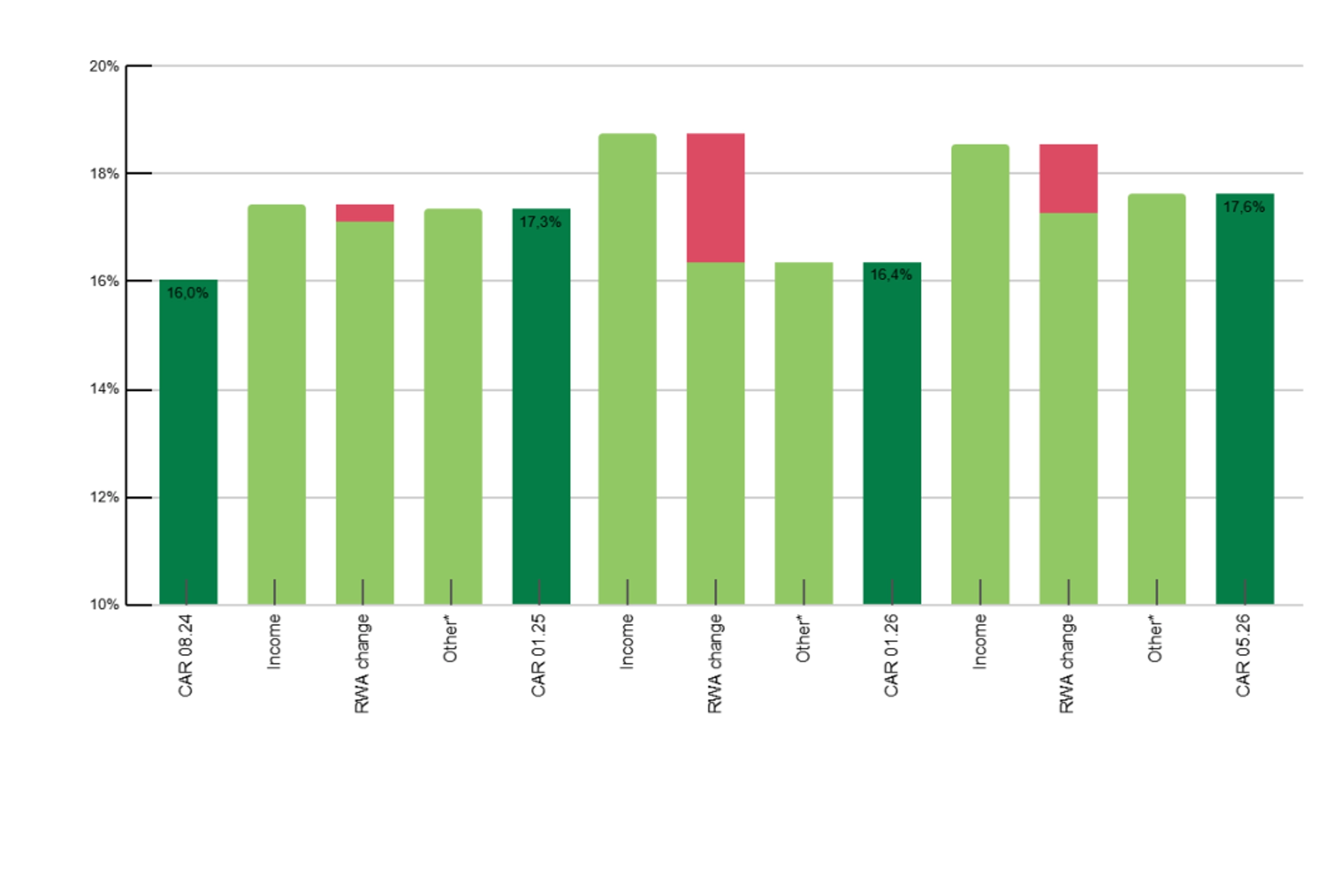
The banks’ capital adequacy ratio (CAR) decreased from 17.3% to 16.4%. The normal range is 9-15%. But now banks lend more actively and also pay more in taxes and dividends, with record profits not offsetting record lending, according to Nikolaichuk.
Economists don’t rush to protect banks while fiscal needs are high
Independent economists Kyiv Post spoke with agree that lawmakers pick the low-hanging fruit – but they challenged part of the NBU’s case.
Ukraine’s banks are indeed a fat cat compared to Europe’s.
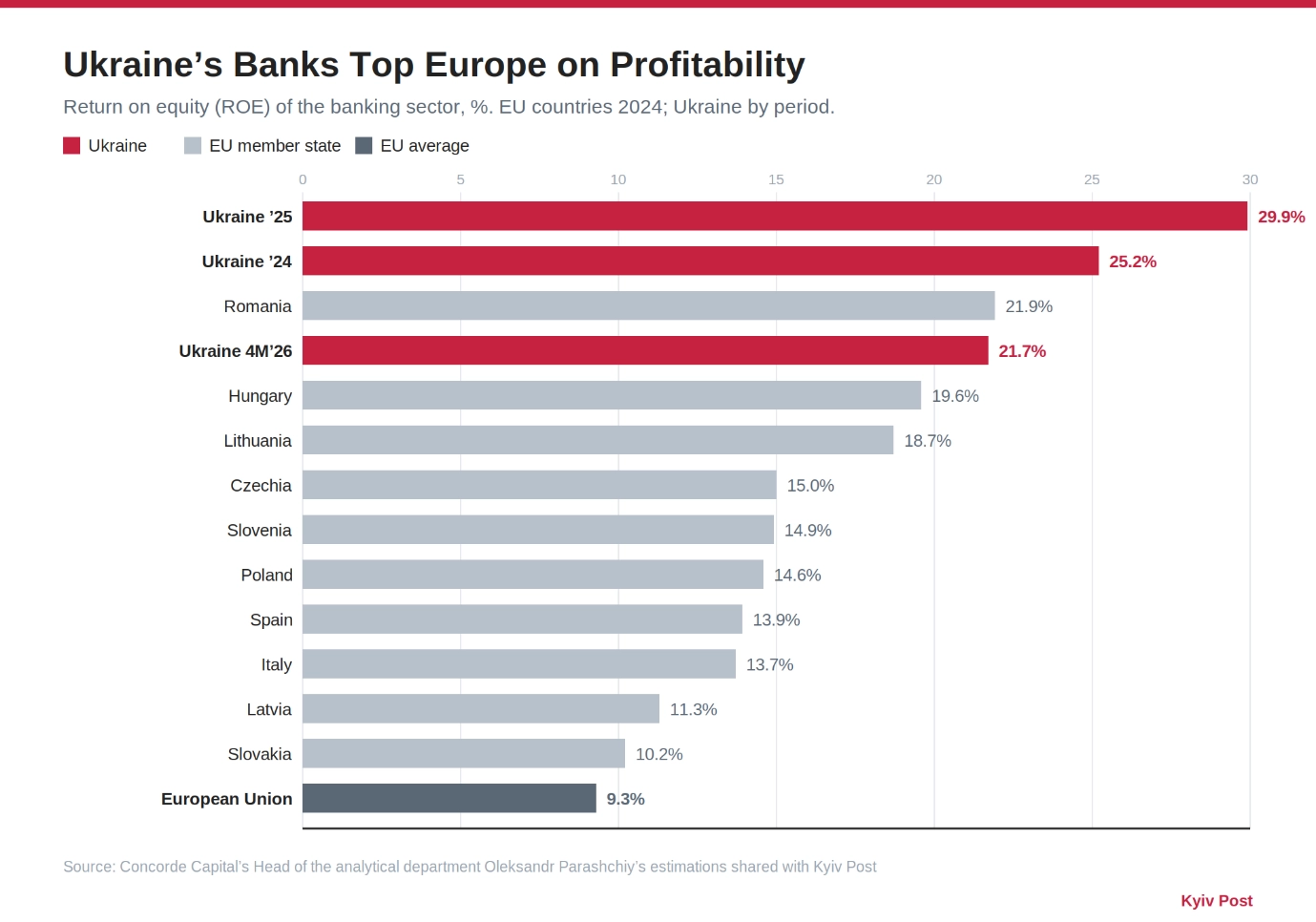
ROE remained above 20% – estimated at 25.2% in 2024, 29.9% in 2025, and 21.7% in the first four months of 2026, according to Oleksandr Parashchiy, Head of the Analytical Department at Concorde Capital, who shared the estimates with Kyiv Post.
The EU average in 2024 was 9.4%. Even Romania’s 21.9%, being the highest in the bloc, trailed Ukraine’s figures.
The NBU warns the tax scares investors, but war and political risks are what actually deter them, Parashchiy said.
Despite these challenges, two foreign investors entered Ukraine’s banking sector: Estonian fintech group Iute Group bought a bridge bank created from the failed RWS Bank in January, and Polish fintech Zen bought PIN Bank in April, This was done not by their own technologies but by those already built inside Ukraine’s banking system, according to Nikolaichuk.
“Given the banking system’s current capital levels, they could easily issue an additional Hr.300-400 billion ($6.7-$8.9 billion) in loans today,” Parashchiy said.
Banks lend less than they could because of war-related risks, a shortage of quality borrowers, high hryvnia borrowing costs, and the weakened financial position of companies drained by the war.
Predictability matters too.
“If the increased rate is deemed temporary, businesses need to understand how long the higher rate will last and to plan their future operations,” Raiffeisen Bank Ukraine CEO Natalia Gurina said. “It increases investment risks on top of existing military risks,” a source at a state-owned bank told Kyiv Post.
“A 50% rate may be defensible in wartime – but only while defense spending stays high, bank profits remain outsized, and there are no signs that capital is eroding or lending is slowing,” Taras Marshalok, analyst at the KSE Institute’s Center for Public Finance, told Kyiv Post.
Banks can temporarily pay more when profits are high and the state has acute fiscal needs, but that is not a permanent license, he added.
At 50% in 2024, banks paid Hr.95.9 billion ($2.16 billion) in corporate income tax – roughly a third of the Hr.271 billion ($6.09 billion) collected from all companies that year.
Even at 25% in 2025, they paid Hr.84.8 billion ($1.91 billion) out of Hr.285 billion ($6.41 billion) total, Marshalok estimated for Kyiv Post.
Ukraine earns more from excise taxes, personal income tax with the military levy, and VAT. However, those are harder to tighten.
2027 budget gap is looming, as the quest to find cash
In the fight against higher tax, banks and the NBU are left alone in the face of wartime and lawmakers’ decisions. Now Hetmantsev wants it for 2027 too.
“More than a dozen countries in Southern and Central Europe tax banks’ windfall profits in one form or another,” ICU financial analyst Mykhailo Demkiv told Kyiv Post.
Lost in the noise was a harder number from the NBU’s December 2025 Financial Stability Report: Ukraine extracts the most from the smallest base. Its additional tax-to-GDP ratio of 0.60% is nearly double Latvia’s 0.36% and more than triple the Czech Republic’s 0.19%. Yet, Ukraine’s banking sector assets are just 49% of GDP, against Latvia’s 166% and the Czech Republic’s 127%.
Taxing banks is easier because their financial statements are the most transparent in the economy – one can freely see profits, losses, and capital in NBU statistics. The same cannot be said of agriculture, retail, heavy industry, or the defense sector, which has grown significantly. But the state-owned banking sector already pays more.
“The state-owned banks generate most of the profits, and next year they will simply pay them out in dividends,” Oleksandra Betliy of the Institute for Economic Research and Policy Consulting (IER) told Kyiv Post.
Ukraine’s parliament could have found more money for the war budget – but lawmakers stall the relevant bills worth billions in euros needed to unlock external financing. Ukraine’s businesses can save up to $82-117 million in fees and boost operations if lawmakers vote on the SEPA payment package for the World Bank.
Untaxed international parcels under €150 ($176) could get the budget extra Hr.27 billion ($607 million) a year, the State Tax Service estimates – more than the NBU’s estimated Hr.20 billion ($449.7 million) banks will pay in windfall tax in 2026.
However, the relevant bill sits unvoted.
“If the government and parliament pass all the necessary legislation on time and implement it, there will be enough money in the budget,” Oleksandra Betliy of the Institute for Economic Research and Policy Consulting told Kyiv Post.
Some mid-sized companies also split into smaller LLCs to dodge taxes – another shadow-economy trick that makes the cash harder to track down, with no policy yet in place to stop it.
“Squeezing more out of the banks is simpler than de-shadowing the economy or pushing through structural reforms whose payoff is hard to quantify, and harder still to prove to the IMF,” Parashchiy told Kyiv Post.
“These funds would stimulate lending much better if they were allocated to insure the military risks,” the source in a state-owned bank said.
By September this year, Ukraine’s officials should estimate the 2027 financing gap and identify how to finance it with both domestic and internal revenues. Or even think about how to increase military funding in light of military salary reforms.
All of this requires money and will require cash until Russia’s invasion is over, the date of which is unknown.
Lawmakers may still insist on the fast and easy decision – taxes on banks’ profits. Will the new government shift the paradigm and fight with lawmakers for long-term decisions for the wartime economy?
The new prime minister will decide.
You can also highlight the text and press Ctrl + Enter

OPINION: The Bill for Crimea Comes Due for Putin