Tariffs made headlines, but the real news was that Donald Trump grabbed control of the global economy this week by weaponizing tariffs. This was the first salvo in an unprecedented geo-economic war aimed at toppling unfair trade and eventually reshaping geopolitics.
Trump’s tariffs will level the playing field concerning some nations, but will also hurt economies and punish or isolate allies as well as foes.
JOIN US ON TELEGRAM
Follow our coverage of the war on the @Kyivpost_official.
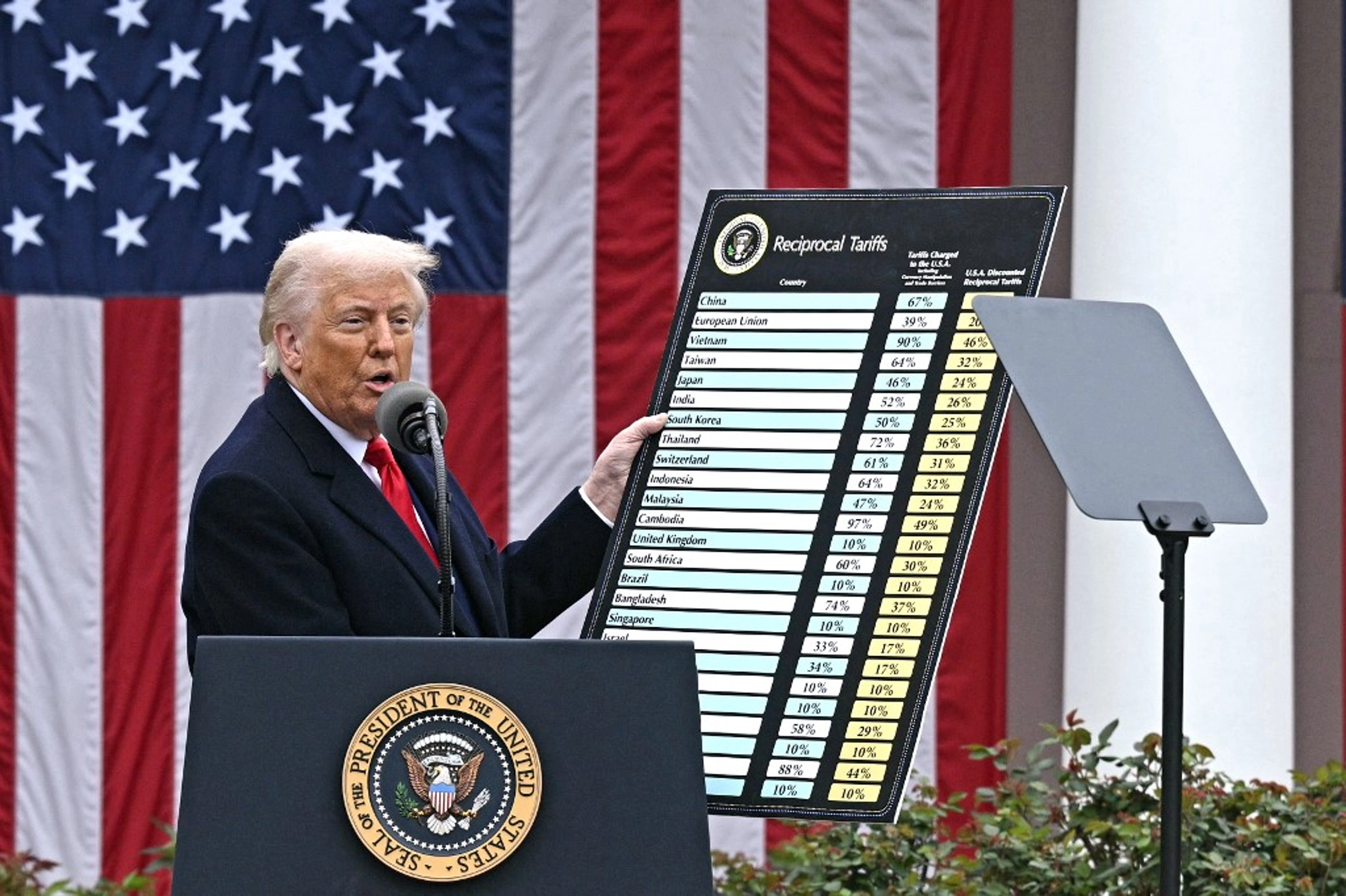
That’s why Trump’s triumphant “Liberation Day” press conference in the Rose Garden struck fear into stock markets everywhere before and after he spoke. He intends to slash America’s unsustainable annual trade deficit of $1 trillion, and to end unfair trading practices by some countries that have cheated by subsidizing their exports, stealing technology, blocking American exports, imposing high tariffs, or purposely lowering the value of their currencies to dump products in America.
Trump’s tariffs are also designed to give America permanent leverage over future tariffs and trade. They were purposely set at high rates to leave room for bargaining: If a country reduces its tariffs, or agrees to economic or geopolitical concessions, they will be reduced or exempted. China called this “blackmail,” but it’s clear that America intends to reshape the global economy to suit its needs from now on … and not the other way around.

Russians’ Gloom Over Economy and Living Standards Reaches 20-year High
Trump’s reciprocal, country-by-country tariff plan provides Washington with enormous bargaining power to push around the world. In fact, his tariffs were effective even before they were announced: Hours ahead of Trump’s “liberation day” press conference, Israel pre-emptively scrapped all tariffs on American imports. Vietnam announced it would do the same, and many others will follow.
Some countries, considering retaliatory measures, will rethink the process because of America’s clout. Mexico, for instance, stated it would not retaliate despite being hit with 25% tariffs in contravention of a free trade treaty. Instead of pushing back, Mexico stepped up dramatically by placing thousands of troops and committing resources to prevent illegal migration and fentanyl smuggling along its border.
Trump has threatened tariffs against any country that trades with Venezuela or will do so concerning other American enemies. America will threaten tariffs, publicly or privately, to pressure trading partners into bolstering their armed forces and defenses to reduce America’s global military burden. America has also hinted that it will use tariffs to punish trading partners who join forces in order to fight back or form alternative trading blocs.
The US blatantly warned Canada against joining with the European Union in competition with America. Likewise, America’s economic-military “vassals” Japan and South Korea will be prohibited from joining a trilateral free trade agreement with China that Beijing has proposed.
Domestically, Trump believes his tariffs will pay down the country’s huge debt and finance tax cuts for its citizens. Chief proponent White House adviser Peter Navarro said that tariffs could raise $600 billion a year, but others dispute this. Some believe tariffs will be inflationary and an indirect tax mostly borne by consumers who will pay more for foreign goods and services. If true, tariffs will become a drag on incomes and the economy.
Critics add that Trump’s scheme will hurt the global economy and stunt economic growth. Said one economist: “It’s a seismic day for global trade. Trump is blowing up the post-war system that made the US and the world more prosperous, and he’s doing it with reckless confidence.”
A recent Wall Street Journal editorial echoed this concern: “Blowing up the world trading system has consequences that the President isn’t advertising. The cost in lost American influence will be considerable. Mr. Trump thinks the lure of the US market and American military power are enough to bend countries to his will. But soft power also matters, and that includes being able to trust America’s word as a reliable ally and trading partner. Mr. Trump is shattering that trust as he punishes allies and blows up the USMCA (free trade deal with Canada and Mexico) he negotiated in his first term.”
The damage to stock markets has been ongoing since the tariffs were first mentioned. As stocks cratered on “liberation day” April 2, ace investor and broadcaster Jim Cramer of CNBC dubbed the current administration the “Walmart White House – Every Day Lower Prices.” He warned that stocks would continue to fall in value because “the President doesn’t care” about markets or investors.
On the other hand, tariffs are somewhat popular in the United States as a form of “rustbelt revenge” wherever “free trade” has resulted in the shuttering of thousands of American factories and job losses for millions of workers in America.
Trump’s protectionism has also sparked “reshoring” in the form of enormous investments by American outfits like Apple, which have chosen to move a portion of their supply chains to America from China. Even offshore giant Taiwan Semiconductor Manufacturing (TSMC) has gotten the message and is shifting much of its production from Taiwan to the United States. TSCM became the world’s biggest maker of sophisticated chips, invented by Americans, because of low-cost labor and massive government subsidies. (TSCM also knows that Trump will be more inclined to protect Taiwan if it spends hundreds of billions building factories stateside).
Not all jobs will be repatriated, but his new tariffs will begin to end the economic hemorrhage that has afflicted America and other developed nations since the “free trade era” came about a few decades ago.
America’s new tariffs wMercantilism will return, prevalent from the 16th to 18th centuries, which focused on wealth creation based mostly on maximizing exports and minimizing imports in order to boost nation-state influence and power.ill trigger seismic geopolitical changes, too. Globalization will become a dirty word.
America, under Trump, has already launched into that process and abandoned foreign policy idealism. The world’s other “hegemons” – China, the European Union, Japan, South Korea, and eventually India – will also ruthlessly expand and strengthen economically.
Europe, in particular, must replicate America’s generous post-war nuclear and military umbrella to secure its people and prospects. India is already a nuclear power with the world’s second largest military, but Japan and South Korea must re-arm and will likely become nuclear powers to keep China and North Korea at bay.
Trump also intends to use tariffs to aggressively secure America’s economic future through geographic expansion. Canada and Denmark’s Greenland are on its hit list, and Trump intends to indenture valiant Ukraine by scooping up all rights to rebuild and develop its natural resources. These three targets alone will make America more globally and economically dominant than it already is. But will it stop there? Will future American regimes begin to conquer as well as control? Will China or others?
Reprinted from [email protected] – Diane Francis on America and the World.
The views expressed in this opinion article are the author’s and not necessarily those of Kyiv Post.
You can also highlight the text and press Ctrl + Enter