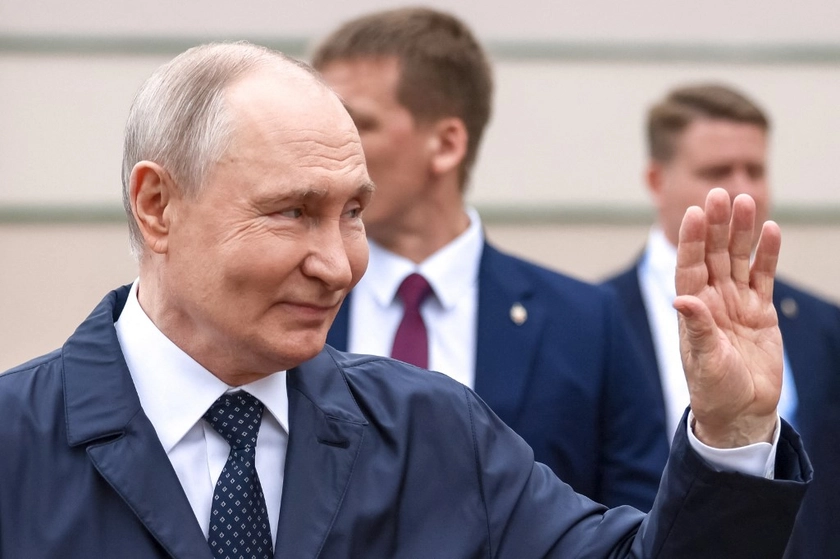
Regardless where one sits on the political spectrum, another ultimatum from the Trump Administration lapsed without being enforced. As expected by numerous analysts and political pundits, Russian President Vladimir Putin presented President Donald Trump with an alternative to confrontation, which he promptly accepted.
According to the President, special envoy Steven Witkoff had a “highly productive meeting with Putin” last Wednesday, adding “great progress” was made in the eleventh-hour meeting.
JOIN US ON TELEGRAM
Follow our coverage of the war on the @Kyivpost_official.
But was it “highly productive”? The only progress made was a bilateral meeting between Putin and Trump. The victim of Russian aggression – Ukraine – does not, for now, have a seat at the table. Nor does NATO or its European leaders, many of whom believe they are Kremlin’s next target.
White House Press Secretary Karoline Leavitt told reporters: “The Russians expressed their desire to meet with President Trump, and the president is open to meeting with both President Putin and President Zelensky. President Trump wants this brutal war to end.”
Twenty-four hours after the announcement, Putin would back off his meeting with Ukrainian President Volodymyr Zelensky, saying it was “very far” from happening. Last Thursday morning a White House official told the New York Post that Putin “must meet with Zelensky for the meeting to occur.” Later that afternoon, the White House said the President is willing to meet one-on-one with Putin – backing off yet another stipulation.
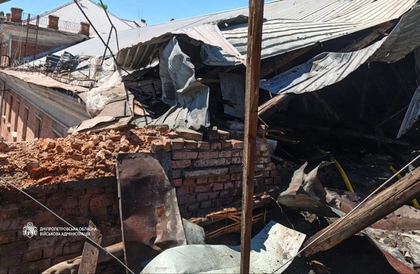
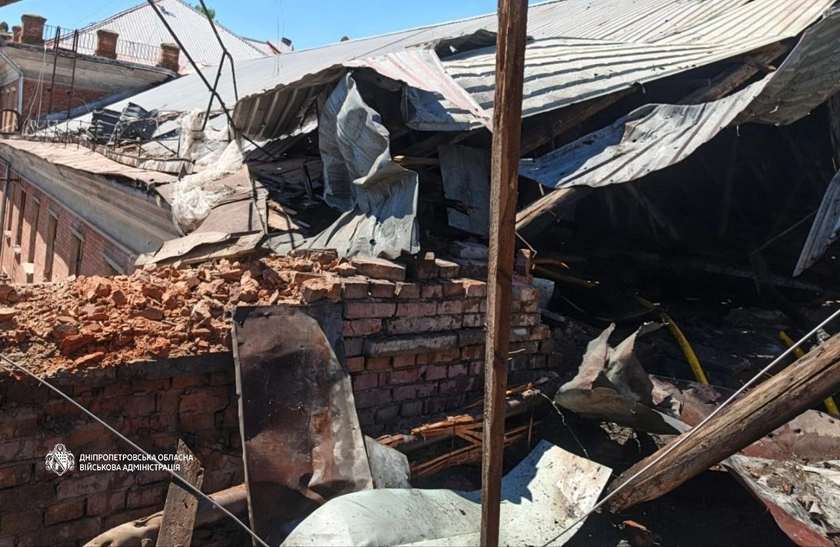
Russia Strikes 4 Districts in Dnipropetrovsk Region, Injuring 2
The proposals discussed during the Witkoff-Putin meeting remain unclear. An Aug. 7 report on the Polish portal Onet, which was later refuted by Zelensky’s communications advisor Dmytro Lytvyn, stated that Witkoff’s proposal to Putin included: 1) a ceasefire in Ukraine without a peace treaty; 2) de facto recognition of Russia’s territorial gains in Ukraine, with the matter postponed for either 49 or 99 years; 3) lifting most sanctions against Russia and, over time, resuming energy cooperation and imports of Russian oil and gas; 4) no guarantee regarding Ukraine’s potential NATO membership; and 5) no commitment to end military support for Ukraine.
Multiple reports since then have only contributed to the uncertainty. One thing is certain though, a ceasefire – not a peace deal – from the Oval Office’s perspective involves concessions to Russia in order to get Putin to stop, for now, his obsession with the destruction of Ukraine. President Trump believes that means ceding the occupied territories and Crimea to Moscow, stating: “There’ll be some swapping of territories to the betterment of both… he’s [Zelensky] going to have to get ready to sign something.”
This does not solve the problem or get to the “root cause” of the war – Putin. It only serves to embolden him, and his Chinese ally, by rewarding aggression.
What Putin has not been able to accomplish on the battlefield, he wants Trump to give him at the negotiation table.
Former national security advisor John Bolton believes Putin is trying to take advantage of a one-on-one summit with Trump to “put out a Russian peace plan, or ceasefire plan, in order to have Trump take it to [Zelensky] and see if [he] rejects it,” posturing to see who can look like they are more interested in peace.
Putin did just that on Friday, providing the Trump Administration his terms for a cease-fire: Ukraine withdraws forces from entirety of the Donetsk and Luhansk regions, as well as the Crimea peninsula. What he has not been able to accomplish on the battlefield, he wants Trump to give him at the negotiation table – sans Ukraine.
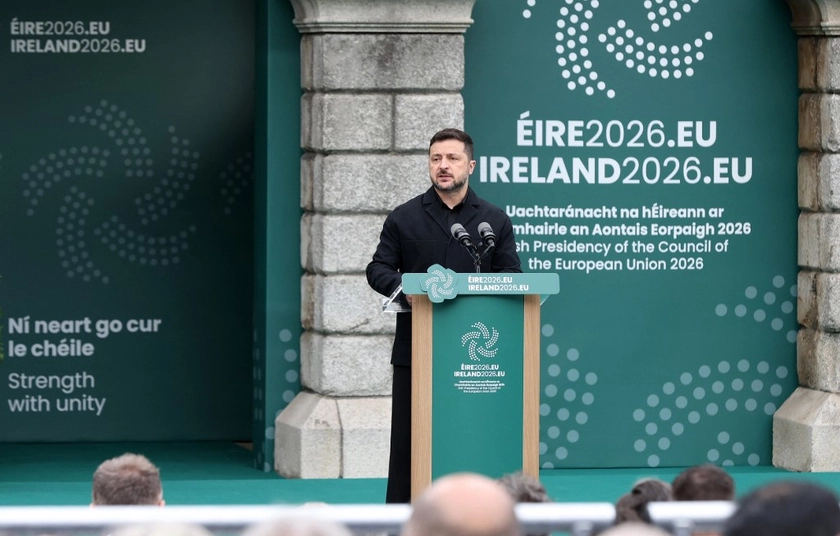
Zelensky promptly rejected the proposal on Saturday, reaffirming that Ukraine would not concede territory to Russia – the Constitution of Ukraine forbids it – and must be directly involved in any negotiations to resolve the conflict. European officials also voiced significant concerns regarding Putin’s offer.
Putin is gambling that Ukraine’s refusal to cede the occupied territories and Crimea to Russia will turn Trump against Zelensky – again. Trump says he “wants this brutal war to end.” Putin’s intent is to show his willingness to do just that – however far-fetched – while convincing Trump that Zelensky does not. He cannot do that with Zelensky in the room.
Putin is using the meeting to divide the US from Europe over the war in Ukraine. Vice President JD Vance took the bait on the Sunday morning circuit, telling Fox News’s Maria Bartiromo: “We’re done with the funding of the Ukraine war business. We want to bring about a peaceful settlement to this thing.”
If Putin truly wanted peace – he would stop attacking. He is responsible for 1,064,240 Russian casualties. Another 1,000 on Aug. 11 – roughly two infantry battalions.
Time enables Russia, and Putin is playing to Trump’s weakness – his ego – to gain time.
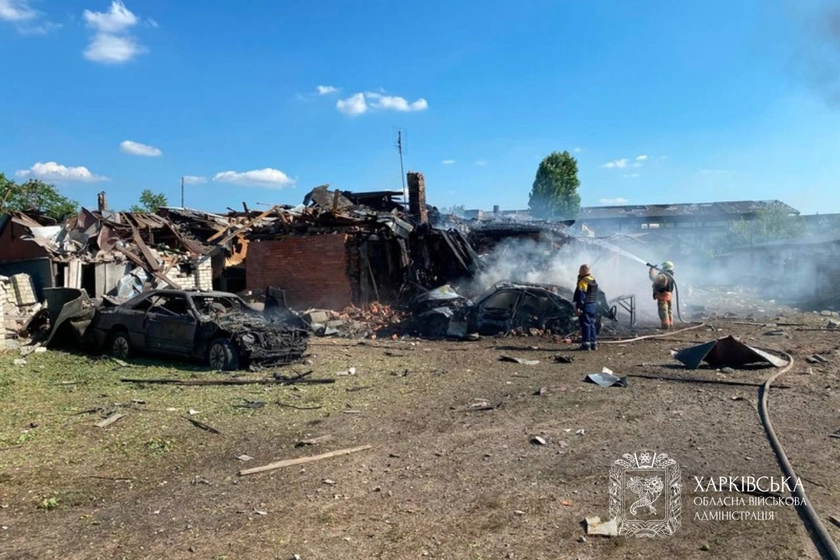
Aug. 8 came and went with no ceasefire announcement, no peace deal, and no additional sanctions or tariffs against Russia – just a bilateral meeting with a leader who has an International Criminal Court war crimes warrant on his head, Friday in Alaska. In the meantime, Putin continues his ballistic missile and drone strikes on Ukrainian cities and “meat grinder” assaults along the southern and eastern fronts.
Nothing has changed, and Putin continues to dictate terms to a receptive Trump.
While the President continues to tell Americans about “unnecessary” Russian and Ukrainian casualties, that this is “Biden’s War,” and how he wants to stop it – his willingness to pressure the Kremlin to stop their attacks is noticeably absent. He does not want to pull the trigger on Putin, but will against India or other countries buying Russian oil – except the other bully on the block, China.
The Institute for the Study of War (ISW) correctly described the Kremlin as “engaged in a delicate balancing act between feigning interest in negotiations to Trump and conditioning Russian society to accept nothing short of Putin’s desired full victory in Ukraine, no matter how long it takes.”
Furthermore, as the ISW deduced, “Putin may have used his meeting with Witkoff to propose a long-range strikes moratorium… [allowing] Russia to stockpile long-range drones and missiles and renew devastating large-scale strikes against Ukraine after the moratorium expires. A strikes moratorium will also handicap Ukraine’s ability to continue its long-range strike campaign aimed at attritting the Russian defense industrial base and wartime economy.”
Time enables Russia, and Putin is playing to Trump’s weakness – his ego – to gain time. The Russian president has embraced Chinese military general, strategist, and philosopher Sun Tzu by “knowing his enemy.” Trump on the other hand does not know his enemy; rather, he acts on “instinct,” and is “ignorant both of [his] enemy and of [himself], [and is] certain in every battle to be in peril” at the expense of Ukraine and possibly Europe.
Putin is simply buying time to avoid additional sanctions, terrorize Ukrainian civilians, and continue his war of attrition.
Team Trump must be wary of the second and third order effects of Putin’s proposals – unintended consequences are still consequences. Since the start of Russian aggression in 2014, Moscow has violated 25 ceasefires. There are ulterior motives; he needs to turn to his Russian experts for advice.
One unintended consequence – Trump stands to lose billions of dollars in rare earth minerals he gained access to in the deal he signed with Ukraine in April should Putin retain the occupied territories.
The Putin-Trump meeting in Alaska could be a propaganda win for Moscow. Putin has brought the US to the table without the Kremlin having made any clear concessions over its war in Ukraine. Furthermore, its location, Alaska – purchased by the US in 1867 for $7.2 million – itself is seen as a win. As Michael McFaul, an Obama-era U.S. Ambassador to Russia, wrote on X: “Wonder if he [Trump] knows that Russian nationalists claim that losing Alaska, like Ukraine, was a raw deal for Moscow that needs to be corrected.”
Putin’s recent comment concerning Ukraine could have other connotations too: “We have an old rule. Wherever a Russian soldier sets foot is ours.” The meeting in Alaska has symbolic meaning for Russia.
As the analogy goes: Putin is playing chess while Trump is playing checkers.
Copyright 2025. Jonathan E. Sweet and Mark C. Toth. All rights reserved.
The views expressed in this opinion article are the author’s and not necessarily those of Kyiv Post.
You can also highlight the text and press Ctrl + Enter