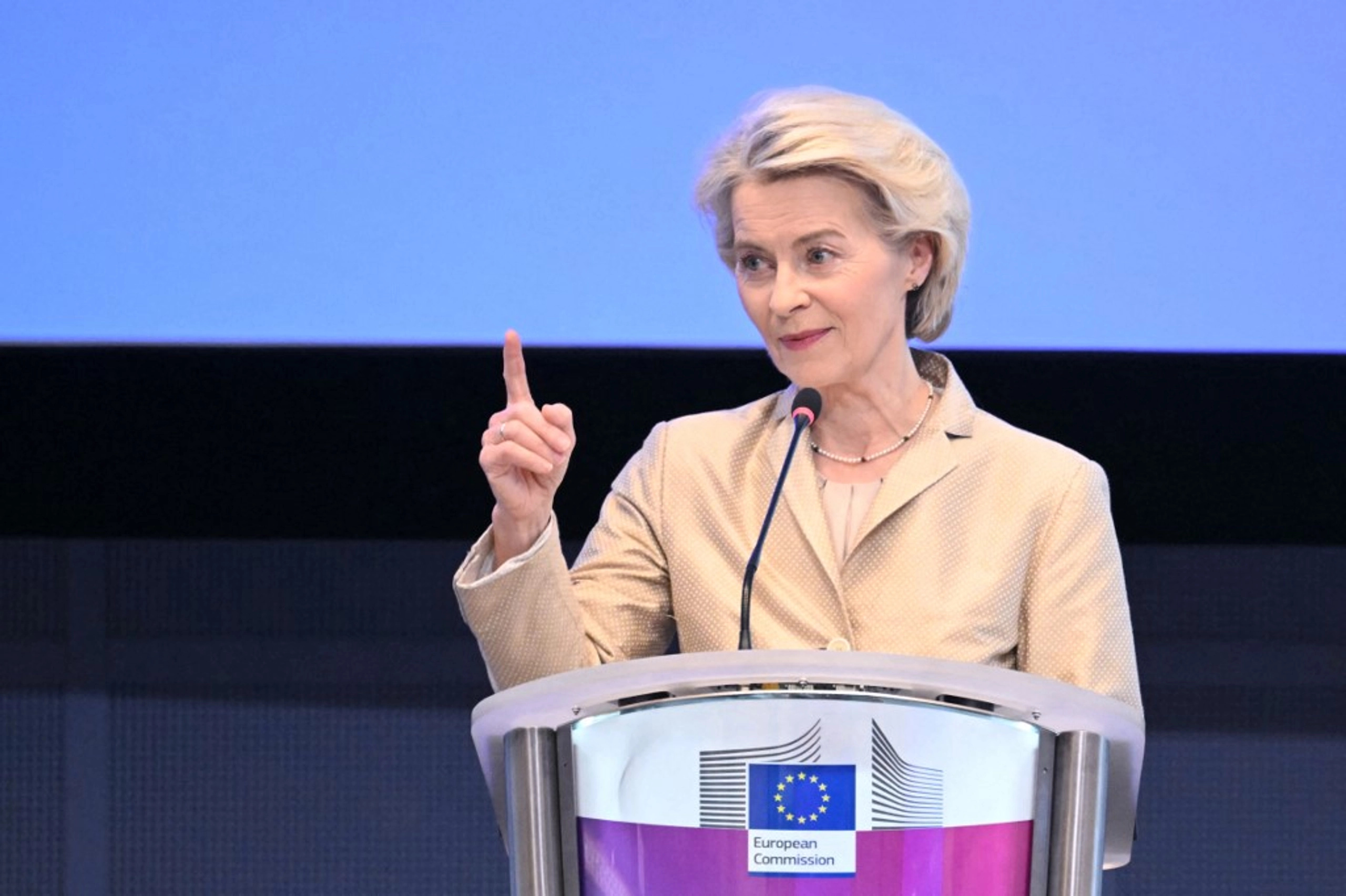
“Sanctions” were the word of the week in Brussels, as the European Commission took a substantial step in pressuring Israel to desist from its brutal tactics in Gaza and, separately, unveiled its 19th round of sanctions against Russia.
Though the trade and diplomatic measures are distinct, in both cases, doubts about the efficacy of the proposals were widespread.
JOIN US ON TELEGRAM
Follow our coverage of the war on the @Kyivpost_official.
Details of the sanctions were revealed on Tuesday by foreign policy chief Kaja Kallas, who explained in an interview with Euronews that violent settlers and extremist ministers would be targeted, and that preferential trade access covered by the EU-Israel Association Agreement would be suspended. This is roughly €6 billion worth of Israeli goods.
But although outrage is growing in Europe against the horrendous civilian cost of Israel’s military offensive in Gaza – and a UN commission concluding on Tuesday that Israel has committed genocide – it is a received assumption that the proposals will fail to get approval from EU countries. Most notably, Germany’s staunch support for Israel makes it almost inconceivable they would pass such measures; Italy, Poland, Hungary, and Austria are also unlikely to give the nod.
All the same, the proposals shift the moral impetus onto these members, at a time when Gaza weighs ever more heavily on domestic politics, as on relations between key EU players.
Russian Authority Urges 3 Kids by 35 Amid Birth Rate Collapse
Turning off the Russia Tap
The hotly anticipated 19th round of sanctions against Russia was unveiled on Friday, designed to force Ukraine’s aggressor to “leave the battlefield and come to the negotiation table,” Ursula von der Leyen explained.
On the menu are sanctions against 118 more shadow fleet tankers, restrictions on Russian cryptocurrency traders, and a ban on imports of Russian LNG from January 2027.
The likelihood that the measures will cause the Kremlin to reconsider its increasingly ferocious attempts on Ukraine is slim, though energy independence from Russia would be a strategic advance for the bloc – though one that Trump hopes will be to the gain of the US, which has already been promised $750 billion in European fuel purchases.
A birthday present for Modi
At the same time that Indian soldiers joined with Russian and Belarusian forces for a large-scale military exercise near Poland’s border, the Commission announced the EU-India strategy on Wednesday. The plan is part of the move towards an EU-India free trade agreement, but the timing was unfortunate and perhaps only explicable by a desire to give Modi a gift.
But after the birthday celebrations were over, trade chief Maroš Šefčovič soberly told Euractiv that the India trade pact is far from being a done deal, with major differences to reconcile – on issues of agriculture and cars in particular. Hopes of getting the agreement over the line by the end of the year seem wishful.
The original of this Brief by Orlando Whitehead for Euractiv can be seen here.
The views expressed in this article are the author’s and not necessarily those of Kyiv Post.
You can also highlight the text and press Ctrl + Enter