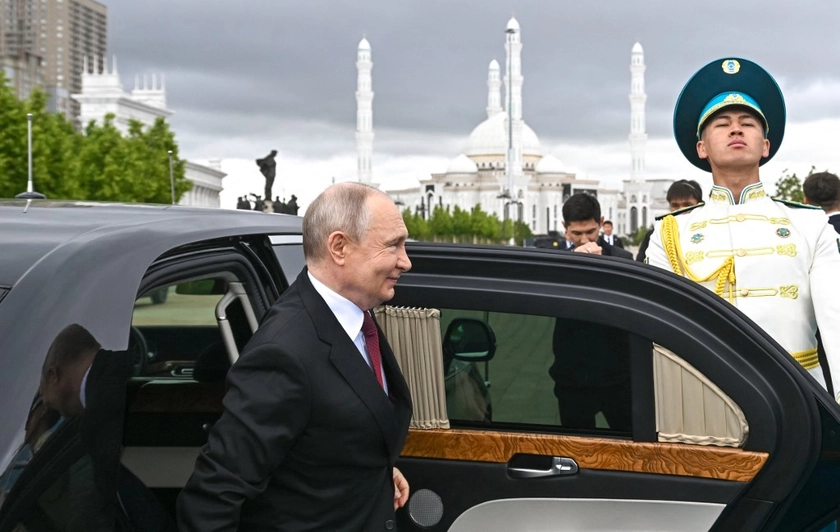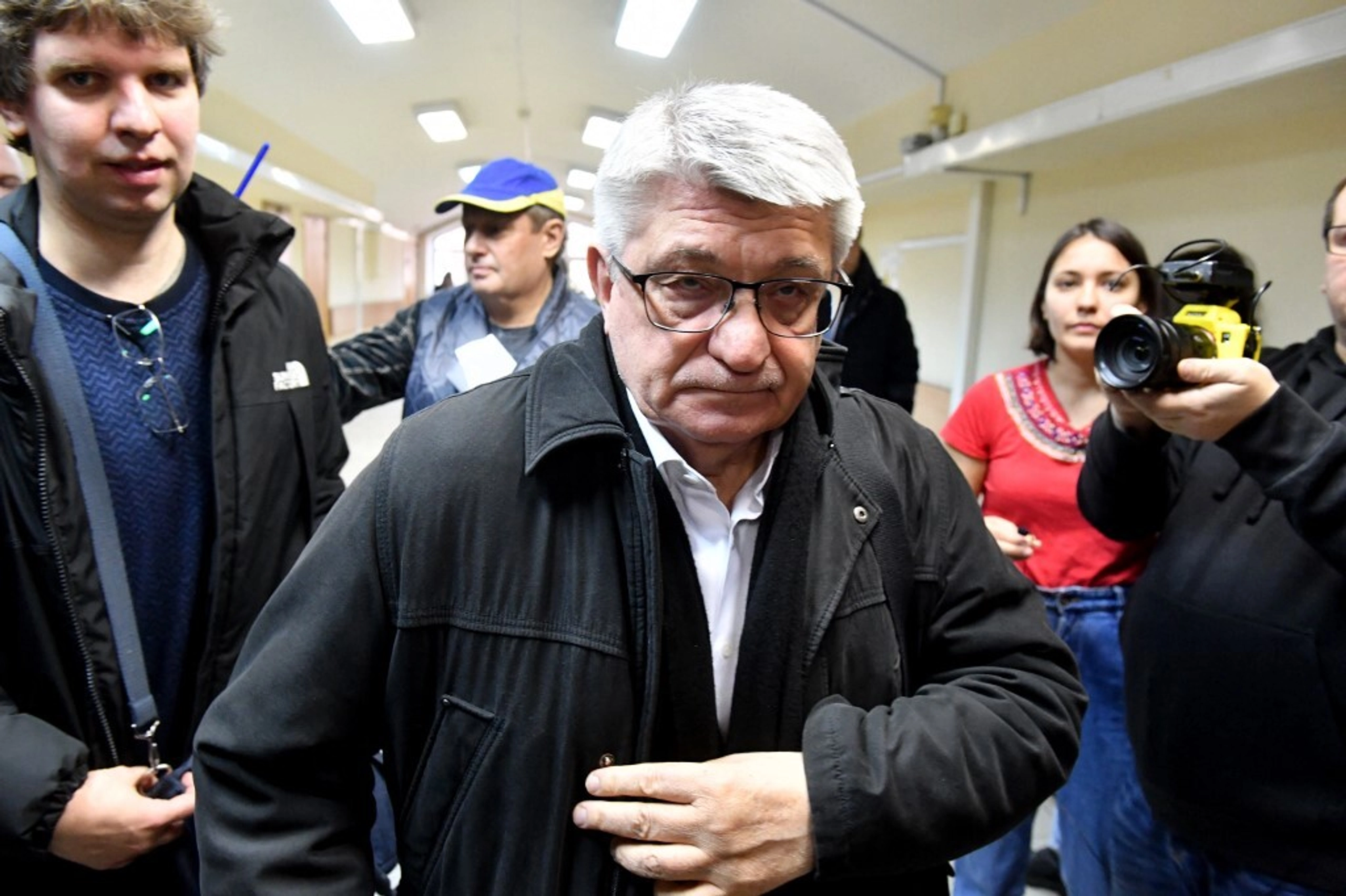
Earlier in December, Alexander Sokurov did something rare in Russia today. He told Vladimir Putin the truth, speaking directly to him on camera.
He did not speak from exile in Berlin or London, where many Russian dissenters now live.
JOIN US ON TELEGRAM
Follow our coverage of the war on the @Kyivpost_official.
Sokurov spoke from within Russia, where he has been stuck since 2022. His passport was taken, and he lost the right to leave the country after he criticized the war in Ukraine.
He spoke during a meeting of the Presidential Council for Civil Society and Human Rights, with Putin watching by video link. Sokurov did not hold back.
He called the “foreign agents” law “humiliating.” He said Russian censorship is suffocating the country’s culture. His film “Fairytale,” banned in Russia but shown worldwide, is, in his view, a clear example of what is wrong with Putin’s regime.
It was an extraordinary moment, one that left many people in awe.
This was not the first time he had spoken out.
In December 2016, Sokurov asked Putin to reconsider the terrorism conviction of Ukrainian filmmaker Oleh Sentsov, but Putin refused.
In December 2021, Sokurov gave what Putin called “not a speech but a manifesto – a stack of problems and a heap of fears.” He criticized Russia’s foreign policy and spoke about a constitutional crisis, saying “the text says one thing, and we’re living something else.” He even suggested that regions wanting to leave Russia should be allowed to do so.
Russia Issues 1,100+ ‘Traditional Values’ Visas in 2025 as Kremlin Expands Anti-Western Push
Putin was not pleased. “Some things it’s better to say directly,” the president told him, “and some things it’s better not to say at all.”
Sokurov has not been deterred.
While many others have been silenced, imprisoned, or forced into exile, Sokurov has used his rare opportunities to challenge Putin directly.
His appearance in December 2025 came after years of growing repression, the closure of his film foundation, and being placed under what is essentially house arrest. This was his riskiest move so far.
What did he say? He criticized the “foreign agents” law, which has ruined the lives of journalists, activists, and artists – anyone who receives foreign funding or is seen as influenced from abroad.
“Every week, we watch with concern to see who has become a foreign agent,” Sokurov said. “They just name them, make various claims against a person, and then that’s it, it’s all over.”
Still, Putin continues to speak as if nothing is wrong.
He also spoke about censorship, saying Russia “still didn’t know how to have political discussions with young people, with older schoolchildren, with students. The country is afraid of these discussions.” He added that even classic Soviet war films could not be made in Russia today. His own film, “Fairytale,” which imagines historical dictators meeting purgatory, is still banned in Russia.
Putin’s response was typical for him.
He claimed the foreign agents’ law was copied from American legislation and said it had no serious consequences.
“The most important thing for us is simply that you disclose your sources of funding.”
Rubbish. Russian courts now often give prison sentences for breaking these rules. Lives are destroyed, careers ended, and people are forced to flee. Still, Putin continues to speak as if nothing is wrong.
Then Putin did something unexpected. He called the bans on Sokurov’s films “strange” and promised to look into who had blocked them. “I’ll call you, we’ll talk,” he told Sokurov. He also said, “I draw your attention to the fact that you are a member of the Presidential Human Rights Council, so no discrimination against you is allowed. At least at this level.”
Was this protection or a warning? It seemed like a reminder that Sokurov’s safety depends entirely on Putin’s will.
The next day, Sokurov gave an answer. He told reporters he hoped to meet with Putin, but he “fears the consequences of his speech.”
Sokurov is not just any filmmaker. He is a “People’s Artist of the Russian Federation,” one of the country’s highest cultural honors. He made “Russian Ark,” a single-take film set in the Hermitage, and won the Golden Lion at Venice for Faust.
His other acclaimed films have explored the mindsets of figures like Hitler, Lenin, and Hirohito.
It is hard to appreciate Sokurov’s courage if you live in a free society. In Russia today, speaking out against the war can mean years in prison. Even holding a blank sign can lead to arrest. Calling the “special military operation” a war is a crime. Well-known critics of Putin have been poisoned, imprisoned, or have died under suspicious circumstances.
Sokurov is aware of all this, but he still chooses to speak out.
Many others have chosen to stay quiet, keeping their heads down. Even those in exile, while opposing Putin’s despotism, often avoid condemning Russia’s war against Ukraine, especially its occupation of eastern Ukraine and Crimea. They hesitate to criticize this new form of Russian imperialism or to support the rights of Ukrainians and others under Russian rule to self-determination, independence, and democracy, to align with Europe rather than Russia.
The sad truth is that, decades after Sakharov, Russia still relies on its bravest people to risk everything just to speak simple truths.
Sokurov is a rare example of Russian culture speaking out against oppression and regimentation, supporting freedom for both Russians and non-Russians.
Before Sokurov, there was Andrei Sakharov. Sakharov’s death anniversary was just marked on Dec. 14, and the similarities between the two men are clear.
Both men – Sakharov, the physicist, and Sokurov, the filmmaker – used their status not for comfort, but to challenge those abusing their power.
The sad truth is that, decades after Sakharov, Russia still relies on its bravest people to risk everything just to speak simple truths.
December brings another reminder: The Decembrist uprising of December 1825. Tsarist officers stood in St. Petersburg’s Senate Square, demanding a constitution and an end to autocracy. They were defeated, hanged, or sent to Siberia, but they became a symbol the tsars could not erase.
So, 1825: the Decembrists. 1980s: Sakharov. 2025: Sokurov.
The sad irony is that, two centuries later, Russians are still risking everything for the same basic freedoms, rule of law, and human dignity. How many more Decembers and Decembrists will there be?
At least Sakharov could appeal to world opinion and a global community that might listen. Sokurov speaks in a Russia that has shut itself off, where isolation is official policy and the outside world is seen as an enemy. He is even more alone.
Yet both men are united by the same strong belief: Staying silent in the face of injustice is immoral and impermissible.
And this principle is just as vital whether in Washington, Kyiv, or elsewhere, as it is in Moscow.
The views expressed are the author’s and not necessarily of Kyiv Post.
You can also highlight the text and press Ctrl + Enter
Putin’s Worst Nightmare