I was proud to accompany the Ukrainian delegation headed by Deputy Minister of Defense Serhii Boyev, promoting their groundbreaking technology and defense companies at this year’s CANSEC, Canada’s leading global defense and security trade show.
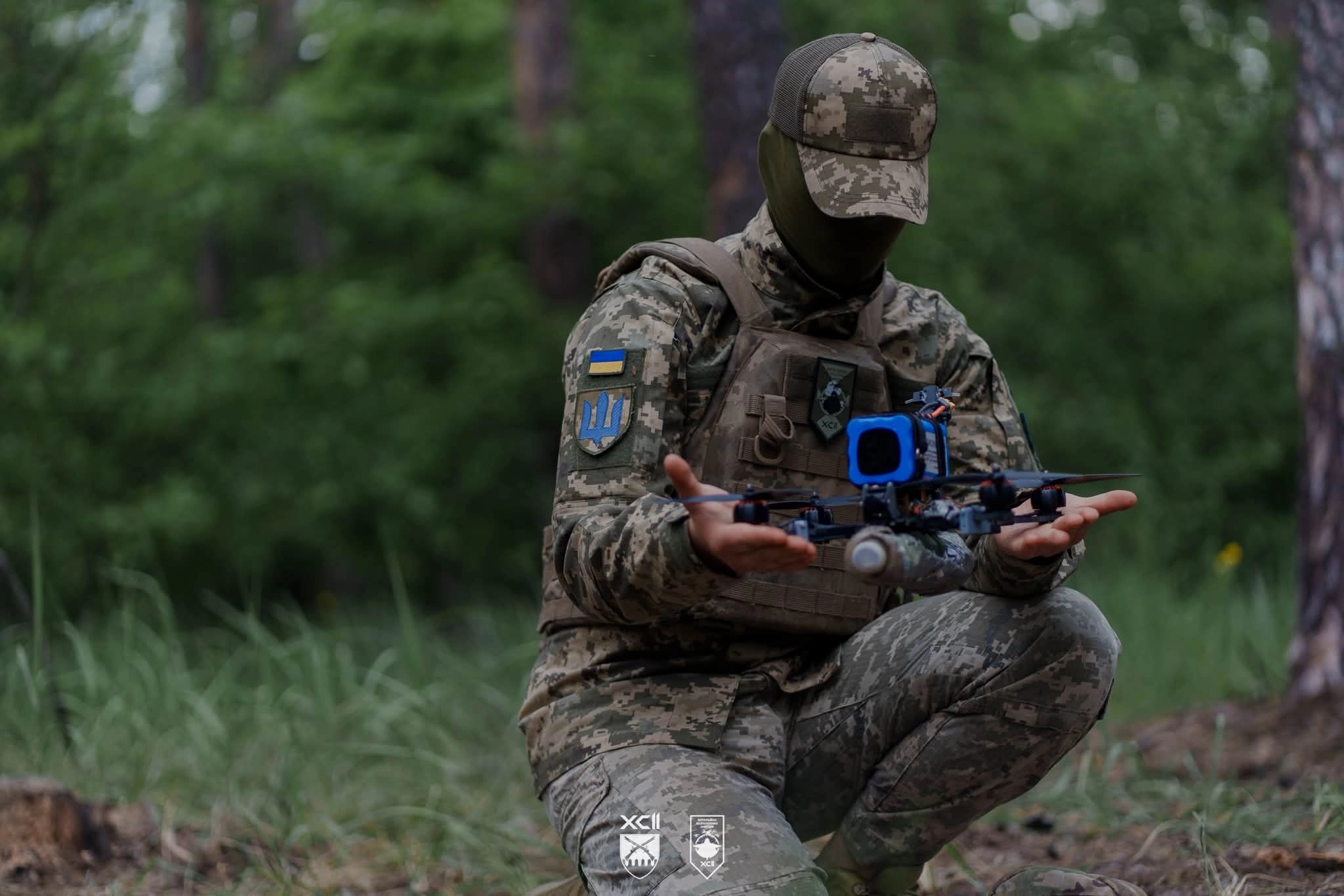
At CANSEC, Canada and Ukraine signed a landmark government-to-government arrangement to manufacture military drones in Canada for deployment on Ukrainian front lines. The agreement formalizes a strategic joint venture between Hamilton-based Sentinel R&D Inc. and Kyiv-based aerospace and defense tech company Airlogix.
JOIN US ON TELEGRAM
Follow our coverage of the war on the @Kyivpost_official.
Let’s hope that this is the first of many to come.
Ukraine will benefit from Canada’s re-energized defense industry, as stressed by Prime Minister Mark Carney at CANSEC. This is a win-win situation for both countries, as Canada is gaining direct access to Ukraine’s experience.
Having been stationed in Ukraine since August 2023, I have witnessed firsthand how this war has evolved. More importantly, I have seen how Ukrainians continuously adapt and innovate, keeping a much larger aggressor permanently on its back foot.
We often describe modern warfare through the lens of technology, including drone evolution, counter-unmanned aerial systems (C-UAS), and electronic warfare. But this conflict encompasses much more than what is visible on the frontlines and in the skies. Analysts now widely agree that Ukraine’s ability to keep the frontline stable against overwhelming odds is one of the most impressive military feats of the century.

Ukraine Approves National Pantheon Law to Honor State Builders, Military Leaders and Cultural Icons
Pundits continue to analyze what gave Ukraine the ability to hold back a larger, ostensibly more experienced adversary. In the West, we tend to focus heavily on the training and mentoring, military equipment donations, and the intelligence support we provided.
It is true, Western intervention helped transform post-Soviet military – one that faced the added complication of deep Russian infiltration – into a modern fighting force.
Canada is a trusted partner. Since 2015 following the annexation of Crimea, with its signature initiative of Operation Unifier. This Canadian Armed Forces’ ongoing military training and capacity-building mission was recently extended to 2029 and is a powerful, historic testament to our enduring commitment. Canada has trained over 47,000 Ukrainian security forces members, 13,000 of whom have been trained since the full-scale invasion. As of February 2022, Canada has committed over $8.5 billion in military assistance to Ukraine.
International military donations have been critical, providing the baseline stock required for self-defense.
Knowing the enemy
The first strategic rule of any conflict is simple: Know your enemy. Ukrainians know Russia better than anyone because they’ve had to. All of Russia’s immediate neighbours share this deep, historical understanding.
As we look to tighten and modernize our own continental defenses, we are learning from this war about the realities of the Russian threat. Ukraine’s wartime experience offers invaluable lessons in scaling innovation and adapting quickly under pressure.
Institutions like the Business Development Bank of Canada are stepping up with billions in potential financing for defense and dual-use technologies. This is creating real opportunities to scale up proven Ukrainian innovations in Canada and establish Canada-Ukraine joint ventures.
The turning point of Bakhmut
Equally important is understanding how the Ukrainian military structure adapted to survive. The brutal battle for Bakhmut was a critical catalyst for change. The loss of so many brave defenders forced a paradigm shift.
Facing a cold mathematical reality, Ukrainian commanders realized they could not fight a traditional war of attrition against an aggressor with a vastly larger population. They had to try something radically different.
Bakhmut served as a critical, high-loss catalyst for the Ukrainian Armed Forces to abandon Soviet-style command structures in favour of decentralized, agile operations driven by low-cost first-person view (FPV) drone integration.
Bakhmut triggered two fundamental changes in the Ukrainian Armed Forces:
- Decentralized Command: Decision-making was pushed down to lower tactical levels, allowing small units to react to battlefield changes in real time.
- Tactical Autonomy: Units were given an objective, but complete freedom in how to achieve it. This autonomy sparked rapid, bottom-up innovation, directly accelerating the widespread use of drones for reconnaissance, active defense, and offensive operations.
A delegation of Ukrainian startups at CANSEC showcased this battle-tested tech, featuring AI-driven combat management systems, AI-enabled autonomous drones, localized electronic warfare kits, and automated demining technologies.
New blueprint for military innovation
Ukraine has developed a pace of defense innovation rarely matched in any global sector. This agility is driven by three distinct factors:
- Extreme Budget Constraints: When Western partners restricted the use of funded weaponry, Ukrainians pivoted. Operating with modest budgets, they engineered quick, cheap, and highly efficient solutions that could be scaled and replicated instantly.
- An Agile Research &Development (R&D) Ecosystem: Ukraine strategically navigated outside traditional bureaucratic chains of command to set up dedicated hubs for rapid innovation, testing, and solution-based R&D. Instead of relying solely on massive legacy defense contractors, they partnered with tech startups, micro-enterprises, and small-to-medium businesses (SMEs). They fostered intense parallel competition. Rather than fighting over intellectual property (IP), startups competed to solve the same problem simultaneously, yielding superior products. Successful entities naturally consolidated later.
- End-User Selection: Weapon procurement is not dictated by a centralized committee. The front-line units themselves select the gear they want to use. Consequently, tech companies spend less time lobbying for corporate monopolies and more time optimizing their products to survive rigorous battlefield testing.
In Ukraine, the defense tech sector is entirely focused on survival and solving problems in an arena where the electronic and physical landscape changes weekly.
Canada is building many of the same foundations – from innovation programs to growing regional tech clusters – creating strong potential for deeper collaboration with Ukrainian partners.
Partnership with Canada
At CANSEC, we solidified our strong Canada-Ukraine partnership – combining our talents and coming up stronger together. Nimble adaptation, decentralized decision-making, and radical reliance on tech startups are the cornerstones of Ukraine’s defensive success.
Canada, on the other hand, brings a strong tradition of scaling up and manufacturing, including automation that allows more to be produced more efficiently. We also have very talented problem-solving engineers and designers, finding genius solutions to enhance material, lightness, speed, and aerodynamics.
Together we are stronger.
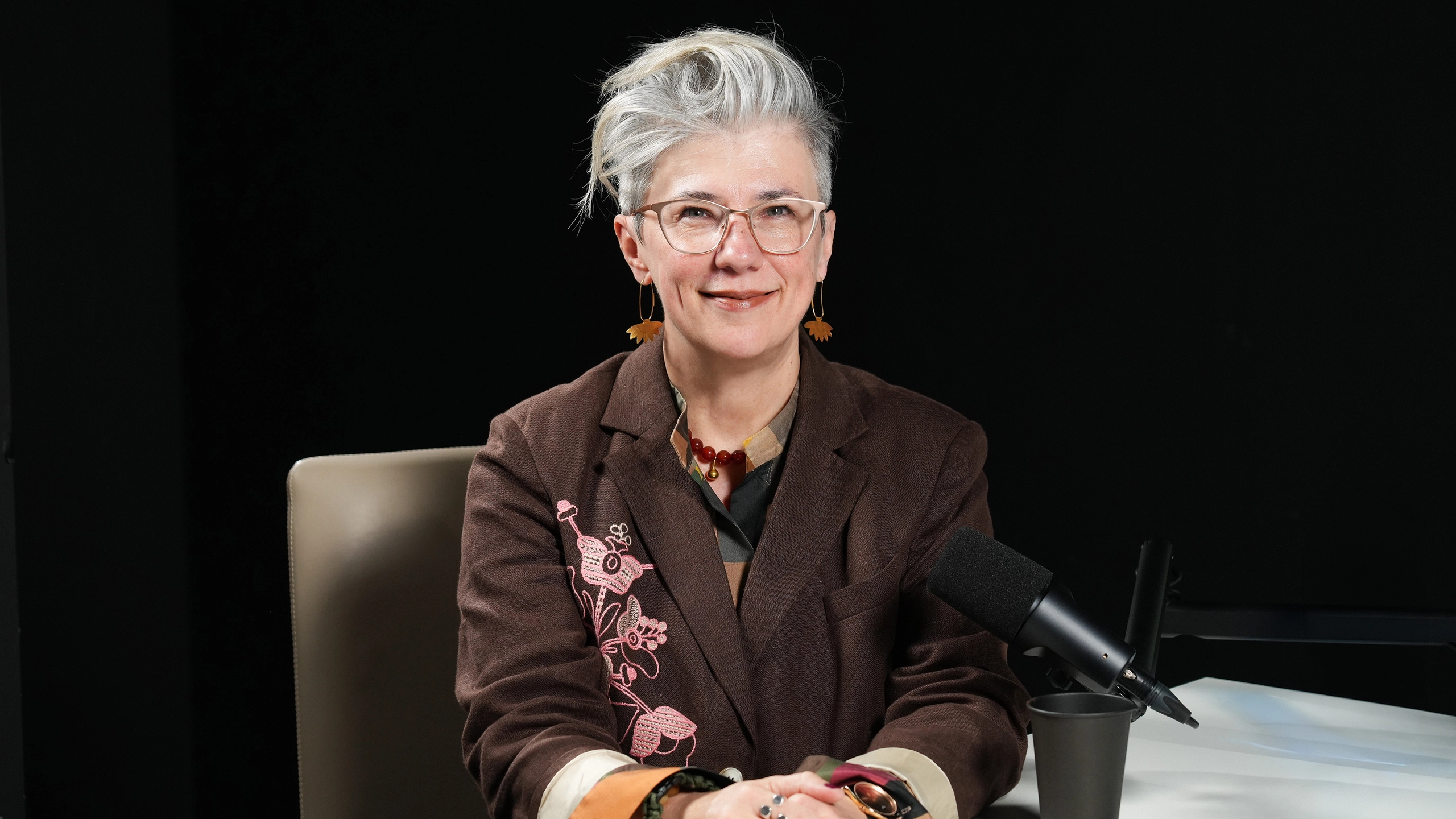
Natalka Cmoc is Canada’s Ambassador to Ukraine.
The views expressed in this opinion article are the author’s and not necessarily those of Kyiv Post.
You can also highlight the text and press Ctrl + Enter