Last week saw Russia and Ukraine trade long-range strikes – with the Russians focusing on civilians in Kyiv and the Ukrainians focusing on infrastructure in Crimea – and maintaining the initiative. Things got worse in Russia, and in Crimea, it was worse than that.
The front
In general, static, with no major changes.
JOIN US ON TELEGRAM
Follow our coverage of the war on the @Kyivpost_official.
Russian ground gains that could be confirmed – i.e. that weren’t potentially a couple of guys recorded by one drone and then killed by others – were minimal.
There was more evidence of careful Ukrainian clearing operations in several sectors. The scale was small. There is some evidence of Russian troops, whom the Ukrainians are able to reach on foot, being tired and poorly supplied, especially for water. ISW reports possible Russian tactical drone shortages as well.
In the Kharkiv sector, there were more reports of Ukrainian mopping up around Kozacha Lopan.
In the Kostiantynivka/Slovyansk sector, the situation seems to have stabilized. At least, no credible Russian progress has been observed. Multiple sources reported lower intensity of Russian attacks, and the Ukrainians offered up more video of foot “attacks” getting cut up by drones. There was some Russian Fake News/AI content attesting to Russian gains around Kostiantynivka; zero corroborating evidence. If there are Ukrainian counterattacks in this sector, they are keeping it an excellent secret.
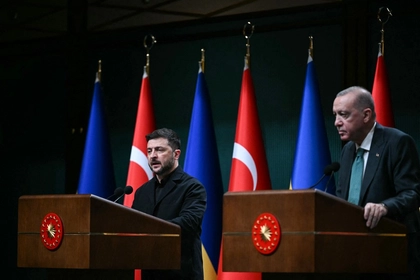
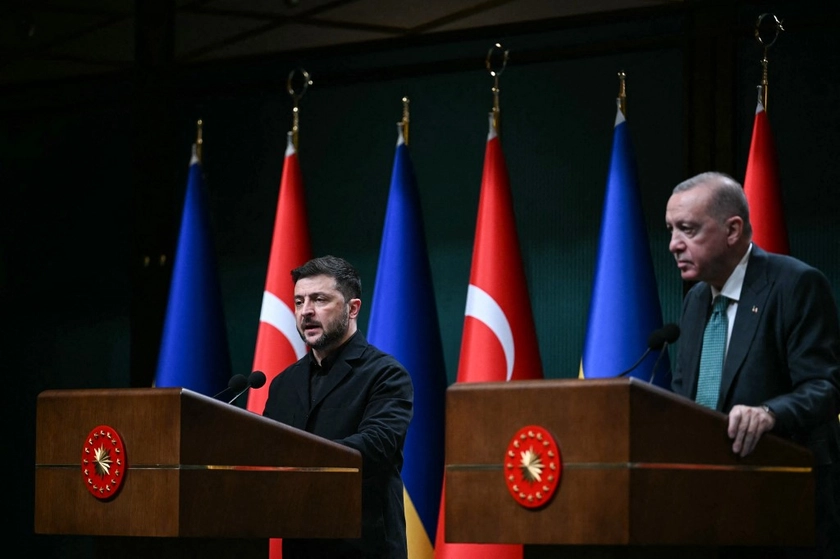
Turkey Commits to NATO’s PURL Fund
In the Zaporizhzhia sector, Ukrainian clearing operations are effectively an open secret; the Russian bloggers say it’s happening, the Ukrainian bloggers say they aren’t allowed to say if it’s happening, the Russian official sources say everything is great, and the Armed Forces of Ukraine (AFU) says combat operations are proceeding adequately. This is not a wide front offensive but rather the Ukrainians picking locations and attacking vulnerable spots along the Russian security cordon. I am reminded a little of General Slim’s tactic of pitting Commonwealth battalions against Japanese platoons to convince his troops that the enemy might be defeated, but that might be projecting.
The Russians put out some fake content claiming the village of Kopani, in the Hulyaipole sector, had fallen to Russian forces – which triggered a counter-video from the 225th Assault Regiment, showing troopers grinning and making rude gestures from inside Kopani’s village limits
In Zaporizhzhia, reports surfaced last week that the long-rumored Russian Molniya drone (this is what inspired the Ukrainian mid-range Hornet) is now being launched with full AI targeting, the human is out of the loop. The main danger is that since the drone flies itself and hunts for things to kill itself, no data link to an operator and so no data link to detect as early warning. Apparently the only real counter-tactic left is old-fashioned visual spotting, since there’s no signal to jam or detect
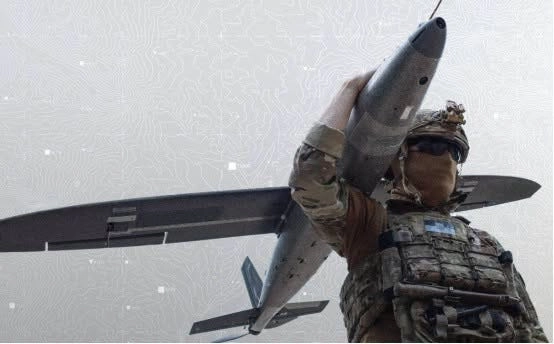
Russian mid-range strikes
The Ukrainian campaign in this range envelope dwarfs what the Russians are doing, but, last week I spotted multiple reports of Russian mid-range drones going after civilian automobile fueling stations.
This is effectively a terror tactic because although the AFU is one of the Ukrainian fuel retail markets’ best customers (go ahead, try and find a fuel station w/in 50 kilometers – 30 miles – of the front without soldiers doing something there, 24/7 you can’t). The AFU has an established fuel supply chain and can drive back to friendly territory pretty freely if near the front pumps aren’t available.
For the record, on the Russian side of the equation, last week, Russian drones hit fuel stations in Dnipropetrovsk, Kharkiv, and most recently, the Sumy region. In the Sumy strike, all the people injured were station attendants. In the Dnipropetrovsk strike (village Sofiivska) – one civilian dead, five injured, cars and station damaged, fire.
This is all consistent with the Russian strategy of (1) creating a “buffer zone” between Russia-controlled territory and Ukraine-inhabited territory and (2) the Russian strategy of trying to force the Ukrainian government to capitulate by destroying civilian infrastructure and terrorizing Ukrainian civilians.
Russian long-range strikes
There were two last week, one small and one very big.
On June 27, Russia launched eight missiles and 142 drones, of which two were Zircon/Onyx anti-ship “hypersonic” missiles, six were Iskander-M/S-400 ballistic missiles and along with that there were 142 strike drones. Kyiv was the main target.
The Ukrainians shot down or otherwise rendered ineffective Zircon/Onyx anti-ship missile, all six of the ballistic missiles and 125 of the drones. The upshot was one missile and 14 strike drones were hit in 11 locations, and falling hit/was found at 13 other locations. In retrospect, the Russian intent probably was to determine the extent and location of Ukrainian air defenses and to force the Ukrainians to expend interceptor missiles.
Overnight on July 2-3, the Russians followed up with one of biggest drone/missile attacks of the war, by the numbers it wasn’t the most massive ever, but it was in the top ten. Again the main target was Kyiv.
Ukraine’s air force reported it identified 74 missiles and 496 unmanned aerial vehicles (UAVs) of various types entering Ukrainian airspace.
Of these weapons, four were anti-ship/”hypersonic” Zircon missiles, 24 were ground-launched Iskander-M/S-400 ballistic missiles fired from Kursk and Belgorod regions, 34 were bomber-dropped Kh-101 cruise missiles launched from airspace above the Vologda region, eight were warship-launched Kalibr cruise missiles from just outside Novorossiysk, four were heavy Kh-59/69 cruise missiles launched from the Voronezh region, and 496 were drones launched from from Russia’s Bryansk, Kursk, Orel, Rostov regions and occupied Donetsk and Crimea regions.
Ukraine’s air defenses shot down or otherwise rendered ineffective four of 24 ballistic missiles, 32 of 34 air-dropped cruise missiles, zero of four hypersonic missiles, all ship-launched missiles, all heavy cruise missiles, and 476 of the 496 drones.

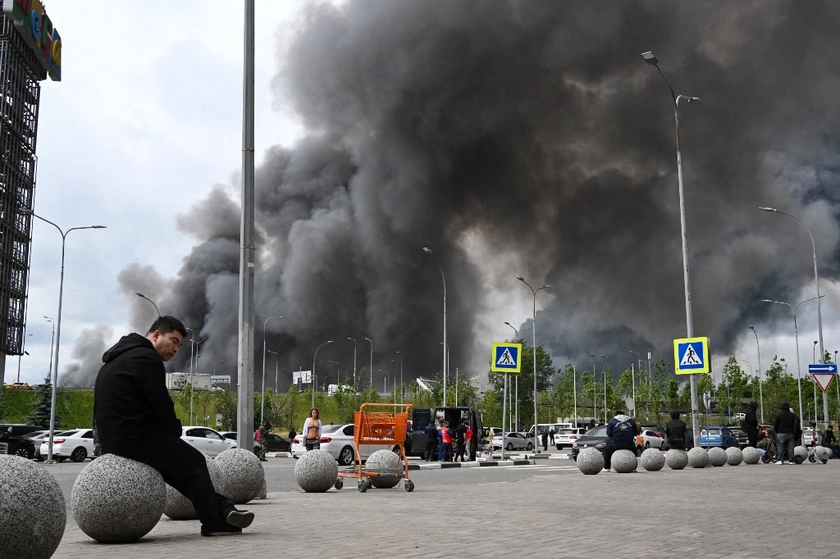
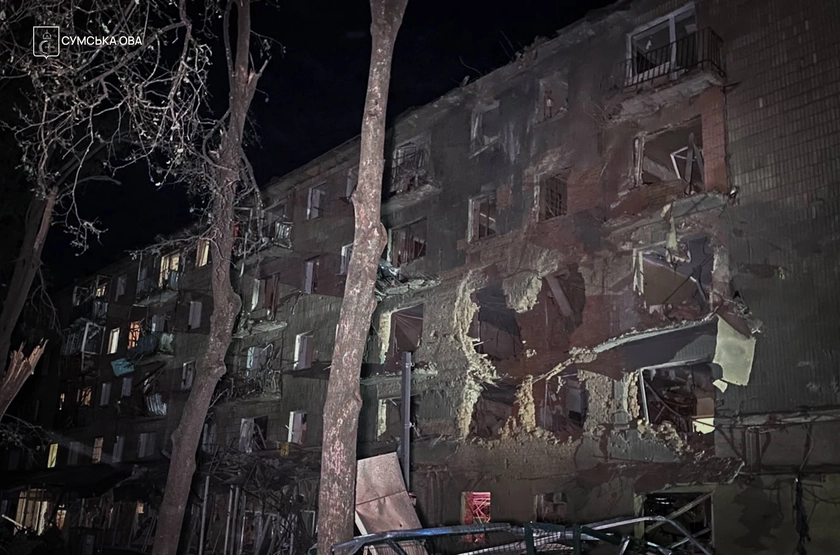
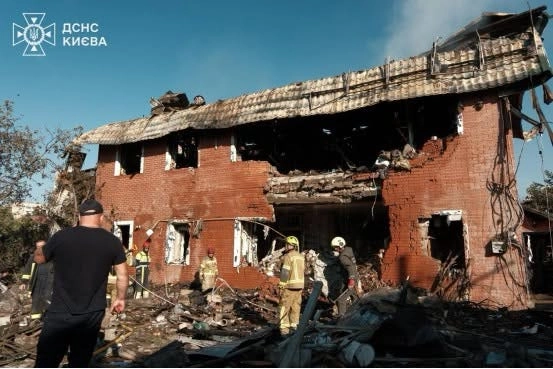
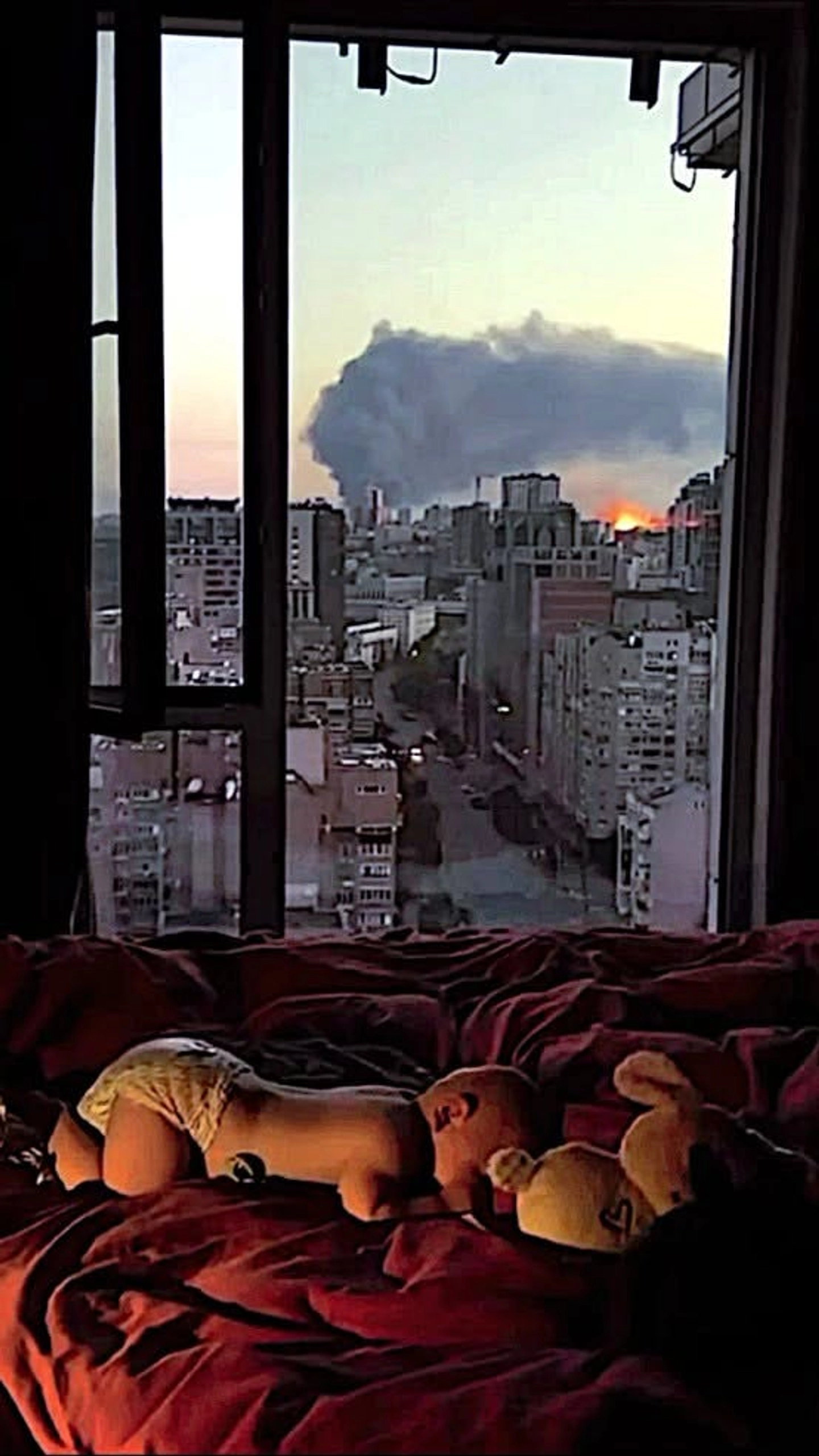
Twenty-five ballistic missiles and 12 strike UAVs hit 33 locations and falling debris was identified at 18 locations. The very heavy main weight of the attack was against Kyiv. Some of the missiles hit apartment buildings, partially collapsing them and burying residents. So far, the civilian casualty count is 30 dead and 99 injured. Almost certainly, more dead will be found after rescue workers finish digging through the debris.
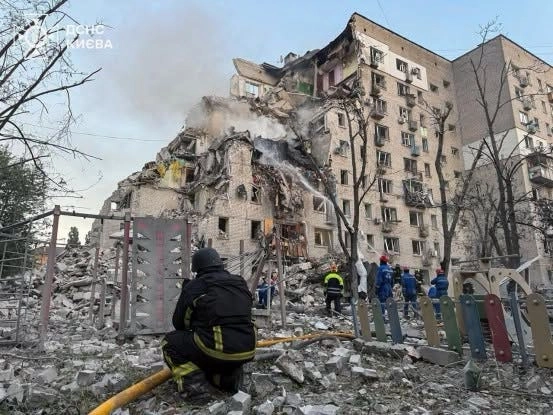
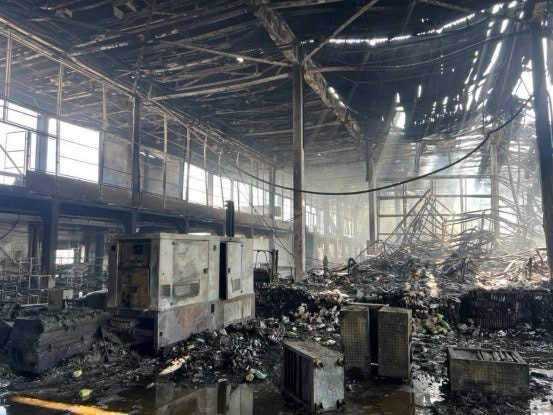
The Russians said a civilian shipping warehouse they hit was a legitimate target. Also smashed was the main warehouse used by the Red Cross in Ukraine.
The main thing to understand is that this is proof positive that Ukraine is nearly out of interceptor missiles and with no interceptor missiles to stop them, the Russian ballistic missiles will impact at will, not always accurately, because they are not precise weapons, but try telling that to the people in Kyiv.
Ukrainian long-range strikes
There were two major ones last week, both significant and damaging. But they were far from the only strikes. Since May, the quantity of Ukrainian drones attacking Russia every night has increased by about half, from about 200 to at least 300 and sometimes well more than that. We have seen record-breaking nights: June 6 – 376, June 18 – 550 drones, June 26 – 660, June 30 – 419.
Arguably, we are at a point in the war where, by quantity of strike weapons, there are certainly more things carrying explosives heading into Russian airspace on some days than Russian weapons heading the other way. Once one counts air-dropped bombs, the weight of Russian explosives is still heavier hitting Ukraine, but the Ukrainian strike capacity is visibly expanding.
Skill at prosecuting an air strike campaign is accelerating as well. Anyone who thinks the Ukrainians are amateurs at air warfare is ignorant. Over and over, planning and execution are on a level that astounds me – the Israeli, NATO or US air forces certainly could manage the same pace of operations, but I wonder whether they could keep it up for now eleven months, as the Ukrainians have.
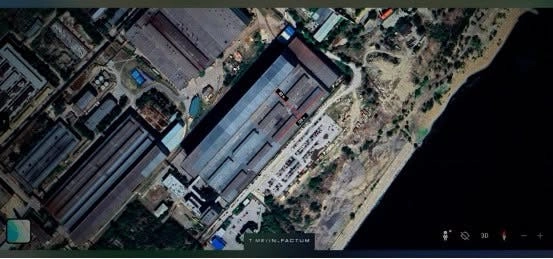
The first major attack of the week took place overnight Friday-Saturday. The Ukrainians launched five Flamingo missiles, which are really big and carry an aviation-bomb warhead, at a ballistic missile components factory in Volgograd, which many of you remember once was Stalingrad and before that, Tsaritsyn.
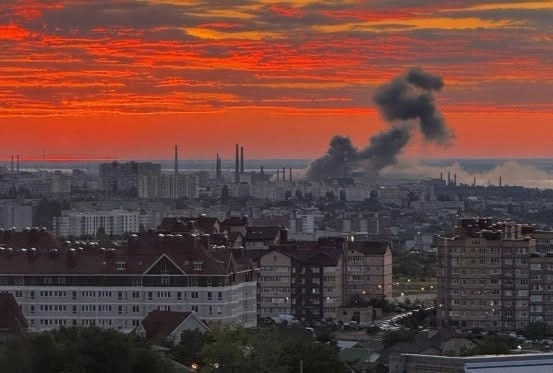
The Flamingo has had a troubled development and in the past several months earned a reputation for being massive and not accurate enough. This time, three of five missiles hit, two of them hit factory production buildings, including the main assembly line. The fires were powerful and hard to put out and the damage was massive.
In a few days, enough additional information came out to develop a reasonable picture of Ukrainian strike planning and why it seems to be working, even with Flamingos. The bottom line is this is bad news for Russia on several levels because now the Ukrainians seem to have a missile that can level major structures and fly 2,000 kilometers (1,243 miles) or maybe even 3,000 kilometers (1,864 miles). If you want details, go here.
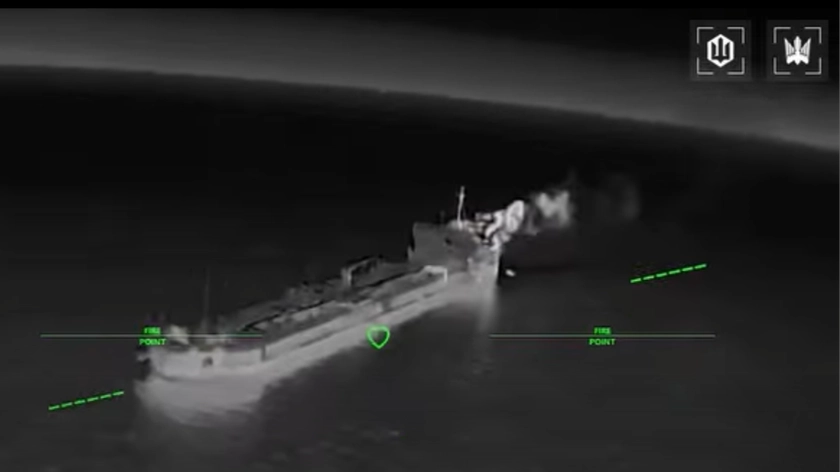
The other banner, headline strike of the week took place overnight Tuesday-Wednesday, and then again Thursday-Friday as Ukraine’s security service, the SBU, took a crack at Russian air assets in Crimea and sent drones to Saki and Gvardeyskiy airfields, and – a little surprisingly to us laymen, especially considering the first attack preceded the second one – it turned out the Russians are still basing combat aircraft there.
SBU drones struck Russian military airfields in occupied Crimea for the second time in a week, targeting aircraft and drone infrastructure at the Saky Air Base and Gvardiyske Air Base.
The SBU claimed kamikaze aircraft hit five hangars in the first night and seven hangars the second night at Saky airfield. Supposedly, the hangars housed Sukhoi Su-30SM, Sukhoi Su-30, and Sukhoi Su-24 aircraft. There is video of hangars getting blasted, but what’s inside isn’t clear. The SBU said “at least” seven aircraft were destroyed or damaged.
Two hangars at Gvardeyskiy, supposedly containing Shahed drones and components and operators etc., were hit as well. The Russians said damage was minor. DniproOsint on Friday confirmed the SBU report using satellite video showing one hangar very badly damaged and one with a big hole in the roof.
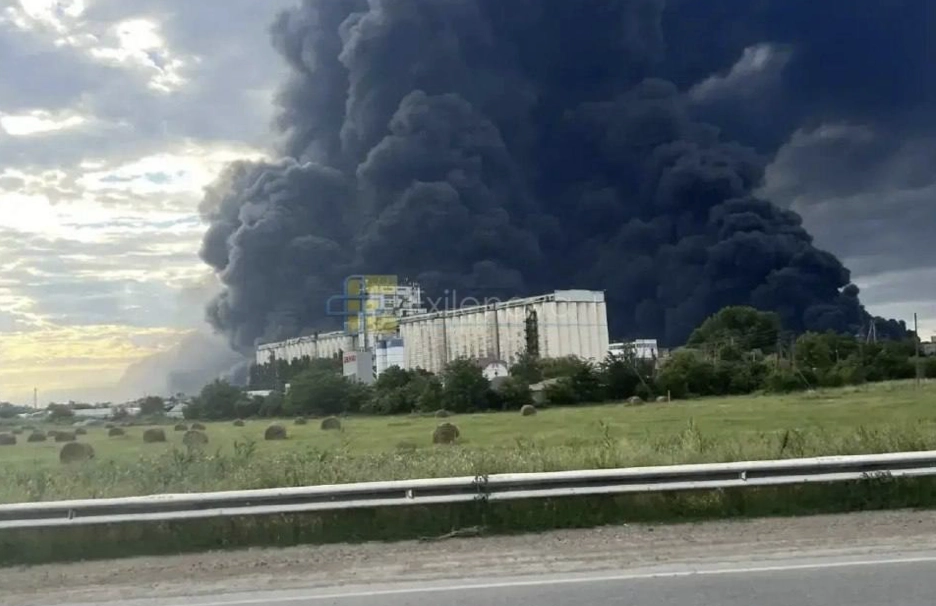
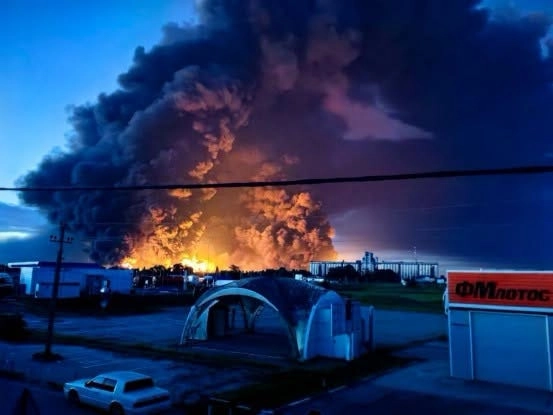
Then there was the day-to-day, “bombardment campaign” strikes. The week’s strikes are listed below; this is not all of them. The biggest fires (still in progress) were at Krasnodar, the blaze covered more than 20 square kilometers (8 square miles).
There really is no need to argue that the Ukrainians are conducting an effective and well-planned bombardment campaign of Russia. The evidence is the evidence; it doesn’t matter what the Kremlin says, everyone can see the smoke and fires.
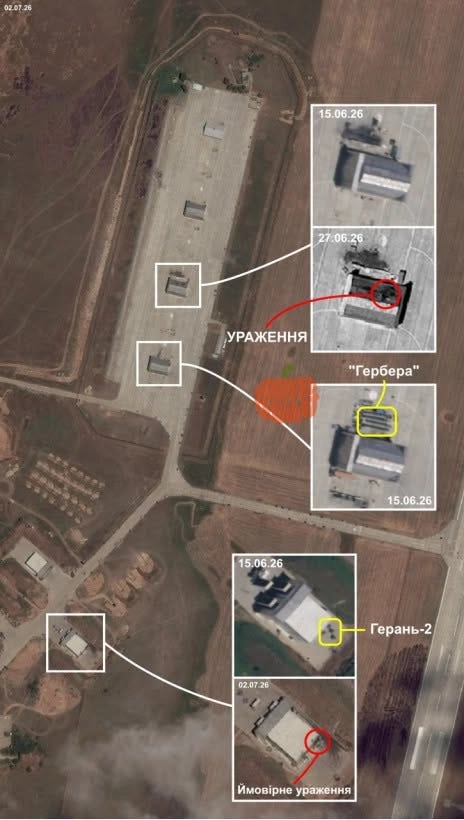
After analyzing the images of the Gvardiyske airfield for June 15–27, as well as yesterday’s image for July 2, I came to the conclusion:
- The images for June 15 show a large number of “Gerber” and “Shahed” UAVs near the hangars.
- The image for June 27 shows a hole in one of the hangars from damage. In another hangar, signs of probable damage to the rear wall are visible.
This is all copy/pasted from DniproOsint who did a great job:
- In addition, a large number of traces of fires are observed on the territory of the airfield, as well as several craters and damage, which are probably the consequences of missed strike UAVs.
Whether these are the consequences of the attacks that the SBU recently announced is unknown.
Coordinates: 45.1118137060245, 33.96868401319283
Middle Strike
We are witnessing a drone-led air bombardment campaign the likes of which the world has never seen before; military history is being made.
The Ukrainian middle-strike campaign in the 50-200 kilometers (31-124 miles) envelope stayed intensive but expanded, moving from mostly trucks and a few transportation hubs, to more transportation hubs. Towards the end of the week, there were massed strikes against power substations across Crimea; the intent is clearly to ruin the tourist season and make business and normal government functions impossible.
These are also attacks directly affecting the civilian population; however, thus far the Ukrainians have left alone civil infrastructure like fueling stations, water pumping stations, and schools. The way it looks, the Ukrainian intent is also to make the region unlivable and to increase dissent against the Russian state. This is something the Ukrainian national leadership has avoided doing for more than a decade. Historically, bombarded populations increase resilience as they are bombarded, but bombarded populations in a despotic authoritarian state tend not to want to fight things out to “victory.”
Video of burnt trucks seemed to fall off last week, however, USF spokesman and drone units said the hunt is still on and scores are high. The best-confirmed attack was a semi-truck park that had accumulated near Melitopol, possibly waiting for safe passage south. One drone unit said more than ten trucks were torched, no confirmation on that.
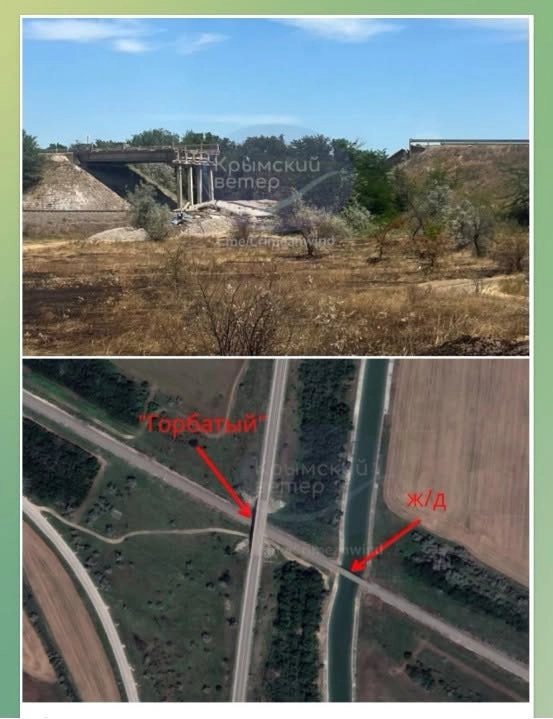
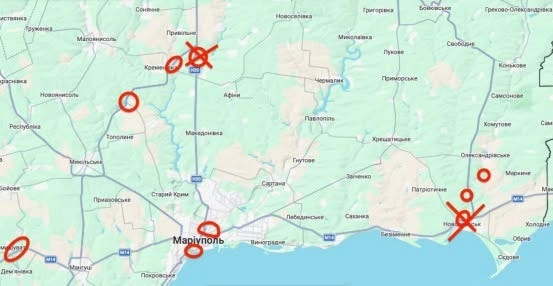
Most visibly, Ukrainian drones hit and damaged a railway bridge near Ichki (Sovetskyi/Sovetske area), Crimea, on the night of June 28, and again around June 29-30. A railway bridge over the Krasnohvardiiske Canal near Krasnohvardiiske was hit overnight on July 2-3. Images surfaced of the road bridge near Rozdolne. The debris fell on the railroad underneath.
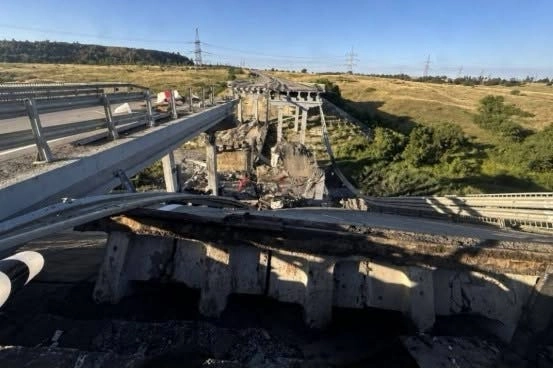
Near Armyansk, the Russians built a dirt road filling in a section of the North Crimean canal (see note above about drinking and agricultural water) and by Tuesday, it was functioning as a stand-in bridge. The Russians also built a pontoon bridge connecting the road from the Kherson region to Crimea via the Arabatska Strilka spit. So far, these replacement bridges haven’t been hit.
North of Mariupol, the bridge over the Kalka River near Hranitne (known once as “little Hranitne”), three spans destroyed on July 1. A long time ago, I inspected that bridge for det charges. On the R-280 highway between the cities of Berdiansk and Melitopol, Ukrainian drones partially collapsed a bridge and left a big hole, into which a motorist later drove his/her vehicle. Possibly this took place at night.
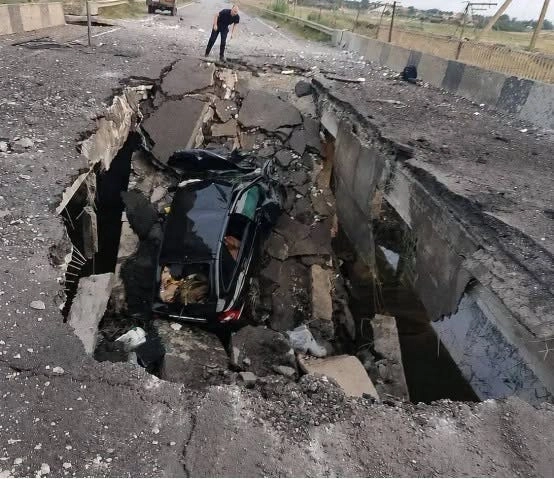
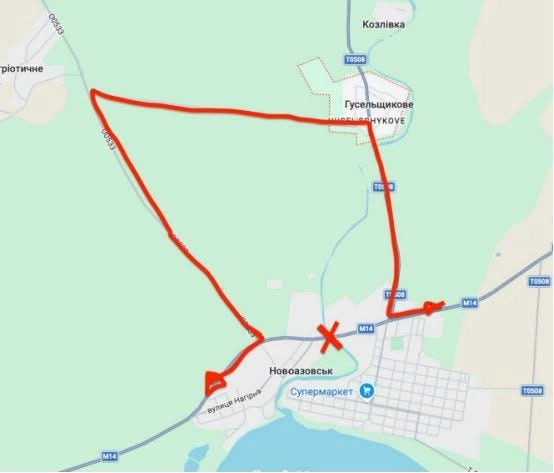
In southern Ukraine, a road bridge near Azovske (Zaporizhzhia region, on the M-14/Melitopol-area highway) was knocked down on June 29, with two spans destroyed. The net effect of these strikes seems to have been to end regular through traffic and reduce freight shipments to convoys moving by indirect routes, often through towns and villages. This in turn has drawn the middle strike drones away from the open road and towards populated areas, so we are seeing images like a semi burnt out by drone strike well inside of Mariupol city.
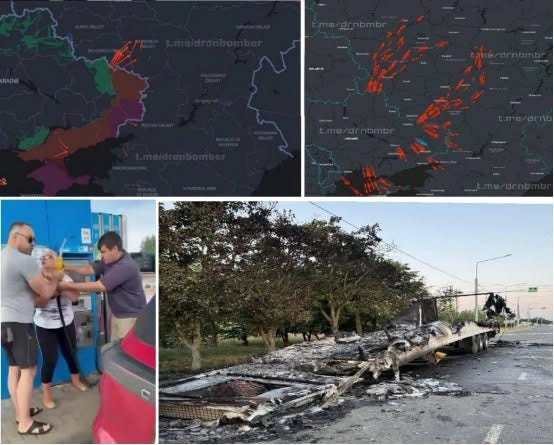
Overall, during the week, I’ve seen reports of more than a dozen bridges hit and possibly made impassible. It is probable that some of them are passable, but it’s also probable that there are bridges or similar that have been hit, whose state hasn’t reached open sources.
Over the week, the drone forces opened a new front and began systematically targeting power substations, and to a lesser extent, telephone towers, power lines, and communications nodes, across Crimea. There have been a few reports of this type of targeting in occupied southern or eastern Ukraine. The Unmanned Systems Forces (USF) forces have run the strikes which seem to have started on June 28, intensified on June 29, then took a break, and then swarmed again on the July 1-3. On Friday (July 3) alone there were at least seven substations hit, fires at all locations, there may have been more.
Across Crimea, the logical confirmation of damage done has come in the form of reported blackouts, internet failures, mobile phone failures, power surges and shutdowns of commercial services. It would be sloppy not to point out that attacking the power grid in Crimea at the height of summer, where temperatures can reach 40 C/110 F+ during the day, is a brutal thing to do to Crimea’s civilian population, loyal to Ukraine or no.
As noted – so far – the Ukrainian drones have not gone after the Crimean water delivery infrastructure directly. Were they to do so, a humanitarian disaster would probably follow in about a week. I am not exaggerating, water is critically short in Crimea in the summer, even during peace. That being said, if the Ukrainians manage to knock Crimea off the power grid for even a few days, then the water pumps won’t work, and people will have to get water from trucks or reservoirs, as has been the case in Donetsk (mostly) since the start of the war.
The final point about the progress of the Middle Strike campaign is that, over the week, the Ukrainians continued strikes against Russian air defense systems in Crimea and southern Russia, the biggest success seemingly Sunday-Monday with strikes aground Kerch. According to some reports (Krysmky Veter) another objective was fiber optic cables connecting the Russian mainland to Crimea.
In Russia
Last week bad economic news flooded from Russia, most of it directly or indirectly caused by the Ukrainian strike campaign against Russian fuel production, fuel transportation and fuel storage infrastructure. So much so that I’ll pass on the information in factoids:
- Russian crude oil processing is at a multi-year low; it’s lost about one-third of output since early 2022, and most of that loss began in late 2025. See graph.
- Russia used to export 35-40% percent of all the diesel it produced, over the first half of 2026, that fell to 0%.
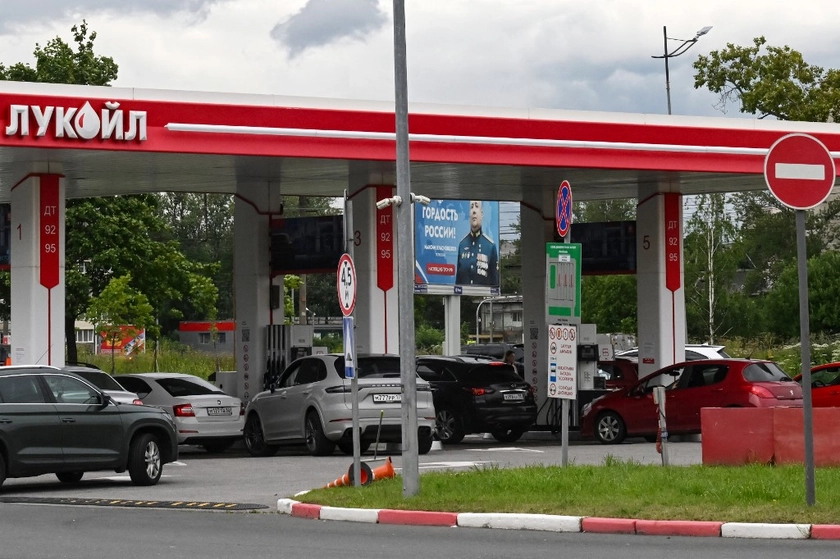
- Fuel shortages and filling station queues are being reported all over Russia, including Moscow and St. Petersburg. Rationing is widespread. Filling fuel cans is widely banned.
- Reports from the Trans-Siberian highway: No fuel at all between Chita and Lake Baikal, that’s about 1,500 kilometers (932 miles).
- Based on media, the longest filling station automobile queue in the country was in Chita, eastern Siberia, 1,000+ vehicles.
- In Novorossiysk, a city with its own oil refinery and at the end of one of Russia’s biggest oil pipelines, automobile fuel is no longer on sale, not even for ration cards. Only emergency vehicles.
- In St. Petersburg, recording video or taking photographs of long vehicle queues at a filling station, or even signs saying no fuel for sale, just got banned.
- The national Russian statistics agency Rostat for the past week has made national information about fuel market pricing; it no longer publishes it.
- Russia’s agriculture ministry announced it was delaying by two weeks the start of the harvest season because of weather and shortage of fuel for harvest machinery, according to Kommersant.
- Russia’s cabinet of ministers last week changed the law so that it’s again legal to sell more-polluting Euro-3 standard fuel at a filling station rather than the former national standard Euro-5. The former is easier to produce and requires less refinery capacity, but causes more pollution.
- India is selling diesel to Russia to help Russia fill its fuel shortage, and there were reports last week that Japan would do the same thing with automobile fuel.
- Georgia’s sole oil refinery last week stopped buying Russian crude oil; it will buy from other sources, probably Azerbaijan and/or Iran.
- The bottom has fallen out of the Crimea real estate market; prices last week were reported down 30-50% from the start of 2026.
Reprinted from Kyiv Post’s Special Military Correspondent Stefan Korshak’s blog. You can read his blog here.
The views expressed in this opinion article are the author’s and not necessarily those of Kyiv Post.
You can also highlight the text and press Ctrl + Enter