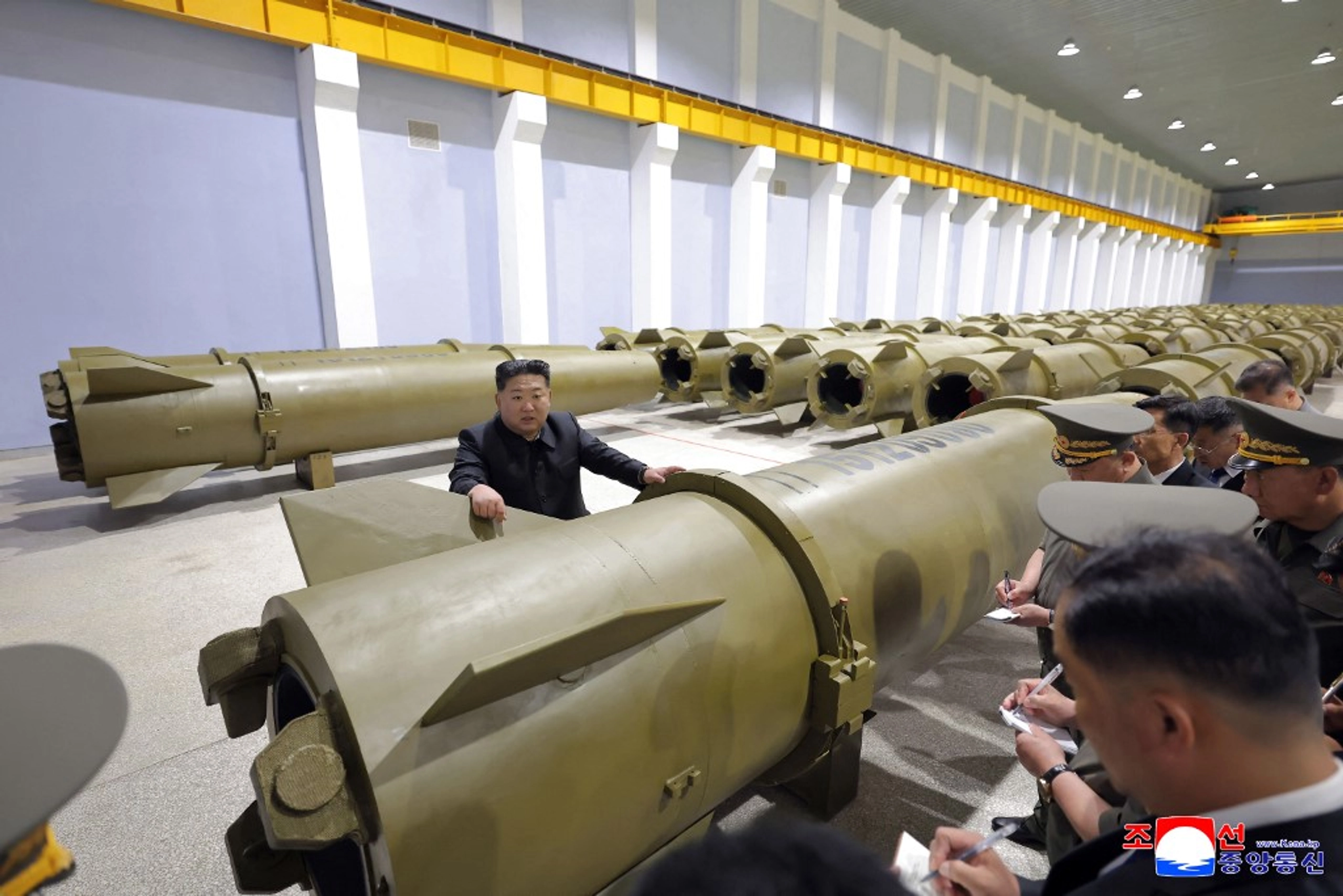
North Korea has become one of Russia’s most important foreign military suppliers, providing between 25% and 40% of Moscow’s artillery ammunition needs, and delivering millions of rounds of ammunition, ballistic missiles, and hundreds of artillery systems since 2023.
In a document provided in response to a Kyiv Post inquiry, Ukraine’s Military Intelligence (HUR) said the scale and regularity of deliveries indicate that military-technical cooperation between Pyongyang and Moscow has become “systemic.”
JOIN US ON TELEGRAM
Follow our coverage of the war on the @Kyivpost_official.
According to the agency’s assessment, North Korea currently occupies a “key position” among Russia’s foreign suppliers of weapons and military equipment, supplying between a quarter and two-fifths of the artillery ammunition used by Russian forces.
HUR said that, since June 2023, Russia has received more than 100 KN-23 and KN-24 ballistic missiles together with their launchers from North Korea. At least 80 of those missiles have already been used, the agency said.
The first reported use of North Korean ballistic missiles by Russia occurred on Dec. 29, 2023, when one missile landed in a field in Ukraine’s Zaporizhzhia region. The missiles were used again on Jan. 2, 2024, during a massive strike on Kharkiv that killed two people and injured 62 others.
Reports in 2025 suggest that the missiles have become more accurate as the war has progressed.
Pyongyang has also delivered more than 600 artillery systems of various types and calibers, including M-1989 Koksan 170mm self-propelled guns, M-1991 240mm multiple-launch rocket systems (MLRS), 107mm Type 63 rocket launchers, self-propelled anti-tank missile systems, D-74 122mm towed guns, and Type 76 140mm mortars.
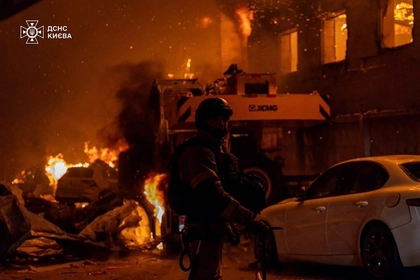
Fresh Russian Drone Strike on Kyiv Leaves 3 Dead, 10 Injured
Additionally, North Korea has supplied more than 7 million rounds of ammunition, including mortar, artillery, tank, and rocket munitions ranging from 82mm to 240mm, as well as anti-tank guided missiles, according to HUR.
The intelligence agency said North Korea’s defense industry is capable of producing between 1 million and 2 million artillery shells annually, with a minimum monthly production capacity of 30,000 to 50,000 rounds.
“A significant portion of this production could be supplied to the Russian Federation if the appropriate political decision is made,” HUR said.
Despite the extensive military cooperation, the agency said it has no indication that Russia is using high-tech North Korean-made components in the production of drones or missile systems.
Arms sales to Russia have earned North Korea billions
North Korea has sent more than 15,000 troops to the Russian front lines, with roughly one-third killed or wounded. It has also supplied ammunition and other arms that South Korean analysts say have earned the regime billions of dollars.
Those arms sales and deployments have helped secure energy and construction materials, allowing North Korean leader Kim Jong Un to launch a nationwide building boom and expand energy supplies despite UN sanctions.
According to a Wall Street Journal report, North Korea’s economy grew nearly 4% in 2024 – the fastest pace in eight years – and has continued to grow, with satellite imagery showing the country three times brighter at night than it was five years ago, especially around industrial regions.
The new economic growth has reshaped daily life, especially in Pyongyang.
The capital has implemented QR code payments, begun using Chinese electric vehicles, and opened pet stores and gaming cafes.
It has been reported that last year, North Korea built about 10,000 new homes in its capital city, with Kim saying that “everything has fundamentally changed.”
You can also highlight the text and press Ctrl + Enter