After the first atomic explosion on July 16, 1945, physicist Robert Oppenheimer cited a passage from Hindu scriptures, the Bhagavad Gita, that described the unleashing of catastrophic power: “Now I am become Death.” The bomb changed the world, resulting in Hiroshima and Nagasaki, an arms race, and eventually a global non-proliferation effort. But there have been warnings that another existential struggle is underway concerning an even more cataclysmic technology: Artificial Intelligence (AI).
The United States, with Silicon Valley, already dominates and controls it, but China is gaining quickly, as are others. AI will be the defining strategic, economic, and geopolitical prize of the 21st century, and unless bridled, will also outsmart humanity.
In October, 2025, an identical “Oppenheimer” epiphany went viral when Ukraine’s President Volodymyr Zelensky warned the world at a gathering at the United Nations that the most destructive arms race in human history was underway involving “artificial intelligence (AI) weapons that are evolving faster than our ability to defend ourselves against them.”
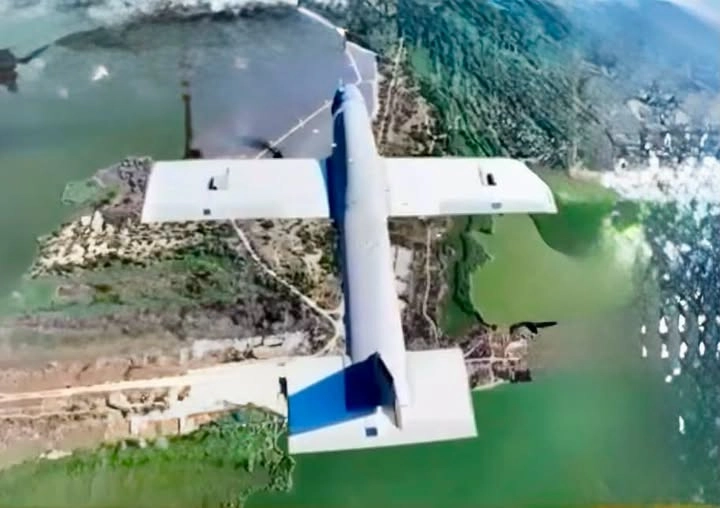
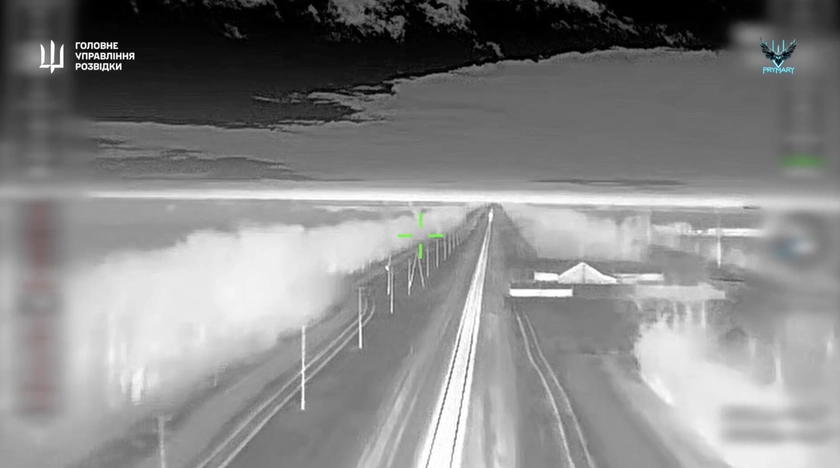
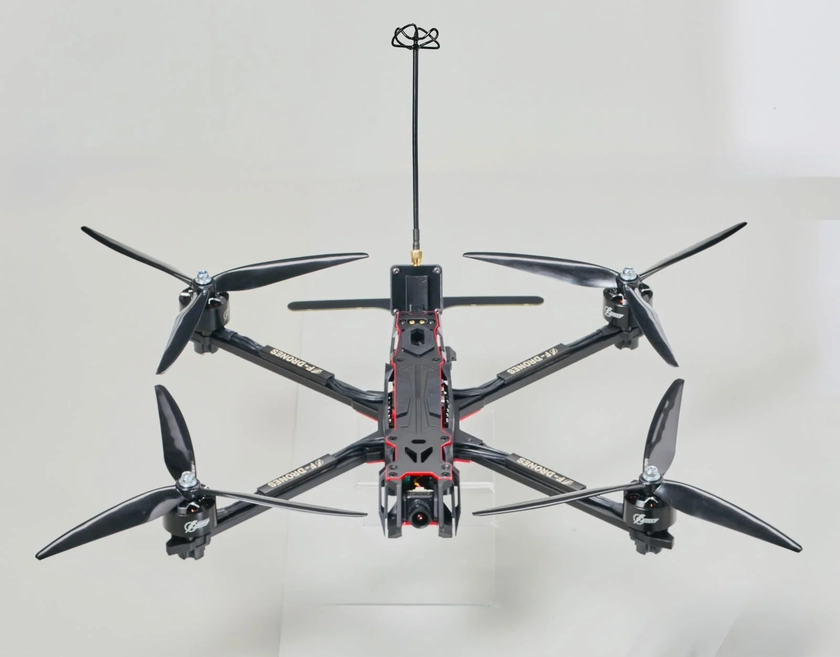
His father is a respected computer scientist, and his technologically advanced country has reinvented warfare and created destructive “intelligent” weapons. That is why his prediction should have made global headlines, but was mostly ignored. Few understood then what Ukraine had already demonstrated: the creation of an AI armageddon was possible by unleashing incredible autonomous weapons that have been decimating the gigantic Russian military.
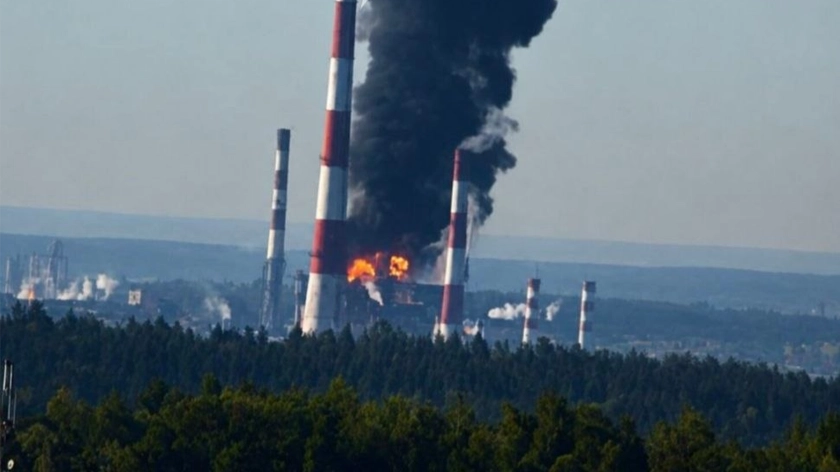
US Intelligence Helped Ukraine Strike Russian Oil Sites, Kremlin Orders Media Silence
Months later, on June 4, 2026, Zelensky’s warning was reinforced in Silicon Valley by a report issued by America’s foremost AI company, Anthropic. Its tech team was concerned that its latest technology models posed similar threats to humanity. Their report, “When AI Builds Itself,” alerted the world that existing AI systems were already capable of autonomously improving themselves and even creating new, more powerful AIs. Such “recursive self-improvement,” they concluded, could rapidly push AI capabilities beyond human comprehension and control. Thus, they asked: “Will Humans Lose Control of AI?”
Anthropic’s CEO, Dario Amodei, declared that his company’s AI systems, and those of others in the market, posed a national security risk to the United States and all nations. This was because they could find software flaws in any AI model and exploit them, and also because they could launch cyberattacks.
The company, out of concern, voluntarily limited sales of its most advanced models. However, this led to a clash with the Pentagon after Anthropic denied access to its most sophisticated models due to concerns about unethical US military and surveillance uses. The Pentagon labeled Anthropic a “supply chain risk” and threatened to sue. Then CIA Director John Ratcliffe compared their models to “digital nuclear weapons.” Eventually, all Anthropic’s exports were banned, talks followed with the White House, and the ban was lifted after additional guardrails were added by the company to their models.
Anthropic then published regulatory guidelines for governments worldwide to consider. It recommended that the tech industry and governments establish a coordinated framework that would slow or temporarily pause advanced AI development until safety requirements were imposed globally. It urged companies to pause too. Then, on June 22, a coalition of cybersecurity agencies – called the “Five Eyes” from the US, UK, Canada, Australia, and New Zealand – also emphasized the global danger of AI and urged governments and corporations to take immediate action.
The White House quickly restricted access to certain powerful “frontier” AI models, which are overwhelmingly created in the United States. Companies like OpenAI, Anthropic, Google, Microsoft, Meta, Nvidia, and dozens more have collaborated with the Trump regime to address these issues. But Trump also aims to win the AI war by preserving America’s competitive advantage and facilitating AI, quantum computing, robotics, and advanced semiconductor development.
Trump has forged a unique policy solution: The American government will acquire equity stakes in major tech companies. This unprecedented private-public partnership is underway for several reasons: To deal with the public’s fear about job losses to AI; to monitor practices; to deal with concern about the concentration of economic power in the hands of a few tech titans; to share the technology wealth by giving taxpayers a piece of the action; and to prevent the Chinese or others from acquiring or surpassing these transformative technologies.
However, Elon Musk has warned for years that China will become a dominant force in artificial intelligence, citing its massive engineering talent, government coordination, and power-scaling capabilities. “Google will win the AI race in the West, China on Earth, and SpaceX in space. China’s decisive advantage in the AI race lies in its ability to scale electricity generation, and it could reach about three times the electricity output of the United States, giving it the capacity to support energy-hungry AI data centers,” he said. “For the next few years, I think America is likely to win. Then it will be a function of who controls electricity, AI chip fabrication, the factories that make the AI chips. If more of the factories are owned by China, then China will win.”
(As I wrote in a recent series of newsletters on AI and space, Musk and Japan propose to beat China by putting solar power panels into space, then beaming power back to Earth to provide unlimited electricity.)
The reality is that World War AI is already underway—not as a shooting war, but as an increasingly aggressive competition for technological supremacy, economic power, military advantage, and political influence. America currently holds most of the cards. But the danger is that the United States lacks sufficient power to control AI, and may not yet know how to govern it.
In 2015, Eliezer Yudkowsky, an AI expert, warned about the dangers and suggested that “we need to shut it [AI development] all down. The most likely result of building a superhumanly smart AI, under anything remotely like the current circumstances, is that literally everyone on Earth will die.”
Such a bleak prediction is rejected by most technologists, notably those who have been pushing for measures to bridle AI. Optimistically, AI research pioneer Demis Hassabis, CEO of DeepMind, says AI must be developed and “not a robotic apocalypse; it’s a tool for a better future.”
Reprinted from [email protected] – Diane Francis on America and the World.
The views expressed in this opinion article are the author’s and not necessarily those of Kyiv Post.
You can also highlight the text and press Ctrl + Enter