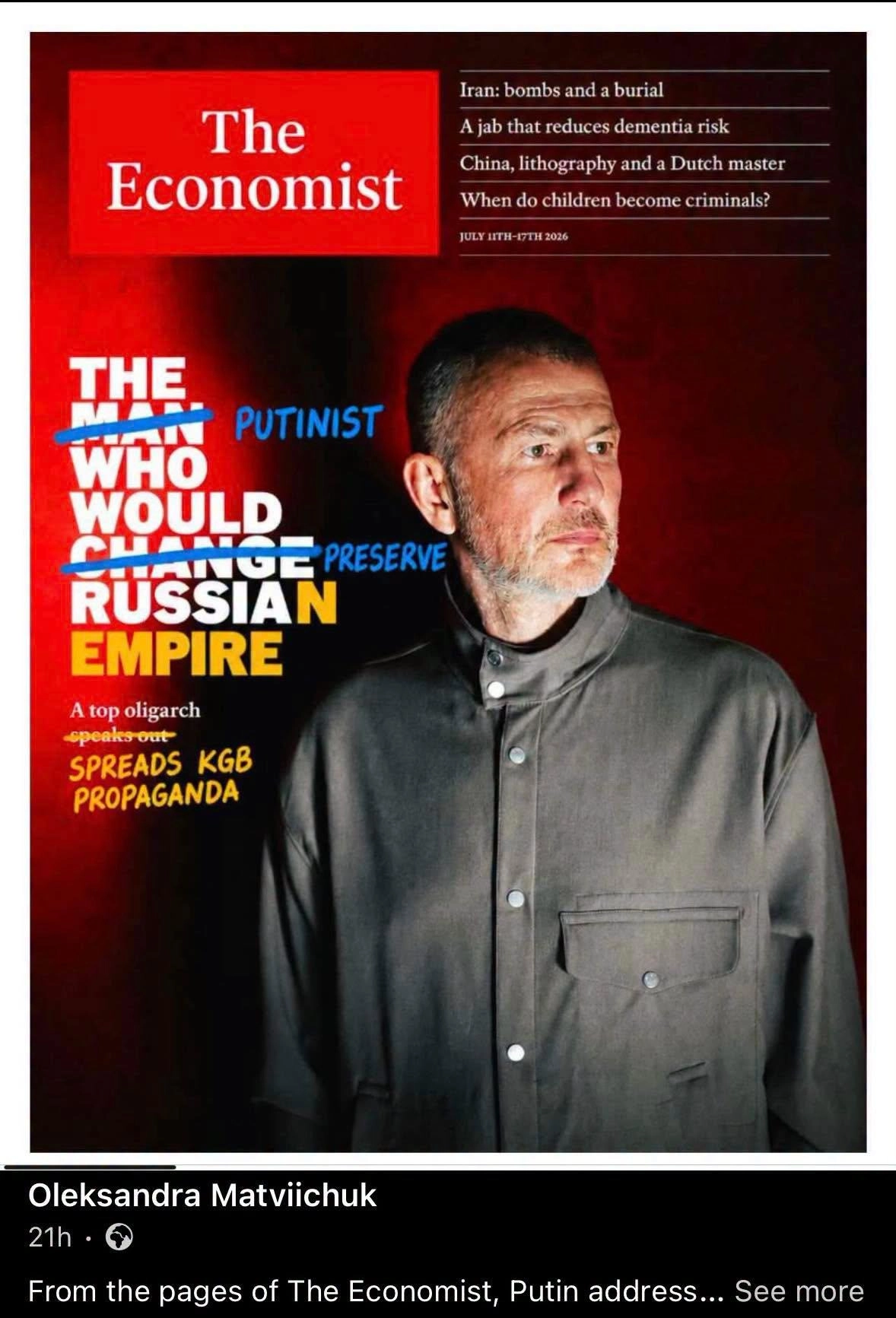
The Economist recently devoted an entire issue to Andrey Melnichenko, a Russian fertilizer magnate who, we are told, has broken the oligarchs’ code of silence to offer his “vision” for Russia’s future. The magazine gave him a cover, a leader, a 7,500-word profile, and space to publish an essay laying out his ideas. Western readers are invited to see this as a courageous act of independent thinking from within the Russian elite.
They should not be deceived.
JOIN US ON TELEGRAM
Follow our coverage of the war on the @Kyivpost_official.
The first question any serious observer should ask is: how does a sanctioned oligarch, living in Moscow, give 60 hours of interviews to a Western magazine, publish an essay advocating political change, and survive? In Putin’s Russia, far less ambitious acts of independence have resulted in prison, poisoning, or mysterious falls from windows. Yet Melnichenko publishes a manifesto for post-Putin Russia and faces no consequences?
The answer is obvious to anyone who understands how power operates in Moscow: this initiative must have been approved at the highest level. Russian oligarchs do not act independently of the Kremlin. They exist at the pleasure of the security services. Their function is to serve as wallets, intermediaries, and sometimes messengers. Melnichenko’s intervention is not a break with the system. It is a product of it.
In any case, what matters is not Melnichenko’s sincerity but the function his words serve: to repackage Russian maximalist demands in language palatable to Western intellectuals.
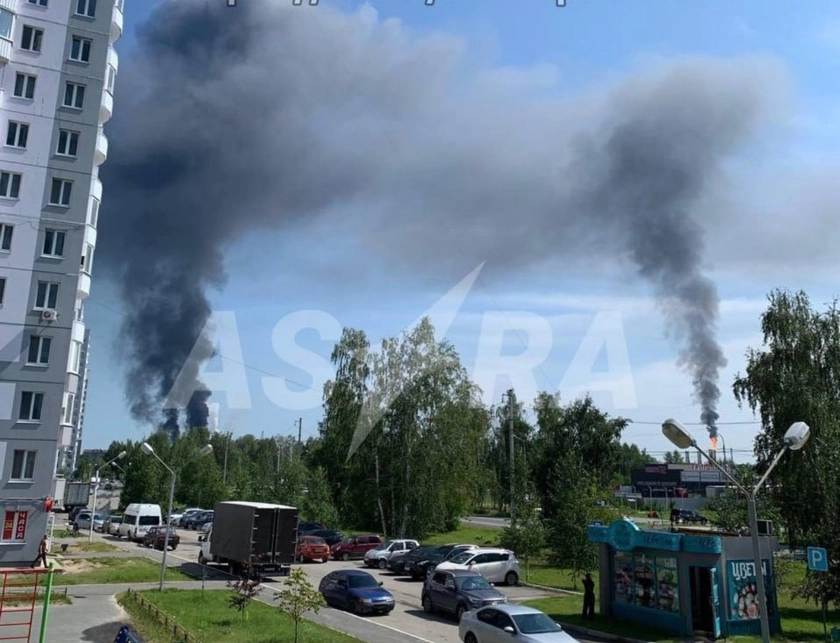
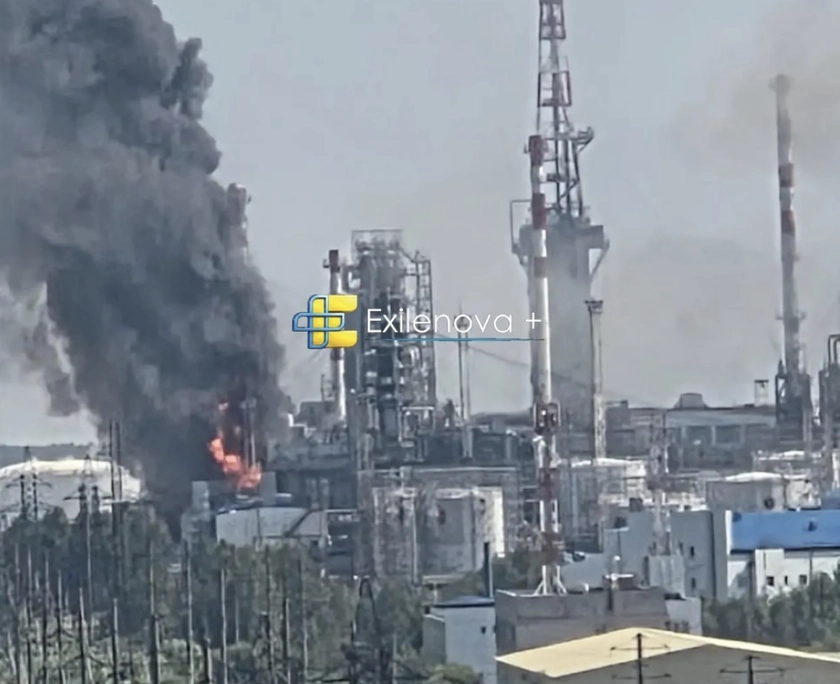
Drone Strike Sparks Fire at Tyumen Oil Refinery in Russia’s Ural Region
Students of Cold War history should recognize this maneuver immediately. The Soviet Union perfected the art of deploying “independent” voices – scientists, artists, engineers, etc. – to deliver messages that served Kremlin interests while appearing to challenge them. These emissaries spoke the language of peace, reason, and mutual understanding. They warned of catastrophe if the West did not accommodate Soviet concerns. They presented themselves as moderates restraining darker forces. And Western audiences, eager to believe that dialogue was possible, took the bait repeatedly.
The playbook is clear: a seemingly independent figure emerges from within the system, expresses mild disagreement with the regime’s methods while endorsing its goals, warns that alternatives to engagement are catastrophic, and demands concessions from the West in exchange for vague promises of future moderation.
Melnichenko follows this template exactly. He does not condemn the invasion. He does not call for withdrawal of Russian army from Ukrainian territory. He does not challenge Putin’s right to rule. He simply asks the West to accept Russia’s conquests and stop resisting, while promising that a “sovereign” Russia will be “predictable” (although it will retain the right to attack other states).
It bears remembering that many of such “kind voices” from the Soviet era or modern Russia turned out to be rather odious. For example, Sergei Karaganov, who was an early proponent of a “common European home” and even a NATO membership for Russia, now calls for preemptive nuclear strikes on Europe. Civil tone is not evidence of reasonable intents, nor does it reveal the Kremlin’s long-term interests.
Even setting aside the question of Kremlin orchestration, Melnichenko’s intervention lacks credibility on its own terms. He is a businessman. He has no political base, no institutional authority, no following among the Russian public. He controls no security forces. He commands no votes. His power consists entirely of money, which in Russia exists only with the Kremlin’s blessing.
The idea that such a figure could become “an architect of change” in a system dominated by security services is fantasy. The siloviki who control Russia’s coercive apparatus have no reason to share power with billionaires. Melnichenko himself acknowledges this: “The security establishment sees any independence as a threat.” Yet he proceeds as though this observation does not apply to him.
The Economist compares his situation to the industrialists who pressured Tsar Nicholas II after Russia’s defeat by Japan in 1905. The magazine omits both the prerequisite for change and what happened next: Nicholas crushed those reforms within two years. The lesson of 1905 is not that elite pressure produces change. It is that autocrats do not yield power because businessmen ask nicely.
Perhaps the most troubling aspect of both Melnichenko’s essay and The Economist’s framing is the erasure of Russian collective responsibility. The war in Ukraine is not one man’s project. Over one and a half million Russian soldiers have been killed or wounded. This means that more than one and a half million Russians volunteered, signed contracts, or accepted conscription to kill Ukrainians. Millions more manufacture weapons, transport ammunition, operate propaganda channels, and provide the economic base for continued aggression. Somebody flies the bombers that flatten Ukrainian cities. Somebody fires the missiles that strike children’s hospitals. Somebody operates the filtration/concentration camps. And The Economist’s willingness to adopt Russian framing, writing that “Putin invaded Ukraine” as though 144 million Russians bear no responsibility, compounds the problem.
Wars are not conducted by single individuals. They require mass participation, and that participation implies moral agency.
Having absolved Russian society, Melnichenko proceeds to blame the West. Following a well-worn path, he complains that NATO expansion and Western disregard for Russian “security concerns” caused this war. “After the political upheaval in Ukraine in 2014,” he writes, “Russia concluded that diplomacy had run its course, and then acted.” So NATO is ultimately responsible for Russia’s aggression. But countries join NATO precisely because they fear Russian aggression. The Baltic states joined NATO in 2004. Twenty years later, they remain the only former Soviet territories that Russia has not invaded, occupied, or destabilized. This is proof that NATO works exactly as intended: it protects countries from Russia.
Melnichenko does not acknowledge that the security concerns of sovereign nations on Russia’s borders are no less legitimate than Russia’s own. Instead, he demands that the West respect Russia’s sovereignty. In the same breath, he denies sovereignty to Ukraine by insisting on neutrality and protection of Russian language as conditions for peace and by keeping control over territories seized by force from Ukraine. This is imperialism – where the strong do what they can and the weak suffer what they must, to quote Thucydides.
And if the West does not like this message? Melnichenko presents four scenarios for Russia’s future, designed to make Western audiences conclude that only accommodation is safe. Russian fragmentation, he warns, would be “unmanageable.” But this framing assumes that a unified, aggressive Russia is preferable to its alternatives. In fact, the choice is rather simple: i) a Russia that cannot project military power beyond its borders; ii) a “sovereign” Russia that retains the capacity and the will to invade its neighbors with terrifying regularity.
All empires (including the Soviet Union and the Russian Empire) collapse eventually. The current Russian Federation is a patchwork of conquered territories spanning 11 time zones, containing dozens of distinct peoples. If history is any guide, the question is not whether fragmentation is conceivable, but whether the West should develop contingency plans for managing it, rather than exhausting its resources to prevent it at any cost.
Melnichenko merely offers the West a familiar bargain: accept our conquests, respect our sphere of influence, and we will behave predictably. This is not a peace plan. It is an ultimatum delivered in a civil tone by a man authorized to deliver it. The West has accepted such bargains before – in 2008 after Georgia, in 2014 after Crimea. Each time, accommodation produced not stability but escalation. We should learn from previous mistakes. The correct response to this and similar “visions” from the Kremlin is a single word: nyet.
The views expressed in this opinion article are the author’s and not necessarily those of Kyiv Post.
You can also highlight the text and press Ctrl + Enter