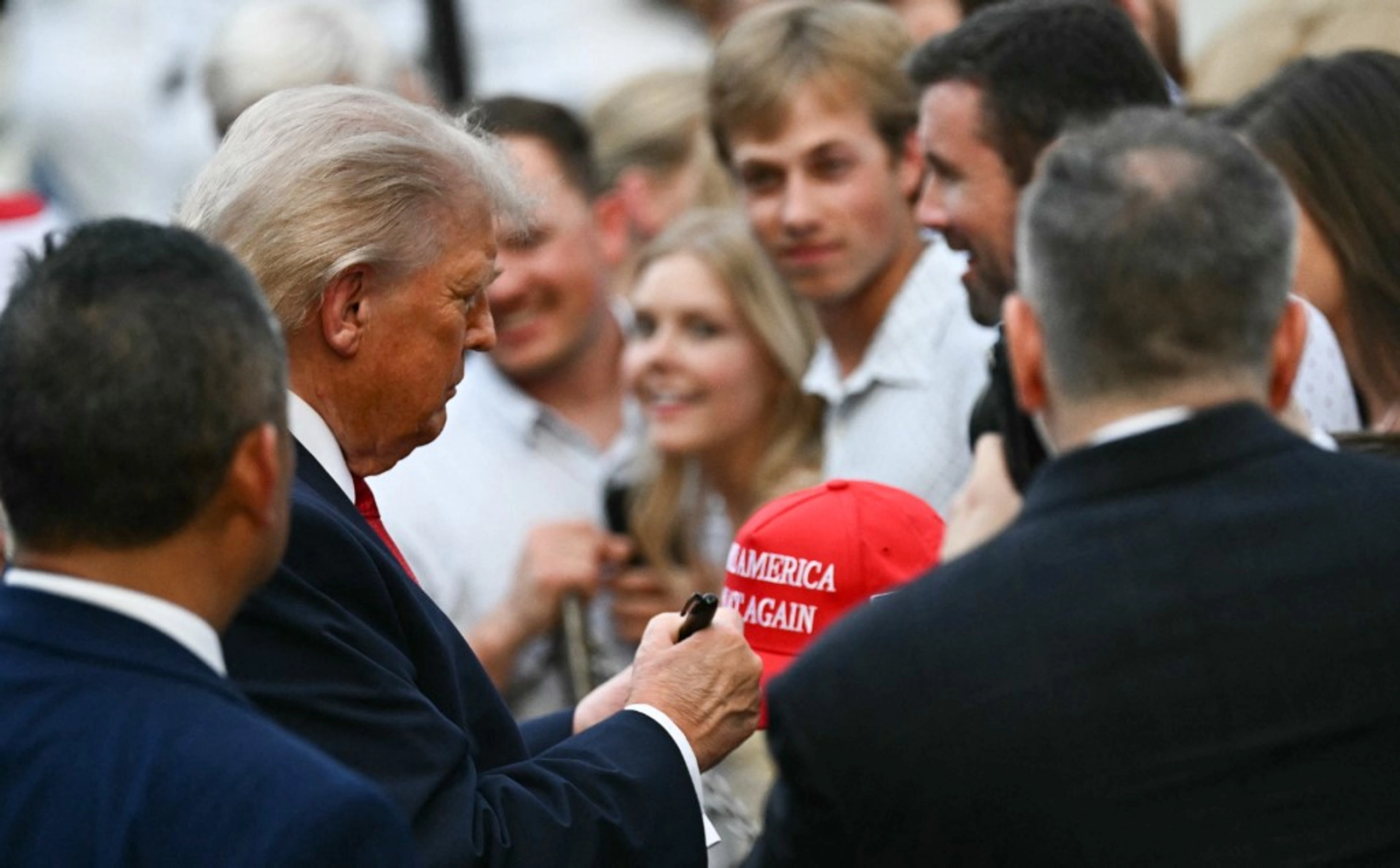
When American right-wing commentator Tucker Carlson interviewed Russian ruler Vladimir Putin on Feb. 8, 2024, Putin answered the question of why he had invaded Ukraine with a lengthy and heavily disputed tour of Eastern European history.
American commentator Ben Shapiro responded by reposting a joke from The War Zone editor-in-chief Tyler Rogoway, comparing Putin’s answer to Dr. Evil’s famous autobiographical monologue in Austin Powers – including the father who was a “relentlessly self-improving boulangerie owner from Belgium.”
JOIN US ON TELEGRAM
Follow our coverage of the war on the @Kyivpost_official.
At the time, it looked like a sarcastic take on Putin’s habit of presenting disputed historical claims as settled fact. In retrospect, it also captured a growing split on the American right over Russia’s war on Ukraine.
Two and a half years later, Carlson and other Russia-adjacent figures, including Candace Owens, face an emerging pro-Ukraine conservative camp. It includes Shapiro, who interviewed Zelensky in Kyiv, and – more recently and unexpectedly – MAGA activist Laura Loomer.
Kyiv Post spoke to people directly involved in Ukraine’s outreach to conservative America.
Overcoming the resistance
“Two years ago, I asked myself a hard question: If I, who was once mentored by the founder of Fox News, had never been to Ukraine, what would I believe about Ukraine’s resistance?” American journalist Joe Lindsley told Kyiv Post. “The answer wasn’t pretty. But it enabled me to understand why many Americans doubted the nobility of Ukraine’s resistance.”
Russian Strike on Ukraine Arms Expo Kills Employee of Polish Defense Firm
Lindsley, who is based in Ukraine, has covered Russia’s full-scale invasion through his news service Under Fire News while working to reach Americans across party lines, particularly Republicans.
“To persuade someone, you first have to understand them,” he said. “Russia convinced millions of Americans that supporting Ukraine means supporting ‘forever war.’”
Steven Moore, founder of the Ukraine Freedom Project, reached a similar conclusion.
“Russians spend $2 billion annually on propaganda, much of it directed toward conservatives,” he told Kyiv Post on the day Loomer recorded her interview with Zelensky.
A former Republican congressional chief of staff, Moore arrived in Ukraine on the fifth day of the full-scale invasion. He realized that few people had experienced both the Ukrainian front and the floor of the US House of Representatives – and that his former colleagues in Washington lacked credible information.
Much of MAGA’s skepticism was rooted in the legacy of Iraq and Afghanistan, distrust of Washington’s foreign-policy establishment, anxiety about endless spending and the belief that Europe should carry more of its defense burden.
Ukraine also came with political baggage tailored to conservatives: Hunter Biden and Burisma Holdings, accusations of promoting a “woke agenda” and claims that Kyiv was hostile to traditional values.
Russia exploited all of it.
In December 2022, Moore noticed that Carlson began accusing Zelensky of persecuting Christians – a claim quickly embraced by anti-Ukraine Republicans, including former Rep. Marjorie Taylor Greene.
Moore responded with the testimony of Viktor Cherniavskyi, an evangelical pastor from Russian-occupied Luhansk who said Russian forces had tortured him for 25 days. During one session, Cherniavskyi recalled, a Russian Orthodox priest attempted to cast supposed demons out of him because he was an evangelical.
The Ukraine Freedom Project turned such accounts into a conservative outreach campaign. Moore, Karl Ahlgren and Anna Shvetsova visited around 100 congressional offices, created RussiaTorturesChristians.org, and ran digital campaigns in the districts of key lawmakers, including House Speaker Mike Johnson.
Johnson ultimately allowed the April 2024 $60 billion Ukraine aid package to reach the House floor.
The Israel and Iran opening
Another opening emerged from MAGA’s bitter internal split over Israel.
That divide became particularly visible in March 2024, when Owens left Shapiro’s Daily Wire after a public rupture over Israel and allegations of antisemitism.
Owens said American taxpayers should not finance “Israel’s wars or the wars of any other country.” She also said that she and Shapiro disagreed over “Ukraine and Russia.”
Ukraine’s first entry into this part of the conservative media ecosystem came through podcaster Lex Fridman, who interviewed Zelensky in Kyiv in January 2025.
A source in Zelensky’s office told Kyiv Post that Fridman had been granted access because “he’s popular and has colossal influence on Republicans and Trump voters.”
Unlike Carlson, the source added, Fridman had not interviewed Putin, so “there’s no reason not to talk to him.”
The interview garnered more than 7.5 million YouTube views and was widely deemed a success.
Then came Shapiro – a firmly pro-Israel conservative whose audience substantially overlaps with MAGA.
Shapiro had long regarded Russia as an American adversary and supported helping Ukraine while questioning open-ended spending and demanding clearer US objectives.
In April 2025, he made his first visit to Ukraine, traveling roughly 10 hours overland from Warsaw to Kyiv. During a 60-minute interview with Zelensky near Saint Sophia Cathedral, Shapiro asked about US assistance, audits, mobilization, religious freedom, territorial concessions and Zelensky’s disastrous Oval Office confrontation with US President Donald Trump and US Vice President JD Vance.
Zelensky said Ukraine was open to American inspections, disputed claims that Kyiv had received $200 billion in cash and argued that Ukraine was shielding NATO – and American troops – from a direct war with Russia.
“After the Oval Office meeting between Trump and Zelensky, our team worked to help Ukrainians better prepare for such moments,” Lindsley told Kyiv Post. “Step one was bringing Ben Shapiro to Ukraine.”
Convincing the Ukrainian side was difficult, he disclosed, because many influential Ukrainians still did not believe American minds could be changed.
The Israel-Iran confrontation created a second opening for rapprochement.
Kyiv did not oppose Israel’s June 2025 strikes on Iran (or the 2026 war that allowed it to expand its reach in the Middle East), which Ukraine considers an enemy state because of its military support for Russia. The US Treasury has documented Iran’s transfer of Shahed attack drones to Russia and linked their manufacturer to the Islamic Revolutionary Guard Corps Aerospace Force.
For conservatives who see Tehran as an implacable adversary, it became harder to denounce Ukraine while describing Moscow as a friendly Christian power. Russia was using Iran’s weapons against Ukrainian cities while deepening its relations with Tehran, Beijing and Pyongyang, which a good faction of the MAGA camp are openly opposed to.
By 2026, the divide had erupted into open warfare over US and Israeli action against Iran, with the Shapiro and Loomer camp defending a hard line and Carlson denouncing intervention and interviewing Iran’s President Masoud Pezeshkian.
While Shapiro dubbed Carlson “a coward,” Loomer derided Carlson as “Tucker Qatarlson” – a jab at what she portrays as his pro-Qatar and anti-Israel politics.
In an interview with Puck, she also said her split with figures she calls the “Woke Reich” – including Fuentes, Carlson, Megyn Kelly and Owens – began as they embraced conspiracy theories involving Charlie Kirk and Jeffrey Epstein.
“Their turn against Israel and the Jewish community, in her view, made her question what else they might be wrong about,” Puck wrote.
The power of eyes
If beauty is in the eye of the beholder, propaganda has an even simpler antidote: using one’s own eyes, literally.
At a 2024 security forum in Odesa, Moore met a participant associated with the Heritage Foundation and the America First movement whose views on Ukraine he considered unfavorable. When the visitor unexpectedly had a free Sunday, Moore arranged a trip to Kherson, bringing him within several kilometers of Russian forces.
His understanding of the war changed.
“When they come to Ukraine, they understand,” Moore said. “Ukraine is a story of freedom, and Americans respond to freedom.”
Two years later, in June 2026, the Ukraine Freedom Project brought Andrew Moore, an editor for Loomer, to Ukraine. He embedded with a unit shooting down Shahed drones and visited a fixed-wing drone unit in the Kherson region.
“Like all the conservatives we have taken to Ukraine, once he saw the situation firsthand, he understood that Ukraine is winning,” Steven Moore told Kyiv Post.
Loomer followed her editor in July. During an air raid in Kyiv, she acknowledged the callousness of her previous position.
“I often said I don’t care. Looking back, that wasn’t very nice of me to say,” she admitted.
She later met Zelensky and visited the Dormition Cathedral at the Kyiv-Pechersk Lavra, which had been damaged in a Russian drone attack the previous month.
“I just don’t think that you should be allowed to say that you’re protecting Christianity if you’re trying to drone strike Jesus Christ,” Loomer said from inside the church.
Meaghan Mobbs, the director of the Center for American Safety and Security, combat veteran, and daughter of Trump’s special peace envoy, Keith Kellogg, responded to Loomer’s change of heart and travels to Kyiv.
“Wars aren’t won by purity tests,” Mobbs told Kyiv Post. “They’re won by expanding the coalition of people willing to defend what’s right. If Laura Loomer’s visit helps more Americans understand what’s happening in Ukraine, that’s a good thing. Every person willing to see Ukraine with their own eyes is another opportunity to replace propaganda with reality.”
“The Kremlin has spent years trying to convince conservatives that supporting Ukraine isn’t in America’s interest,” she added. “The antidote to propaganda isn’t censorship or gatekeeping – it’s truth.”
Too early to celebrate
For all the success, Ukraine has not converted the entire MAGA movement.
Carlson remains one of the most influential carriers of Kremlin-friendly narratives in the US. In May, he interviewed Zelensky’s former spokesperson Yuliia Mendel, who accused her former boss of corruption, authoritarianism and losing public trust.
Kyiv Post reviewed several of her verifiable claims and found that many were disputed, misleading or unsupported.
Owens has moved beyond skepticism over US aid. In June, she traveled to Russia for the St. Petersburg International Economic Forum and presented the country as a “land of tradition.”
The forum’s other guests included Andrew and Tristan Tate, both prominent in the anti-Ukraine, anti-Israel online ecosystem, now arrested and facing deportation to the UK.
The stance of other previously anti-Ukraine figures like Tim Pool of the allegedly Russian-sponsored Tenet media remains to be fully established.
While in his new tweet, he says that “Ukraine has been fighting for their very existence against an evil dictator” and hopes that “Trump and people of the United States will lend their support,” Pool is perceived as a figure using deadpan sarcasm in his public communication.
His former colleagues like Dave Rubin, a strong supporter of Israel, has yet to fully communicate his new position – if any.
Chance for change on Capitol Hill
Still, the numbers are moving in Ukraine’s favor.
Ukraine Freedom Project polling shows that 37% of Republican primary voters now view Carlson unfavorably, up from 19% the previous October. His favorability fell from 55% to 41% – a 32-point net swing in nine months.
“If Carlson were a candidate, his donors might have begun forgetting to return his calls,” Moore said.
In June 2026, Razom for Ukraine and the Ukraine Freedom Project commissioned Public Opinion Strategies to survey 1,000 registered voters, with an oversample of 744 likely Republican primary voters.
Every provision tested from H.R. 2913, the Ukraine Support Act, received majority support overall and within both major parties.
Tougher sanctions on Russia received 82% support, including 81% among likely Republican primary voters and 83% among Trump voters.
Weapons and military funding for Ukraine were supported by 61% of all voters and 52% of Republican primary voters. Another 74% backed greater US-Ukraine defense cooperation so the American military could learn from Ukraine’s battlefield experience.
While H.R. 2913 passed the House on June 4 by 226 votes to 195, with only 18 Republicans supporting it, the sudden death of Republican Sen. Lindsey Graham, a leading supporter of Ukraine and architect of legislation targeting buyers of Russian oil, has created new momentum around the sanctions debate.
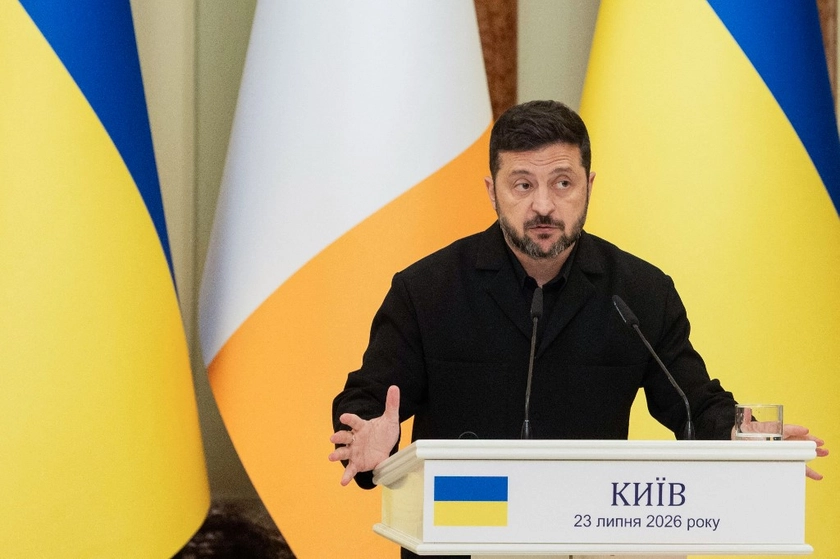
Zelensky told Loomer that he plans to attend Graham’s funeral in Washington and said that his relations with Trump have improved significantly, a claim seconded by Trump at the recent NATO summit in Ankara.
Loomer, meanwhile, urged Republicans to pass the late senator’s sanctions legislation.
“We need to whip those votes,” she wrote. “The United States needs to break Russia’s economy until they submit to peace.”
Trump has signalled that he’s open to legislation’s approval and called on Congress to add Iran to it.
“Truth still works”
Lindsley said the worst way to approach a skeptic was to begin by telling them they had fallen for propaganda.
“You’re basically calling the person a fool,” he told Kyiv Post. Instead, the message should be: “I understand you hate the forever war machine. I do too. But supporting Ukraine means stopping the Russian war machine.”
Lindsley called Burisma the “stickiest point” of Russian propaganda: millions of Americans assume former US President Joe Biden’s support for Ukraine was driven by his son’s work for the company. He argued that pro-Ukraine communicators often ignore the claim because they underestimate how strongly it shapes opposition.
“By explaining the Burisma reality – by showing the 2023 congressional testimony in which Hunter’s business partner confirmed he was in Moscow, not Kyiv, in March 2014, meeting with Burisma’s CEO – I have changed MAGA minds one-on-one. Now with Loomer’s reach we can correct the record for millions,” he confesses.
He also insisted that language matters.
Beginning in January 2025, Lindsley said, Under Fire News and its Café Resistance coalition pushed officials to replace the phrase “stop the killing” with “stop the Russian war machine.”
The first formulation, he argued, placed Ukraine and Russia on equal moral ground. The second created room to argue that supporting Ukraine was a way to stop – rather than perpetuate – a forever war.
“You’ll notice most people, including Trump officials, now use this phrase instead of “stop the killing.” That change created the space to argue that supporting Ukraine is the way to STOP forever war,” he said.
Russia may spend billions trying to shape what American conservatives believe, yet, Ukraine’s counterargument is ultimately much cheaper and effective.
“We have the truth on our side,” Moore told Kyiv Post. “The truth still works.”
You can also highlight the text and press Ctrl + Enter