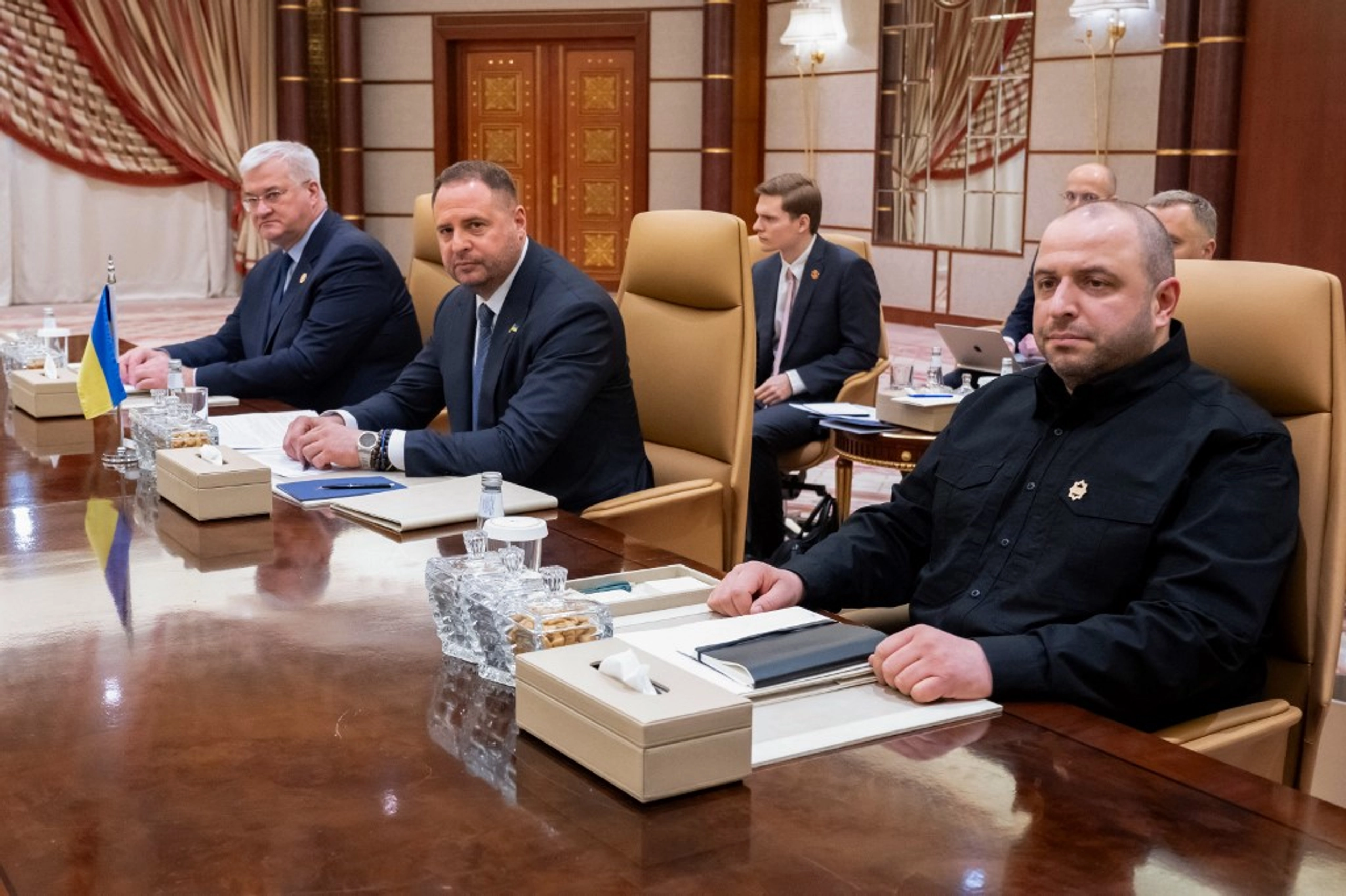
US Treasury Secretary Scott Bessent said a Ukrainian delegation might visit the US by the end of this week or early next week to sign the revised version of the resources deal.
After the new version began circulating in the media at the end of March, Ukrainian President Volodymyr Zelensky said he would not visit the US to sign the deal until the terms were set as they had been “constantly changing.”
JOIN US ON TELEGRAM
Follow our coverage of the war on the @Kyivpost_official.
Bessent, speaking to Bloomberg on Wednesday, said he believed the Ukrainian delegation had hired a counsel and claimed the new version – which now stipulates all revenue from Ukraine’s resources from both private and public sectors, for instance – “is the exact same deal” that would have resulted from earlier agreements.
“I believe we may have a team from Ukraine coming over as soon as the end of this week or the beginning of next week. Ukrainians have – I believe that they’ve hired counsel,” Bessent said.
Bessent added that “we’re going to sign a four-page deal” after the infamous White House meeting between Zelensky and US President Donald Trump on Feb. 28 before claiming the new version is simply an extension to earlier agreements.
“What we did was, after the incident in the White House on – I believe it was Feb. 28 – we’re going to sign a four-page deal that was parameters of understanding. And at Treasury, we took the opportunity to move forward to the big deal,” Bessent said.
Zelensky Warns of Massive Russian Overnight Strike on Ukraine
“So this is the exact same deal that would have resulted from the four-page signature deal.”
The new deal
The US reportedly demanded more resources and revenues than those stipulated in earlier agreements, with terms such as veto power from US appointees and the omission of any security guarantees that raised concerns in Kyiv.
Kyiv is reportedly seeking changes to the new draft agreement by aiming for more American investment, while the Trump administration is reportedly open to amending certain parts of the deal to address Kyiv’s economic interests.
According to Ukrainian lawmaker Yaroslav Zheleznyak and foreign media such as the Financial Times and Reuters, who said he had obtained copies of the new draft deal, changes were made to the following areas:
- Scope of the deal – earlier versions stipulated 50% revenue extracted from Ukraine’s oil, gas and mineral resources (plus associated infrastructure), but the new version includes more minerals and all revenues extracted from both public and private sectors.
- Payment terms – under the new deal, the revenue is to be converted into foreign currencies immediately after extraction and to repay US aid for Ukraine, plus a 4% annual interest rate. The US also has first rights to all resources. Ukraine would not gain access to the fund’s profits until after repayment.
- Indefinite terms – there is now an indefinite term on the deal, which could only be altered or terminated with US approval.
- Joint fund management – the funds are to be managed by a joint investment fund in different iterations of the agreement, but the new version stipulates that the fund be managed by a five-person board, three of which are appointed by the US with full veto power.
The new version also made no mention of security guarantees, a key provision that Kyiv has pushed for. Trump has previously argued that the US economic interests in the country alone should serve as a deterrent against future invasions.
However, substantial US investments in Ukraine before 2022 failed to deter Moscow’s 2022 invasion.
You can also highlight the text and press Ctrl + Enter