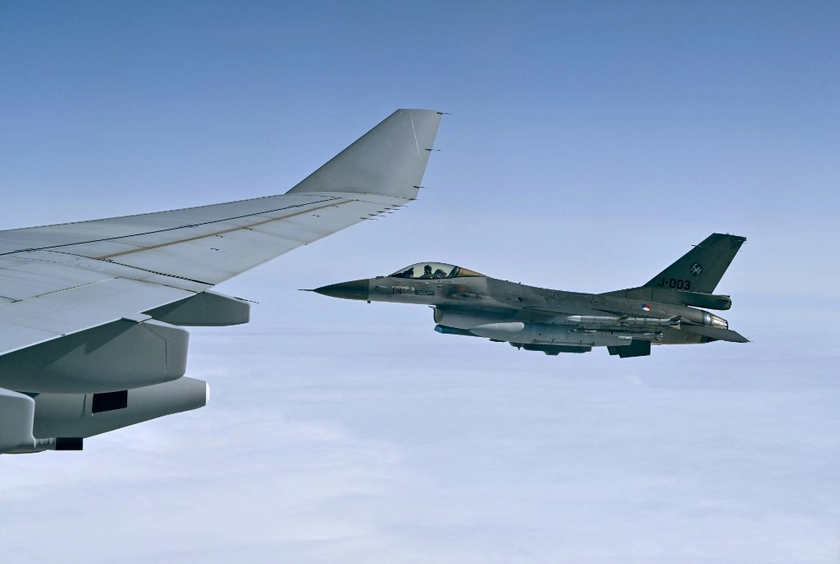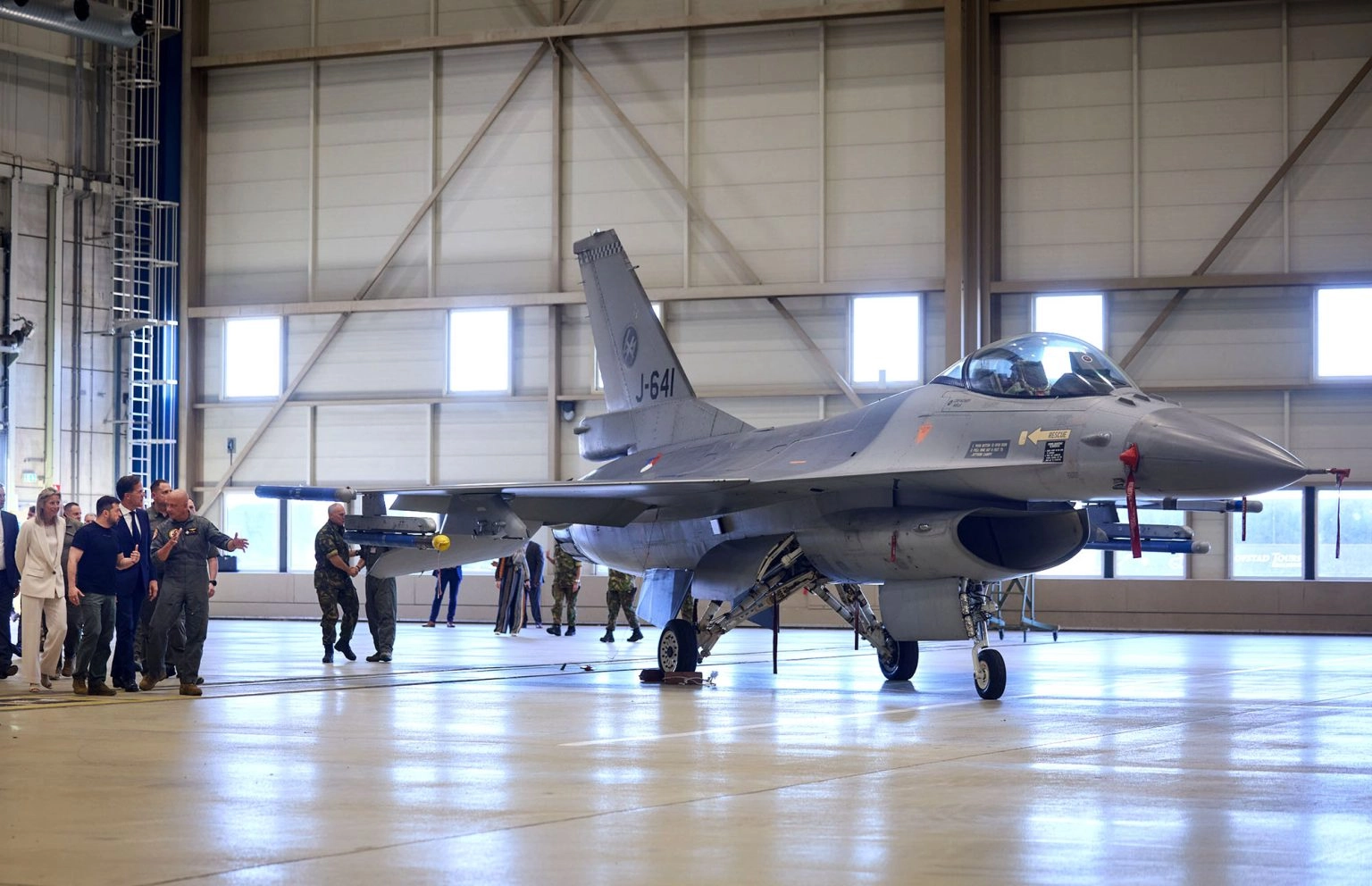
US Army Gen. Christopher G. Cavoli, who is both Supreme Allied Commander Europe (SACEUR) and commander of the US European Command (EUCOM), told the Senate Armed Services Committee last week that the Ukrainian Air Force (UAF) pilots operate their F-16 “Viper” fighter aircraft “every day.”
He said they were performing defensive operations against Russian cruise missile and Shahed kamikaze drone attacks and offensive strikes against Russian forces in Ukraine’s eastern region. His assessment that with its limited numbers of Vipers the UAF was achieving a laudable level of operational success rate.
JOIN US ON TELEGRAM
Follow our coverage of the war on the @Kyivpost_official.
“They fly every day; they’ve defeated a large number of cruise missile threats, and they’ve delivered an awful lot of offensive attacks as well – specifically bombing attacks in the east.”
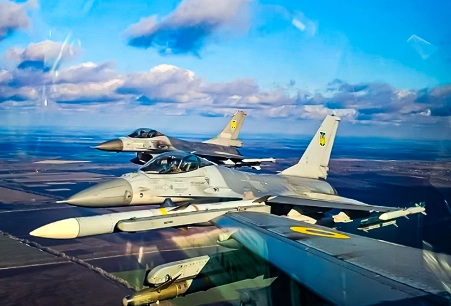
F-16s of the Ukrainian Air Force in the skies over Ukraine. Photo: X / UAF
Even as the White House is attempting to negotiate a ceasefire, fighting rages unabated with little let-up in Russian attacks on Ukraine’s civilian infrastructure is still raging in the war-torn country. Ukraine has received an unspecified number of the US-made fighters from European countries, primarily the Netherlands and Denmark, with more promised by Belgium and Norway.
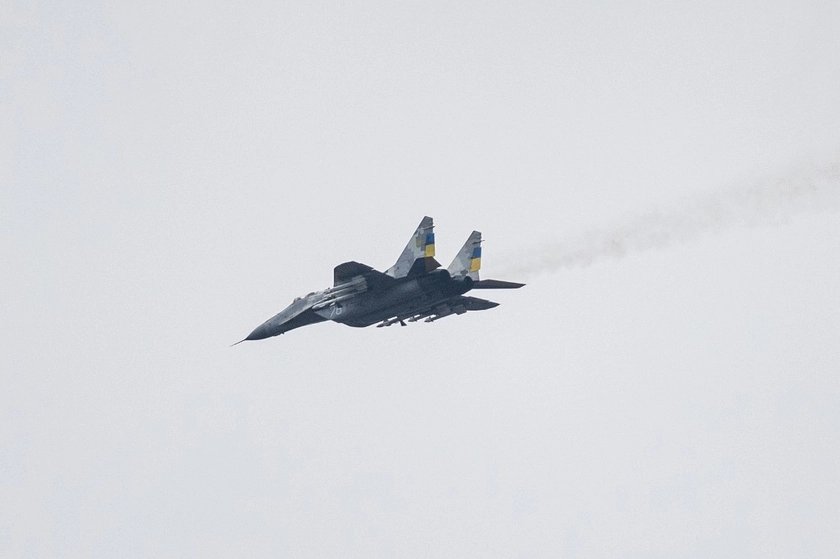
Ukrainian MiG-29 Lost on Combat Mission in Poltava Region, Pilot Survives
Last month, Ukraine’s President Volodymyr Zelensky said that Kyiv had received more F-16s, without specifying the source. It still remains unclear how many have been lost in combat.
While the US continues to offer training to some Ukrainian F-16 pilots, as well as limited quantities of spares, weapons systems and operating system upgrades it has not sent any of the aircraft and seems unlikely to in the near future.
In March, an interview with a UAF F-16 pilot, whose identity was hidden on security grounds was released by air force officials. The pilot spoke about how he and his comrades were successfully taking on Russian missile and drone attacks launched from air, sea, and land. He added the multirole F-16s were also carrying out air-to-air missions against Russian aircraft as well as ground attack operations on both Russian and Ukraine’s occupied territories, achieving 80% success.
These mission profiles may seem to contrast with comments made by the commander of US Air Forces in Europe (USAFE), Gen. James B. Hecker, on Sept. 17 at the Air Force Association (AFA) Air, Space & Cyber conference where he said that Ukraine was taking a cautious approach in its use of the F-16:
“The pilots are new to it, so they’re not going to put them on the riskiest missions. Ultimately, that’s a Ukrainian decision. But I think that’s the approach that they’re taking.”
The increase in the number and extent of F-16 missions seems to be confirmed by the increased number of photos and videos of Viper sightings on Ukrainian official channels along with other mainstream and social media.
However, Hecker said Western military leaders are trying to boost the status of the country’s air force within the Ukrainian military establishment.
“In a lot of the former Soviet Union countries, the army was kind of the service, and everybody else was below that and maybe didn’t get a voice at the table,” Hecker said. “So I have been asking that the Air Force get positions on the General Staff.”
Hecker, with backing by Cavoli, aims to enable Ukraine’s air force to do more joint operations with the country’s ground forces.
Cavoli and Hecker would like to see Ukraine’s service branches better integrate their missions and objectives in the air-land battlespace and embrace concepts that took Western air power pioneers in the UK and US several decades to get old school “ground-pounders” to accept.
You can also highlight the text and press Ctrl + Enter