European military assistance to Ukraine is accelerating and focusing particularly on lower-tech weaponry proved in close-in combat against the Russian army, and manufacturing in Ukraine if possible.
British Defence Secretary John Healy in Thursday comments to media, said the idea behind the assistance was to make Ukraine’s combat brigades and frontline formations more lethal in the “close fight.”
JOIN US ON TELEGRAM
Follow our coverage of the war on the @Kyivpost_official.
“(T)oday’s major package will surge support to Ukraine’s frontline fight,” Healy said. “Our job as defence ministers is to put into the hands of the Ukrainian war fighters what they need.”
Healy said the United Kingdom along with Norway would allocate a total $580 million towards sending Ukraine “hundreds of thousands” of drones, anti-tank mines and funding of combat vehicles inside Ukraine.
The UK will contribute the equivalent to $456 million (£350 million) to the aid package, and Norway the remainder to an arms and military support program run by Britain called the International Fund for Ukraine, and the lion’s share of the assistance, worth $326 million (£250 million) will fund the delivery to Ukraine of hundreds of thousands of drones, anti-tank mines and radar systems, Healy said.
The Armed Forces of Ukraine (AFU) since Russia’s February 2022 invasion of Ukraine have turned cheap observation and attack drones – once considered almost toys by most military professionals – into the dominant weapons system of the Russo-Ukraine War. AFU statisticians report about three out of every four Russian soldiers killed or wounded, or combat vehicle damaged or destroyed, is the result of a Ukrainian drone strike.
Trump Hints at Scrapping ‘Anchorage Understandings’ on Donbas at G7 Summit
AFU frontline units fighting mostly on the defense have honed tactics of waiting until an attacking Russian armored columns stalls in a mine-field, and then swarming stopped tanks and infantry fighting vehicles with drone swarms. Surviving infantry are hunted down by first-person-view (FPV) drones and by mortar strikes.
Ukraine’s Defense Ministry in March announced 2025 plans to deliver 4.5 million drones to AFU fighting units. Funding for AFU drone acquisition comes from a combination of state funding, international support initiatives like the International Fund, and cash donations from civilians mostly to drone units flying in the field.
The Netherlands, on March 31, made public its own cash injection to strengthen Ukraine’s attack drone armada: $568 million (€500 million) to support “large-scale drone purchases.” A defense ministry statement said the delivery “should help Ukraine to be able to stop Russian attacks at the front…and make a difference on the battlefield.” Netherlands’ total 2025 commitment to Ukrainian military support is $2.27 billion, the official announcement said.
Germany’s Defense Minister Boris Pistorius, in Friday comments to Brussels media, said that Berlin will, aside from financing hundreds of thousands more Ukrainian drones, in 2025, transfer to the AFU four more Iris-T systems. The anti-aircraft missile weapon including launcher, radar and missiles operates at short and medium ranges and is rated among the most effective near-battle-space air defense systems operated by the AFU. Germany will provide Ukraine at least 300 missiles as well, Pistorius said.
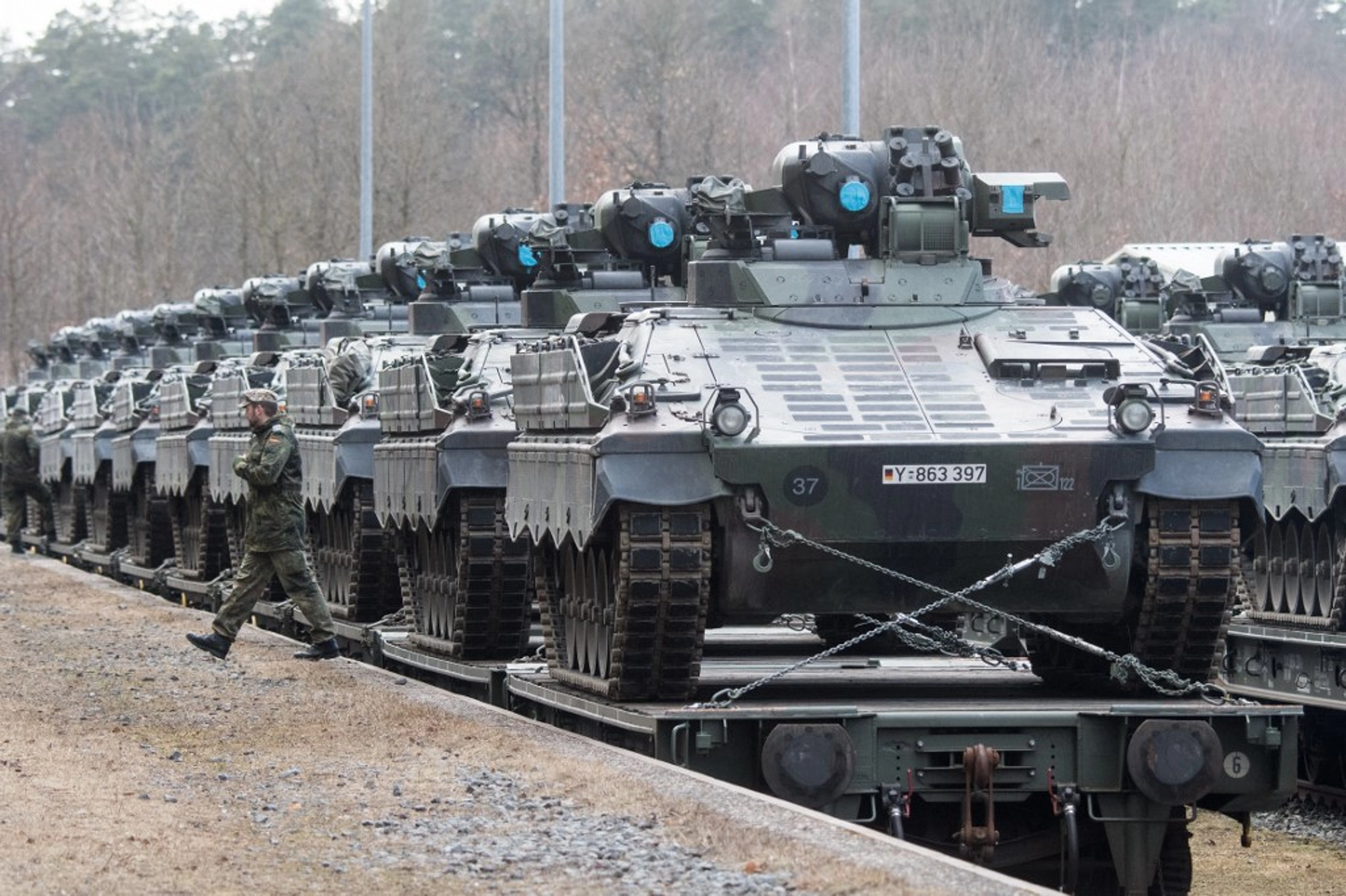
Other made-in-Germany equipment now in the Ukraine arms pipeline include 300 reconnaissance drones, 120 portable (hand-held) anti-aircraft missile launchers, 14 artillery systems, “around” 100,000 155mm artillery shells, 100 ground surveillance radars, 25 Marder 1A3 infantry fighting vehicles and 15 Leopard 1A5 main battle tanks. Germany expects to contract for the delivery to Ukraine of 1,100 more surveillance radars in the near future, Bundeswehr statements said.
Germany’s Cold War-era Marder fighting vehicles and Leopard 1A5 tanks, although obsolete by NATO standards, have a solid reputation among Ukrainian mechanized troops for reliability and good mobility cross-country
Germany’s Defense Ministry in February announced Berlin intends to send Ukraine at least 500,000 155mm artillery shells in 2025. AFU leadership has said it needs at minimum about 1.5-2 million medium-caliber artillery shells a year, and probably twice that or more to conduct major offensives.
International assistance to Ukraine’s artillerymen is run by a planning group called the Artillery Coalition, which is led jointly by France and the United States and includes Belgium, the United Kingdom, Czechia, Denmark, Finland, Germany, Greece, Lithuania, Luxembourg, Poland, Spain, Turkey, and Sweden. One of the most visible successes of the Coalition’s work has been delivered by Denmark, which in late 2023, launched a program to build artillery Bohdana howitzers inside Ukraine.
Zelensky in February comments, praised the joint manufacturing project which, he said, had produced 154 of the modern systems in 2025. The Ukrainian leader claimed the “Danish model” of in-country arms production had turned Ukraine into the world’s top artillery manufacturer in less than a year.
Denmark, in early April, approved a $970 million package to Ukraine funding air defense, drone manufacturing, military IT development, F-16 aircraft and spare parts.
Sweden at the end of March announced the biggest military aid package to Ukraine in Swedish history, committing $950 million to buy weapons either in army stocks or to be produced in country, and $550 million for arms production in Ukraine. Sweden is a key source of high-tech battle kit for the AFU. The most high-profile weapons have been advanced CV90 infantry fighting vehicles, upgraded Leopard 2 tanks, 1,000+ AT4 anti-armor missiles, and world-class Archer howitzers. The total value of Stockholm’s support to Ukraine is $8.2 billion.
More than 30 countries have donated close to $130 billion in military assistance to Ukraine, with material ranging from helmets and personal med kits to precision-guided ballistic missiles and fourth generation fighter jets. Germany, with about $30 billion of arms support promised since Russian invasion, is Ukraine’s second-most important source of weaponry after the United States, at $61 billion.
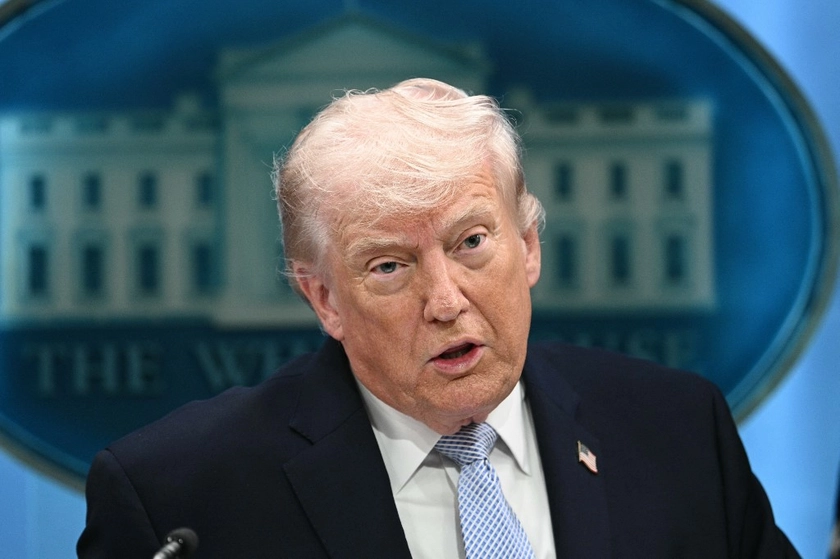
US President Donald J. Trump has said Russia and Ukraine should conclude a peace immediately and that Kyiv should accept Russia’s launch of an unprovoked war without conditions and agree to Russia’s occupation of 20% of Ukraine’s territory. A declared “friend” of Russian authoritarian leader Vladimir Putin, Trump has allowed American arms deliveries to Kyiv – once the lifeblood of international war help to Ukraine – to shrink to a trickle.
President Volodymyr Zelensky, on Tuesday, said the US’ cut-off of more Patriot missiles is most threatening to Ukrainian national air defense, because aside from the made-in-USA Patriot system, Ukraine has no means of defending cities and people living in them from Russian ballistic missile strikes.
Germany, Netherlands, Romania and the United States reportedly have donated a total six Patriot missile systems to the AFU. Ukrainian officials in March reported Patriot missile stockpiles were near-empty.
Germany will donate 30 Patriot missiles from Bundeswehr stocks to Ukraine, Germany’s Pistorius said on Friday.
“Our steadfast support (to Ukraine) continues,” he said. “(I)n the last few days we have been able to provide 30 additional Patriot guided missiles from our own stockpile for the Patriot systems that we have already delivered to Ukraine.”
You can also highlight the text and press Ctrl + Enter

Attack on Moscow Oil Refinery: Putin Under Pressure?