The Kremlin’s deadly ballistic missile strikes against Ukrainian civilian targets are exploiting critical gaps in Ukraine’s ability to protect its airspace, which is exacerbated by a White House intent on delivering little or no Patriot air defense systems to Kyiv.
Ukraine’s airspace is big and has holes that Russia sees and exploits
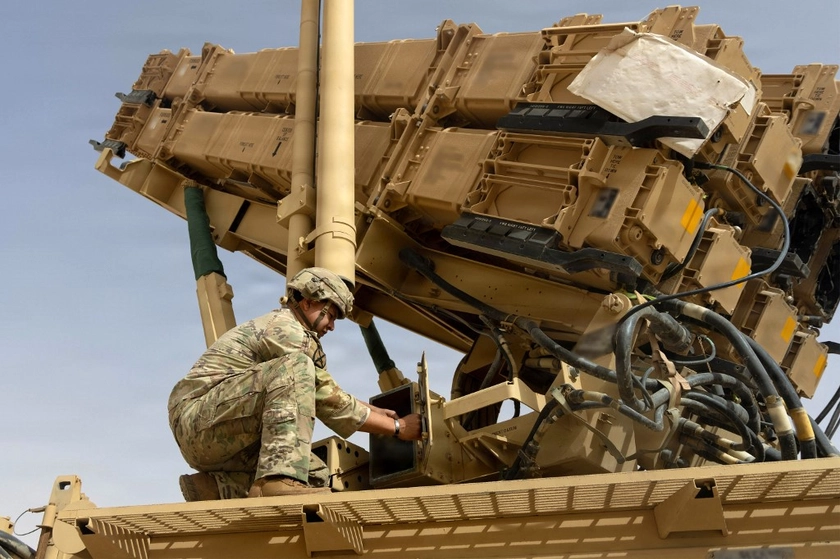
The Raytheon-manufactured MIM-104 Patriot system is the lynchpin of Ukraine’s defense against Russian and North Korean-furnished ballistic missile strikes as the only air defense system available to the Armed Forces of Ukraine (AFU) that is capable of shooting down those types of missiles.
JOIN US ON TELEGRAM
Follow our coverage of the war on the @Kyivpost_official.
The US Patriot system, designed to knock down airborne targets at ranges between 90-180 kilometers (60-120 miles), depending on the type of missile fired, is able to engage ballistic missiles at half that range. In areas where Ukraine has not been able to deploy the relatively few Patriot systems it possesses, the results have been horrific.
Late on Sunday morning, Russia launched two cluster munition warhead equipped Iskander short-range ballistic missiles against the center of the regional city of Sumy. The missile’s submunitions showered an area thick with pedestrians and shredded a packed trolley bus. At least 34 people died and 117 were injured with eyewitnesses reporting that no Patriots had been launched.
On April 4, a single Iskander missile landed among an apartment complex in the southern city of Kryvyi Rih, once again showering cluster munitions across a courtyard, parking lots, and a playground. The strike killed 18 and wounded dozens. Once more, eyewitnesses reported no Patriot launches.
Poland, Germany Clash Over €6.6B in EU Funds for Ukraine
On Sept. 3, 2024, two ballistic missiles hit military students drawn up in a morning formation in the northern city of Poltava. In probably the bloodiest Russian ballistic missile strike 59 were killed and at least 328 injured – again no Patriot launches were reported.
In Ukraine, the AFU has almost always deployed Patriot batteries to protect cities with key industry, or more rarely airfields. Aside from those small “islands” protected by Patriot, Moscow can use ballistic missiles to hit any part of Ukraine – a territory roughly the size of Texas - with impunity.
Ballistic missiles are difficult to identify and intercept allowing Russia to maximize casualties
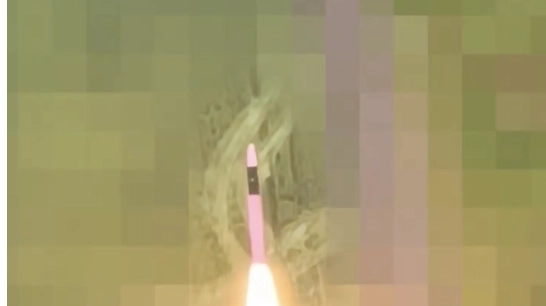
A ballistic missile is difficult to intercept because it flies in a parabolic arc nearing the edge of the earth’s atmosphere before plunging on its target at speeds in excess of Mach 5 (6,000 kph / 3,750 mph).
On Sunday one missile was fired from within Russia’s Kursk region, the second from Belgorod region, so that the two missiles hit the Ukrainian city Sumy from converging paths.
In the Krivi Rih strike, despite an air raid warning being declared to warn people to seek shelter, the Russian missile fired from the occupied Crimea region struck less than four minutes after launch leaving people little time to find cover.
In the Poltava strike, news reports said the missiles arrived only a minute or two after the air raid warning went out.
Ukraine’s Patriots cover only a fraction of the country
Ukraine’s first Patriots were provided by in January 2023. Each $1.5 billion system consists of a surveillance radar, a command-and-control station, a support unit with communications equipment and power generators, and at least one and usually four and sometimes eight missile launchers.
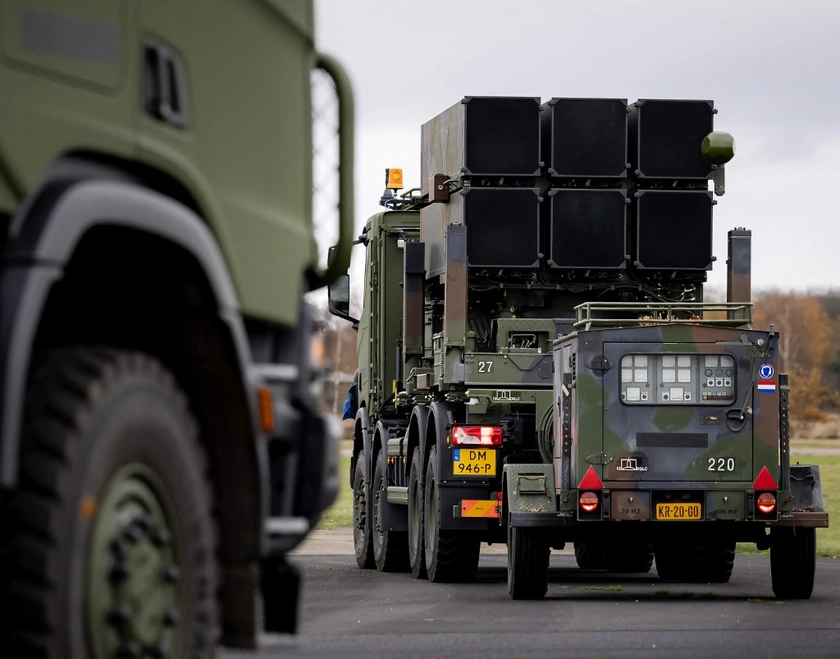
The precise number of Patriot air defense systems in Kyiv’s hands is a military secret. Open sources estimate the number at six: three donated by Germany, two by the US, one by Romania, and one a “hybrid” made up with elements provided by Germany and the Netherlands together.
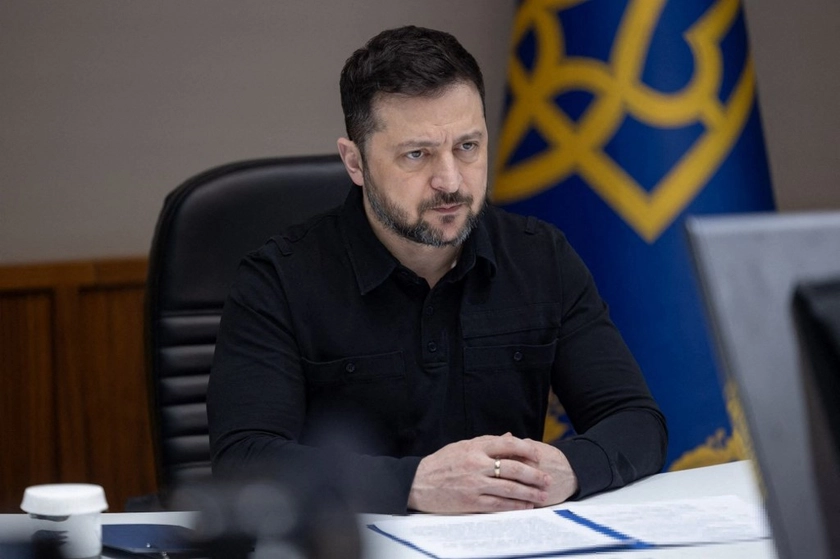
Ukrainian President Volodymyr Zelensky previously estimated that 27 Patriot systems, or some other comparable systems were needed, to shut down Ukraine’s entire air space to Russian missile strikes.
In remarks to local media on April 9 he said that ten systems would be an absolute minimum that would still leave many cities fully exposed to attacks but might protect major population centers and key industries.
Zelensky says he will buy more Patriots or build them under license
According to the Ukrainian leader the White House isn’t interested in a deal.
On April 14 Zelensky repeated the offer in an interview with the CBS Sixty Minutes program, saying “We are ready to buy and we need at least ten systems to cover some of our cities…and that’s $15 billion. We are ready to pay this $15 billion. We will find this money and we will pay for everything (up front).”
Speaking at a Ramstein Ukraine defense support conference last week, Zelensky said he and Ukraine’s allies could come up with as much as $50 billion to finance arms purchases from the US.
The Zelensky administration formally requested licenses from US to produce both the Patriot systems itself, or failing that the missiles, either way at Ukraine’s cost according to a domestic news report in March saying that US President Donald Trump rejected the deal.
Ukraine’s ability to manufacture ballistic missiles and high-tech guidance systems dates back to the Soviet era and continues up to the present day. Ukraine’s aerospace sector could almost certainly assemble Patriot-type anti-aircraft missile and probably manufacture some but not all of its components – although local military analysts suggest it would take years to bring local production on line.
“The bottleneck in global MSE (Patriot system) production isn’t the number of final assembly lines – it’s the supply of critical components from US subcontractors… producing Patriot systems or their missiles require billion-dollar contracts, long-term cooperation, and industrial capacity. For Ukraine, such a path is strategic - but it will not be quick, and it won’t come cheap,” said Defense Express, a Ukrainian military issues magazine, in an April 9 report.
Zelensky has said the White House had not reacted to the Ukrainian offer to buy Patriot systems. Although not commenting directly on possible air defense assistance to Ukraine, US Defense Secretary Pete Hegseth at a NATO summit said the United States considers European security a low priority and that the US no longer considers helping Ukraine in its
Vice President J.D. Vance probably made the administration position most clear in a pre-election statement widely reported across Ukraine: “I don’t really care what happens to Ukraine, one way or the other.”
Ukraine needs more Patriot missiles not just air defense systems
At least twice, in November 2023 and in May-June 2024 the AFU ran critically short and, in some sectors, completely out of Patriot missiles. The first shortage was probably caused by unanticipated delays in arms deliveries while the second was the direct result of the five-month Congress inspired US boycott on sending arms to Ukraine.
The Patriot interceptor missile is a fiercely expensive, high-tech weapon costing $4-7 million a throw, depending on the type. Ukrainian Patriot operators usually fire two or more interceptors at an incoming Russian ballistic missile. In a typical month of attacks the Russia launches 20 to 40 ballistic missiles of various types at targets in Ukraine.
Germany broke ground for a €250 million ($284 million) missile production facility planned to be operational by September 2026. In late 2024. Japan’s Mitsubishi Heavy Industries according to news reports produces about 30 Patriot missiles a year under license and is considering increasing production to 60, according to the Reuters news agency d.
Germany, as part of major arms package to Ukraine announced on Thursday, said it would send 30 Patriot missiles from its own stocks, without detailing a timeline. That quantity would, based on the history of past attacks, probably be sufficient for Ukraine’s air defenses to take on one or two major Russian missile strikes, before once again running short.
You can also highlight the text and press Ctrl + Enter