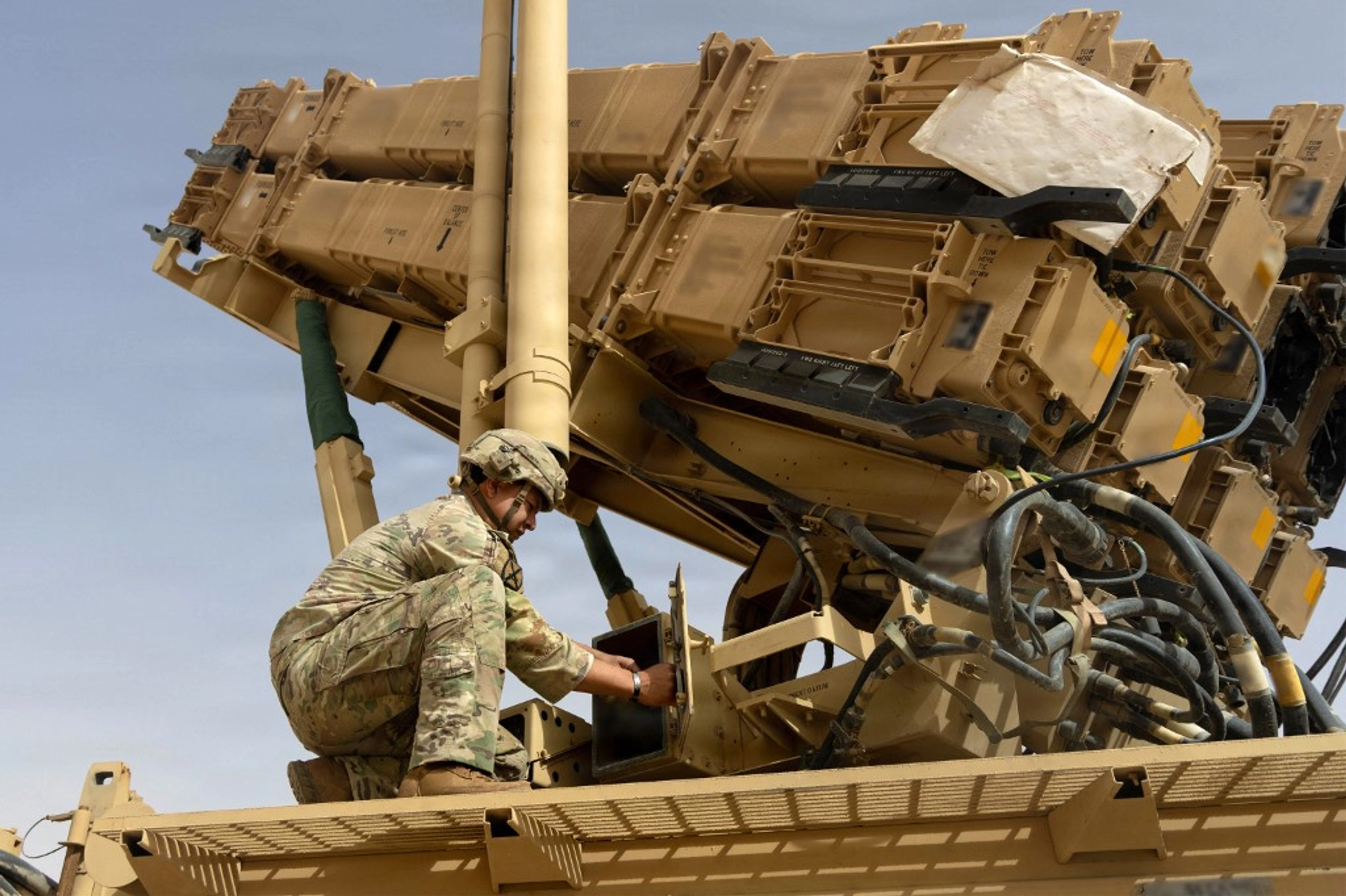
Lockheed Martin has warned that it cannot provide US allies with certainty over when they will receive critical Patriot interceptor missiles, despite plans to significantly increase production.
The Financial Times (FT) reported the remarks, citing Brian Dunn, vice-president for strategy and business development for missiles and fire control, who spoke at the ILA Berlin Air Show.
JOIN US ON TELEGRAM
Follow our coverage of the war on the @Kyivpost_official.
Dunn said the company is working to expand production of PAC-3 interceptor missiles amid a global supply crunch intensified by ongoing conflicts, including the war in Iran.
However, he stressed that Lockheed does not control how missiles are allocated between customers.
“We do not control what the allocation of those missiles is going to be. We can’t tell anybody where you’re going to be on that [priority list],” Dunn said, according to the FT.
He added that even with expanded capacity, delivery timing remains uncertain for countries including Germany, Japan, Poland, the UAE and Saudi Arabia, which operate Patriot systems.
Lockheed has agreed with the Pentagon to raise annual PAC-3 production from about 650 missiles to 2,000 by 2033 under a $4.7 billion contract, but demand continues to outstrip supply.
European allies have also voiced concerns about long delivery delays for US weapons, particularly after stockpiles were depleted during recent conflicts.
The FT also reported that US officials have warned allies, including the UK and Baltic states, of extended wait times as Washington prioritizes replenishing its own reserves.

Infantry Up Close, More and Better Bombardment, Helping America ‘Win’
Lockheed executive Paula Hartley said international partners are increasingly frustrated by delays and uncertainty in deliveries.
“They get frustrated that sometimes there are delays and unavailability of products, and sometimes there are frustrations with the government,” she said.
The PAC-3 system is a key component of air defense against ballistic and cruise missiles and is also vital for Ukraine, where shortages of interceptors have raised concerns about sustained defense against Russian strikes.
The development comes as Ukraine warns of critical gaps in air defense amid continued Russian strikes and shortages of interceptor missiles.
Armed Forces of Ukraine (AFU) Commander-in-Chief Oleksandr Syrsky has said Ukraine lacks sufficient modern air defense systems and must use existing resources more efficiently while seeking additional Western support.
President Volodymyr Zelensky has repeatedly called for more Patriot PAC-3 missiles and systems, warning of a critical shortage of air defense capabilities.
Ukraine’s ambassador to the US, Olha Stefanishyna, said Kyiv is prepared to finance additional Patriot systems if Washington agrees to supply them.
Zelensky also set a one-week deadline on June 3 for officials to resolve legal, financial and technical issues related to a potential Patriot purchase, warning of consequences if delays continue.
However, Ukrainian defense company Fire Point says it has successfully tested a missile that could form the basis of the country’s first domestically developed anti-ballistic interceptor system.
The company, known for producing Flamingo cruise missiles, released footage of a test flight of its FP-7.X missile, which it plans to integrate into its future FREYJA air defense system.
Chief Technology Officer Iryna Terekh said the test demonstrated a fully controlled maneuvering flight and pledged efforts to accelerate development “so that Ukraine can close its skies on its own.”
Fire Point announced in April that it aims to field a ballistic missile defense capability by 2027, positioning FREYJA as a lower-cost alternative to the US-made Patriot system, with interceptor missiles expected to cost under $1 million. The FP-7.X is designed to reach speeds of 1,500–2,000 m/s and measures 7.25 meters in length.
You can also highlight the text and press Ctrl + Enter

Russia Hit by 660-Drone Overnight Barrage Targeting Moscow, Crimea and Key Military Sites