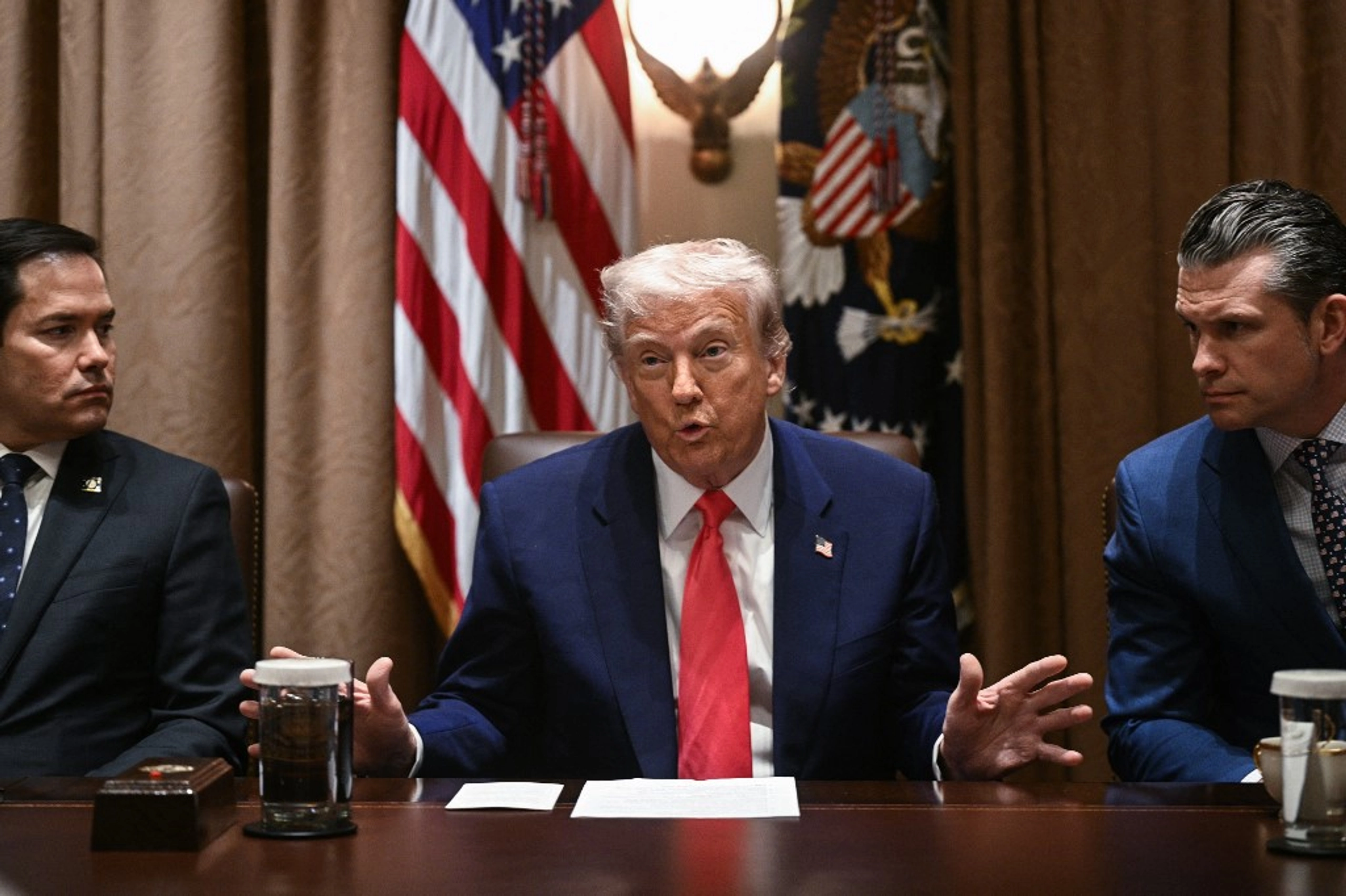
Amid minerals deal talks, the White House has reportedly lowered its demands – from $300 billion to about $100 billion – for payback of US aid allegedly provided to Ukraine since the beginning of Russia’s full-scale invasion.
Even by its own numbers, the US has never been close to pledging – or delivering – $300 billion in aid to Ukraine.
JOIN US ON TELEGRAM
Follow our coverage of the war on the @Kyivpost_official.
Following the last round of negotiations in Washington on April 11-12, the administration of US President Donald Trump reduced its estimate for aid to Kyiv by about $200 billion, Bloomberg sources said. This brings the White House’s amount closer to Ukraine’s own estimate of about $90 billion, Bloomberg reported based on sources familiar with the matter.
The $100 billion figure is also closer to independent estimates the US aid pledged to Ukraine since the full-scale invasion, although still higher than what was really delivered.
For example, the value of actual military aid from the US to Ukraine may even be three times lower than official claims from Washington.
“The US government has valued its military aid to Ukraine at $65.9 billion, whereas our estimate places it at $18.3 billion,” the authors of an in-depth report representing the findings of researchers at UC Berkeley, the Stockholm School of Economics, Minerva University, the University of Illinois at Urbana-Champaign and the Kyiv School of Economics wrote.
Intent in Plain Sight: the Politics of a UN-Recognized Genocide
The Trump administration is pushing for a deal with war-torn Ukraine that would give it a share of profits from future Ukrainian investment projects, including in minerals and infrastructure.
This way, Washington claims it would receive compensation for military and other aid that had been delivered explicitly in the form of grants and loans provided to Ukraine during the presidency of Trump’s predecessor, Joe Biden.
Under the proposed agreement, the US would have the first claim on profits sent to a special reconstruction fund, which would be managed by Washington, Bloomberg reported.
Ukraine, however, is refusing to transform past US aid – which had been given as grants – into debt and is seeking better terms for the minerals deal that would make it beneficial to both the US and Ukraine.
According to the Secretary of the US Treasury, Scott Bessent, the technical talks were highly productive and Ukraine and the US are now looking forward to bringing talks to a swift conclusion, Bloomberg reported.
“We are very, very close,” Bessent told Bloomberg News. “It could even be signed as early as this week.”
Talks between the technical teams on Friday and Saturday were constructive, but the US still approaches the deal as an opportunity to recoup costs in Ukraine through profits from the fund, Bloomberg source said.
The Trump administration has so far hesitated to commit to any investment into the fund — a priority for Kyiv in any potential agreement — and has postponed discussions on the matter, the media outletʼs sources said.
Instead, it continues to insist that past US wartime spending on Ukraine should be treated as Washington’s contribution without adding any new investment or security guarantees, they said, speaking on condition of anonymity.
According to Bloomberg’s sources, Ukrainian negotiators have found it hard to convince US officials to change their position.
Under a recent draft of the deal, Kyiv agrees to allocate 50% of future revenues generated from minerals, hydrocarbons, oil, natural gas, and other extractive materials to a joint US-Ukraine fund managed by the US.
Under the 1994 Budapest Memorandum, Ukraine gave up the world’s third largest nuclear arsenal, largely in exchange for security guarantees from the US and other countries. That arsenal was likely worth over $1 trillion. However, this potential source of significant US debt to Ukraine has not been accounted for as a part of the minerals deal.
You can also highlight the text and press Ctrl + Enter