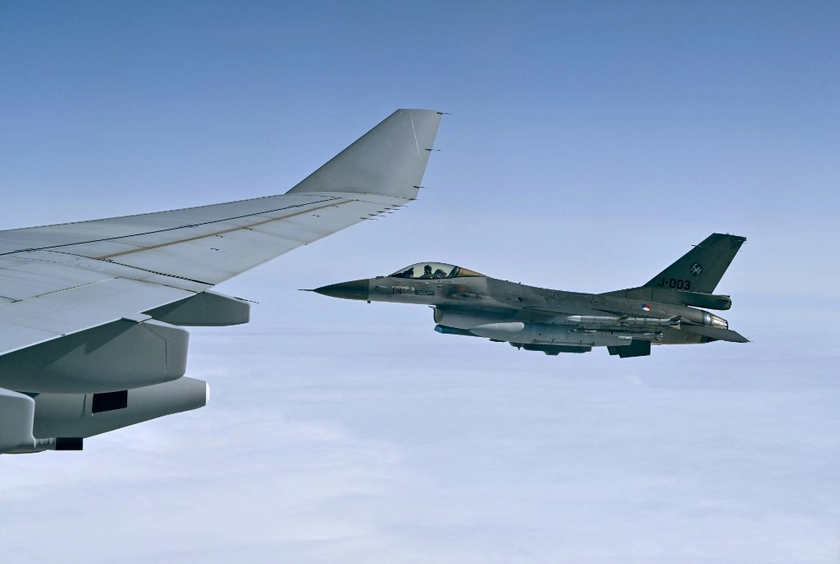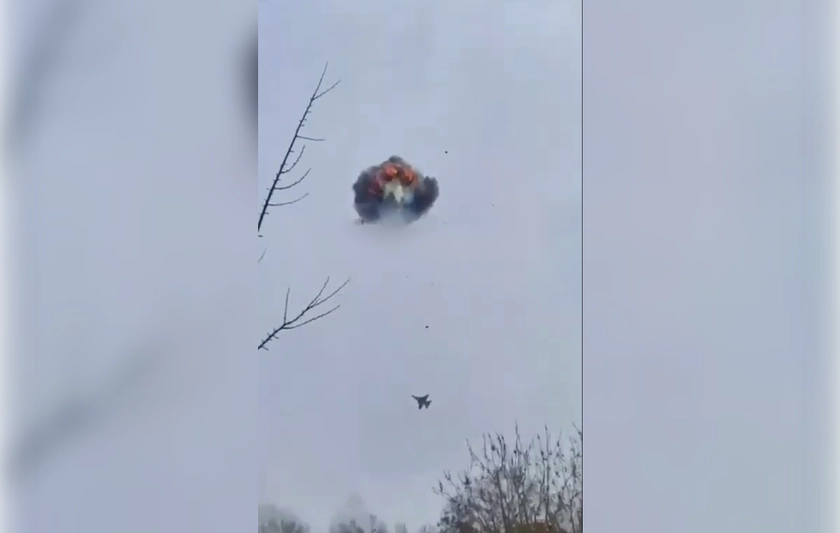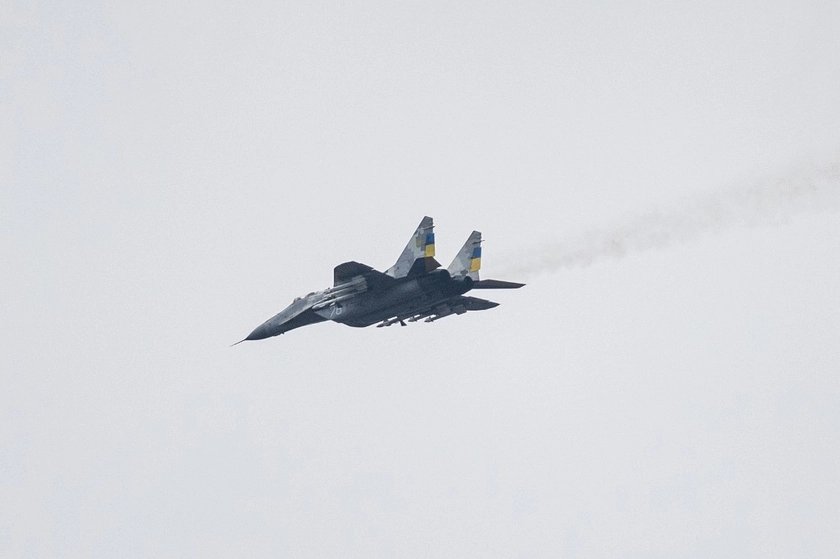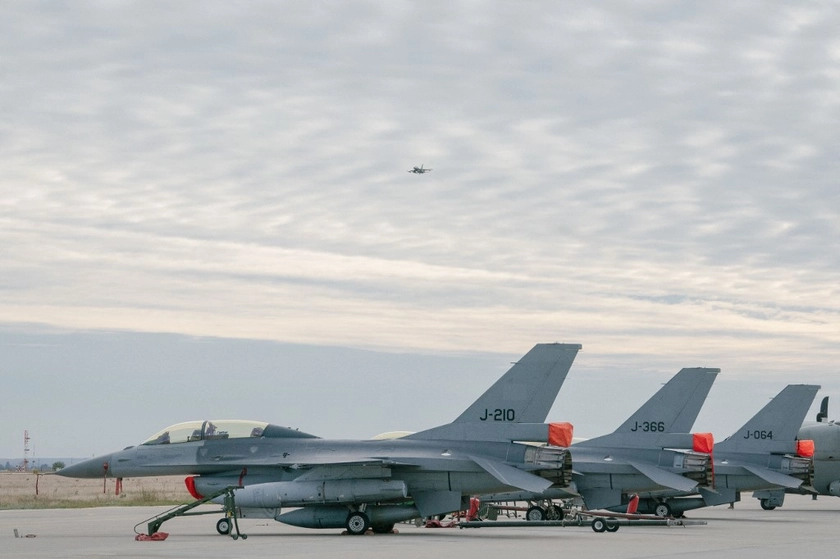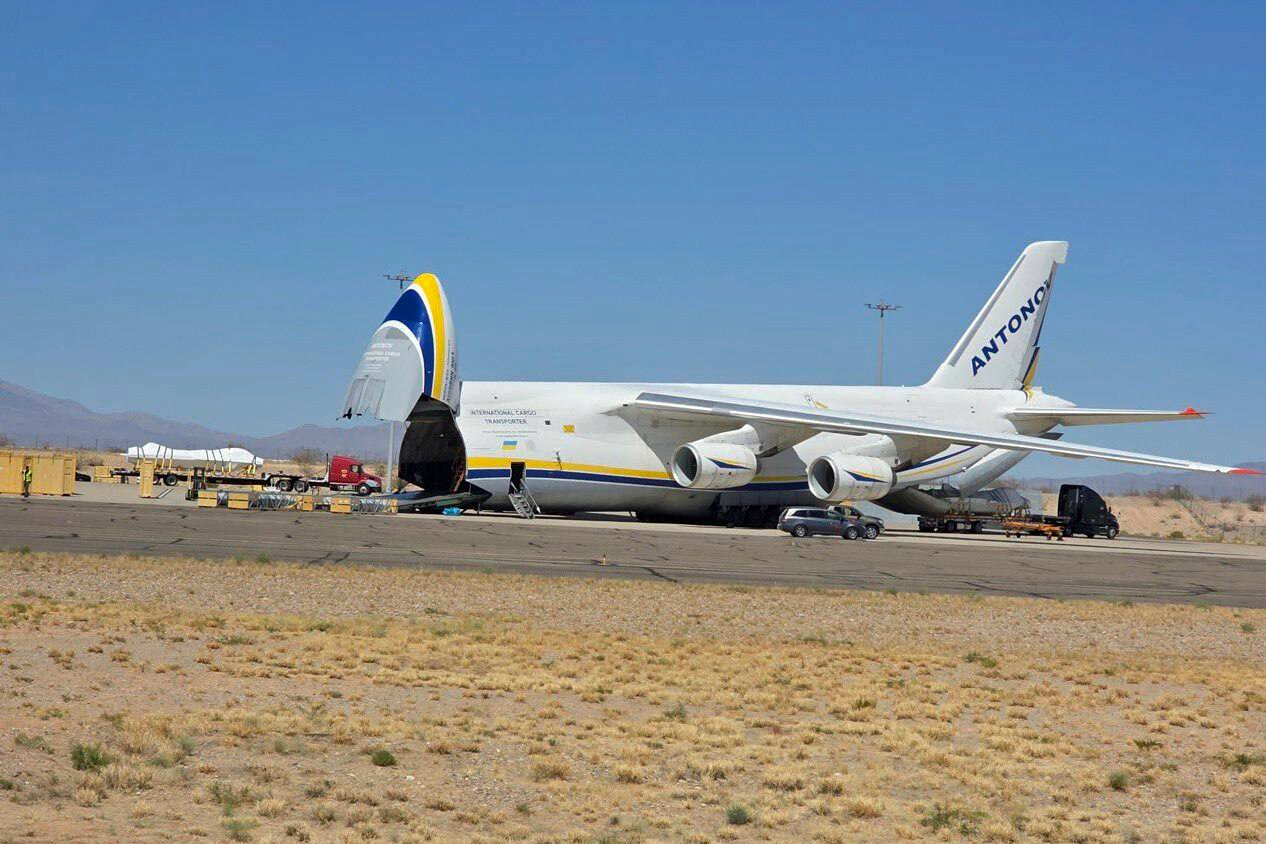
Photos and video posted by the Ukrainian milbloggers “The Military Journal” and the “Eye of the Mountain” on Wednesday, April 30, showed decommissioned F-16 fighter aircraft being loaded onto a Ukrainian An-124-100M at the Tucson International Airport in Arizona.
The images show vehicles belonging to the US company HAULPRO delivering the F-16s, enveloped in shrink wrap coverings, to the cargo plane and loading them through both the front and rear access ramps.
JOIN US ON TELEGRAM
Follow our coverage of the war on the @Kyivpost_official.
The milbloggers were unsure whether three or four “Vipers” were being loaded. They are likely to have originated from the Davis-Monthan Air Force Base (AFB) in Tucson, Arizona, where the US has been storing surplus and decommissioned aircraft since World War II.
Davis-Monthan AFB is the home of the 309th Aerospace Maintenance and Regeneration Group (AMARG) and the US Department of Defense “Boneyard” facility for storage and maintenance of decommissioned military aircraft.
The condition of the F-16s is unclear, but it is likely they will be used to provide spare parts to keep Ukraine’s fleet of donated aircraft serviceable or to act as ground decoys to confuse ongoing Russian airfield assaults.

US Plans to Cut One-Third of Fighter Jets It Provides to NATO in Europe, Report Says
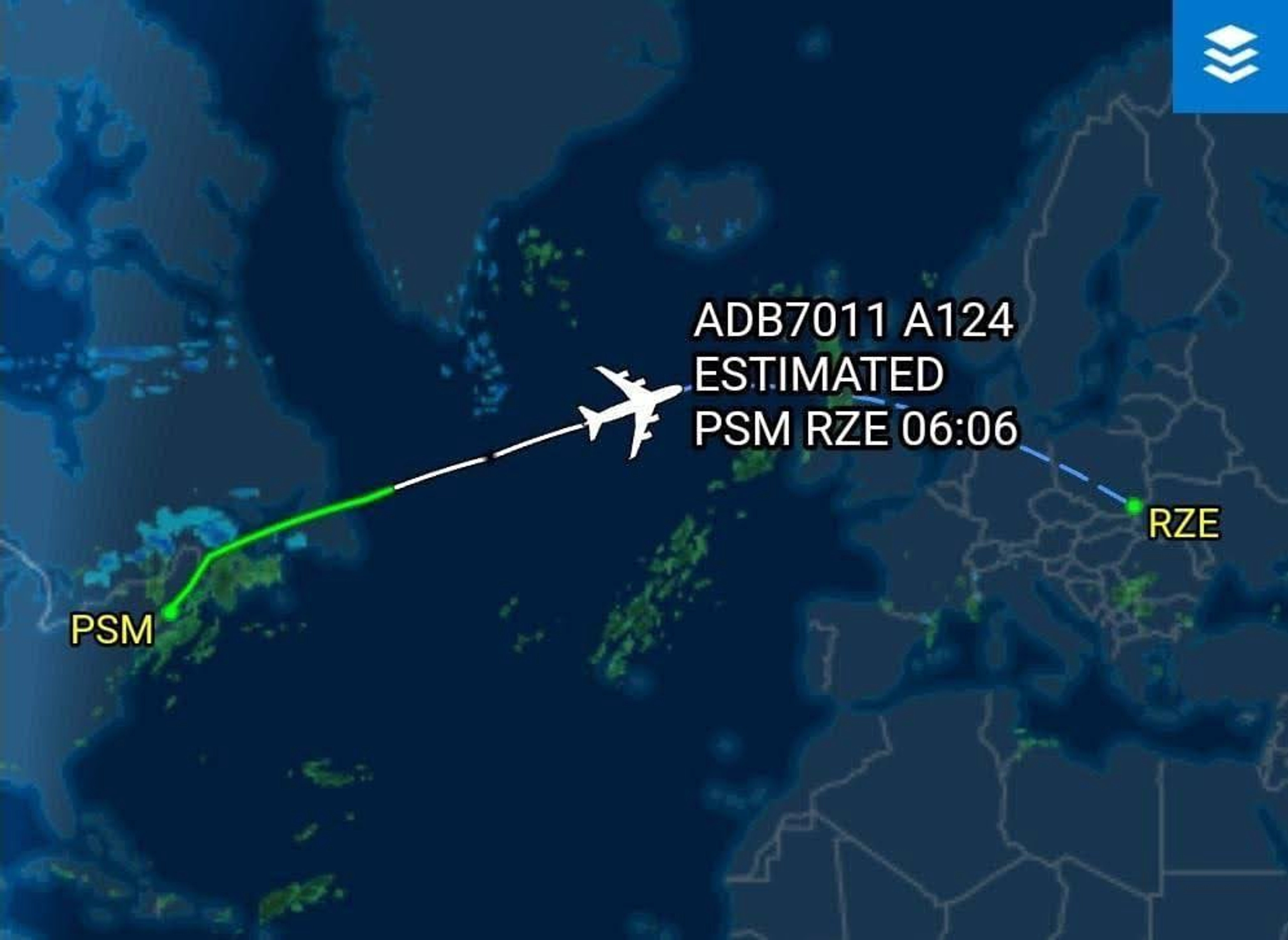
Open-source flight data sites showed that the Antonov flew from Tucson via the New Hampshire city of Portsmouth to the Polish airport of Rzeszów, the key military aid logistics hub located 80 kilometers (50 miles) from Ukraine.
Davis-Monthan Air Force Base’s role for the storage of military aircraft was established following World War II and continues in that role today. By May 1946, it was the repository for 800 strategic bombers and cargo aircraft, including the B-29s “Enola Gay” and “Bockscar” that dropped the atomic bombs on Japan.
The area’s low humidity, less than 20%, and sparse annual rainfall of less than 28 centimeters (11 inches), hard-baked alkaline soil, and high elevation of 780 meters (2,550 feet) naturally preserve aircraft for cannibalization or possible reuse. More information on the boneyard and the aircraft stored there can be found here.

Kyiv Post aviation analysts note that the F-16s seen in Tucson are probably F-16AM MLU aircraft that the Ukrainian Air Force operates have the supposed telltale IFF interrogator antennae like the F-16 ADF. The F-16C Block 25/30/32, F-16CG Block 40/42, and F-16CJ Block 50/52 varieties originally delivered to Ukraine did not include the IFF interrogator, which seems to have been added to the lineup later, either from newly built aircraft or by retrofit.
You can also highlight the text and press Ctrl + Enter

US Loses First Apache Helicopter in Iran War
CARTOON: Who Has the Cards Now?