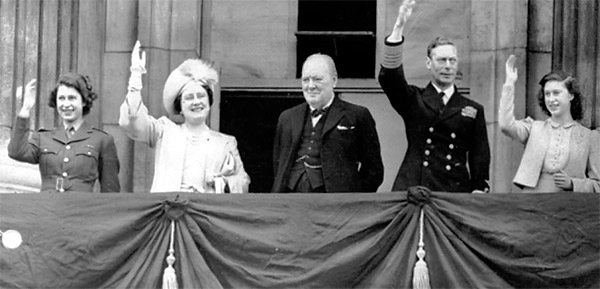
I dare say it would have come as some disappointment to the cheering crowds in Trafalgar Square, London on May 8, 1945 to know that 80 years on, despite humanity having advanced so far that all of us would possess little pocket-sized rectangular devices that give access to every piece of knowledge known to humankind, our friends in the East would wake every night to the sound of air raids and bombs.
Yes, it is disappointing. Mightily so. But the spirit that saw that struggle for freedom has not waned. Winston Churchill stood and addressed the crowds on that day from the balcony of the Ministry for Health, and the things he said, if taken out of context, could have been uttered in Kyiv today without anyone noticing their provenance:
JOIN US ON TELEGRAM
Follow our coverage of the war on the @Kyivpost_official.
“There we stood, alone. Did anyone want to give in? [“No,” cheered the crowd] Were we down-hearted? [“No,” cheered the crowd]. The lights went out and the bombs came down. But every man, woman and child in the country had no thought of quitting the struggle.”
Of course, the purpose Churchill spoke about was clarified elsewhere in his speech, and I have taken his words as the subtitle of this article. The chirping bird of freedom. Ask anyone what that really means and arguments will erupt. One person might say it’s the freedom to believe any religion that they want, another might say that it is the freedom to speak their mind, yet another might say the freedom to set up their own organization.
Switzerland Rejects Divisive Hard-Right Population Cap, Early Projections Show
Paradoxically, what seems to define the notion of freedom is the fact that it cannot be stated in clear terms. The nature of freedom is that we can argue about what it is. It is not an iron-clad state doctrine, the edict of a one-party state, or the munificent insights of a political leader who claims the power of a deity. It defies the cage of easy definition, thwarts the narrow-mindedness of the tyrant.
Freedom is the simple dignity and self-respect of human individuals given expression. It is rooted in something quite fundamental: a spirit of internal freedom, the lack of fear in singing as one wishes; Churchill’s chirping bird.
Despite its ethereal disposition, all those who fight for freedom know exactly what they fight for, and they are willing to see it to the end. It’s a remarkable thing when one ponders on this for a moment. A nebulous idea that cannot be written down, but which commands the ability to make people rise and defend it with greater vigor than those who claim to be fighting for some exact objective or territorial claim laid down with precision by their leaders. Within freedom’s blurred character is its indisputable magnetism and power.
In 1945, conflict came to a successful conclusion, at least as far as ending the Nazi empire was concerned. However, although it would be disingenuous not to recognize on VE Day the joint efforts of all those involved in defeating Nazism, it is inescapable that the efforts of the West were different from those of the East. Both sought to end the horror of the Third Reich, but the West sought to replace it with the liberal democratic institutions that would crush totalitarian government.
Despite its ethereal disposition, all those who fight for freedom know exactly what they fight for, and they are willing to see it to the end.
The Soviet led forces in the East, although heroic in the vast sacrifices they made, sought to replace Nazism with Bolshevism, which offered little escape from the horrors of one-party rule. Can you claim to have liberated a people by replacing their despotic government with another? The unyielding demands of the Marxist vision seemed a poor trade for many in Eastern Europe who craved the return of their freedom.
For those of us who spent their youth in the Cold War, when the world shivered restlessly under the shadow of nuclear obliteration, it was a moment of extraordinary hope when the Warsaw Pact crumbled and we believed that on the 45th anniversary of VE Day, freedom was about to sweep east once more, liberating the world of communist ideology, and finally instantiating a reign of democracy. It seemed that patience would pay off and the appeal and force of free nations would finally bring an end to that “other” totalitarian structure and menace of the 20th century.
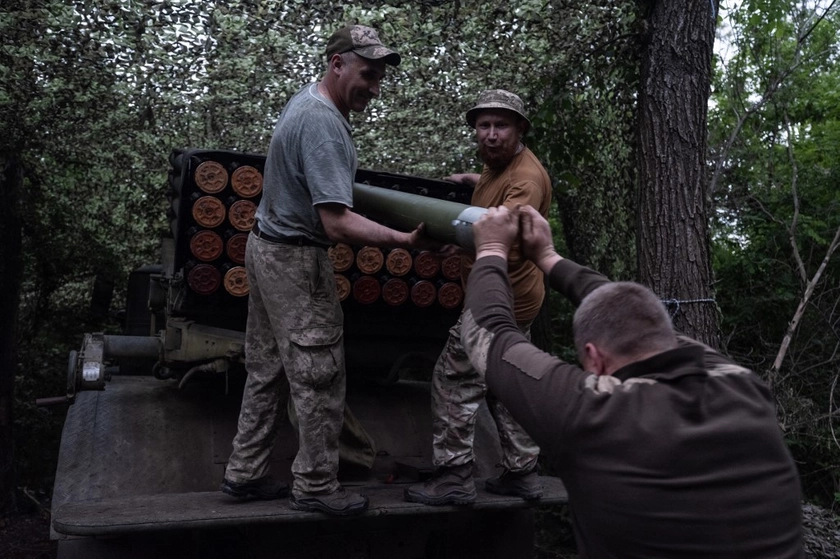
These hopes were not to be entirely realized. Today, the world has seen the back of Nazism and Bolshevism in their original form, but states rallying their people under the banner of rank nationalism to impose their will on others who want to be free has not abated. Eighty years after VE Day, Ukraine fights a war as brutal as that concluded in 1945 for the same principles.
Why does this fight seem never to cease? Why is it that after the devastation of the Second World War, we were not able to agree that despotic states should be bid farewell once and for all? Why is the obvious promise of freedom not so compelling as to see tyrants off and rouse humanity to cherished liberation? Why must we look back to May 8, 1945, with a sense of guilt and shame that we have so manifestly failed to realize the hopes of those who waved their flags on that fine spring day after enduring over five years of destruction and grief?
It was philosopher Hannah Arendt who brought to our attention the hard reality that in despotism many see freedom. When asked why anyone would want to abnegate their personal liberty for the terror of Nazism, many viewed the regime as an escape from personal responsibility. Failure in life could be blamed on the government, absolving oneself of any liability for misdirected choices in life. In this sense of belonging came the abandonment of the uncertainty of freedom and its replacement with the clarity of the state.
“These men began to tell the mob that each of its members could become such a lofty all-important walking embodiment of something ideal if he would only join the movement. Then he no longer had to be loyal or generous or courageous, he would automatically be the very incarnation of Loyalty, Generosity, Courage,” she explained in her 1976 work “The Origins of Totalitarianism.”
It is this confusion of the apparatus of tyranny with freedom, the fear of freedom and the simplicity of the slogan and the “movement” that has denied humanity the clarity that would give freedom its break, its chance to dominate our affairs. Instead, it must be fought for relentlessly, its benefits made clear day after day.
On the 80th anniversary of VE Day, there is no shortage of regimes that would use any means to throttle the chirping bird and replace it with the monotonous chorus of an inflexible ideology. Europe is again faced with war on its soil.
VE Day was an historic moment, but not a transformation in the human spirit, a momentous transition from one time to another. It marked a particularly memorable waypoint in a ceaseless effort to protect the habitat in which the chirping bird of freedom can find its unhindered peace and expression.
The views expressed in this opinion article are the author’s and not necessarily those of Kyiv Post.
You can also highlight the text and press Ctrl + Enter
OPINION: Crimea Cuts, St. Pete Double Tap, Boats Bashed