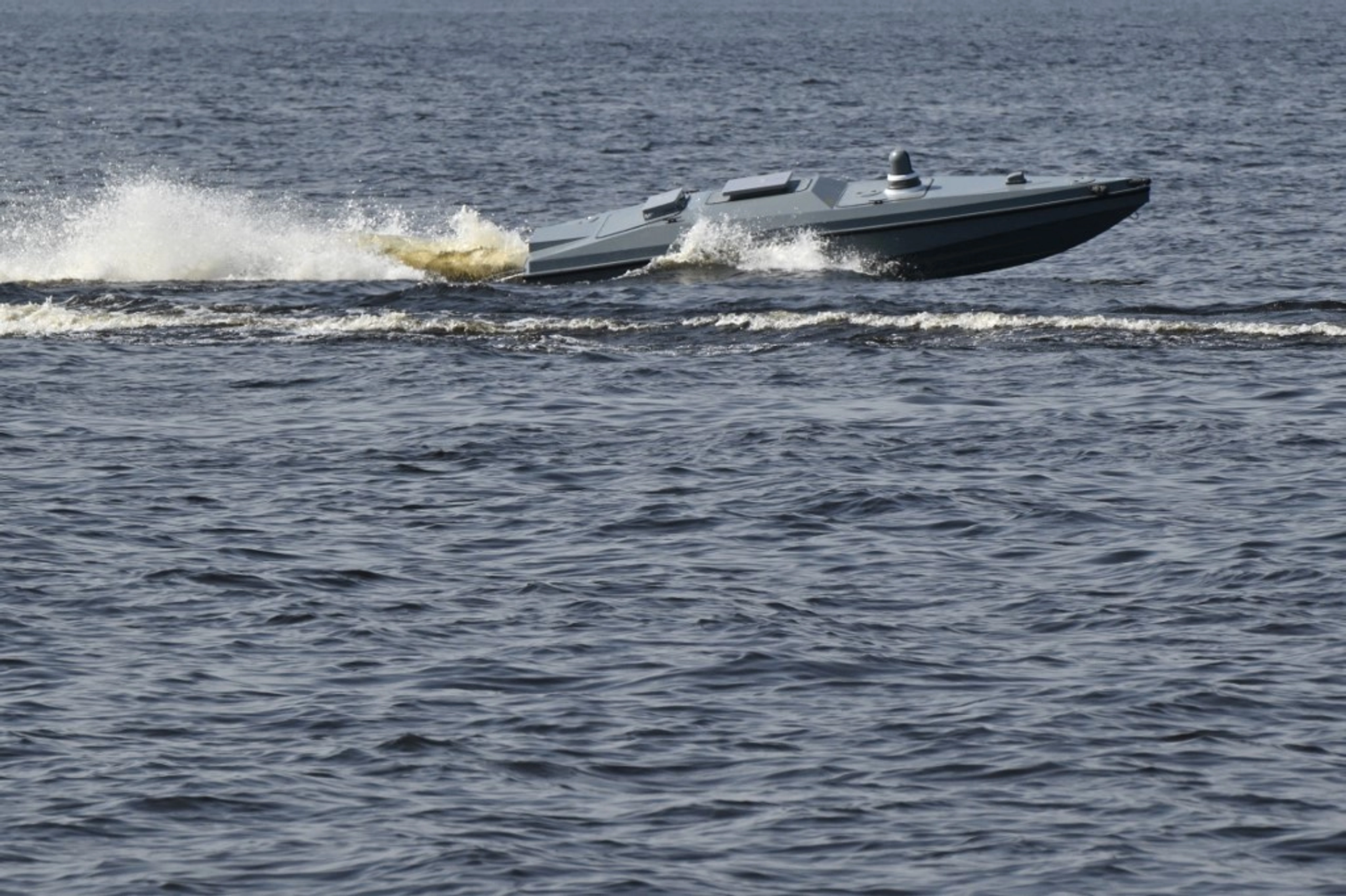
The military innovations of Ukrainian inventors have given its forces an advantage on the battlefield that can ensure its survival – not only physically, but also economically. In this article, I want to discuss the key role of patenting and other procedures needed to protect Ukraine’s intellectual property rights.
In the focus of investors
Today, the capabilities of Ukraine’s defense industry significantly exceed the volume of investment the country can provide on its own. According to its Ministry of Defense, with additional funding, defense production in 2025 could potentially reach $20 billion. Since the beginning of 2024, Ukraine’s defense sector has already attracted over $20 million in investment.
JOIN US ON TELEGRAM
Follow our coverage of the war on the @Kyivpost_official.
While attracting funding from partner countries requires diplomatic efforts and projects such as ZBROYARI, working with private investors demands a different approach. In this case, the main factors include a favorable business climate, a regulated IP policy, and a high level of IP culture. These are the very conditions that guarantee investors what they are most interested in – profit.
Let’s imagine the opposite situation: the inventor did not take care of patenting their invention or did so improperly. In that case, a third party may copy the technology, obtain a patent for it – and sue the inventor or the company they cooperate with for producing counterfeit goods. This leads to the loss not only of profits but also of significant additional resources needed to participate in litigation. No investor is willing to take on such risks.
Germany Warns of Russian Orbital Nuclear Threat
National Security comes first
During wartime, there is a high probability that the role of the third party will be played by the enemy, who may (and does) engage in industrial espionage to steal technologies. Moreover, several years ago, cases of “patent migration” in the defense sector were recorded: Ukrainians, without first applying for registration of an invention/utility model with the Ukrainian Patent Office, registered intellectual property (including new types of weapons) in Russia. To prevent Ukrainians from dying from inventions created by their “fellow citizens,” we must first and foremost improve the legal framework.
One example to follow is the United States: it is one of the countries that practices the issuing of Foreign Filing Licenses. According to this regulation, a person may submit a patent application in any foreign country no earlier than six months after filing such an application in the US, and only after obtaining the relevant license. If the disclosure of the invention could harm national security, submitting such an application in other countries is prohibited.
Technology transfer: smart “borrowing” of innovation
The registration of inventions abroad is closely tied to technology transfer. It is a kind of franchise in the world of intellectual property, through which the author of a product grants a third party the right to use their developments, earns money from it, and helps to replenish their country’s budget.
For Ukraine, which has become a true innovation hub in defense technologies and is implementing military innovations faster than the US, the prospect of successfully developing technology transfer looks entirely realistic. However, military technologies should be shared only when alternative ways of exploiting them – such as manufacturing and exporting finished products – are less profitable, and when the transfer does not pose a threat to national security. Therefore, at least during full-scale war, technology transfer should primarily focus on dual-use technologies. Considering that demand for them is also growing due to Russia’s war of aggression – all the more so.
Cooperation as a driver of development
Finally, the full development of military and defense tech is impossible without international cooperation. A vivid example of this is Japan, which recently moved away from the pacifist principles adopted after World War II to develop a new fighter jet in cooperation with Italy and the United Kingdom.
Ukraine’s situation is the opposite, as we are waging a purely defensive war. Therefore, the signing of security agreements, which necessarily include a clause on the exchange, transfer, and joint development of technologies, is our path to victory and the strengthening of the defense sector. To date, Ukraine has concluded 27 such agreements, and the 28th is on the way. We have signed even more cooperation and arms production localization agreements with defense companies, including the German Rheinmetall and the UK’s BAE Systems. Each of these partnerships prove that our partners trust our IP system.
Today, Ukraine is at the epicenter of both military actions and the global defense technology and innovation industry. Ukrainian developments not only help our soldiers effectively destroy the enemy but also showcase our intellectual potential to the world. By protecting these developments with patents, we protect Ukraine’s defense industry –and along with it, our economy, investment appeal, and competitiveness on the global market.
You can also highlight the text and press Ctrl + Enter